 {waid} विद्
  {wi.di.} विदि
  {wi.dé} विदे
  {wi.dya.} विद्य
: Romabama spelling is not entirely satisfactory
{wi.dya.} विद्य
: Romabama spelling is not entirely satisfactorywi1da1-170b3-4.htm
from: Online Sanskrit Dictionary, February 12, 2003 . http://sanskritdocuments.org/dict/dictall.pdf 090907
Downloaded, set in HTML, and edited by U Kyaw Tun, M.S. (I.P.S.T., U.S.A.), and staff of TIL Computing and Language Centre, Yangon, Myanmar. Not for sale. No copyright. Free for everyone.
index.htm | Top
SED-semivow-r6-indx.htm
{waid} विद् {wi.di.} विदि {wi.dé} विदे {wi.dya.} विद्य
: Romabama spelling is not entirely satisfactory
UKT notes
• Adi Shankara आदि शङ्करः
(788 CE - 820 CE)
• विद् (vid.h)
Skt: विद् (vid.h) - to obtain
- OnlineSktDict
• विदः (vidaH)
Skt: विदः (vidaH) - who understand
- OnlineSktDict
• विदधामि
(vidadhaami)
Skt: विदधामि
(vidadhaami) - give - OnlineSktDict
• विदारयति
(vidaarayati)
Skt: विदारयति
(vidaarayati) - to split apart - OnlineSktDict
¤ वित्तवत्
vittavat
Skt: वित्तवत्
vittavat - adj. wealthy
- SpkSkt
¤ विदहति
{ वि- दह् } vidahati {vi- dah }
Skt: विदहति
{ वि- दह् } vidahati {vi- dah } - v1.
consume by fire, destroy by fire - SpkSkt
• विदाहिनः
(vidaahinaH)
Skt: विदाहिनः
(vidaahinaH) - burning - OnlineSktDict
{wi.di.} विदि
• विदितम्
(viditam.h)
Skt: विदितम्
(viditam.h) - known - OnlineSktDict
•
विदितात्मनां
(viditaatmanaaM)
Skt:
विदितात्मनां
(viditaatmanaaM) - of those who are self-realised
- OnlineSktDict
• विदित्वा
(viditvaa)
Skt: विदित्वा
(viditvaa) - having known, realised- OnlineSktDict
• विदिशां (vidishaaM)
Skt: विदिशां
(vidishaaM) - non-direction - OnlineSktDict
• विदुः (viduH)
Skt: विदुः (viduH)
- understood - OnlineSktDict
• विदूषकः
(viduushhakaH)
Skt: विदूषकः
(viduushhakaH) - (m) clown, joker - OnlineSktDict
{wi.dé} विदे
• विदेश (videsha)
Skt: विदेश
(videsha) - foreign land - OnlineSktDict
Pal: videsa - m. a foreign land - UPMT-PED196
• विदेशी (videshii)
Skt: विदेशी
(videshii) - foreigner - OnlineSktDict
• विद्धि (viddhi)
= व ि द ् ध ि
Skt: विद्धि
(viddhi) - know for sure - OnlineSktDict
• विमः (vidmaH)
Skt: विमः
(vidmaH) - do we know - OnlineSktDict
• विद्महे (vidmahe)
= व ि द ् म ह े
Skt: विमहे (vidmahe) - ?
- OnlineSktDict
{wi.dya.} विद्य
= व ि द ् य
• विद्यते
(vidyate)
Skt: विद्यते
(vidyate)
- there is - OnlineSktDict
¤ विधवा
vidhavā
Skt: विधवा
vidhavā f. widow - SpkSkt
Pal: vidhavā f. a widow - UPMT-PED196
•
विद्यनिपुणै
(vidyanipuNai)
Skt:
विद्यनिपुणै
(vidyanipuNai)
- by the ace scholar Shankara (Plural is used for reverence) - OnlineSktDict
See my note on Adi Shankara .
• विद्यया
(vidyayaa)
Skt: विद्यया
(vidyayaa) - (fem.instr.sing.) by knowledge
- OnlineSktDict
• विद्या (vidyaa)
Skt: विद्या
(vidyaa) - knowledge - OnlineSktDict
• विद्यात्
(vidyaat.h)
Skt: विद्यात्
(vidyaat.h) - you must know - OnlineSktDict
•
विद्यातुरानां
(vidyaaturaanaaM)
Skt:
विद्यातुरानां
(vidyaaturaanaaM) - (poss.pl.) of people who are indulging in knowledge
- OnlineSktDict
•
विद्यानां
(vidyaanaaM)
Skt:
विद्यानां
(vidyaanaaM) - of all education - OnlineSktDict
•
विद्यानिधः
(vidyaanidhiH)
Skt:
विद्यानिधः
(vidyaanidhiH) - the stock-pile of knowledge (here rAma)
- OnlineSktDict
• विद्यामहं
(vidyaamahaM)
Skt:
विद्यामहं
(vidyaamahaM) - shall I know - OnlineSktDict
•
विद्यार्थिनी
(vidyaarthinii)
Skt:
विद्यार्थिनी
(vidyaarthinii) - f. student - OnlineSktDict
• (vidyaarthii)
Skt: (vidyaarthii) - m. student - OnlineSktDict
•
विद्यालयः
(vidyaalayaH)
Skt:
विद्यालयः
(vidyaalayaH) - (m) school - OnlineSktDict
•
विद्यावान्
(vidyaavaan.h)
Skt:
विद्यावान्
(vidyaavaan.h) - a knowledgeable manor scholar - OnlineSktDict
•
विद्युत्कन्दः
(vidyut.hkandaH)
Skt:
विद्युत्कन्दः
(vidyut.hkandaH) - (m) incandescent bulb - OnlineSktDict
• विद्रोह (vidroha)
Skt: विद्रोह
(vidroha) - revolt - OnlineSktDict
• विद्रोहः
(vidrohaH)
Skt: विद्रोहः
(vidrohaH) - (m) rebellion - OnlineSktDict
• विद्वत् (vidvat.h)
Skt: विद्वत्
(vidvat.h) - scholar - OnlineSktDict
• विद्वत्व
(vidvattva)
Skt: विद्वत्व
(vidvattva) - scholarliness - OnlineSktDict
• विद्वान्
(vidvaan.h)
Skt: विद्वान्
(vidvaan.h) - learned - OnlineSktDict
•
विद्विषावहै
(vidvishhaavahai)
Skt:
विद्विषावहै
(vidvishhaavahai) - may us not quarrel or hate - OnlineSktDict
• विधातृ (vidhaatRi)
Skt: विधातृ
(vidhaatRi) - the creator - OnlineSktDict
• विधान (vidhaana)
Skt: विधान (vidhaana)
- placing - OnlineSktDict
Pal: vidhāna - n. arrangement, disposal, precept, ceremony - UPMT-PED196
• विधानं (vidhaanaM)
Skt: विधानं
(vidhaanaM) - (n) legislation - OnlineSktDict
• विधानं (vidhaanaM)
Skt: विधानं
(vidhaanaM)s - Arranging, disposing; Performing,
making, doing, executing;
Creation, creating; Ordinance,
Sacred rule or precept, sacred injunction; Mode, manner;
Wealth; Pain, agony, torment, distress; - OnlineSktDict
• विधानोकतः
(vidhaanoktaH)
Skt:
विधानोकतः
(vidhaanoktaH) - according to scriptural regulation
- OnlineSktDict
• विधि (vidhi)
Skt: विधि (vidhi) - ritual
- OnlineSktDict
Pal: vidhi - m. rule, precept, ceremony, luck, destiny - UPMT-PED196
• विधिः (vidhiH)
Skt: विधिः (vidhiH) -
(m) law, ritual - OnlineSktDict
• विधिदिष्टः
(vidhidishhTaH)
Skt:
विधिदिष्टः
(vidhidishhTaH) - according to the direction of scripture
- OnlineSktDict
• विधिहीनं
(vidhihiinaM)
Skt: विधिहीनं
(vidhihiinaM) - without scriptural direction - OnlineSktDict
• विधीयते
(vidhiiyate)
Skt: विधीयते
(vidhiiyate) - does take place - OnlineSktDict
¤ विधुर vidhura
Skt: विधुर
vidhura m. widower - SpkSkt
• विधूत (vidhuuta)
Skt: विधूत (vidhuuta)
- moving - OnlineSktDict
• विधेम (vidhema)
Skt: विधेम
(vidhema) - make - OnlineSktDict
•
विधेयात्मा
(vidheyaatmaa)
Skt:
विधेयात्मा
(vidheyaatmaa) - one who follows regulated freedom - OnlineSktDict
• विध्वंस
(vidhva.nsa)
= व ि ध ् व ं स
Skt: विध्वस
(vidhva.nsa) - destruction - OnlineSktDict
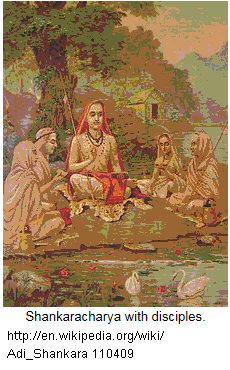
See a fuller article in sha1-182top.htm
Excerpt from: http://en.wikipedia.org/wiki/Adi_Shankara 110409
Adi Shankara (Ādi Śaṅkara /aːd̪i ɕaŋkərə/, Skt: आदि शङ्करः, Malayalam: ആദി ശങ്കരന് Ādi Śaṅkaran , (788 CE - 820 CE[1]), also known as Śaṅkara Bhagavatpādācārya and Ādi Śaṅkarācārya, was an Indian philosopher from Kalady of present day Kerala who consolidated the doctrine of Advaita Vedanta, a sub-school of Vedanta. His teachings are based on the unity of the Atman and Brahman — non-dual Brahman, in which Brahman is viewed as without attributes.
UKT: To get an understanding of the Theravada views on doctrines, read: Brhamajala Sutta - http://en.wikipedia.org/wiki/Brahmajala-Sutta 120104
Shankara travelled across India and other parts of South Asia to propagate his philosophy through discourses and debates with other thinkers. He is reputed to have founded four Maṭhas (Skt: मठ 'monasteries') [UKT: Skt-Dev spelling copied from another part of the same Wiki article], which helped in the historical development, revival and spread of Advaita Vedanta. Adi Shankara is believed to be the organizer of the Dashanami monastic order and the founder of the Shanmata tradition of worship.
His works in Sanskrit concern themselves with establishing the doctrine of Advaita (Nondualism). He also established the importance of monastic life as sanctioned in the Upanishads and Brahma Sutra, in a time when the Mimamsa school established strict ritualism and ridiculed monasticism. [UKT ¶]
Shankara represented his works as elaborating on ideas found in the Upanishads, and he wrote copious commentaries on the Vedic Canon (Brahma Sutra, Principal Upanishads and Bhagavad Gita) in support of his thesis. The main opponent in his work is the Mimamsa school of thought, though he also offers some arguments against the views of some other schools like Samkhya and certain schools of Buddhism that he was partly familiar with. However, he held firmly that only Brahmin caste males are eligible to attain the knowledge of Brahman.[2]
UKT: More in the Wikipedia article.
Go back Adi-Shankara-note-b
End of TIL file