 {la.}
{la.}
 {la.wïn~ga.} लवङ्ग
= ल व ङ ् ग
{la.wïn~ga.} लवङ्ग
= ल व ङ ् ग la-160b2-2.htm
from: Online Sanskrit Dictionary, February 12, 2003 . http://sanskritdocuments.org/dict/dictall.pdf 090907
Downloaded, set in HTML, and edited by U Kyaw Tun, M.S. (I.P.S.T., U.S.A.), and staff of TIL Computing and Language Centre, Yangon, Myanmar. Not for sale. No copyright. Free for everyone.
index.htm | Top
SED-semivow-r6-indx.htm
{la.}
{la.wïn~ga.} लवङ्ग
= ल व ङ ् ग
• लंघ् (la.ngh.h)
= ल ं घ ्
Skt: लंघ्
(la.ngh.h) - to climb - OnlineSktDict
• लंबोदरं
(laMbodaraM)
Skt: लंबोदरं
(laMbodaraM) - having a long stomach - OnlineSktDict
• लंबोदराय
(laMbodaraaya)
Skt: लंबोदराय
(laMbodaraaya) - to the long-stomached - OnlineSktDict
• लगुड (laguDa)
Skt: लगुड
(laguDa) - a club, a stick - OnlineSktDict
• लग्न (lagna)
Skt: लग्न
(lagna) - The Ascendant or 1st house - OnlineSktDict
• लग्नकः (lagnakaH)
Skt: लग्नकः
(lagnakaH) - (m) bail - OnlineSktDict
• लग्नधिपति
(lagnadhipati)
Skt:
लग्नधिपति
(lagnadhipati) - Ascendant lord - OnlineSktDict
• लघु (laghu)
Skt: लघु (laghu) - small, inferior, light
- OnlineSktDict
Pal: laghu - adj. light, quick, small - UPMT-PED182
• लघुः (laghuH)
Skt: लघुः (laghuH) - light - OnlineSktDict
• लघुड (laghuDa)
Skt: लघुड
(laghuDa) - club, stick - OnlineSktDict
• लघुत्वं
(laghutvaM)
Skt: लघुत्वं
(laghutvaM) - lightness - OnlineSktDict
• लघ्वाशी
(laghvaashii)
Skt: लघ्वाशी
(laghvaashii) - eating a small quantity - OnlineSktDict
• लङ्का (la.nkaa)
Skt: लङ्का (la.nkaa)
- the kingdon of Ravana, Ceylon or Sri Lanka - OnlineSktDict
Pal: laṅkā - Ceylon - UPMT-PED182
• लज्जा (lajjaa)
Skt: लज्जा (lajjaa) - modesty
- OnlineSktDict
• लज्ज्यते
(lajjyate)
= ल ज ् ज ् य त े
Skt: लज्ज्यते
(lajjyate) - (1ap) to be ashamed, embarrassed - OnlineSktDict
Pal: lajjati - v. (√lajj) to be ashamed - UPMT-PED182
• लत (lata)
Skt: लत (lata) - creeper - OnlineSktDict
• लता (lataa)
Skt: लता (lataa) - (f) creeper, vine
- OnlineSktDict
• लद्दुक (ladduka)
Skt: लद्दुक
(ladduka) - laddoo, a sweet-ball - OnlineSktDict
• लब्धं (labdhaM)
Skt: लब्धं
(labdhaM) - gained - OnlineSktDict
• लब्धा (labdhaa)
Skt: लब्धा
(labdhaa) - regained - OnlineSktDict
• लब्ध्वा
(labdhvaa)
Skt: लब्ध्वा
(labdhvaa) - having achieved - OnlineSktDict
• लभ् (labh.h)
Skt: लभ् (labh.h) - to obtain
- OnlineSktDict
• लभते (labhate)
Skt: लभते (labhate)
- (1 ap) to get, to obtain - OnlineSktDict
• लभन्ते (labhante)
Skt: लभन्ते
(labhante) - do achieve - OnlineSktDict
• लभस्व (labhasva)
Skt: लभस्व
(labhasva) - gain - OnlineSktDict
• लभे (labhe)
Skt: लभे (labhe) - I obtain
- OnlineSktDict
• लभेत् (labhet.h)
Skt: लभेत्
(labhet.h) - gains - OnlineSktDict
• लभ्य (labhya)
Skt: लभ्य
(labhya) - Easy - OnlineSktDict
• लभ्यः (labhyaH)
Skt: लभ्यः
(labhyaH) - can be achieved - OnlineSktDict
• लय (laya)
Skt: लय (laya) - Decline - OnlineSktDict
• लयं (layaM)
Skt: लयं (layaM) - tranquility or
the lull after destruction or the Deluge - OnlineSktDict
• लययोग (layayoga)
Skt: लययोग
(layayoga) - yoga using the latent power of kundalini
- OnlineSktDict
• ललाटक (lalaaTaka)
Skt: ललाटक
(lalaaTaka) - (n) forehead - OnlineSktDict
• ललित (lalita)
Skt: ललित (lalita) - (a) playing,
sporting, dallying; amorous, lovely, beautiful; grace, charm
- OnlineSktDict
• ललित (lalita)
Skt: ललित (lalita) - lovely, beautiful,
elegant graceful - OnlineSktDict
See my note on Lilith - a name in Jewish folklore.
• ललिता (lalitaa)
Skt: ललिता
(lalitaa) - A women; wanton woman; musk; a form of goddess
Durga; various metres - OnlineSktDict
• लव (lava)
Skt: लव (lava) - Piece - OnlineSktDict
Skt: लव lava - n. cloves - SpkSkt
{la.wïn~ga.}
लवङ्ग
= ल व ङ ् ग
• लवङ्ग (lava.nga)
Skt: लवङ्ग
(lava.nga) - clove - OnlineSktDict
Pal: lavaṇga - n. cloves - UPMT-PED183
• लवङ्गः (lava.ngaH)
Skt: लवङ्गः
(lava.ngaH) - (m) cloves - OnlineSktDict
¤ लवंगक lavaṃgaka
Skt: लवंगक
lavaṃgaka - n. cloves - SpkSkt
¤ लवंगकलिका
lavaṃgakalikā
Skt: लवंगकलिका
lavaṃgakalikā f. cloves - SpkSkt
• लवण (lavaNa)
Skt: लवण (lavaNa) (m) salty
- OnlineSktDict
Skt: लवण lavaṇa n. salt, table salt - SpkSkt
Pal: lavaṇa - n. salt - UPMT-PED183
• लवणम् (lavaNam.h)
Skt: लवणम् (lavaNam.h)
- (n) salt - OnlineSktDict
¤
लवणसिन्धु
lavaṇasindhu
Skt:
लवणसिन्धु
lavaṇasindhu - m. salt-sea - SpkSkt
• लशुनम्
(lashunam.h)
Skt: लशुनम्
(lashunam.h) - (n) garlic - OnlineSktDict
¤ लशुन laśuna
Skt: लशुन laśuna - n. garlic - SpkSkt
Pal: lasuna - n. garlic - UPMT-PED183
• लसत्भिः
(lasatbhiH)
Skt: लसत्भिः
(lasatbhiH) - glowing - OnlineSktDict
• लसितं (lasitaM)
Skt: लसितं
(lasitaM) - beautified - OnlineSktDict
• लक्ष (lakSha)
Skt: लक्ष (lakSha)
- Lakh, 100,000 in number, also sight - OnlineSktDict
• लक्षं (lakShaM)
Skt: लक्षं
(lakShaM) - target - OnlineSktDict
• लक्षणं (lakShaNaM)
Skt: लक्षणं
(lakShaNaM) - symptom; indication; aspect; characteristics
- OnlineSktDict
• लक्ष्मणपूर्वजं
(lakShmaNapuurvajaM)
Skt:
लक्ष्मणपूर्वजं
(lakShmaNapuurvajaM) - the (earlier-born) elder of
LakShmaNa - OnlineSktDict
• लक्ष्मणनुचरो
(lakShmaNaanucharo)
Skt:
लक्ष्मणनुचरो
(lakShmaNaanucharo) - having LakshmaNa as the follower
- OnlineSktDict
• लक्ष्मणो
(lakShmaNo)
Skt:
लक्ष्मणो
(lakShmaNo) - laksshmaNaH - OnlineSktDict
•
लक्ष्मणोपेतं
(lakShmaNopetaM)
Skt:
लक्ष्मणोपेतं
(lakShmaNopetaM) - having Lakshmana nearby
- OnlineSktDict
•
लक्ष्मि
(lakShmi)
Skt: लक्ष्मि
(lakShmi) - goddess of wealth, beauty and luck, wife of Vishnu - OnlineSktDict
• लक्ष्मी
(lakShmii)
Skt: लक्ष्मी
(lakShmii) - wealth - OnlineSktDict
• लक्ष्यम्
(lakShyam.h)
Skt:
लक्ष्यम्
(lakShyam.h) - (n) aim, target, goal - OnlineSktDict
•
लक्ष्यमात्रव्यापकः
(lakShyamaatravyaapakaH)
Skt:
लक्ष्यमात्रव्यापकः
(lakShyamaatravyaapakaH)
- lakshyam + atra + vyApakaH:
goal or target + here + manifested
- OnlineSktDict
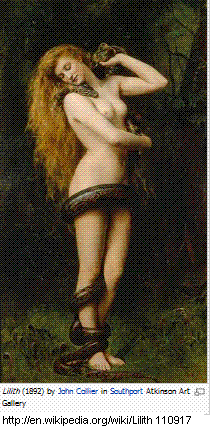 UKT:
The word ललित (lalita) usually brings to my mind the
name Lilith which "according to Jewish folklore, Lilith was the first wife of
Adam. She was banished from the Garden of Eden when she refused to make herself
subservient to Adam (specifically, she refused to get into the missionary
position with him during sex). When she was cast out, she was made into a demon
figure, and Adam was given a second wife, Eve, who was fashioned from his rib to
ensure her obedience to her man." -
http://art.net/Studios/Poets/Schlong/lilithmyth.html 110917
UKT:
The word ललित (lalita) usually brings to my mind the
name Lilith which "according to Jewish folklore, Lilith was the first wife of
Adam. She was banished from the Garden of Eden when she refused to make herself
subservient to Adam (specifically, she refused to get into the missionary
position with him during sex). When she was cast out, she was made into a demon
figure, and Adam was given a second wife, Eve, who was fashioned from his rib to
ensure her obedience to her man." -
http://art.net/Studios/Poets/Schlong/lilithmyth.html 110917
From Wikipedia: http://en.wikipedia.org/wiki/Lilith 110917
Lilith (Hebrew: לילית; lilit, or lilith) is a character in Jewish mythology, found earliest in the Babylonian Talmud (completed between 500 and 700 AD/CE), who is generally thought to be related to a class of female demons Līlīṯu in Mesopotamian texts. However, Lowell K. Handy (1997) notes, "Very little information has been found relating to the Akkadian and Babylonian view of these demons. Two sources of information previously used to define Lilith are both suspect."[1] The two problematic sources are the Gilgamesh appendix and the Arslan Tash amulets, which are discussed below.[2]
In Jewish folklore, from the 8th–10th Century Alphabet of Ben Sira onwards Lilith becomes Adam's first wife, who was created at the same time and from the same earth as Adam. This contrasts with Eve, who was created from one of Adam's ribs. The legend was greatly developed during the Middle Ages, in the tradition of Aggadic midrashim, the Zohar and Jewish mysticism.[3] In the 13th Century writings of Rabbi Isaac ben Jacob Alfasi ha-Cohen, for example, Lilith left Adam after she refused to become subservient to him and then would not return to the Garden of Eden after she mated with archangel Samael.[4] The resulting Lilith legend is still commonly used as source material in modern Western culture, literature, occultism, fantasy, and horror.
UKT: More in the Wikipedia article
Go back Lilith-note-b
End of TIL file