p075.htm
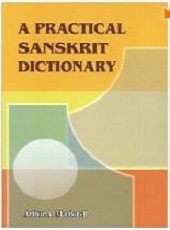
• A Practical Sanskrikt Dictionary,
by A. A. Macdonell, 1893,
http://www.sanskrit-lexicon.uni-koeln.de/scans/MDScan/index.php?sfx=jpg;
1929.
-
Nataraj ed., 1st in 2006, 2012.
-
https://dsal.uchicago.edu/dictionaries/macdonell/ 190516
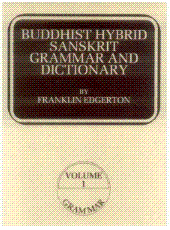
• The Buddhist Hybrid Sanskrit Grammar and
Dictionary, BHS, vol.2, by F. Edgerton,
pp. 627.
-
FEdgerton-BHSD<Ô> /
Bkp<Ô> (link chk 180627)
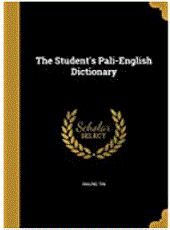
• The Student's Pali English dictionary ,
by U Pe Maung Tin, 1920.
- (ref: UPMT-PEDxxx).
Downloaded copies in TIL
HD-PDF and SD-PDF libraries:
-
UPMT-PaliDict1920<Ô> /
bkp<Ô> (link chk 190113)
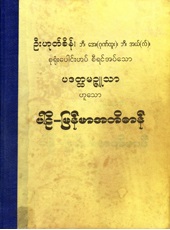
• Pali-Myanmar Dictionary
(in Pal-Myan), by U Hoke Sein,
- (ref: UHS-PMD). The dictionary in printed form is in TIL Research Library.
• Latin-English Vocabulary II, by Hans H Ørberg, 1998
-
HHOrberg-LinguaLatina<Ô> /
Bkp<Ô> (link
chk 190624)
Edited by U Kyaw Tun (UKT) (M.S., I.P.S.T., USA),
Daw Khin Wutyi, Daw Thuzar Myint, Daw Zinthiri Han
and staff of Tun Institute of Learning (TIL).
Not for sale. No copyright. Free for everyone.
Prepared for students and staff of TIL
Research Station, Yangon, MYANMAR
-
http://www.tuninst.net ,
www.romabama.blogspot.com
MC-indx.htm |
Top
MCpp-indx.htm
UKT 190207: Eng-Lat cannot differentiate
{ké} के and
{kè:} कै .
Similarly we cannot differentiate{kau:} को from
{kao} कौ .
I've only the diacritics on Skt-Dev to rely on to differentiate the four of them.
I may have to change my views as my knowledge advances.
{kè:} : cont
p075c1
{kau:} /
को
 {kau:ka.}
 {kaün~} :

 {
kau:sa.}: with palatal plosive-stop
{
kau:sa.}: with palatal plosive-stop
 {
kau:Ta.}
{
kau:Ta.}
 {
kau:pa.}
{
kau:pa.}
 {
kau:ya.}
{
kau:ya.}
 {kau:ra.}
 {kau:la.}
 {kau:wa.}
p075c2
 {kau:sha.}
 {kau:Sa.}
 {kau:þa.}
{kao} कौ /
 {kau} : UKT 190207: From the definition of {þa.wûN}-{a.þa.wûN},
I opine that
{kao} is correct.
{kau} : UKT 190207: From the definition of {þa.wûN}-{a.þa.wûN},
I opine that
{kao} is correct.
 {kao-kSa.} /
 {kau-kSa.} : Pseudo-Kha
 {kSa.} क्ष / True-Kha
 {hka.} {kao-Ta.} ख
 {kao-Ta.}
/
{kao-Ta.}
/
 {kau-Ta.}
 {kao-Na.} /
 {kau-Na.}
 {kao-ta.} /
 {kau-ta.}
 {kao-na.} /
 {kau-na.}
p075c3
 {kao-pa.} /
 {kau-pa.}
 {kao-ra.} /
 {kau-ra.}
 {kao-la.} /
 {kau-la.}
 {kao-wa.} /
 {kau-wa.}
 {kao-sha.} /
 {kau-sha.}
 {kao-Sa.} /
 {kau-Sa.}
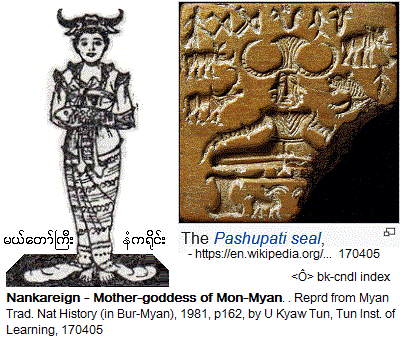
"Maa" is
{mèý tau} and are not necessarily dévi-goddesses. I view them as local Mother-goddesses of the Bronze-Age indigenous Tib-Bur speaking peoples of the Indian subcontinent extending into Myanmarpré, an example being Nan'ka'reign MèýDaw of southern Myanmarpré.
UKT notes :
•
Chanakya aka Kautilya or Vishnu Gupta
•
Doggie's Problem: paucity of nasals in
English
•
Konkana
• Maa Sakti of the Left-hand Path
• Saffron-crocus
{kè:} कै : cont - Eng-Lat cannot differentiate
{ké} के and
{kè:} कै
p075c1-b00/ p057-004
• कैवल्य
[ kaival-ya ]
- n. absolute oneness; absolute bliss.
4)
p075c1-b01/ p057-003
• कैशव
[ kaisava ]
Skt: कैशव
[ kaisava ] - a. belonging to Kesava
(Krishna or Vishnu). - Mac075c1
3)
BPal:
 {ké-þa.wa.} - UHS PMD0335c2
UKT from UHS: mfn. profuse
head-hair, long head-hair, Vishnu déva
p075c1-b02/ not online
• [kais-ika]
- m. pl. N. of a people
( end of old p074-3.htm )
{kau:}
p075c1-b03/ p057-002
• को˚ [ ko- ]
- prn. prefix [=nm. kas], what? how?
= strange, indifferent, somewhat,
easily (cp. ka, kava, kâ, kim, ku).
2)
 {kau:ka.}
p075c1-b04/ p057-001
• कोक [ kóka ]
Skt: कोक [koka]
- m. wolf; cuckoo; ruddy goose (kakravâka): f. î.
- Mac075c1
1)
BPal:
{kau:ka.} - UHS PMD0336c1
UKT from UHS: m.
 {þic-kroat} ?, wolf,
 {sak~ka.waak} ?
p075c1-b05/ p057-025
• कोकनद [ koka-nada ]
Skt: कोकनद [ koka-nada ]
- n. red lotus (flower); -nadinî, f. red lotus (plant). -
Mac075c1
25)
BPal:
 {kau:ka.na.da.} - UHS PMD0336c1
UKT from UHS: n. red lotus
p075c1-b06/ p057-024
• कोकिल [ kok-ila ]
Skt: कोकिल [ kok-ila ]
- m., â, f. Indian cuckoo. - Mac075c1
24)
BPal:
 {kau:ki.la.}
- UHS PMD0336c1
{kau:ki.la.}
- UHS PMD0336c1
UKT from UHS: m. cuckoo
{kaün~}
See my note on Doggie's Problem in going from
{kaún}
using{kín:si:} :
The problem is mainly due to English having only two nasals to Bur-Myan five.
p075c1-b07/ not online
• कोङ्कण
«koṅkaṇa» [koṅkana]
-->
 {kaún~ka.Na.}
Skt: कोङ्कण
[koṅkana] - m. pl.
N. of a people -- Mac075c1
Skt: कोङ्कण
«koṅkaṇa» - n. kind of weapon -- SpkSkt
See my note on Konkana
p075c1-b08/ p057-023
• कोङ्काण [ koṅkâna ]
-->
 {kaún~ka-Na.}
- a. (î) coming from Koṅkana (horse).
23)
p075c1-b09/ p057-022
• कोङ्कार [ koṅ-kâra ]
- m. the sound kom.
22)
 {kau:sa.} : Palatal plosive-stop
p075c1-b10/ p057-021
• कोच [ kok-a ]
- m. shrinking, shrivelling.
21)
 {kau:Ta.}
p075c1-b11/ p057-020
• कोट [ kota ]
- m. fortress, stronghold (cp. kotta).
20)
p075c1-b12/ p057-019
• कोटर [ kotara ]
- n. hollow of a tree; cavity: -vat, a. having caves.
19)
p075c1-b13/ p057-018
• कोटाद्रि [ kota‿adri ]
- m. N. of a mountain (fortress-hill).
18)
p075c1-b14/ p057-017
• कोटि [ koti (also î) ]
- f. curved tip (of a bow, talons, etc.); point; extremity, height,
highest degree; ten millions; -ka, m. kind of frog; -kâ, f. extreme point: --°, = outcast,
scum of; -mat, a. pointed; -vedhin, a. hitting the extreme = accomplishing a most
difficult task; -sas, ad. to the number of ten millions.
17)
p075c1-b15/ p057-016
• कोटीश्वर [ koti‿îsvara ]
- m. (lord of ten millions), N. of a millionaire.
16)
p075c1-b16/ p057-015
• कोट्््ट [ kotta ]
- m. [ko-(a)tta], stronghold; -pâla, m. commandant of a fortress.
15)
p075c1-b17/ p057-014
• कोट्््टवी [ kottavî ]
- f. naked woman.
14)
p075c1-b18/ p057-013
• कोण [ kona ]
- m. corner, angle; intermediate point of the compass (N. E. etc.).
13)
p075c1-b19/ p057-012
• कोथ [ koth-a ]
- m. putrefaction.
12)
p075c1-b20/ p057-011
• कोदण्ड [ ko-danda ]
- n. [kind of rod], bow.
11)
p075c1-b21/ p057-010
• कोद्रव [ ko-drava ]
- m. kind of inferior grain eaten by the poor people.
10)
 {kau:pa.}
p075c1-b22/ p057-009
• कोप [ kop-a ]
- m. morbid excitement (esp. of the bodily humours); fury (of battle,
etc.); wrath, anger (at, g., lc., prati, upari, or --°): -m kri, be angry:
-ka, a. irascible; -kshamâ vismaya-harsha-vat, a. angry, compassionate,
astonished, and glad; -ganman, a. produced by anger.
9)
p075c1-b23/ p057-008
• कोपन [ kop-ana ]
- a. passionate, wrathful, angry; n. excitement; provocation; -in,
a.
angry, wrathful.
8)
p075c1-b24/ p057-007
• कोमल [ ko-mala ]
- a. [easily fading], tender; soft (fig.); -‿aṅga, a. (î) of tender
frame.
7)
 {kau:ya.}
p075c1-b25/ p057-006
• कोयष्टि ko-yashti, ˚क [ -ka ]
- m. [stilt-like], kind of bird.
6)
{kau:ra.}
p075c1-b26/ p057-005
• कोर [ kora ]
- m. flexible joint (of the body).
5)
p075c1-b27/ p057-041
• कोरक [ kora-ka ]
- m. n. (?) bud: î, f. id.
41)
{kau:la.}
p075c1-b28/ p057-040
• कोल [ kola ]
- m. boar, hog: -tâ, f. abst. ɴ.
40)
p075c1-b29/ p057-039
• कोलक [ kola-ka ]
- n. kind of perfume.
39)
p075c1-b30/ p057-038
• कोलाहल [ kolâ-hal-a ]
- m. n. clamour, outcry, uproar; yelling: -in, a. filled with din (--°).
38)
{kau:wa.}
p075c1-b31/ p057-037
• कोविद [ ko-vida ]
- a. [knowing well], knowing, skilled in (g., lc., --°): -tva,
n.
skill.
37)
BPal:
 {kau:wi.da.} - UHS-PMD0339c2
UKT from UHS: mfn. clever
p075c1-b32/ not online
• कोविदार ko-vidara
- m. [splitting well], kind of ebony.
{kau:sha.}
p075c2-b00/ p057-036
• कोश [ kós-a ]
- m. butt, tub, pail, coop (esp. of clouds); box, chest; sheath; case;
shell; abode;
store-room; treasury, treasure; vocabulary, dictionary; treasury of poetry,
collection of
stanzas; bud, calix (esp. of the lotus); cocoon; cup of peace; sacred draught
used in ordeals;
oath: -kâraka, m. silk-worm; -griha, n. treasury;
-gâta, n. treasure, wealth; -danda,
m. du.
treasury and army; -dâsa, m. N.; -pîthin, a. draining or having drained any
one's treasury; -petaka, m. n. casket; *-phala, n. kind of perfume;
-rakshin, m. guardian of the
treasury.
36)
p075c2-b01/ p057-035
• कोशल [ kosala ]
- v. kosala.
35)
p075c2-b02/ p057-034
• कोशवत्् [ kosa-vat ]
- a. wealthy; -vâri, n. ordeal water; -vesman, n. treasury;
-‿agâra, m.
n. id.:
-‿adhikârin, m. treasurer; -‿adhyaksha, m. treasurer.
34)
{kau:Sa.}
p075c2-b03/ not online
• कोष [kosha]
- v. कोस kosa
p075c2-b04/ p057-033
• कोष्ठ [ koshtha ]
- m. entrails, stomach, abdomen; n. store-room; encircling wall;
-‿agâra, n. store-house, granary; -‿agni, m. fire of the stomach, i.e. of digestion.
33)
p075c2-b05/ p057-032
• कोष्ण [ kâ‿ushna ]
- a. lukewarm, tepid.
32)
{kau:þa.}
p075c2-b06/ p057-031
• कोसल [ kosala ]
- m. N. of a country: pl. its people; â, f. capital of Kosala, i.e. Ayodhyâ;
-gâ, f. born in Kosala, ep. of Râma's mother; -videhá,
m. pl. the Kosalas and the Videhas.
31)
( end of old p075-1.htm )
{kao} कौ /
{kau}
UKT 190207: Pal-Myan does not have this sound. It has only
{a.þa.wûN}-pair each with duration 2 eye-blnk:
{kao-kSa.} /
{kau-kSa.}
UKT 190207: Remember to differentiate Sanskrit Pseudo-Kha
p075c2-b07/ p057-030
• कौक्षेय
[ kauksh-eya ]
- m. (belonging to a sheath),
sword: -ka, m. id.; knife.
30)
p075c2-b08/ p057-029
• कौङ्कुम
[ kauṅkuma ]
-->
 {kaún~ku.ma.}
Skt: कौङ्कुम
[ kauṅkuma ]
- a. (î) consisting of saffron;
coloured with saffron. - Mac075c2
29)
BPal:
 {koän~ku.ma.} - UHS PMD0323c1
UKT from UHS: n.
 {ma-la-kyi.kyu},
 {koän-ku.mün} (obviously from
{koän-ku.ma.} with
 {þé:þé:tín}) Saffron Crocus sativus .
UKT 170405: See my note on Saffron-crocus :
p075c2-b09/ p057-028
• कौञ्जर
[ kauñgara ]
Skt: कौञ्जर
[ kauñgara ]
- a. (î) belonging to an elephant. - Mac075c2
28)
BPal: {koañ~za.ra.} - UHS PMD0324c2
UKT from UHS: m. elephant
{kao-Ta.}
/
{kau-Ta.}
p075c2-b10/ p057-027
• कौट [ kauta ]
- a. fraudulent, false;
-sâkshin, m. false-witness;
-sâkshya, n. false
evidence.
27)
p075c2-b11/ p057-026
• कौटस्थ्य
[ kautasth-ya ]
- n. immutability.
26)
p075c2-b12/ p057-054
• कौटिल्य [ kautil-ya ]
- n. crookedness; crispness, waviness; deceitfulness; m. ep. of Kânakya;
-sâstra, n. science of Kautilya, diplomacy.
54)
UKT 151128, 170405, 180126: See my note on Chanakya aka Kautilya or Vishnu Gupta. He is known in Pali as Cānakka
{sa-nak~ka} and Bur-Myan as
{za-nak~ka. poaN~Na:} - the 'evil' advisor to the king - epitome [pronounce: e-pit-o-me] of Poonas in classical Bur-Myan drama. He is also referred to as the Machiavelli of Ancient India.
p075c2-b13/ p057-053
• कौटुम्ब
[ kautumb-a ]
- a. requisite for the household;
n. affinity; -ika, a.
belonging to or constituting a family;
m. father of a family.
53)
p075c2-b14/ p057-052
• कौट्््टन्य
[ kauttan-ya ]
- n. pimping.
52)
{kao-Na.} /
{kau-Na.}
p075c2-b15/ not online
•
[kauna-kuta-ya]
- m. N. of a Brahman
p075c2-b16/ p057-051
• कौणप [ kaunapa ]
- a. proceeding from corpses; m. Râkshasa.
51)
p075c2-b17/ not online
• [kaunadin-ya ]
- m. pat. fr. Kundina
{kao-ta.} /
{kau-ta.}
p075c2-b18/ p057-050
• कौतुक [ kautuka ]
- n. curiosity, interest, eagerness (w. lc. or --°); curious,
strange or interesting
spectacle; entertaining story; festival; wedding investiture with the nuptial
cord; nuptial cord;
happiness, bliss; -kriyâ, f. wedding festival; -griha, n. wedding-house;
-pura,
n. N. of a city;
-bhrit, a. wearing the nuptial cord; -maṅgala, n. solemn ceremony,
festival; -maya, a. interesting; charming; -‿âgâra,
m. n. wedding chamber.
50)
p075c2-b19/ p057-049
• कौतुकित [ kautuk-ita ]
- pp. interested in (lc.), by (in.); -in, n. interested, curious.
49)
p075c2-b20/ p057-048
• कौतूहल [ kautûhala ]
Skt: कौतूहल [ kautûhala ]
- n. curiosity, interest, eagerness (with lc., prati, or inf.); festival.
- Mac075c2
-
48)
BPal:
 {kau:tu-ha.la.} - UHS-PMD0337
UKT from UHS - n. public excitement because of festivities or
instigation by rumours
p075c2-b21/ p057-047
• कौत्स [ kaútsa ]
- a. relating to Kutsa; m., î, f. pat.; n. hymn composed by Kutsa.
47)
UKT 151129: See Vedic Mythology by A. A. Macdonell, 1898, pdf pp216
- https://archive.org/details/vedicmythology00macduoft - 151129
See TIL HD-PDF and SD-PDF libraries
- AAMacdonellVedicMyth<Ô> / Bkp<Ô> (link chk 18011)
p146, pdf 158/216
para 58. A: Kutsa . This warlike hero belonging to the Indra myth is mentioned nearly forty times in the RV. The name occurs only once in the plural as designation of a family of singers who address a hymn to Indra. Kutsa is four times called by patronymic Ārjuneya, son of Arjuna. Mention is made of a son of his, whom Indra aided in fight against a Dasyu. Kutsa is young and brilliant. He is a seer, who called upon Indra for aid when plunged in a pit. Kutsa rides on the same car with Indra, who wafts him or takes him as his charioteer.
{kao-na.} /
{kau-na.}
p075c2-b22/ p057-046
• कौनख्य [ kaunakh-ya ]
- n. disease of the nails.
46)
p075c2-b23/ p057-045
• कौन्तेय [ kaunt-eya ]
- m. son of Kuntî, met. of Yudhishthira, Bhîmasena, and Arguna.
45)
p075c3-b00/ p057-071
• कौन्द [ kaunda ]
- a. (î) belonging to or made of jasmine.
71)
 {kau-pa.}
p075c3-b01/ p057-075
• कौप [ kaupa ]
Skt: कौप [ kaupa ]
- a. (î) coming from a well. - Mac075c3
75)
Skt: कौप «kaupa» - adj. coming from a well or cistern. n. well-water -
SpkSkt
BPal:
{kau:pa.} - UHS-PMD0338
UKT from UHS: m. anger, destruction 
p075c3-b02/ p057-044
• कौपीन [ kaupîna ]
- n. pudenda ; loin cloth; infamous deed: -vat, a. wearing only a loin
cloth.
44)
© कौपीन [ kaupîna ]
Skt: कौपीन [ kaupîna ]
- n. pudenda [¹. human external genitalia, esp. of a woman - AHTD];
infamous deed - Mac075c3
BPal:
 {kau:pi-na.}
- UHS PMD0338
{kau:pi-na.}
- UHS PMD0338
UKT from UHS: n.
 {hka:wut} 'a person's lower garment like a longyi' (loincloth are not worn by
men in Myanmarpré), genitalia, doing what is not proper.
{hka:wut} 'a person's lower garment like a longyi' (loincloth are not worn by
men in Myanmarpré), genitalia, doing what is not proper.
p075c3-b03/ p057-043
• कौबेर [ kaubera ]
- a. (î) relating to Kubera.
43)
p075c3-b04
• कौमार [ kaumâra ]
- a. (î) relating to a youth or virgin; youthful; relating to Kumâra (god
of war); n.
childhood, youth; innocence of youth, virginity; -kârin, a. practising chastity;
-vrata, n. vow of chastity: -kârin, a. practising a vow of chastity.
42)
UKT 170405: Hindu god of war has several names, and I venture to say that they be different persons - not one.
"The several names of Murugan of origin would include the following, Aaiyyan, Cheyon, Senthil, Vēlaṇ, Kumāran ("prince, child, young one"), Svaminatha ("ruler of the gods", from -natha king), Saravanan ("born amongst the reeds"), Arumugam or Shanmuga ("six-faced"), [3] Dandapani ("wielder of the mace", from -pani hand), Guhan or Guruguha ("cave-dweller"), Subrahmanya, Kadhirvelan, Kandhan, Kartikeya ("son of the Krittikas") and Skanda ("attacker"). [4] [5] He was also known as Mahasena and the Kadamba dynasty worshiped him by this name. [6] And the most famous name Kartikeya means son of krittikas, where the Sanskrit word krittika means creativity [7]"
-- https://en.wikipedia.org/wiki/Kartikeya 170405
p075c3-b05/ p057-070
• कौमारी [ kaumârî ]
- f. female energy of the god of war; (sc. kâshthâ or dis) the north.
70)
p075c3-b06/ p057-069
• कौमुद [ kaumud-a ]
- m. pat. descendant of Kumuda; the month Kârttika (October--November);
î, f.
moonlight: --°, common in titles of works; -ikâ, f. N. of a maid;
-vateya,
m. met. fr.
Kumudvatî.
69)
p075c3-b07/ p057-068
• कौमोदकी [ kaumodakî ]
- f. N. of Vishnu's or Krishna's club.
68)
{kao-ra.} /
{kau-ra.}
p075c3-b08/ p057-067
• कौरव [ kaurav-a ]
- a. (î) belonging to the Kurus; m. pat. descendant of Kuru;
-eya, m. pl.
descendants
of Kuru; -yá (+kaúrav ya), m. pl. id.= Pândavas; N. of a people.
67)
p075c3-b09/ p057-066
• कौर्म [ kaurma ]
- a. peculiar to the tortoise.
66)
{kao-la.} /
{kau-la.}
p075c3-b10/ p057-065
• कौल [ kaula ]
- a. (î) relating to a family; hereditary, inherited; m. worshipper of Sakti according to the
Left-hand ritual.
65)
{wa-ma-sa-ra.} the Left-hand path.
BPal:{wa-ma.}
-- UHS-PMD0864
UKT from UHS: ¹. mfn. beautiful.{wa-ma} - f. woman ². left-hand, opposition
p075c3-b11/ p057-064
• कौलिक [ kaul-ika ]
- m. weaver; worshipper of Sakti according to the Left-hand ritual: -kâra,
a.
behaving like a weaver.
64)
p075c3-b12/ not online
• [kauili-tará]
- a. the demon Samhara
p075c3-b13/ p057-063
• कौलीन [ kaul-îna ]
- a. peculiar to high birth; n. rumour; slander; disgraceful deed;
-înya,
n. noble
birth; nobleness.
63)
p075c3-b14/ p057-062
• कौलूत [ kaulûta ]
- m. pl. N. of a people: sg. king of Kaulûta.
62)
p075c3-b15/ p057-061
• कौलेय [ kaul-eya ]
- m. dog: -ka, m. id., esp. sporting dog; -kutumbinî,
f. bitch.
61)
p075c3-b16/ p057-074
• कौल्य [ kaul-ya ]
- a. sprung from a noble race; n. noble descent.
74)
{kao-wa.} /
{kau-wa.}
p075c3-b17/ not online
• कौवेर [kauvera]
- v. कौबेर kaubera
{kao-sha.} /
{kau-sha.}
p075c3-b18/ p057-060
• कौश [ kausa ]
- a. ¹. silken (coming from the cocoon: kosa); ². á, (î) made of Kusa
grass.
60)
p075c3-b19/ p057-059
• कौशल [ kausal-a ]
- n. welfare, prosperity; skill, cleverness, experience (in, lc. or --°);
-ya, n.
id.; -ikâ, f. gift, present.
59)
p075c3-b20/ not online
• [kausâmbikâ]
- f. N. (Pr.).
p075c3-b21/ p057-058
• कौशाम्बी [ kausâmbî ]
- f. N. of a city: -ya, a. belonging to Kausâmbî.
58)
p075c3-b22/ not online
• [kausiká]
- i. a. relating to Kusika; m. pat., esp. of Visvāmitra;
(a), m. owl; î, f. ep. of Durgâ; N. of a Buddhist
mendicant nun; 2. a. sheathed; n. silk cloth or garment.
p075c3-b23/ p057-057
• कौशीलव [ kausîlav-a ]
- n. profession of a bard or actor; -ya, n. id.
57)
p075c3-b24/ p057-056
• कौशेय [ kaus-eya ]
- a. silken; n. silk, silk garment.
56)
{kao-Sa.} /
{kau-Sa.}
p075c3-b25/ p057-055
• कौषारव [ kaushârava ]
- m. pat. from Kushâru.
55)
p075c3-b26/ p057-073
• कौषीतक kaushîtaka, ˚कि [ -ki ]
- m. pat. from Kushîtaka: (ki)-brâhmana, n. Brâhmana of the Kaushîtakins
(also called Sâṅkhâyana Brâhmana); (ki)-‿upanishad, f. Kaushîtaki upanishad.
73)
p075c3-b27/ p057-072
• कौष्ठ
[ kaushth-á ]
- a. being in the body; being in the
store-room; -ya, a. being in the abdomen.
72)
( end of new p075.htm )
-- UKT 140411, 151128, 180112:
There are two Poannars
 {poaN~Na:}, solely hated by the audience of classical Bur-Myan plays of before
and soon-after WWII. The first being Chanakya
{za.Na.ka poaN~Na:} - the
kingmaker of Chandragupta, and the second Vassakara
{poaN~Na:}, solely hated by the audience of classical Bur-Myan plays of before
and soon-after WWII. The first being Chanakya
{za.Na.ka poaN~Na:} - the
kingmaker of Chandragupta, and the second Vassakara
 {wuþ~þa.ka.ra. poaN~Na.} - the
Trojan Horse of King Ajatasattu.
{wuþ~þa.ka.ra. poaN~Na.} - the
Trojan Horse of King Ajatasattu.
In traditional Burmese drama, such as the Vesali - a play, the villain is always
a scheming Poannar
{poaN~Na:} based on the character of Vassakara - the chief
minister of King Ajatasattu - the expansionist ruler of Magadha.
King Ajatasattu
could not defeat the Vesali kingdom, and Vassakara went to the Buddha to get an
explanation. Instead of giving an answer to the Poona, Buddha preached a sermon
on unity being the root of invincibility. Vassakara got the message, and asked
Ajatasattu to banish him after inflicting bodily punishment. The crafty Brahmin went over to Vesali, and asked for refuge.
The rulers of Vesali were easily duped. They employed the clever Vassakara as a
trusted advisor not knowing his true intension. Using diplomacy (upalapana), Vassakara
brought disunion (mithubheda). And when Ajatasattu attacked
them again, they were easily defeated, because the princes of Vesali no longer
trusted each other.
See
http://www.wisdomlib.org/definition/vassakara/index.html 140411.
And then earlier there was Chanakya
{za.Na.ka. poaN~Na:} - the king-maker of Magadha, who was
instrumental in making Chandragupta king. King Chandragupta, became the grandfather of King Asoka. The two
Poonas were well hated by the Bur-Myan audience for their duplicity.
UKT 151128: The Poannar
{poaN~Na:} Kautilya aka Chanakya
«cāṇakya» (350 – 275 BCE) was the author of Arthashastra
«arthaśāstra»
is known as the Machiavelli of the East.
Both the Indian Kautilya and the
Italian Niccolò Machiavelli (1469-1527 CE) author of The Prince are
masters of diplomacy & statecraft with hidden secrets, and
economics, indifferent to moral considerations. Such people should never be
trusted.
See An Introduction to the
Machiavelli of the East ,
-
http://www.returnofkings.com/67718/an-introduction-to-the-machiavelli-of-the-east
151128
From Wikipedia: http://en.wikipedia.org/wiki/Chanakya 120127
Chānakya (Skt: चाणक्य Cāṇakya = च ा ण क ् य ) (c. 370–283 BCE) was a teacher to the first Maurya Emperor Chandragupta (c. 340–293 BCE) - the first emperor in the archaeologically recorded history to rule the complete Indian Subcontinent. [UKT ¶ ]
UKT: Akshara-to-akshara change from Dev to Myan:
चाणक्य Cāṇakya = च ा ण क ् य -->{sa-Nak~ya.} -->
{sa-Na.kya.} or
Chanakya is generally considered to be the architect of Chandragupta's rise to power at a young age. Traditionally, he is also identified by the names Kautilya and Vishnu Gupta, who authored the ancient Indian political treatise called Arthaśāstra. [1][UKT ¶] .
See downloaded paper in TIL HD-PDF and SD-PDF libraries:
- RShamasastry-Arthashastra<Ô> / Bkp<Ô> (link chk 180112)
Chanakya is considered as the pioneer of the field of economics and political science and his work is thought of as an important precursor to Classical Economics. [2] [3] [4] [5] In the Western world, he has been referred to as The Hindu Machiavelli, although Chanakya's works predate Machiavelli's by about 1,800 years. [UKT ¶]
Chanakya was a teacher in Takṣaśila, an ancient centre of learning, and was responsible for the creation of Mauryan empire, the first of its kind on the Indian subcontinent. His works were lost near the end of the Gupta dynasty and not rediscovered until 1915. [6]
UKT: More in the Wikipedia article.
Go back Chanakya-note-b

in going from
UKT 151129, 170404, 180110, 190208:
{kau:} is derived from Pal-Myan vowel
 {AU.} . Remember it is NOT
 {þa.ra.ric}. There is no
 {þa.}. A similar case is the well known
 {I.} which has no
 {ka.}. Note the way I've sculpted the glyphs:
UKT 190207: Eng-Lat cannot differentiate
Similarly we cannot differentiate
I've only the diacritics on Skt-Dev to rely on to differentiate the four of them.
I may have to change my views as my knowledge advances.
Pal-Myan has only
{kau:} को, but no
{kao} कौ, whereas Skt-Dev has
both. Also note that from the vow-signs,
को seems to last only 1 blnk -
it is definitely not emphatic, and I should
have given the transcription as {kau.}, i.e.
 {kau.}
को - 1 blnk:
{kau} कौ - 2 blnk . However in
view of Bur-Myan phonology, I've given it
as emphatic
{kau:} को .
{kau.}
को - 1 blnk:
{kau} कौ - 2 blnk . However in
view of Bur-Myan phonology, I've given it
as emphatic
{kau:} को .
UKT 190208: Note the use of Single-dot-below
{auk.mric}, and absence of Double-dot
{wic~sa.} in Bur-Myan,
Noting that in Mon-Myan, the Double-dot{na:.} indicates a 1/2 blnk (for a "very-short vowel"), I wonder whether
{kau:.} can be used for a short-vowel Skt-Myan in BEPS.
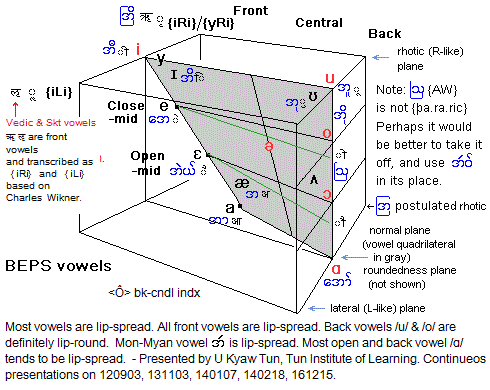 The nuclear vowel in
{kau:} को, can be killed by
killed consonants, e.g.
The nuclear vowel in
{kau:} को, can be killed by
killed consonants, e.g.
 {kauk}. We have an added problem
when the killed consonants are nasals:
/ŋ/, /ɲ/, /ɳ/ - TIL mascot
Doggie's problem, because of paucity of
nasals in English. The problem is accentuated
with /ŋ/ because the only ASCII
representation is the diagraph {ng.}. My
solution is to change the representation of
the nuclear vowel as shown in the inset.
{kauk}. We have an added problem
when the killed consonants are nasals:
/ŋ/, /ɲ/, /ɳ/ - TIL mascot
Doggie's problem, because of paucity of
nasals in English. The problem is accentuated
with /ŋ/ because the only ASCII
representation is the diagraph {ng.}. My
solution is to change the representation of
the nuclear vowel as shown in the inset.
We have already come up with simple nasal endings sometime ago. It has to be modified as we meet new words. The following is an example:
{aún.} (1 blnk);
{aún} (2 blnk);
{aún:} (2 blnk + emphasis)
Go back Doggies-problem-note-b
-- UKT 140410, 170404, 180110
My interest in this kingdom and its people
is in the spelling of the word which in
Bur-Myan would be written as a
 {gna.þût}.
For Skt-Myan I have to use a
{kín:si:} . Reading through the following
I have come upon another interesting word
Kasyapa which is a name of:
{gna.þût}.
For Skt-Myan I have to use a
{kín:si:} . Reading through the following
I have come upon another interesting word
Kasyapa which is a name of:

¤ a Theravada Buddha, an eon before Gautama Buddha
- http://en.wikipedia.org/wiki/Kassapa_Buddha 140410
Kasapa Buddha{kaþ~þa.pa. boad~Da.} (Ajanta Caves)
- http://ignca.nic.in/jatak102.htm 170404
¤ a Hindu-rishi Kaśyapa{kaþ~þa.pa. ra.þé.} - http://en.wikipedia.org/wiki/Kashyapa 140410
¤ a Buddhist Arahat Mahākāśyapa{shín ma.ha kaþ~þa.pa.}.
- http://en.wikipedia.org/wiki/Mah%C4%81k%C4%81%C5%9Byapa 140410
¤ a hidden cave west of Monywa across the Chindwin river which is revered by many in Myanmarpré as the grave site of
The names are very confusing especially when not correctly spelled and correctly affixed.
From Wikipedia: http://en.wikipedia.org/wiki/Konkana_Kingdom 140410
Konkana was a southern kingdom populated by Brahmins during and after the period of Puranas. This kingdom is identified to be the Konkan region (coastal region) of Maharashtra. Other such Brahmin populated kingdoms includes Dravida, Andhra and Karnata. They have migrated in the later periods to the south as far as Kerala.
The name Konkana probably have originated from the older name Kanwa-gana (meaning the clan of Kanwa) a clan of Bhrahmins. Kanwas were a sub-clan of the Kasyapa-clan of Brahmins. They arrived at the western shores of Indian peninsula, which were the stronghold of the Bhargava clan of Bhrahmins. This history is hidden in the myth of Vamana who arrived at the sacrifice of king Mahabali, conducted in the land of the Bhrigus (Bhrigu-kaksha (Brauch in Gujarat), on the banks of river Narmada. This sacrifice was officiated by king Mahabali's priest named Sukra, who belonged to the Bhagava clan. In spite of the protest of priest Sukra, king Mahabali gave some land for Vamana. Starting with Vamana, many Kasyapas, in large numbers, settled in the kingdom of Mahabali. Their settlements outumbered those of Bhargavas and of the ruling clan of Asuras. Thus Mahabali lost his kingdom and was forgotten into the underworld of memories. (See also Keralas).
Konkana is not mentioned in Mahabharata. Thus it is obviously a later-period province. However, the epic mentions Kanwa, the founder (or a member ?) of the Kanwa clan. Sage Kanwa of the race of Kasyapa is mentioned at (1,70). He was the foster-father of Sakuntala the wife of the famous Puru king Dushyanta (Dushmanta). Kanwa raised Sakuntala as his own daughter in his asylum.
Go back Konkana-note-b
- UKT 151130, 170405, 180112: I remember reading somewhere that Suja - the wife of Buddhist king of
Heaven Sakka is identified with Sakti of the beautiful eyes.
BPal:
{wa-ma.}
- UHS-PMD0864
-
UKT from UHS: ¹. mfn. beautiful.
"Maa"
{mèý
tau} is not necessarily a dévi-goddess. I view them as local
Mother-goddesses of the Bronze-Age indigenous Tib-Bur speaking peoples of the
Indian subcontinent extending into Myanmarpré, an example being Nan'ka'reign
MèýDaw of southern Myanmarpré.
It is probable that Mother-goddess
{mèý
tau} worship in Myanmarpré had nothing to do with its later-day association with
Tantric Buddhism practiced by some Arigyi monks of northern Myanmarpré which
King Anawrahta ruthlessly suppressed.
See ¤ Chapter 09. Ari Monks and the
Introduction of Buddhism in
Folk Elements in Buddhism
--
flk-ele-indx.htm >
ch09-ari.htm (link chk 170404).
See also:
https://en.wikipedia.org/wiki/Pashupati_seal 170405
"Writing in 2002,
Gregory L. Possehl concluded that while it would be appropriate to recognize
the figure as a deity, its association with the water buffalo, and its posture
as one of ritual discipline, regarding it as a proto-Shiva would "go too far."
[18]
From Wikipedia: - https://en.wikipedia.org/wiki/Vamachara 151129
Vāmācāra
वामाचार
«vāmācāra»
{wa-ma sa-ra.} is a Sanskrit term meaning "left-handed attainment" and is
synonymous with "Left-Hand Path" or "Left-path" Vāmamārga
 {wa-ma. mar~ga.}
[1]
[2]
[3].
It is used to describe a particular mode of worship or
sadhana (spiritual practice) that is not only "heterodox"
«nāstika» to standard
Vedic
injunction, but extreme in comparison to the
status quo.
{wa-ma. mar~ga.}
[1]
[2]
[3].
It is used to describe a particular mode of worship or
sadhana (spiritual practice) that is not only "heterodox"
«nāstika» to standard
Vedic
injunction, but extreme in comparison to the
status quo.
These practices are often generally considered to be Tantric in orientation. The converse term is dakṣiṇācāra "Right-Hand Path", which is used to refer not only to "orthodox" (Āstika) sects but to modes of spirituality that engage in spiritual practices that not only accord with Vedic injunction but are generally agreeable to the status quo.
Left-handed and right-handed modes of practice may be evident in both orthodox and heterodox schools of Indian religions such as Hinduism, Jainism, Sikhism and Buddhism [does not include Theravada] and is a matter of taste, culture, proclivity, initiation, sadhana and dharmic "lineage" (parampara).
... ... ...
Vamachara
{wa-ma sa-ra.} 'Left Hand Practice', is
particularly associated with the
pancha-makara or the "Five
Ms"
 {ma. gna:loän}, also known as the
pancha-tattva. In literal terms they
are:
{ma. gna:loän}, also known as the
pancha-tattva. In literal terms they
are:
1. Madya (wine),
2. Mamsa (meat),
3. Matsya (fish),
4. Mudra (cereal),
5. Maithuna (sexual intercourse) [7].
Mudra usually means ritual gestures, but as part of the Five Ms it is parched cereal [8].
Read on Shaktism by B. K. Barua (from p001-237) in TIL HD-PDF and SD-PDF
libraries:
- BKBarua-Ch01SaktismIntro<Ô> (p001-017) /
Bkp<Ô> (link chk 180112)
- BKBarua-Ch02SaktismOrigin<Ô> (p018-087) /
Bkp<Ô>
- BKBarua-Ch03SaktismTemples<Ô> (p088-118) /
Bkp<Ô>
-
BKBarua-Ch04SaktismKirata<Ô> (p119-171) /
Bkp<Ô>
-
BKBarua-Ch05SaktismAndSociety<Ô> (p172-210) /
Bkp<Ô>
- BKBarua-Ch06SaktismConclusion<Ô> (p211-217) /
Bkp<Ô>
- BKBarua-SaktismGloss<Ô> (p233-237+illustrations) /
Bkp<Ô>
The most interesting to read is Ch04 relating to Kirata. See also about the
author:
-
https://en.wikipedia.org/wiki/Birinchi_Kumar_Barua 190208
"Birinchi Kumar Barua (10 November 1908 in
Puranigudam,
Nagaon, Assam,
India – 30 March 1964) was a folklorist, scholar, novelist, playwright,
historian, linguist, educationist, administrator and an eminent 20th century
littérateur of Assam, with both scholarly and creative pursuits. Barua was the
pioneer in the study of
folklore
in North East India, and was one of the many founders of
Gauhati University. Barua's contributions to
Assamese literature are significant, both as a novelist and as an early
literary critic.
[1] "
See TIL HD-PDF and SD-PDF libraries on
Mother goddess cult - represented
by a beautiful set of woman's eyes:
-
BKKakati-02SaktiCult<Ô> (p059-p089) / Bkp<Ô> (link chk 180112)
-
BKKakati-07Religion<Ô>
(p241-298) / Bkp<Ô> (link chk 180112)
See also B K Kakati (1894-1952):
https://en.wikipedia.org/wiki/Banikanta_Kakati
180111
The Left-Hand in Bur-Myan esoteric Buddhism is known as the Lower-Path
 {auk-lûm:
piñ~ña} ("piñ~ña" here means "practice" or "scinece"),
and the Right-Hand is the Higher-Path
{auk-lûm:
piñ~ña} ("piñ~ña" here means "practice" or "scinece"),
and the Right-Hand is the Higher-Path
 {a.htak-lûm:}.
UKT 170405, 180111: I venture to identify the Left-Hand Bur-Myan esoteric Buddhism with the Mother-goddess religion - looked down upon by Male-god worshippers, who prided their religion as the Right-Hand Aryan religion. Both being based on childish fairy tales not based on reason and logic, and not supported by scientific facts are set aside - neither accepting or rejecting - by Gautama Buddha.
Bur-Myan, including those of faiths other than Theravada Buddhist, believe in esoteric practices in one form or the other. Contrary to what they may say openly, they have faith and fear in such practices and practitioners. According to the common belief, the Right-Hand acts slowly but eventually it wins over the Left-Hand practices.
Personally, on my own and through my maternal family, I
came to know practitioners of both paths. I remember one Saya Ni of Thoangwa
village a few miles from Kungyangon where I was born. Saya Ni was a well
respected Left-Hand
 {auk-lûm:}-master.
He made sure that those who had come to him, must not be bent to harm his or her
adversary. He would just try to set the situation right and would do no more. I
remember, one of my aunts coming to my mother in the second half of 1930s with
her very young son. Her complaint: her husband had been forced into a second
marriage by his father to punish her - my aunt. My mother took my aunt to Saya
Ni, and after taking certain "esoteric" actions, the second wife's mother came
to realize that her daughter had become the instrument of punishment. She took
her daughter back and the second marriage was annulled. My aunt then became very
fast friends with the ex-second wife and her mother to their dying days.
{auk-lûm:}-master.
He made sure that those who had come to him, must not be bent to harm his or her
adversary. He would just try to set the situation right and would do no more. I
remember, one of my aunts coming to my mother in the second half of 1930s with
her very young son. Her complaint: her husband had been forced into a second
marriage by his father to punish her - my aunt. My mother took my aunt to Saya
Ni, and after taking certain "esoteric" actions, the second wife's mother came
to realize that her daughter had become the instrument of punishment. She took
her daughter back and the second marriage was annulled. My aunt then became very
fast friends with the ex-second wife and her mother to their dying days.
From Wikipedia: http://en.wikipedia.org/wiki/Vamachara 120128
Vāmācāra is a Sanskrit term meaning "left-handed attainment" and is synonymous with "Left-Hand Path". It is used to describe a particular mode of worship or sadhana (spiritual practice) that is not only "heterodox" (Sanskrit: nāstika) to standard Vedic injunction, but extreme in comparison to the status quo.
These practices are often generally considered to be Tantric in orientation. The converse term is dakṣiṇācāra "Right-Hand Path", which is used to refer not only to "orthodox" (Āstika) sects but to modes of spirituality that engage in spiritual practices that not only accord with Vedic injunction but are generally agreeable to the status quo.
Left-handed and right-handed modes of practice may be evident in both orthodox and heterodox schools of Indian religions such as Hinduism, Jainism, Sikhism, and Buddhism and is a matter of taste, culture, proclivity, initiation, sadhana and dharmic "lineage" (parampara).
UKT: More in the Wikipedia article
Go back wa-ma-sa-ra.note-b
 UKT 140411, 170405:
"Saffron is a key seasoning, fragrance, dye, and medicine in use for over three millennia. [1] One of the world's most expensive spices by weight, [2] saffron consists of stigmas [of flowers - commonly called " threads"] plucked from the vegetatively propagated and sterile Crocus sativus, known popularly as the saffron crocus." - https://en.wikipedia.org/wiki/Trade_and_use_of_saffron 170405
The colour of saffron is yellow. In powder form it is adulterated with inexpensive turmeric, Curcuma longa powder. My last research in chemistry, as the associate professor and head of the department of chemistry, at Taunggyi Degree College (now University) is on the oil of Curcuma longa steam distilled from fresh rhizomes.
Go back Saffron-crocus-note-b
End of TIL file