


p193.htm
• A Practical Sanskrikt Dictionary,
by A. A. Macdonell, 1893,
http://www.sanskrit-lexicon.uni-koeln.de/scans/MDScan/index.php?sfx=jpg;
1929.
-
Nataraj ed., 1st in 2006, 2012.
-
https://dsal.uchicago.edu/dictionaries/macdonell/ 190516
• The Buddhist Hybrid Sanskrit Grammar and
Dictionary, BHS, vol.2, by F. Edgerton,
pp. 627.
-
FEdgerton-BHSD<Ô> /
Bkp<Ô> (link chk 180627)
• The Student's Pali English dictionary ,
by U Pe Maung Tin, 1920.
- (ref: UPMT-PEDxxx).
Downloaded copies in TIL
HD-PDF and SD-PDF libraries:
-
UPMT-PaliDict1920<Ô> /
bkp<Ô> (link chk 190113)
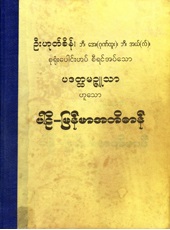
• Pali-Myanmar Dictionary
(in Pal-Myan), by U Hoke Sein,
- (ref: UHS-PMD). The dictionary in printed form is in TIL Research Library.
• Latin-English Vocabulary II, by Hans H Ørberg, 1998
-
HHOrberg-LinguaLatina<Ô> /
Bkp<Ô> (link
chk 190624)
Edited by U Kyaw Tun (UKT) (M.S., I.P.S.T., USA),
Daw Khin Wutyi, Daw Thuzar Myint, Daw Zinthiri Han
and staff of Tun Institute of Learning (TIL).
Not for sale. No copyright. Free for everyone.
Prepared for students and staff of TIL
Research Station, Yangon, MYANMAR
-
http://www.tuninst.net ,
www.romabama.blogspot.com
MC-indx.htm |
Top
MCpp-indx.htm
p193c1-b00
• बलक्षोभ [bala-kshobha]
- m. disturbance among the troops, mutiny; -gupta, m. N.; -kakra, n.
[circle of power or of troops], sovereignty; army; -ga, m., â, f. heap of corn;
-da, m. ox; -darpa, m. pride of strength; -daN, a. strength-giving; -dî-bhû,
become an ox; -deva, m. N. of Krishna's elder brother (who has white hair,
having been produced from a single white hair); N.; -dhara, m. N.; -nâsana, -nishûdana,
m. ep. of Indra; -pati, m. lord of might; commander of an army, general; -pura,
n. Bala's citadel; -prada, a. strength-giving; -bandhu, m. N.
p193c1-b01
• [bala-bha]
- m. poisonous insect
p193c1-b02
• बलभद्र [bala-bhadra]
- m. (excelling in strength), N. of a divine being, later identified with
Baladeva; N.; -bhid, m. destroyer of Bala, ep. of Indra; -bhrit, a. strong,
powerful; -mukhya, m. leader of an army; -yukta, pp. endowed with strength,
powerful; -yuta, pp. id.; -râma, m. Râma the Strong, N. of Krishna's elder
brother.
p193c1-b03
• बलवत्् [bála-vat]
- a. 1. strong, powerful, mighty; vehement (desire etc.); dense (darkness);
stout, weighty; prevalent, predominant; of more weight or importance than (ab.);
ad. strongly, powerfully; heavily, stoutly; greatly, lustily; 2. accompanied by
an army: -tara, cpv. stronger; -vargita, pp. destitute of strength, weak; -varman,
m. N.; -vîrya, n. sg. strength and valour; -vritra-ghna, -vritra-nishûdana, -vritrahan,
m. ep. of Indra; -vyasana, n. disorder in the army; -samûha, m. assemblage of
forces, army; -sena, m. N. of a warrior; -senâ, f. army; -stha, a. strong,
powerful, mighty (of persons); m. (standing in the army), warrior, soldier; -han,
a. defeating armies; -hantri, m. Slayer of Bala, ep. of Indra; -hara, m.
(strength-depriving), N.; -hîna, pp. destitute of strength, weak: -tâ, f.
weakness.
p193c1-b04
• बलाक [balâka ]
- m., galy. â f. kind of crane (the flesh of which is eaten); N.
p193c1-b05
• बलाकिन्् [balâk-in]
- in, a. attended by or abounding in cranes; N. of a son of Dhritarâshtra.
p193c1-b06
• बलाग्र [bala̮agra]
- n. excessive strength; head of an army.
p193c1-b07
• बलात्कार [balât-kâra]
- m. employment of force, violence: °-- or in. by force, forcibly; strongly,
vehemently; -m, abs. forcibly; -krita, pp. forced, overcome, by (in. or --°).
p193c1-b08
• बलाधिक [bala̮adhika]
- a. superior in strength (e.g. in running); -̮adhikarana, n. pl. affairs of the
army; -̮adhyaksha, m. inspector of the forces, minister of war; -̮anuga, m.
younger brother of Baladeva, ep. of Krishna; -̮anvita, pp. endowed with power,
mighty; suggestive of power; -̮abala, n. strength or weakness, comparative
strength, importance, or significance; relative highness (of price); a. now
strong, now weak; -̮abhra, n. army in the shape of a cloud.
p193c1-b09
• बलाय [balâ-ya]
- Â. exhibit strength.
p193c1-b10
• बलारि [bala̮ari]
- m. foe of Bala, ep. of Indra; -̮avastha, a. strong, powerful.
p193c1-b11
• बलास [balaNsa]
- m. swelling in the throat, which prevents swallowing.
p193c1-b12
• [bala saura]
- m. N. of a washerman.
p193c1-b13
• बलाहक balâha-ká
- m. rain or thunder-cloud; cloud; one of the seven clouds appearing at the
destruction of the world; kind of serpent; N. of a mountain.
p193c2-b00
• बलि [balí]
- m. tax, impost, tribute; offering, gift, oblation; offering of food (generally
rice, grain, or ghee) thrown up into the air and made to living creatures, esp.
birds (also called bhûta-yagña): very often --° with the object, the time, the
place, or material of the offering; handle (of a fly-whisk); N. of a Daitya, a
son of Virokana, who obtained the sovereignty of the three worlds, but was
deprived of it by Vishnu in the form of a dwarf after promising the latter as
much land as he could measure in three steps; he was cast down by Vishnu to
Pâtâla, which he was allowed to rule; N.; incorrect for vali, fold: -kara, m.
pl. taxes and duties; -karman, n. performance of the Bali or food offering; -krit,
a. paying taxes; -dâna, n. presentation of an offering or oblation.
p193c2-b01
• बलिन्् [bal-ín]
- a. strong, powerful; m. soldier; N.
p193c2-b02
• बलिनियमनोद्यत bali-niyamana̮udyata bent on vanquishing Bali; -putra, m. son of Bali, pat. of the Asura Bâna; -push- ta, (pp.) m. (fed on the rice-offering), crow; -bhug, a. eating the food-offering; m. crow; -bhrit, a. paying tribute; -bhogana, m. crow; -mát, a. receiving tribute; attended with food oblations.
p193c2-b03
• बलिवर्द [balivárda]
- m. bull.
p193c2-b04
• बलिव्याकुल bali-vyâkula engaged in offering oblations; -shad-bhâga, m. sixth part as tribute: -hârin, a. taking the sixth part as tribute.
p193c2-b05
• बलिष्ठ [bal-ishtha]
- spv. strongest, mightiest; most powerful; stronger than (ab.): -tama, dbl. spv.
id.
p193c2-b06
• बलिहरण [bali-harana]
- a. (î) suitable for presenting an offering; n. presentation of an offering; -hârá,
a. paying taxes; m. presentation of offerings; -hrít, a. paying tribute.
p193c2-b07
• [bali-kri]
- turn into or intend as an offering.
p193c2-b08
• बालीयस्् [bál-îyas]
- cpv. stronger, more powerful or important; very strong or powerful; turning
the scale: -tara, dbl. cpv. excessively powerful, -tva, n. superior or excessive
power; predominance, greater importance.
p193c2-b09
• बलीवर्द [balîvárda]
- m. bull.
p193c2-b10
• बलोत्साह [bala̮utsâha]
- m. ardour of the forces; -̮unmatta, pp. frenzied with power.
p193c2-b11
• [balba-ga]
- m. sort of course grass (Eleusine indica).
p193c2-b12
• बल्बलाकार [balbalâ-kâra]
- m. stammer; -kri, pronounce with a stammer (Br.).
p193c2-b13
• बल्य [bal-ya]
- a. invigorating.
p193c2-b14
• बल्लव [balla-va]
- m. cowherd; î, f. cowherdess; (a)-yuvati, f. young cowherdess.
p193c2-b15
• [ballala]
- m.N.: sena, m. N.
p193c2-b16
• [balhi-ka]
- m.N.: pl. N. of a people (probably in the west of the Aryan Territory).
p193c2-b17
• बष्कय
[bashkáya]
- f.
cow having a young calf.
p193c2-b18
• बस्त
[bastá]
- m.
he-goat: a̮aginá, n. goatskin (V.).
p193c2-b19
• बस्ति
[bastí]
- m.
bladder: -sîrsha, n. sg. or m. du. neck of the bladder.
p193c2-b20
• [basri]
- ad, (RV1.) quickly
p193c3-b00
• [BAH]
- v.BAMH
p193c3-b01
• बहल [bah-ala]
- a.
thick, dense; bushy, shaggy (tail); wide, extensive; deep (colour,
tone); manifold, copious, abundant; --°, filled with,
chiefly consisting in; °--, ad. greatly: -tâ, f. thickness.
p193c3-b02
• बहिरङ्ग
[bahir-aṅga]
- a. external; unessential: -tâ, f., -tva, n. abst.
n.; -argala, --°, a. external bolt; -artha, m. external
object; -gata, pp. come forth: -tva, n. appearance; -giri,
m. (country beyond the hills), N. of a country: pl. N. of a
people; -geham, ad. outside the house; -grâmam, ad. outside
the village; -grâma-pratisraya, a. dwelling outside the
village; -dris, a. looking at the outside, superficial
(person); -dvâra, n. outer door; space outside the door; -dvârin,
a. being outside the door; -dhaN, ad. prp. with ab. outside,
away from (V.); -nirgamana, n. going out of (ab.); -nihsarana,
n. taking out, removal; -bhava, a. external; -bhâga, m.
exterior; -mandala-stha, a. being outside the circle; -mukha,
a. issuing from the mouth; averting one's face, averse from
(--°); having one's mind outward, i.e. directed towards the
external world; -yâna, n. going out; (ír)-loma, a. having
the hair turned outwards; -loman, a. id.; -vâsas, n. upper
garment; -vikâram, ad. apart from individual existence (Sâmkhya
ph.); -vritti, f. occupation with external matters; -vedi,
1. f. space outside the Vedi; 2. ad. (í) outside the Vedi; -vedi-ka,
a. being outside the Vedi.
p193c3-b03
• बहिश्््चर
[bahis-kara]
- a.
moving or appearing outside, external: w. prâna, m. sg. &
pl. or hridaya, n. one's external breath or heart, i.e. dear
to one as one's own life or heart; m. external spy.
p193c3-b04
• बहिःशाला
[bahih-sâlâ]
- f.
outer hall; -sîta, a. cold outside, cool to the touch.
p193c3-b05
• बहिष्करण
[bahish-karana]
- n. 1. external organ; 2. exclusion from
(ab.); -kârya, fp. to be banished; -- excluded from (ab.);
-krita, pp. ejected, expelled; -kriti, f. exclusion; -kriya,
a. excluded from sacred rites; -kriyâ, f. external action
(such as bathing etc.).
p193c3-b06
• बहिष्टात््
[bahísh-tât]
- ad. outside (V.).
p193c3-b07
• बहिष्पट
[bahish-pata]
- m. upper garment; -paridhí, ad. outside the
enclosure; -pavamâná, m. n. a Stoma or Stotra generally
consisting of three triplets chanted outside the Vedi during
the Prâtahsavana: î, f. pl. its single verses; -pragña a.
having external cognition; -prâna, 1. m. external breath, i.
e. what is dear to one as one's own life; gold; 2. (bahísh)-prâna,
a. whose breath or life is outside (V.).
p193c3-b08
• बहिस््
[bah-ís]
- ad.
outside (the house, town, country, etc.); out of doors (go,
etc.); prp. from without, outside or out of (ab. or --°); -ish
kri, expel, banish, exclude from (ab. or lc.); put aside,
abandon, renounce: pp. -krita, taken out of, expelled from (ab.);
abandoned by (--°); shut off by=dwelling beyond (in.);
excluded from (ab. or --°); free from, destitute of,
refraining from (in. or --°); become apparent, manifested,
embodied; r gata, pp. id.; r bhû, come forth, from (ab.).
p193c3-b09
• बहिस्तपस््
[bahis-tapas]
- n. external asceticism.
p193c3-b10
• बहिःसंस्थ
[bahih-samstha]
- a.
lying or situated outside (the town).
p193c3-b11
• बहु [bah-ú]
- a. (v-î)
abundant, much; numerous; repeated, frequent; abounding or
rich in (in.): tvayâ hi me bahu kritam -- yad, you have done
me a great service, in --; tasmin bahu̮etad api, even this
was much for him (i.e. more than could be expected); kim
bahunâ, what need of much talk? in short; n. ú, ad. much;
often, repeatedly; greatly, exceedingly, very, highly; °--
sts.=for the most part, almost, tolerably: bahu man, think
much of, esteem highly, value; hold dearer than (in.); n.
plural.
End of TIL file