p229.htm
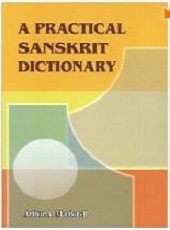
• A Practical Sanskrikt Dictionary,
by A. A. Macdonell, 1893,
http://www.sanskrit-lexicon.uni-koeln.de/scans/MDScan/index.php?sfx=jpg;
1929.
-
Nataraj ed., 1st in 2006, 2012.
-
https://dsal.uchicago.edu/dictionaries/macdonell/ 190516
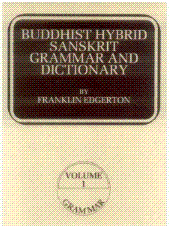
• The Buddhist Hybrid Sanskrit Grammar and
Dictionary, BHS, vol.2, by F. Edgerton,
pp. 627.
-
FEdgerton-BHSD<Ô> /
Bkp<Ô> (link chk 180627)
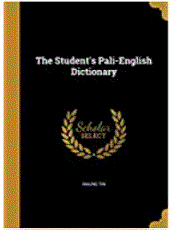
• The Student's Pali English dictionary ,
by U Pe Maung Tin, 1920.
- (ref: UPMT-PEDxxx).
Downloaded copies in TIL
HD-PDF and SD-PDF libraries:
-
UPMT-PaliDict1920<Ô> /
bkp<Ô> (link chk 190113)
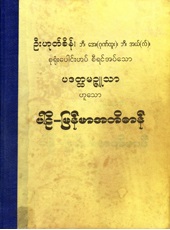
• Pali-Myanmar Dictionary
(in Pal-Myan), by U Hoke Sein,
- (ref: UHS-PMD). The dictionary in printed form is in TIL Research Library.
• Latin-English Vocabulary II, by Hans H Ørberg, 1998
-
HHOrberg-LinguaLatina<Ô> /
Bkp<Ô> (link
chk 190624)
Edited by U Kyaw Tun (UKT) (M.S., I.P.S.T., USA),
Daw Khin Wutyi, Daw Thuzar Myint, Daw Zinthiri Han
and staff of Tun Institute of Learning (TIL).
Not for sale. No copyright. Free for everyone.
Prepared for students and staff of TIL
Research Station, Yangon, MYANMAR
-
http://www.tuninst.net ,
www.romabama.blogspot.com
MC-indx.htm |
Top
MCpp-indx.htm
p229c1-b00
• मिश्रण
[misr-ana]
- n.
mixing, mixture.
p229c1-b01
• मिश्रधान्य
[misra-dhânya]
- n.
mixed grain; -bhâva, m. N.
p229c1-b02
• मिश्रय
[misra-ya]
- den.
P. mix, mingle, combine, with (in.); add: pp. misrita,
mixed, blended, with (--°); promiscuous (taste). vi, mix up:
pp. intermingled or combined with (in. or --°).
p229c1-b03
• [misri-kri] mix with (in.); -bhu, be mixedc or intertwined with (in.); mix with sexually (in.); meet (glances); -bhava, m. mingling (int.): -karman, n. action or process of becoming mixed
p229c1-b04
• [mis-la]
- a. = misra (-° with a, no, sam)
p229c1-b05
• [MISH]
- VI. P. misha, open the eyes, wink, blink: only pr. pt. mishat, gnly. in. g.
abs. with a noun = before the eyes or in presence of. ud, open the eyes; open
(eyes, buds); shine forth, glitter; bloom, appear, arise: pp. unmishita, opened,
expanded; smiling (face). praud, arise. pratiud, shine forth, arise. sam-ud,
arise out of (ab.); shine forth. ni, close the eye; close (int., of the eye).
p229c1-b06
• मिष
[mish-a]
- n.
fraud, deception, delusive appearance, disguise; pretext: gnly. in., ab., or -tas (--° with the cause of the deception
or what is pretended).
p229c1-b07
• मिष्ट
[mish-ta]
[pp.=mrishta]
- a. savoury, dainty; pleasant
(smell); sweet (speech); n. savoury dish, dainty: -kartri,
m. preparer of dainty dishes, skilful cook; -tâ, f.
sweetness; -pâkaka, a. cooking savoury dishes; -vâkya, a.
speaking sweetly; -̮anna, n. sweet food.
p229c1-b08
• [MIH] I. P.
- ( A. metr) maha, make water, upon (ac., lc.), towards (ac.); emit semen: pp.
midha. abhi, make water upon. ava, make water, upon or towards (ac.). pari, pp.
made water around.
p229c1-b09
• मिह््
[míh]
- f. mist,
vapour (sts. pl.; RV.).
p229c1-b10
• मिहिका
[mih-ikâ]
- f.
snow.
p229c1-b11
• मिहिर
[mihira]
- m.
sun: -kula, m. N. of a prince; -datta, m. N.; -pura, m. N.
of a town; -̮âpad, f. eclipse of the sun; -̮îsvara, m. N. of
a temple.
p229c1-b12
• [mihilaropya]
- N. of a town ( v.l. mahila-) .
p229c1-b13
• [MI] IX. P. minati (V., common) V.P. minoti (R.V1., C1.), IV. A. miyate (RV., rare), mimi (RV.2), diminish, destroy; lose (the way), stray; transgress, violate; change; A., ps. be diminished, disappear, be lost. a, (RV.) hinder, frustrate; waste away, diminish; A. withdraw, dissappear; exchange (colour). ud (-mimi), disappear (RV.). pra, frustrate, destroy (-minoti, C.1) change; miss (way, time), forget,niglect, transgrass (RV.); cause to disappear, surpass; A. be destroyed, perish, die; ps. miyate (C.) id: pp. -mita, deceased, dead; cs. (C.) -mapaya, P. destroy, kill; cause to be killed.
p229c1-b14
• [mi]
- occurs in some froms of
√mâ,bleat.
p229c1-b15
• मीढ [mîdha]
- pp.
√mih: â, f. N.; n. mîdhá, mîlhá, reward; contest; mîdha,
excrement.
p229c1-b16
• [mîdhush-mat]
- a. = midhvas.
p229c1-b17
• मीढ्वस््
[mîdh-vás]
- pf. pt. (weak base
mîlhúsh) bountiful.
p229c1-b18
• मीन [mîna]
- m. fish;
Pisces (sign of the zodiac): -ketu, m. (fish-bannered), god
of love; -dhvaga, m. id.; -râga, m. king of the fish; -lâñkhana,
n. god of love.
p229c2-b00
• मीमांसक
[mî-mâm-sa-ka]
- m.
investigator, examiner (--°); follower of the Mîmâmsâ
philosophy.
p229c2-b01
• मीमांसा
[mî-mâm-saN]
- f. [des.fr.
√man] deep reflexion, inquiry, examination, discussion;
opinion; discussion of a sacred text; designation of a
philosophical system, which is divided into two distinct
branches: the former, called Pûrva- or Karma-mîmâmsâ, and
founded by Gaimini, is chiefly concerned with the correct
interpretation of Vedic ritual; the latter, called Uttara-,
Brahma-, or Sârîraka-mîmâmsâ, but best known under the name
of Vedânta, and founded by Bâdarâyana, is a pantheistic
system discussing chiefly the nature of Brahman or the
universal soul.
p229c2-b02
• मीमांस्य
[mîmâms-ya]
- fp.
to be investigated or called in question.
p229c2-b03
• [MIL]
- I. P. mila (Br., C.) , close the eyes; close (int., of the eyes); be
collected: pp. milita, having closed the eyes, droway; disappeared, vanished;
fallen in with (in.); taken together; cs. milaya, clsoe (eyes, blossoms): pp.
milita, closed (eyes). anu, cs. close (the eyes). abhi, A. avert the eye.
a, cs. close (the eyes). abhi, A. avert the eye. a, cs. close (the eyes); take
complete possession of (the heart). via, cs. close (the eyles), ud, open the
eyes; open (the eyes) ; become manifest, show itself, appear; cs. open (eyes),
cause to expand (flowers); call forth, display, show: pp. unmilta, opened (eye),
expanded (flower); displayed. praud, open the eyes; bloom, expand (flowers);
become manifest, show itself; cs. open (the eyes); display, manifest. sam-ud,
become manifest, show itself; cs. o-pen (the eyes); display, manifest. ni, close
the eyes; close (int, of flowers); disappear: pp. having closed the eyes:
closed; vanished: cs. close (eyes, blossoms); close the eye; cause any one (ac.)
to close the eyes. vi-ni, pp. closed (eye). sam-ni, close the eye. pra, close
the elyes: pp. having the eyes closed. sam, close the eyes (V.); close (int. of
flowers); cs. close (the eyes); shut the eyes, cause to close the eyes, darken,
destroy.
p229c2-b04
• मीलन
[mîl-ana]
- n.
closing of the eyes, winking; closing (int., of eyes or
flowers); implicit simile; -ita, pp. closed, etc.; n.
implicit simile (e. g. young women wearing linen garments
and jasmine wreaths etc. are invisible in the moonlight=they
are shining white like the moonlight).
p229c2-b05
• [MIV] I.
- P. miva, (V.) move: only pp. muta (-°). a, push open (door); open: only pp. a-mivita,
und pr. pt. a-miv.at. ni, press down (only pr. pt.). pra, push forward. prati,
push back; close.
p229c2-b06
• मुकुट
[mukuta]
- m.n.
diadem, tiara, crest.
p229c2-b07
• मुकुन्द
[mukunda]
- m. ep. of
Vishnu; kind of treasure.
p229c2-b08
• मुकुर
[mukura]
- m.
mirror; bud.
p229c2-b09
• मुकुल
[mukula]
- n. bud
(also fig. of the teeth); m. N.; a. closed (eye).
p229c2-b10
•
p229c2-b11
• मुकुलाय mukulâ-ya Â. shut like a bud, resemble a closed bud.
p229c2-b12
• मुकुलिन््
[mukul-in]
- a. having buds, blossoming.
p229c2-b13
• [mukuli-kri]
- close like a bud, draw inwards (fingers); -bhava, n. state of being closed (of
blossoms).
p229c3-b01
• मुक्त
[muk-ta]
- pp.
(√muk) set free, released, from (in., ab.); loosened,
detached, fallen or dropped down (fruit); relaxed, languid
(limbs); loose (reins); quitted, left free (road), left bare
(bank); just left by the sun (cardinal point); abandoned,
given up; laid or cast aside (clothes); deposited (flowers);
gone, vanished (esp. --°, a.); shed (tears); uttered
(sound); sent forth, emitted; thrown down, cast, discharged,
hurled; applied (kick); having cast oneself down; delivered
from sin or the bonds of existence, emancipated; destitute
of (in. or --°); m. N. of a cook.
p229c3-b02
• मुक्तक
[mukta-ka]
- a.
detached, independent; n. independent sloka (the meaning of
which is complete in itself); simple prose (without compound
words); -kantha, a. or -m, ad. with krand or rud, shout or
cry (with relaxed throat=) at the top of one's voice; -kara,
a. open-handed, liberal; -kesa, a. (â, î) having loose or
dishevelled hair; -tâ, f., -tva, n. deliverance from the
bonds of existence, final emancipation; -nidra, a. awakened;
-bandhana, a. released from bonds; -buddhi, a. having one's
soul emancipated; -vasana, m. (having cast aside raiment),
Jain monk (=dig-ambara); -sâpa, a. having a curse laid
aside, released from a curse; -sikha, a. having the top-knot
loosened, having the hair hanging down; -saisava, a. (having
left childhood behind), grown up; -samsaya, a. free from
doubt, undoubted; -sûryâ, a. f. with dis, quarter just
quitted by the sun; -svâmin, m. N. of a temple; -hasta, a.
openhanded, bountiful, liberal.
p229c3-b03
• मुक्ता
[muk-tâ]
- f. [ pp. √muk,
secreted by the oyster], pearl: -kana, m. N.; -kalâpa, m.
pearl necklace: î-kri, turn into a pearl necklace; -̮âkâra,
a. looking like a pearl: -tâ, f. pearl-like appearance; -kesava,
m. N. of a statue of Krishna; -guna, m. string or necklace
of pearls; excellence of a pearl, pearl of pure water; -gâla,
n. pearl necklace: -maya, a. (î) consisting of pearls; -̮âtman,
a. whose soul is delivered, emancipated; -dâman, n. string
of pearls; a̮âpad, a. rescued from misfortune; -̮âpîda, m.
N. of a prince and of a poet; -pura, m. N. of a mythical
town in the Himâlaya.
p229c3-b04
• मुक्ताफल
[muktâ-phala]
- n. pearl: -ketu, m. N.; -gâla, n. pearl necklace; -tâ,
f. state of a pearl; -dhvaga, m. N. of a prince; -maya, a.
consisting of pearls; -latâ, f. string of pearls.
p229c3-b05
• मुक्तामणि
[muktâ-mani]
- m. pearl: -sara, m. string of pearls; -maya,
a. (î) consisting of pearls.
p229c3-b06
• मुक्तामुक्त
[mukta̮amukta]
- pp. cast and not cast (said of a missile which can
be used as a hand-weapon); -̮ambara, m. Jain monk
(=dig-ambara).
p229c3-b07
• मुक्तारत्न
[muktâ-ratna]
- n. pearl; -rasmimaya, a. radiant with pearls;
-latâ, f. N.; -̮âvali (or î), f. string of pearls; N.;
-sukti, f. pearl oyster.
p229c3-b08
• मुक्तासन
[mukta̮âsana]
- n. sitting posture of the emancipated; a. having
risen or rising from one's seat.
p229c3-b09
• मुक्तासेन
[muktâ-sena]
- m. N. of a prince of the fairies; -sthûla, a. large as pearls (tears); -hâra, m.
string of pearls, pearl necklace: -latâ, f. pearl necklace;
a̮âhâra, a. taking no food.
| Previous Page [124] | Page 125 | Next Page [126] |
|
Back to the Search Page |
Back to the
DDSA Page |
End of TIL file