p153.htm
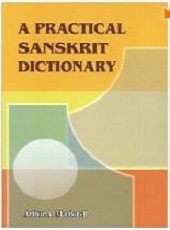
• A Practical Sanskrikt Dictionary,
by A. A. Macdonell, 1893,
http://www.sanskrit-lexicon.uni-koeln.de/scans/MDScan/index.php?sfx=jpg;
1929.
-
Nataraj ed., 1st in 2006, 2012.
-
https://dsal.uchicago.edu/dictionaries/macdonell/ 190516
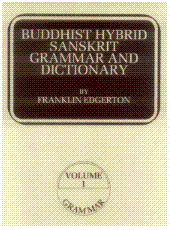
• The Buddhist Hybrid Sanskrit Grammar and
Dictionary, BHS, vol.2, by F. Edgerton,
pp. 627.
-
FEdgerton-BHSD<Ô> /
Bkp<Ô> (link chk 180627)
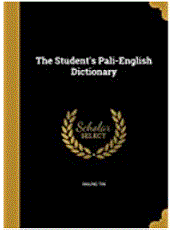
• The Student's Pali English dictionary ,
by U Pe Maung Tin, 1920.
- (ref: UPMT-PEDxxx).
Downloaded copies in TIL
HD-PDF and SD-PDF libraries:
-
UPMT-PaliDict1920<Ô> /
bkp<Ô> (link chk 190113)
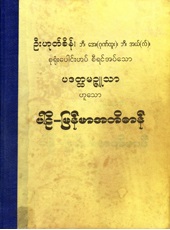
• Pali-Myanmar Dictionary
(in Pal-Myan), by U Hoke Sein,
- (ref: UHS-PMD). The dictionary in printed form is in TIL Research Library.
• Latin-English Vocabulary II, by Hans H Ørberg, 1998
-
HHOrberg-LinguaLatina<Ô> /
Bkp<Ô> (link
chk 190624)
Edited by U Kyaw Tun (UKT) (M.S., I.P.S.T., USA),
Daw Khin Wutyi, Daw Thuzar Myint, Daw Zinthiri Han
and staff of Tun Institute of Learning (TIL).
Not for sale. No copyright. Free for everyone.
Prepared for students and staff of TIL
Research Station, Yangon, MYANMAR
-
http://www.tuninst.net ,
www.romabama.blogspot.com
MC-indx.htm |
Top
MCpp-indx.htm
 {pa.na.}
p153-c1
 {pa.ya.}
: monosyllabic medial
{pa.ya.}
: monosyllabic medial
 {pya.}
& disyllabic conjunct
{pya.}
& disyllabic conjunct
 {p~ya.}
{p~ya.}
{p~ya.}
 {pa.ra.} : why not
 {pra.} ?
p153-c2
 {pa.ra.ka.}
 {pa.ra.sa.}
 {pa.ra.ta.}
 {pa.ra.pa.}
 {pa.ra.ba.}
p153-c3
 {pa.ra.ma.}
 {pa.ra.ya.}
UKT note to TIL editor: It is sometimes necessary to pick out an item from a Macdonell's group to compare it to Pal-Myan. See how I have done it in this file. -- 120627
Orphan:
• परकरगत
parakaragata [ para-kara-gata ]
-- pp. passed
into the hands of others.
UKT notes :
• English prefix Para
• Theory of Monosyllabic Medial Formation
monosyllabic medial
{pya.}
& disyllabic conjunct
{p~ya.}
{p~ya.}
 {pa.na.}
p153c1-b00/ p092
• पनु panu
[ pan-ú (or -&usharp;) ]
-- f. admiration, praise.
पनु pan-ú (or
-uN) admiration, praise.
p153c1-b01/ p092
• पन्था
pantha [ pánth-â ] m., v. páth.
पन्था pánth-â
páth.
p153c1-b02/ p092
• पन्थान्
panthan [ pánth-ân ]
-- v. páth.
पन्थान् pánth-ân
páth.
p153c1-b03/ p092
• पन्न
panna [ pan-na ]
 {pûn~na.}
= प न ् न
-- pp. √pad: -gá, m. (low-going),
(î, f.) snake; snake-demon:
-maya, a. (î) consisting of snakes,
-râga, m. king of the snake-demons,
-‿indra, m. id.,
-‿îsvara, m. id.
पन्न pan-na
√pad: -gá, m. (low-going), (î, f.) snake; snake-demon:
-maya, a. (î) consisting of snakes, -râga, m. king of the
snake-demons, -̮indra, m. id., -̮îsvara, m. id.
¤ [pan-na-gá]
Skt: -- m. (low-going), ( i , f.) snake; snake-demon -- Mac-153c1
BPal:
 {pûn~na.ga.}
-  -- UHS-PMD-0605
UKT from UHS: m. snake
p153c1-b04/ p092
• पन्य
panya [ pán-ya ]
 {pa.nya.}
= प न ् य
-- fp. wonderful: -tama, spv.
पन्य pán-ya
wonderful: -tama, spv.
p153c1-b05/ p092
• पप्रि
papri [ pá-pr-i ]
-- a. [√1. pri] bestowing (ac., g.).
पप्रि pá-pr-i
[√1. pri] bestowing (ac., g.).
p153c1-b06/ p092
• पम्पा
pampa [ pampâ ]
-- f. N. of a river and of a lake: -pâra‿avâra,
m. ocean of milk.
पम्पा pampâ
-pâra̮avâra, m. ocean of milk.
{pa.ya.}
Theory of Monosyllabic Medial Formation
- UKT 120627, 141009: The following is just a theory - my speculation. It needs experimental proof.
The IE speakers cannot articulate the monosyllabic medial
{pa.} /pa/, the bilabial, is articulated outside the front teeth behind the lips and is a very recognized consonant for the Tib-Bur speakers. The IE speakers who are more use to articulating labio-dentals tend to use a different set of muscles to articulate the bilabial.
The POA of palatal
{ya.} the medial former is well inside the mouth. The POA of
{gya.} (IPA transliteration is not satisfactory and is not given.). However, the Tib-Bur speakers articulate
Burmese speakers of the Tib-Bur group are used to approximants, but not to labio-dental. And they are fond of monosyllabic medials - the bane of the IE speakers. That is the reason why my American friends cannot pronounce my name Kyaw . They can only say {k~yau} [My experience with my name 'Kyaw' in the U.S.]
What about Pal-Myan? You would ask.
BPal:
--- UHS-PMD-0611
UKT from UHS: n. milk, fluidBecause of this can we say that Pal-Myan is an intermediate between IE and Tib-Bur. My conjecture is that as Magadhi it was Tib-Bur, but it has become influenced Pal-Lanka which is highly influenced by Sanskrit.
p153c1-b07/ p092
• पयःपान
payhpana [ payah-pâna ]
-- n. drinking or draught of milk;
-pûra, m. quantity of water.
पयःपान payah-pâna
drinking or draught of milk; -pûra, m. quantity of water.
p153c1-b08/ p092
• पयस्
payas [ páy-as ]
-- n. [√2. pî]
juice, fluid; vital sap, strength; milk; water; rain.
पयस् páy-as [√2.
pî] juice, fluid; vital sap, strength; milk; water; rain.
p153c1-b09/ p092
• पयस्य
payasya [ payas-ya ]
-- a. made from milk; âtilda;,
f. clotted milk, curds.
पयस्य payas-ya
made from milk; ẫ, f. clotted milk, curds.
p153c1-b10/ p092
• पयस्वत्
payasvat [ páyas-vat ]
-- a. juicy, full of sap; abounding in milk.
पयस्वत् páyas-vat
juicy, full of sap; abounding in milk.
p153c1-b11/ p092
• पयस्विन्
payasvin [ payas-vin ]
-- a. id.: -î, f. cow yielding abundance of milk.
पयस्विन्
payas-vin cow yielding abundance of milk.
p153c1-b12/ p092
• पयोद
payoda [ payo-da ]
-- a. yielding milk; water-giving; m. cloud;
-dhara, m. (water-bearing), id.;
(milk-yielding), female breast; udder:
î-bhû, become an udder.
पयोद payo-da
yielding milk; water-giving; m. cloud; -dhara, m.
(water-bearing), id.; (milk-yielding), female breast; udder:
î-bhû, become an udder.
p153c1-b13/ p092
• पयोधरोन्नति
payodharonnati [ payodhara‿unnati ]
-- f. high bosom and rise of clouds.
पयोधरोन्नति
payodhara̮unnati high bosom and rise of clouds.
p153c1-b14/ p092
• पयोधारा
payodhara [ payo-dhârâ ]
-- f. shower of water; -dhi,
m. water reservoir; sea; -nidhi,
m. sea; -bhrit,
m. (water-bearing), cloud; -maya,
a. consisting of water; -mukha,
a. having milk on the surface;
-muk, a. yielding milk;
m. (water-discharging), cloud;
-raya, m. torrent;
-râsi, m. ocean;
-vâha, m. (water carrying), cloud;
-vrata, a. subsisting on milk
only as a vow.
पयोधारा
payo-dhârâ shower of water;
p153c1-b15/ p092
• पयोष्णी
payosni [ paya
[h]‿ushnî ]
-- f. N. of a river (milk-warm).
पयोष्णी paya [h]̮ushnî
(milk-warm).
{pa.ra.}
UKT 120627, 141009:
• It is possible that the monosyllabic medial
because of which{ra.} remains separate.
• English, being notoriously lax on pronunciation of vowel lengths, cannot distinguish
{pa.ra} परा (long vowel ending). Yet,
it uses <para> as a prefix in many words.
See my note on English prefix para .
p153c1-b16/ p092
• पर para [ pár-a ]
-- a. [leading beyond: √2. pri],
1. of place: farther, than (ab.);
remoter, ulterior; opposite (shore); next (life); 2. of
time: past, previous; future, subsequent; following (ab.); latest,
extreme (age), high (time); 3. of amount: exceeding, more
than (ab., --° ); remaining over; 4. of sequence: following,
coming next after (ab., --° ); repeated: each successive; 5. of
degree: superior, higher, better, worse, than (ab.; rarely --° );
supreme, pre-eminent, best; utmost, deepest, greatest; 6. of range:
transcending (ab.); 7. of relation: other; alien, strange,
hostile; different, from (ab.); m. descendant; stranger; adversary, foe,
enemy; universal soul, the Absolute; n. remotest distance; height,
summit, acme; supreme bliss; extreme limit (--° ); further or wider
meaning of a word (--° , a. synonymous with); chief aim, main thing: --°
, a. having -as the main thing=intent on, absorbed in, deeply
affected with, mainly consisting in, chiefly meant for, altogether based on;
-m, ad. afterwards, subsequently; beyond, after (ab.);
highly, excessively; completely; at the most; nothing but, only; however, but;
atah param, beyond that; after that; next; hereafter; still
further; itah param, henceforth; tatah or
tatas ka --, id.; thereupon; na‿asmât
param, no more of that, enough; na param - api, not only--but also;
na param--yâvat, not only--but even; yadi param, if at all,
perhaps; param tu or kim tu,
however, but; param na--api na, not only not--but also
not.
पर pár-a
[leading beyond: √2. pri], 1. of place: farther, than (ab.);
remoter, ulterior; opposite (shore); next (life); 2. of
time: past, previous; future, subsequent; following (ab.);
latest, extreme (age), high (time); 3. of amount: exceeding,
more than (ab., --°); remaining over; 4. of sequence:
following, coming next after (ab., --°); repeated: each
successive; 5. of degree: superior, higher, better, worse,
than (ab.; rarely --°); supreme, pre-eminent, best; utmost,
deepest, greatest; 6. of range: transcending (ab.); 7. of
relation: other; alien, strange, hostile; different, from
(ab.); m. descendant; stranger; adversary, foe, enemy;
universal soul, the Absolute; n. remotest distance; height,
summit, acme; supreme bliss; extreme limit (--°); further or
wider meaning of a word (--°, a. synonymous with); chief
aim, main thing: --°, a. having -- as the main thing=intent
on, absorbed in, deeply affected with, mainly consisting in,
chiefly meant for, altogether based on; -m, ad. afterwards,
subsequently; beyond, after (ab.); highly, excessively;
completely; at the most; nothing but, only; however, but;
atah param, beyond that; after that; next; hereafter; still
further; itah param, henceforth; tatah or tatas ka --, id.;
thereupon; na̮asmât param, no more of that, enough; na param
-api, not only--but also; na param--yâvat, not only--but
even; yadi param, if at all, perhaps; param tu or kim tu,
however, but; param na--api na, not only not--but also not.
p153c1-b17/ p092
• परंशक्ति
paraṃsakti [ param-sakti ] f.:
only in. with all one's might; to the best of one's ability.
परंशक्ति param-sakti
with all one's might; to the best of one's ability.
( p153c1 end )
p153c2-b00/ p092
• परकथा
parakatha [ para-kathâ ] f. pl. talk about
others; -kara-gata, pp. being in the hands of another or
others; -karman, n. service for others;
-kalatra‿abhigamana, n. adultery; -kârya,
n. another person's business or affair; -kâla, a.
belonging to a later time, subsequent.
परकथा para-kathâ
talk about others; -kara-gata, pp. being in the hands of
another or others; -karman, n. service for others;
-kalatra̮abhigamana, n. adultery; -kârya, n. another
person's business or affair; -kâla, a. belonging to a later
time, subsequent.
p153c2-b01/ p092
• परकीय
parakiya [ parak-îya ]
-- a. belonging to another or others; hostile.
परकीय parak-îya
belonging to another or others; hostile.
p153c2-b02/ p092
• परकृत
parakrta [ para-krita ]
-- pp. done or committed by another;
-kriti, f.
act of another; analogous case, precedent;
-kritya, n.
another person's business or affair;
a. belonging to the enemy's
party, supporting the enemy's cause:
-paksha, m. hostile party;
-kshetra, n. another's field;
another man's wife; -gata,
pp. belonging to another; -gâmin,
a. benefiting another; relating to another
(adjective); -guna,
m. pl. or ° --, other people's merits:
-grâhin, a. recognising the
merits of others; -geha-vâsa,
m. sojourn in another's house;
-glâni, f. laxity of the enemy.
परकृत para-krita
done or committed by another; -kriti, f. act of another;
analogous case, precedent; -kritya, n. another person's
business or affair; a. belonging to the enemy's party,
supporting the enemy's cause: -paksha, m. hostile party;
-kshetra, n. another's field; another man's wife; -gata, pp.
belonging to another; -gâmin, a. benefiting another;
relating to another (adjective); -guna, m. pl. or °--, other
people's merits: -grâhin, a. recognising the merits of
others; -geha-vâsa, m. sojourn in another's house; -glâni,
f. laxity of the enemy.
p153c2-b03/ p092
• परचिन्ता
paracinta [ para-kintâ ]
-- f. thought for others; -kkhidra,
n. another's failings
or weak points; -gana, m. stranger;
-tantra, a. dependent on another; dependent on (--° ):
î-kri, make dependent; make over to another, sell.
परचिन्ता para-kintâ
thought for others; -kkhidra, n. another's failings or weak
points; -gana, m. stranger; -tantra, a. dependent on
another; dependent on (--°): î-kri, make dependent; make
over to another, sell.
p153c2-b04/ p092
• परतर
paratara [ para-tara ]
-- cpv. greater,
more.
परतर para-tara
greater, more.
p153c2-b05/ p092
• परतस्
paratas [ para-tas ]
-- ad. 1.=ab. of para, a.
highest; belonging to another; m.
stranger; 2. further; henceforward, afterwards;
high up; with ab. high above, over
(of power or rank); after (of time);
itas--paratas, here--there; before--after.
परतस् para-tas
1.=ab. of para, a. highest; belonging to another; m.
stranger; 2. further; henceforward, afterwards; high up;
with ab. high above, over (of power or rank); after (of
time); itas--paratas, here--there; before--after.
p153c2-b06/ p092
• परता
parata [ para-tâ ]
-- f. absoluteness; highest degree.
परता para-tâ
absoluteness; highest degree.
p153c2-b07/ not online
• [para-toshyaitri]
-- a. seeking to please others
p153c2-b08/ p092
• परत्र
paratra [ para-tra ]
-- ad. in the other world, here after; below
(in a book): -bhîru, a.
anxious about the next world.
परत्र para-tra
in the other world, hereafter; below (in a book): -bhîru, a.
anxious about the next world.
p153c2-b09/ p092
• परत्व
paratva [ para-tvá ]
-- n. remoteness; posteriority; superiority, to
(g.); intentness or emphasis on (--° ).
परत्व para-tvá
remoteness; posteriority; superiority, to (g.); intentness
or emphasis on (--°).
p153c2-b10/ p092
• परदार
paradara [ para-dâra ]
-- m. sg. & pl. another man's wife; adultery;
-dûshana, m.
ruin of the foe, peace in which the enemy
seizes the revenue of the country;
-desa, m.
another place; foreign country; enemy's
territory; -dosha-gña,
a. knowing the faults of others;
-dravya, n. pl. goods of others:
-‿apahâraka, a. stealing
others' property; -droha, m.
hostility towards others: -karma-dhî,
a. injuring others in deed or thought;
-dhana, n. another's property;
-dharma, m. law or duties
of another or of another caste; another's
peculiarity.
परदार para-dâra
another man's wife; adultery; -dûshana, m. ruin of the foe,
peace in which the enemy seizes the revenue of the country;
-desa, m. another place; foreign country; enemy's territory;
-dosha-gña, a. knowing the faults of others; -dravya, n. pl.
goods of others: -̮apahâraka, a. stealing others' property;
-droha, m. hostility towards others: -karma-dhî, a. injuring
others in deed or thought; -dhana, n. another's property;
-dharma, m. law or duties of another or of another caste;
another's peculiarity.
p153c2-b11
• परंतप
parantapa [ param-tapa ]
-- a. vexing the foe; N. of a prince of Magadha.
परंतप param-tapa
vexing the foe; N. of a prince of Magadha.
p153c2-b12/ p092
• परपक्ष
parapaksa [ para-paksha ]
-- m. party of the enemy; -patnî,
f. another's wife; -parigraha, m.
another's property; another's wife; -pari bhava, m. humiliation of
others; -parivâda, m. speaking ill of others; -pâka,
m. another's food or table; -pinda, n.
another's cake; -puram-gaya, a. conquering
the city or cities of the foe; -purusha, m. another man,
stranger; -pushta, (pp.) m. Indian cuckoo: â,
f.; N. of a princess; -pushta-maya, a.
(î) being a perfect cuckoo; -pûrvâ, f. woman having had
another husband before, woman previously married: -pati, m.
husband of a woman married before; -prayogana, a.
useful to or benefiting others.
परपक्ष
para-paksha party of the enemy; -patnî, f. another's wife;
-parigraha, m. another's property; another's wife;
-paribhava, m. humiliation of others; -parivâda, m. speaking
ill of others; -pâka, m. another's food or table; -pinda, n.
another's cake; -puram-gaya, a. conquering the city or
cities of the foe; -purusha, m. another man, stranger;
-pushta, (pp.) m. Indian cuckoo: â, f.; N. of a princess;
-pushta-maya, a. (î) being a perfect cuckoo; -pûrvâ, f.
woman having had another husband before, woman previously
married: -pati, m. husband of a woman married before;
-prayogana, a. useful to or benefiting others.
p153c2-b13/ p092
• परब्रह्मन्
parabrahman [ para-brahman ]
-- n. supreme
Brahman; -bhâga, m. supreme state, pre-eminence: -tâ,
f. high position, pre-eminence;
-bhâgya‿upagîvin, a. living on another's
fortune; -bhûmishtha, a. abiding in a foreign (
p153c2 end )
(
p153c3-top
 )
)
country; -bhûshana, m., v. r. for -dûshana;
-bhrita, (pp., nourished by others), m.,
â, f. Indian cuckoo: -maya, a. consisting altogether
of cuckoos; -bhedana, a. foe-piercing.
परब्रह्मन्
para-brahman supreme Brahman; -bhâga, m. supreme state,
pre-eminence: -tâ, f. high position, pre-eminence;
-bhâgya̮upagîvin, a. living on another's fortune;
-bhûmishtha, a. abiding in a foreign country; -bhûshana, m.,
v. r. for -dûshana; -bhrita, (pp., nourished by others), m.,
â, f. Indian cuckoo: -maya, a. consisting altogether of
cuckoos; -bhedana, a. foe-piercing.
p153c3-b01/ p092
• परम parama [ para-má ]
-- spv. farthest, remotest, extreme, last;
highest, chief, primary; supreme, transcendant;
most excellent, best, greatest; worst;
better, greater, worse, than (ab.); n.
extreme limit; chief aim, main thing: only --° a. amounting at the
most to; wholly occupied with, doing nothing but, solely intent on, engrossed
with: -m, ad. very well, yes (expressing assent); ° --,
ad. extremely, exceedingly, greatly, very.
परम para-má
farthest, remotest, extreme, last; highest, chief, primary;
supreme, transcendant; most excellent, best, greatest;
worst; better, greater, worse, than (ab.); n. extreme limit;
chief aim, main thing: only --° a. amounting at the most to;
wholly occupied with, doing nothing but, solely intent on,
engrossed with: -m, ad. very well, yes (expressing assent);
°--, ad. extremely, exceedingly, greatly, very.
p153c3-b0/ p0922
• परमक
paramaka [ parama-ka ]
-- a. most excellent, supreme, highest,
best, greatest; worst.
परमक parama-ka
most excellent, supreme, highest, best, greatest; worst.
p153c3-b03/ p092
• परमत
paramata [ para-mata ]
-- n. opinion of others.
परमत para-mata
opinion of others.
p153c3-b04/ p092
• परमता
paramata [ paramá-tâ ]
-- f. highest position, supremacy; summit,
highest aim; -dâruna,
a. very dreadful; -duhkhita,
pp. deeply afflicted.
परमता paramá-tâ
highest position, supremacy; summit, highest aim; -dâruna,
a. very dreadful; -duhkhita, pp. deeply afflicted.
p153c3-b05/ p092
• परमन्युमत्
paramanyumat [ para-manyu-mat ]
-- a. deeply distressed; -marma-gña,
a. knowing the secret designs of others.
परमन्युमत््
para-manyu-mat deeply distressed; -marma-gña, a. knowing the
secret designs of others.
p153c3-b06/ p092
• परमपुंस्
paramapuṃs [ parama-pums ]
-- m. supreme soul, ep. of Vishnu; -purusha, m. id.
परमपुंस्
parama-pums supreme soul, ep. of Vishnu; -purusha, m.
id.
p153c3-b07/ p092
• परमर्षि
paramarsi [ parama‿rishi ]
-- m. great sage.
परमर्षि parama̮rishi
great sage.
p153c3-b08/ p092
• परमशोभन
paramasobhana [ parama-sobhana ]
-- a. exceedingly beautiful; -samhrishta,
pp. exceedingly rejoiced; -hamsa,
m. ascetic of the highest order; universal soul;
-‿akshara, n. syllable om
or the Absolute; -‿aṅganâ,
f. most excellent woman.
परमशोभन parama-sobhana
exceedingly beautiful; -samhrishta, pp. exceedingly
rejoiced; -hamsa, m. ascetic of the highest order; universal
soul; -̮akshara, n. syllable om or the Absolute; -̮aṅganâ,
f. most excellent woman.
p153c3-b09/ p092
• परमाणु
paramanu [ parama‿anu ]
m. infinitesimal portion, atom: -tâ, f. atomic nature,
-kârana vâda, m. doctrine of atoms,
Vaiseshika system.
परमाणु parama̮anu
infinitesimal portion, atom: -tâ, f. atomic nature,
-kâranavâda, m. doctrine of atoms, Vaiseshika system.
p153c3-b10/ p092
• परमात्मन्
paramatman [ parama‿âtman ]
-- m. supreme or universal soul;
-‿âtma-tâ, f.,
-tva, n. abst. ɴ.;
-‿ânanda, m. supreme joy; -‿anna,
n. (best food), rice boiled in milk; -‿âpad, f.
greatest misfortune; -‿artha, m. highest or whole
truth, true state of the case, reality: ° --, -tas, in., ab. in
reality, -bhâg, a. possessed of the highest truth.
परमात्मन्
parama̮âtman supreme or universal soul; -̮âtma-tâ, f., -tva,
n. abst. n.; -̮ânanda, m. supreme joy; -̮anna, n. (best
food), rice boiled in milk; -̮âpad, f. greatest misfortune;
-̮artha, m. highest or whole truth, true state of the case,
reality: °--, -tas, in., ab. in reality, -bhâg, a. possessed
of the highest truth.
p153c3-b11/ p092
• परमेश्वर
paramesvara [ parama‿îsvara ]
-- m. mighty or supreme lord, prince; God:
-tâ, f., -tva, n. sovereignty, lordship.
परमेश्वर
parama̮îsvara mighty or supreme lord, prince; God: -tâ,
f., -tva, n. sovereignty, lordship.
p153c3-b12/ p092
• परमेष्ठिन्
paramesthin [ parame-shth-ín ]
-- a. standing at the head or in the highest place, supreme;
m. lord, ep. of various gods or divine beings.
परमेष्ठिन्
parame-shth-ín standing at the head or in the highest
place, supreme; m. lord, ep. of various gods or divine
beings.
p153c3-b13/ p092
• परमेष्वास
paramesvasa [ parama‿ishu‿âsa ]
-- m. excellent bowman; -‿upâsaka,
m. zealous Buddhist layman.
परमेष्वास
parama̮ishu̮âsa excellent bowman; -̮upâsaka, m. zealous
Buddhist layman.
p153c3-b14/ p092
• परंपर
parampara [ para-m-para ]
-- a. one after another, successive: -m,
ad. in regular succession; â,
f. uninterrupted line, unbroken series,
regular succession; mediateness: in. indirectly;
(â)-prâpta, pp. handed down by
tradition, -‿âyâta, pp. id.
परंपर para-m-para
one after another, successive: -m, ad. in regular
succession; â, f. uninterrupted line, unbroken series,
regular succession; mediateness: in. indirectly; (â)-prâpta,
pp. handed down by tradition, -̮âyâta, pp. id.
p153c3-b15/ p092
• परयोषित्
parayosit [ para-yoshit ]
-- f. wife of another man; -ramana,
m. second lover, paramour; -loka,
m. the other or future world:
-‿arthin, n. seeking heaven; -vat, 1. ad.
like a stranger; -vat, 2. a. depending on another; ready to obey
(lc.); dependent on (in., g.); devoted to, a prey to (--° ):
-tâ, f. readiness to gratify or obey, complaisance;
-varga, m. party of others; -vasa, a.
dependent on the will of another, subservient; overpowered by, a prey to (--° ):
-m kri, overcome;
-vâkya, n. fault of another; -vâda, m.
talk of others, rumour; detraction; objection; -vîra-han, a.
slayer of the warriors of the enemy; -vyâ kshepin, a. scattering
foes; -vyûha-vinâsana, m. destroyer of the ranks of
the enemy.
परयोषित्
para-yoshit wife of another man; -ramana, m. second lover,
paramour; -loka, m. the other or future world: -̮arthin, n.
seeking heaven; -vat, 1. ad. like a stranger; -vat, 2. a.
depending on another; ready to obey (lc.); dependent on
(in., g.); devoted to, a prey to (--°): -tâ, f. readiness to
gratify or obey, complaisance; -varga, m. party of others; -vasa,
a. dependent on the will of another, subservient;
overpowered by, a prey to (--°): -m kri, overcome; -vâkya,
n. fault of another; -vâda, m. talk of others, rumour;
detraction; objection; -vîra-han, a. slayer of the warriors
of the enemy; -vyâkshepin, a. scattering foes; -vyûha-vinâsana,
m. destroyer of the ranks of the enemy.
( p153c3 end )
Below is the original navigation of Mac-Chicago, and will not work unless you are online.
If you are just a user, use Windows navigation.<Previous Page [152] <Page 153> Next Page [154]>
See this page in simple ASCII
Back to the Search Page | Back to the DDSA PageThe entries were given not only in HTML (which is very misleading) but also in simple ASCII which can be easily related to IAST . I am removing the so-called HTML which were in [...] and substituting simple ASCII.
From http://dictionary.reference.com/browse/para- 120630
UKT note to TIL HTML editor: the downloaded text contains many tags which are unnecessary and have to be removed.¹ para-
a prefix appearing in loanwords from Greek, most often attached to verbs and verbal derivatives, with the meanings "at or to one side of, beside, side by side (parabola; paragraph; parallel; paralysis), "beyond, past, by" (paradox; paragogue); by extension from these senses, this prefix came to designate objects or activities auxiliary to or derivatives of that denoted by the base word (parody, paronomasia), and hence abnormal or defective (paranoia), a sense now common in modern scientific coinages (parageusia; paralexia). As an English prefix, para- ¹ may have any of these senses; it is also productive in the naming of occupational roles considered ancillary or subsidiary to roles requiring more training, or of a higher status, on such models as paramedical or paraprofessional; paralegal; paralibrarian; parapolice.
² Chemistry
a combining form designating the para (1, 4) position in the benzene
ring. Abbreviation: p-. Compare meta (def. 2c), ortho- (def. 2b).
[UKT personal note: The first time I became aware of the meaning was
in my Organic Chemistry lectures which I took as a B.Sc. Honours student in 1952
at the Rangoon University.)
Also, especially before a vowel, par- .
Greek para- , combining form representing pará (preposition) beside, alongside of, by, beyond.
a combining form meaning "guard against", occurring in loanwords from French, or via French, from Italian: parachute; parasol.
Origin:
< French < Italian para, 3rd singular present of parare to prepare against, ward
off < Latin parāre to prepare.
UKT: More in the original
Go back English-prefix-para-note-b
End of TIL file