p149.htm
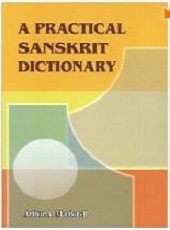
• A Practical Sanskrikt Dictionary,
by A. A. Macdonell, 1893,
http://www.sanskrit-lexicon.uni-koeln.de/scans/MDScan/index.php?sfx=jpg;
1929.
-
Nataraj ed., 1st in 2006, 2012.
-
https://dsal.uchicago.edu/dictionaries/macdonell/ 190516
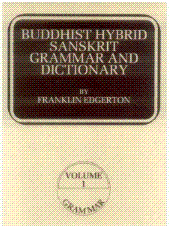
• The Buddhist Hybrid Sanskrit Grammar and
Dictionary, BHS, vol.2, by F. Edgerton,
pp. 627.
-
FEdgerton-BHSD<Ô> /
Bkp<Ô> (link chk 180627)
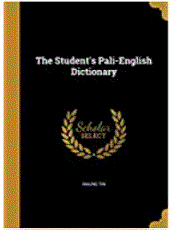
• The Student's Pali English dictionary ,
by U Pe Maung Tin, 1920.
- (ref: UPMT-PEDxxx).
Downloaded copies in TIL
HD-PDF and SD-PDF libraries:
-
UPMT-PaliDict1920<Ô> /
bkp<Ô> (link chk 190113)
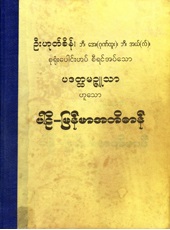
• Pali-Myanmar Dictionary
(in Pal-Myan), by U Hoke Sein,
- (ref: UHS-PMD). The dictionary in printed form is in TIL Research Library.
• Latin-English Vocabulary II, by Hans H Ørberg, 1998
-
HHOrberg-LinguaLatina<Ô> /
Bkp<Ô> (link
chk 190624)
Edited by U Kyaw Tun (UKT) (M.S., I.P.S.T., USA),
Daw Khin Wutyi, Daw Thuzar Myint, Daw Zinthiri Han
and staff of Tun Institute of Learning (TIL).
Not for sale. No copyright. Free for everyone.
Prepared for students and staff of TIL
Research Station, Yangon, MYANMAR
-
http://www.tuninst.net ,
www.romabama.blogspot.com
MC-indx.htm |
Top
MCpp-indx.htm
 {pa.ka.}
p148-2c3-b01
 {pak~Sa.} --> Pal:
 {pak~hka.}
p149-c1
 {pa.gna.} : in
 {kín:si:} form
p149-c2
 {pa.sa.}
 {pa.za.}
 {pa.ña.} /
 {piñ}
{piñ}
 {piñ~sa.}
p149-c3
Orphan:
• पङ्कपूर pankapura [ paṅka-pûra ]
-- m. great quantity of mud, deep mud.पङ्कपूर paṅka-pûra great quantity of mud, deep mud.
न्यायारोपितविक्रम nyâya̮âropita-vikrama from whom powerful assistance might justly be expected.
पञ्चक pañka-ka consisting of five; five days old; with sata, n. five per cent; n. the number five (penta/s); (páñka)-kapâla, a. (î) distributed in five dishes; -kritvas, ad. five times; -gavya, n. sg. & pl. five products of the cow (milk, curds, butter, urine, dung); -guna, a. five times greater than (ab.); -grâmî, f. group of five villages; -katvârimsat, f. forty-five; -kandra, m. N.; -kûda, a. having five tufts of hair; -ganá, m. pl. the five races or kinds: gods, men, Gandharvas and Apsarases, serpents, and Manes; sg. man: î-ya, a. sacred to the five races; -tantra: -ka, n. T. of a collection of fables in five books; -tapas, a. (ascetic) exposing himself to five fires (one at each cardinal point, with the sun above); -taya, a. (î) fivefold; -tâ, f. fivefold amount; dissolution of the body into the five elements, death; -tîrthî, f. the five sacred bathing-places; N. of a Tîrtha; -trimsat: -î, f. thirty-five; -tva, n. fiveness; the five elements, earth, water, five, air, and ether; dissolution into the five elements, death: -m gam, die; -dasá, a. (î) fifteenth; consisting of fifteen; increased by fifteen; î, f. fifteenth day in a half-month; -dasan, a. pl. fifteen; -dasa-vârshika, a. fifteen years old; -dasa̮aha, m. period of fifteen days: i-ka, a. lasting fifteen days; -dhaN, ad. in five parts, fivefold; -dhâtu, n. sg. the five elements.
UKT notes :
• Ashin Angulimala to the rescue
• Mystery of Sri Ksetra aka Prome
• Palatal and dental consonants with fricative
character in BEPS
{pa.ka.}
See my note on the Mystery of Sri Ksetra aka Prome
{pak~Sa.} --> Pal:
{pak~hka.}
• पक्ष paksa [ pakshá ]
= प क ् ष -->
{pak~Sa.}
--> Pal:
{pak~hka.}
-
m. (n. ¹ ) wing, pinion; feathers of an arrow; flank, side; half;
half-month, fortnight (15 days); side, party, following, ally, partisans,
family, race (sg. & pl.); host, troop, class; quantity (of
hair); place; alternative; case; (p148c3-end-p149c1-begin)
opinion, proposition; prosecution (leg.); subject of
an inference (logic); topic, subject under discussion:
pakshe, in the other case; with regard to (--°);
atra --, in this case; tâbhyâm mukte --,
in a case other than these two.
पक्ष pakshá
flank, side; half; half-month, fortnight (15 days);
p149c1-b01/ p090
• पक्षक paksaka [ paksha-ka ]
-- m. wing (--°); side; -kshaya,
m. end of a fortnight; -gama,
a. moving with wings, flying; -grahana,
n. taking the side of (g.); -kara,
m. elephant parted from the herd; -kkhid,
a. having clipped the wings of the mountains, ep. of Indra;
-tâ, f. alliance; being the subject of an inference.
पक्षक paksha-ka
wing (--°); side; -kshaya, m. end of a fortnight;
p149c1-b02/ p090
• पक्षति paksati [ paksha-tí ]
-- f. root of a wing; plumage.
पक्षति paksha-tí
root of a wing; plumage.
p149c1-b03/ p090
• पक्षत्व paksatva [ paksha-tva ]
-- n. being a component part of (--°); being
the subject of a conclusion; prosecution;
-dvâra, n. side-door; -dhara,
a. taking the side of (g.); attached to (lc.);
m. bird; -pâta, m. flight;
partisanship, partiality, predilection for
(ac.±prati, g., lc., --°); -pâti-tâ,
f. partiality or predilection for (lc. or --°);
-pâtin, a. siding with, partial to (--°);
-puta, m. outspread wing; wing;
-bala, n. strength of wing; -rakanâ,
f. formation of a party; (á)-vat, a. winged;
having a large following; -vikala,
a. paralyzed in the wings.
पक्षत्व
paksha-tva being a component part of (--°); being the
subject of a conclusion;
p149c1-b04/ p090
• पक्षान्त
paksanta [ paksha‿anta ]
-- m. end or last day of a fortnight;
-‿antara, n. a particular case
(lc. =supposing, if); another opinion;
-‿âbhâsa, n. mock prosecution:
-tva, n. abst.
ɴ.; -‿ash- tamî,
f. eighth day in a fortnight; -‿âhati, f. stroke
with the wing.
पक्षान्त
paksha̮anta end or last day of a fortnight;
p149c1-b05/ p090
• पक्षित्व
paksitva [ pakshi-tva ]
-- n. condition of a bird.
पक्षित्व
pakshi-tva condition of a bird.
p149c1-b06/ p090
• पक्षिन्
paksin [ paksh-ín ]
-- a. winged; on the side of, belonging to the party of (--°);
m. bird; winged creature; (n)-î,
f. hen-bird; night with the two contiguous days
(sc. râtri).
पक्षिन् paksh-ín
winged; on the side of, belonging to the party of (--°); m.
bird; winged creature; (n)-î, f. hen-bird; night with the
two contiguous days (sc. râtri).
p149c1-b07/ p090
• पक्षिमृगता
paksimrgata [ pakshi-mriga-tâ ]
-- f. condition of bird or beast; -râg, m.,
-râga, m. king of birds;
-râgya, n. sovereignty of the feathered tribes;
ep. of Garuda; -sâvaka, m. young of a
bird, birdling; -svâmin, m. ep. of Garuda.
पक्षिमृगता
pakshi-mriga-tâ condition of bird or beast;
p149c1-b08/ not online

• [pakshî-kri ]
-- make oneself master of Garuda .
p149c1-b09/ p090
• पक्षीन्द्र
paksindra [ pakshi‿indra ]
-- m. chief of birds, ep. of Garuda.
पक्षीन्द्र
pakshi̮indra chief of birds,
p149c1-b10/ p090
• पक्षीय
paksiya [ paksh-îya ]
-- a. siding with (--°).
पक्षीय paksh-îya
siding with (--°).
p149c1-b11/ p090
• पक्ष्मन्
paksman [ páksh-man ]
-- n. sg. & pl. eyelashes; pile (of deer); petal.
पक्ष्मन्
páksh-man eyelashes; pile (of deer);
p149c1-b12/ p090
• पक्ष्मपात
paksmapata [ pakshma-pâta ]
-- m. closure of the eyes.
पक्ष्मपात
pakshma-pâta closure of the eyes.
p149c1-b13/ p090
• पक्ष्मल
paksmala [ pakshma-la ]
-- a. having long or fine eyelashes;
long-haired; hairy, furry; downy: -dris, a.
f. having eyes with beautiful lashes.
पक्ष्मल pakshma-la
having long or fine eyelashes;
p149c1-b14/ p090
• पक्ष्य
paksya [ paksh-yã ]
-- a. siding with (--°).
पक्ष्य paksh-yã
siding with (--°).
{pa.nga.}
: in
 {kín:si:} form
See my note on Ashin Angulimala to the rescue
in solving the mystery of missing ङ «nga»
p149c1-b15/ p090
• पङ्क
panka [ páṅka ]
= प ङ ् क
-- m. or n. (?) mud, mire, slough, quagmire,
dirt, clay; --°, ointment; -kkhid,
m. a plant (with the fruit of which turbid
water is clarified).
पङ्क páṅka
(?) mud, mire, slough, quagmire, dirt, clay;
149c1-b16/ p090
• पङ्कज
pankaja [ paṅka-ga ]
-- n. flower of the day lotus ( Nelumbium speciosum )
which closes in the evening: -nâbha,
a. having a lotus in his navel
(Vishnu), -netra, a.
lotus-eyed, -mâlin, a.
adorned with a wreath of lotuses,
epithet of Vishnu;
-‿akshî, f. lotus-eyed woman;
-‿aṅghri, a.
whose feet are adorned with lotuses (Vishnu).
पङ्कज paṅka-ga
flower of the day lotus (nelumbium speciosum, which closes
in the evening):
p149c1-b17/ p090
• पङ्कजिन्
pankajin [ paṅkag-in ]
-- a. furnished with a lotus: -î,
f. lotus; lotus group.
पङ्कजिन् paṅkag-in
furnished with a lotus:
p149c1-b18/ p090
• पङ्कता
pankata [ paṅka-tâ ]
-- f. condition of mud; -magna,
pp. sunk in the mire.
पङ्कता paṅka-tâ
condition of mud;
p149c1-b19/ p090
• पङ्कय
pankaya [ paṅka-ya ]
-- den. P. besmear.
पङ्कय paṅka-ya
P. besmear.
p149c2-b00/ p090
• पङ्करुहिणी
[ paṅka-ruhinî ]
-- f. lotus; --group; -lagna, pp.
stuck in a bog; -vat, a. muddy, miry;
-vartman, n. miry road.
पङ्करुहिणी
paṅka-ruhinî lotus; --group; -lagna, pp. stuck in a
bog; -vat, a. muddy, miry; -vartman, n. miry road.
p149c2-b01/ p090
• पङ्किल [ paṅk-ila ]
-- a. miry, dirty, bedaubed with (in.):
-bhava, a. growing in swampy soil.
पङ्किल paṅk-ila
miry, dirty, bedaubed with (in.):
p149c2-b02/ p090
• पङ्केरुह्
[ paṅke-ruh ]
-- n. flower of the day lotus: -a,
n., -inî, f. id.
पङ्केरुह्
paṅke-ruh flower of the day lotus: -a, n., -inî, f. id.
p149c2-b03/ p090
• पङ्क्ति
[ paṅk-tí ]
-- f. set of five (penta/s), series of fives;
a metre: 5 X 8, later 4 X 10 syllables;
the number ten; line, row; multitude; company, society;
-krama, m. succession: in. in a row;
-pâvana, a. purifying a society; -ratha,
m. N.=Dasa-ratha.
पङ्क्ति paṅk-tí
set of five (penta/s), series of fives; a metre: 5 X 8,
later 4 X 10 syllables;
p149c2-b04/ p090
• पङ्क्तिशस्
panktisas [ paṅkti-sas ]
-- ad. in rows.
पङ्क्तिशस्
paṅkti-sas in rows.
p149c2-b05/ p090
• पङ्क्ती
pankti [ paṅktî ]
-- f. metrical for paṅkti.
पङ्क्ती paṅktî
paṅkti.
p149c2-b06/ p090
• पङ्गु
pangu [ paṅg-u ]
-- a. (v-î) lame: -ka, a. id.;
-tâ, f., -tva, n.,
-bhâva, m. lameness.
पङ्गु paṅg-u
(v-î) lame: -ka, a. id.; -tâ, f., -tva, n., -bhâva, m.
lameness.
 {pa.sa.}
See my note on Palatal and dental consonants with fricative character in BEPS
p149c2-b07/ not online

• [PAK] I
-- páka , cook, bake, boil, roast; Â. cook for oneself;
burn, bake (gricks, etc.); digest; ripen, mature (tr.); ...
p149c2-b08/ p090
• पच
paca [ paka ]
-- a. cooking, baking (--°).
पच paka
cooking, baking (--°).
p149c2-b09/ p090
• पचन
pacana [ pák-ana ]
-- a. id. (--°); n. cooking utensil:
-kriyâ, f. cooking.
पचन pák-ana
(--°); n. cooking utensil: -kriyâ, f. cooking.
p149c2-b10/ p090
• पचेलिम
pacelima [ pak-elima ]
-- a. being quickly cooked, maturing rapidly.
पचेलिम pak-elima
being quickly cooked, maturing rapidly.
p149c2-b11/ p090
• पच्छस्
pacchas [ pak-khás ]
-- ad. [pad-sas] by pâdas; -
khauka, n.
[pad-sauka] cleansing of the feet.
पच्छस् pak-khás
[pad-sas] by pâdas; -khauka, n. [pad-sauka] cleansing of the
feet.
 {pa.za.}

• [PAG], [PAÑG]
-- fasten, enclose
p149c2-b12/ p090
• पज्र
pajra [ pag-rá ]
= प ज ् र
-- a. stout, portly.
पज्र pag-rá
stout, portly.
 {pa.ña.} /
 {piñ}
{piñ}
In Bur-Myan, there's a word with a similar (or same) pronunciation to Pal-Myan
{piñ~ña} 'education' -- MED2006-249.
{piñ~ña}. )
The Bur-Myan word I am referring to is{pyiñ} 'timber, or plank' -- MED2006-284
MLC (Myanmar Language Commission) transcription given in MED2006 for both the words are the same: /pjin/. [Note: MLC /j/ is the same as IPA /j/] -- UKT120623
p149c2-b13/ not online
• [PAÑK]
-- spread out, manifest
 {piñ~sa.}
• [pañka]
-- °- = pañkan
p149c2-b14/ not online

• पञ्चक
pancaka [ pañka-ka ]
= प ञ ् च क
-- a. consisting of five; five days old;
with sata, n. five per
cent; n. the number five (
p149c3-b00/ p090
• पञ्चन्
pancan [ páñk-an (or -án) ]
-- a. pl. five; T. of the 14th Lambaka in the
Kathâsaritsâgara.
पञ्चन् páñk-an
(or -án) five; T. of the 14th Lambaka in the
Kathâsaritsâgara.
p149c3-b01/ p090
• पञ्चनख
pancanakha [ pañka-nakha ]
-- a. having five claws; m. beast with five claws;
-nada, n. land of the five rivers, Panjâb;
m. pl. inhabitants of the Panjâb; sg. N.
of a river; -padî, a. f. having (taken) five steps; f.
five steps; the five strong cases; -na dîyate, does not accompany him
even five steps; -pala, a. weighing five palas: î,
f. weight of five palas; -purânîya, a. worth
five purânas (a coin); -pushpa maya, a. (î)
consisting of five flowers; -phut- tika, a.
weaving five phuttikas in a day; m. N.; -bandha, m.
fifth part of the value of a thing; -bâna, m.
the five-arrowed god, Kâma; -bindu-prasrita, n.
kind of figure in dancing.
पञ्चनख pañka-nakha
having five claws; m. beast with five claws;
p149c3-b02/ p090
• पञ्चम
pancama [ pañka-má ]
-- a. (&isharp;) fifth; with amsa, m. a
fifth part: -m, ad. for the fifth time; fifthly; m. fifth
(later seventh) note of the Indian scale; a musical mode; fifth
consonant of a class, nasal; î, f. fifth day in a
fortnight; terminations of the fifth case, word in the ablative;
terminations of the imperative.
पञ्चम pañka-má
(î) fifth; with amsa, m. a fifth part:
p149c3-b03/ p090
• पञ्चमय
pancamaya [ pañka-maya ]
-- a. (î) consisting of five (elements); -mâshaka (or
ika), a. consisting of or amounting to five mâshas;
-mâsya, a. needing five months for its development (seed);
-mukha, a. five-faced; having five points (arrow);
-mûla, m. N. of an attendant on Durgâ; -yâma, a.
having five courses; -yoganî, f. distance of five
yoganas; -râtra, n. period of five days; a.
(á) lasting five days; n. general designation of the sacred book of
Vishnuite sects: -ka, a. lasting five days;
-lakshana, a. having five characteristics;
-lambaka, m. T. of the 14th Lambaka in the
Kathâsaritsâgara; -vata, m. N.; N. of a
locality: î, f. id.; -varga, m. group or
series of five; -varna, a. five-coloured; of five
kinds; -varsha: -ka, -varshîya, a. five years old;
-vârshika, a. recurring every five years;
-vimsá, a. (î) twenty-fifth; consisting of
or containing twenty-five; -vimsati, f.
twenty-five: -tama, a. twenty-fifth; -vidha, a.
fivefold; -vrit, ad. five times;
-sata, n. pl. five hundred; consisting of five
hundred panas (fine); paying a fine of five hundred
(panas); five-hundredth: e kâle, in the 500th year; n. 105;
500; î, f. 500; -sara, m.
(five-arrowed), Kâma; -sikha, a. wearing five
top-knots (ascetic); m. N. of an attendant of Siva;
-sîrsha, a. five-headed.
पञ्चमय pañka-maya
(î) consisting of five (elements);
p149c3-b04/ p090
• पञ्चष
pancasa [ pañka-sha ]
-- a. five or six; -sattra, N. of a locality;
-sahasrî, f. 5000; -skandî,
f. sg. pl. the five Skandas of the Buddhists;
-hasta, N. of a locality; -hâyana,
a. five years old.
पञ्चष pañka-sha
five or six; -sattra, N. of a locality;
p149c3-b05/ p090
• पञ्चाक्षर pancaksara [
páñka‿akshara ]
-- a. pentasyllabic; -‿âkhyâna:
-ka, n.=pañka-tantra; -‿agni, a.
maintaining the five sacred fires; allowing oneself to be scorched by five fires
(four kindled towards the quarters, and the sun): -tva, n.
aggregate of five fires (i. e. passions);
-‿aṅga, n. five limbs, members, or parts
(°--); a. (î) consisting of five limbs or parts;
-‿ât maka, a. consisting of the five elements:
-tva, n. abst. ɴ.; -‿ânana,
m. (five-faced, terrible), lion: î, f. ep. of Durgâ;
-‿apsaras: -a, n. N. of a lake;
-‿abda‿âkhya, a. lasting for five years;
(páñka)-‿ara, a. five-spoked.
पञ्चाक्षर páñka̮akshara
pentasyllabic; -̮âkhyâna:
p149c3-b06/ p090
• पञ्चाल
pancala [ pañkâlá ]
-- m. pl. N. of a people and of a dynasty;
î, f. doll.
पञ्चाल pañkâlá
î, f. doll.
p149c3-b07/ p090
• पञ्चावयव
pancavayava [ pañka‿avayava ]
--a. five-limbed.
पञ्चावयव pañka̮avayava
five-limbed.
p149c3-b08/ p090
• पञ्चाश
pancasa [ pañkâ-sa ]
-- a. fiftieth: -ka, a. pl. 50;
i-kâ, f. collection of 50;
-sak-khas,
ad. by fifties.
पञ्चाश pañkâ-sa
fiftieth: -ka, a. pl. 50; i-kâ, f. collection of 50;
-sak-khas, ad. by fifties.
-- UKT120615

 {pa.gna.} by itself is absent in Sanskrit. Instead, we find the
 {king:si:} -- a special vertical conjunct literally meaning 'ridden by a
centipede'. It's glyph is
{king:si:} -- a special vertical conjunct literally meaning 'ridden by a
centipede'. It's glyph is
 standing for
 {pa.}
followed by
{king:si:}. It is the sound of
{pa.}
followed by
{king:si:}. It is the sound of
 {ping} /pɪŋ/ the modal, and may be pronounced with emphasis as
 {ping:} the emphatic. The Sanskrit speakers (IE linguistic group) have
difficulty pronouncing the nasals
{ping:} the emphatic. The Sanskrit speakers (IE linguistic group) have
difficulty pronouncing the nasals
 {nga.}
ङ /ŋa/, and
{nga.}
ङ /ŋa/, and  {ña.} ञ /ɲ/. [the scripts are: Myanmar, Romabama, Devanagari, IPA. ] We find the same to be with another IE-speakers the so-called
"English-native" speakers.
{ña.} ञ /ɲ/. [the scripts are: Myanmar, Romabama, Devanagari, IPA. ] We find the same to be with another IE-speakers the so-called
"English-native" speakers.
Sanskrit speakers had gradually substituted the
{kín:si:} sound with the
 {þé:þé:ting} 'small dot above' sound, so for example,
 {în~gu.li.ma-la.} has become
 {än-gu.li.ma-la.}.
The question now is which pronunciation is correct? If the famous Buddhist monk
was a Tib-Bur (Tibeto-Burman) speaker his name would be
{în~gu.li.ma-la.} [starting sound: अङ् /ɪŋ/ ], close to how we say in
Myanmarland where we speak Tib-Bur languages: elsewhere it doesn't matter to
Bur-Myan speakers. How would Gautama Buddha call him? Because, it is usual for
kings and nobility, the class or caste from which the Buddha came, to speak to
the non-Brahmins, in particular to the commoners most of whom are Sudras, to use
the Prakrit Magadhi of north-eastern India, the Buddha would address him as
{în~gu.li.ma-la.}.
Go back Angulimala-to-rescue-note-b
-- UKT120616
I always had difficulty in remembering the English rendition 'Sri Ksetra' of
the Bur-Myan name
 {þa.ré-hkít~ta.ra} aka
 {præÑ}.
What is this <ks> I had wondered. Now the mystery is solved.
{præÑ}.
What is this <ks> I had wondered. Now the mystery is solved.
Refer to Wikipedia: http://en.wikipedia.org/wiki/Sri_Ksetra_Kingdom 120616
After
 {pa.ka.},
I was expecting to see
{pa.ka.},
I was expecting to see
 {pa.hka.}, instead I found only
 {pak~Sa.}. From the meanings of the entries I soon realized that it is a
substitute for Pal-Myan
{pak~Sa.}. From the meanings of the entries I soon realized that it is a
substitute for Pal-Myan
 {pak~hka.}. The reason: Sanskrit speakers being of the IE (Indo-European)
linguistic group could not and still cannot articulate Tib-Bur (Tibeto-Burman)
sounds. So they had to substitute
{pak~Sa.} (with a highly fricative-hissing sound) for Pali
{pak~hka.} (non-fricative non-hissing). From this observation I have
concluded that "Pali" or Magadhi spoken by the Buddha to be a Tib-Bur
language just like Bur-Myan. Of course the modern International Pali,
derived from SriLanka thanks to the IE phonologists has become an IE. It was
not the original language spoken by the Buddha.
{pak~hka.}. The reason: Sanskrit speakers being of the IE (Indo-European)
linguistic group could not and still cannot articulate Tib-Bur (Tibeto-Burman)
sounds. So they had to substitute
{pak~Sa.} (with a highly fricative-hissing sound) for Pali
{pak~hka.} (non-fricative non-hissing). From this observation I have
concluded that "Pali" or Magadhi spoken by the Buddha to be a Tib-Bur
language just like Bur-Myan. Of course the modern International Pali,
derived from SriLanka thanks to the IE phonologists has become an IE. It was
not the original language spoken by the Buddha.
Go back mystery-ks-note-b
To solve the need to differentiate the palatal plosive-stop
and the dental fricative-sibilant in BEPS, Romabama has
adopted the following method.
They are written as
 {sa.} च, and
 {Sa.} ष respectively. However under
 {a.þût} virama, the first becomes
 {c} च् and the other
 {S} ष्.
I have given the Devanagari forms to clarify
the matter further.
Bur-Myan allows only the tenuis consonants
and the nasal consonants be killed:
 {pic} &
{piñ}. From this we infer the pronunciation
of
{pic} &
{piñ}. From this we infer the pronunciation
of  {piz}.
However, it came as a surprise to me to realized that {Ña.} has only a
little or no nasal character because of the pronunciations
{piz}.
However, it came as a surprise to me to realized that {Ña.} has only a
little or no nasal character because of the pronunciations
 {pæÑ:} arch. 'many, plenty' (MED2006-272) and
{præÑ} 'country'
(MED2006-289).
{pæÑ:} arch. 'many, plenty' (MED2006-272) and
{præÑ} 'country'
(MED2006-289).
The final form of graphemes with killed palatal plosive-stop and
killed dental fricative-nasal are:
•
{pic} - vowel sound totally checked and stops.
•
 {piS}
- vowel sound partially checked and ends with a hissing sound.
{piS}
- vowel sound partially checked and ends with a hissing sound.
-- UKT120615
Go back Pala-dent-conson-note-b
End of TIL file