
p148-1.htm
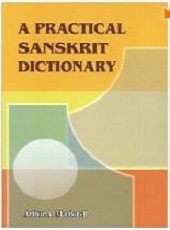
• A Practical Sanskrikt Dictionary,
by A. A. Macdonell, 1893,
http://www.sanskrit-lexicon.uni-koeln.de/scans/MDScan/index.php?sfx=jpg;
1929.
-
Nataraj ed., 1st in 2006, 2012.
-
https://dsal.uchicago.edu/dictionaries/macdonell/ 190516
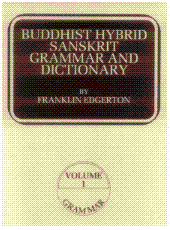
• The Buddhist Hybrid Sanskrit Grammar and
Dictionary, BHS, vol.2, by F. Edgerton,
pp. 627.
-
FEdgerton-BHSD<Ô> /
Bkp<Ô> (link chk 180627)
• The Student's Pali English dictionary ,
by U Pe Maung Tin, 1920.
- (ref: UPMT-PEDxxx).
Downloaded copies in TIL
HD-PDF and SD-PDF libraries:
-
UPMT-PaliDict1920<Ô> /
bkp<Ô> (link chk 190113)
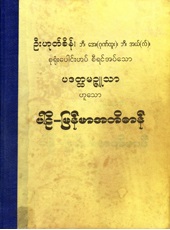
• Pali-Myanmar Dictionary
(in Pal-Myan), by U Hoke Sein,
- (ref: UHS-PMD). The dictionary in printed form is in TIL Research Library.
• Latin-English Vocabulary II, by Hans H Ørberg, 1998
-
HHOrberg-LinguaLatina<Ô> /
Bkp<Ô> (link
chk 190624)
Edited by U Kyaw Tun (UKT) (M.S., I.P.S.T., USA),
Daw Khin Wutyi, Daw Thuzar Myint, Daw Zinthiri Han
and staff of Tun Institute of Learning (TIL).
Not for sale. No copyright. Free for everyone.
Prepared for students and staff of TIL
Research Station, Yangon, MYANMAR
-
http://www.tuninst.net ,
www.romabama.blogspot.com
MC-indx.htm |
Top
MCpp-indx.htm
 {nè:pa.}
p148-1c1
 {nè:ya.}
 {nè:r} : repha
p148-1c2
 {nau:}
 {nau}
{nau}
 {nya.} : slight difference in sound from
 {ña.} ञ
p148-1c3
 {nya}
: slight difference in sound from
{nya}
: slight difference in sound from
 {ña}
ञा
{ña}
ञा
UKT note to Romabama editor: In this file you will see the need to use three graphemes, {Ña.}, {ña.}, & {nya.} together. Though there is no problem in Romabama itself, you will run into trouble giving bookmarks: use, NNYYa1 , nya1 , & n-ya1 , respectively.
Orphan:
•
न्यायारोपितविक्रम
nyayaropitavikrama [
nyâya‿âropita-vikrama ]
-- a. from whom powerful assistance might
justly be expected.
 {nè:pa.}
p148-1c1-b00/not online

• [naipun-ya]
-- n. id
p148-1c1-b01
• नैबिड्य
naibidya [ naibid-ya ]
-- n. denseness; immediate contiguity.
नैबिड्य naibid-ya
denseness; immediate contiguity.
p148-1c1-b02/ p090
• नैमित्तिक
naimittika [ naimitt-ika ]
-- a. (î) produced by a cause; occasional, incidental;
n. effect; m. fortune-teller.
नैमित्तिक naimitt-ika (î)
produced by a cause; occasional, incidental; n. effect; m. fortune-teller.
p148-1c1-b03/ p090
• नैमिष
naimisa [ naimisha ]
-- n. N. of a sacred forest: î-ya, a. relating to the Naimisha forest;
m. pl. inhabitants of the Naimisha forest.
नैमिष naimisha î-ya, a. relating
to the Naimisha forest; m. pl. inhabitants of the Naimisha forest.
{nè:ya.}
p148-1c1-b04/ p090
• नैयग्रोध
naiyagrodha [ naíyagrodha ]
-- a. relating to the sacred fig-tree ( Ficus indica ).
नैयग्रोध naíyagrodha relating to
the sacred fig-tree (ficus Indica).
p148-1c1-b05/ p090
• नैयत्य
naiyatya [ naiyat-ya ]
-- n. fixity, necessity; exigency.
नैयत्य naiyat-ya fixity, necessity;
exigency.
p148-1c1-b06/ p090
• नैयायिक
naiyayika [ naiyây-ika ]
-- a. relating to the Nyâya philosophy; m. logician.
नैयायिक naiyây-ika relating to the
Nyâya philosophy; m. logician.
p148-1c1-b07/ p090
• नैरन्तर्य
nairantarya [ nair-antar-ya ]
-- n. [v. nir-] uninterruptedness; immediate succession:
in. constantly; -apeksh-ya, n. regardlessness,
indifference; complete independence; -arth-ya,
n. senselessness; -âkâṅksh-ya,
n. non-requirement of supplying anything;
-âs-ya, n. hopelessness, despair
(of, prati or --°); -ukta, a. etymologically
explained; m. etymologist.
नैरन्तर्य
nair-antar-ya nir-] uninterruptedness; immediatesuccession:
in. constantly; -apeksh-ya, n. regardlessness, indifference;
complete independence; -arth-ya, n. senselessness;
-âkâṅksh-ya, n. non-requirement of supplying anything;
-âs-ya, n. hopelessness, despair (of, prati or --°); -ukta,
a. etymologically explained; m. etymologist.
p148-1c1-b08/ p090
• नैरुज्य
nairujya [ nai-rug-ya ] n. health (v. nîrug).
नैरुज्य nai-rug-ya
health (v. nîrug).
p148-1c1-b09/ p090
• नैर्ऋत
nairrta [ nair-ritá ]
-- a. (&isharp;) relating to nirriti; south-western;
pointed southward; m. son of Nirriti, demon, Râkshasa:
î, f. south-west; ep. of Durgâ; -ritya,
a. relating or sacred to Nirriti; south-western.
नैर्ऋत nair-ritá
(î) relating to nirriti; south-western; pointed southward;
m. son of Nirriti, demon, Râkshasa: î, f. south-west; ep. of
Durgâ; -ritya, a. relating or sacred to Nirriti;
south-western.
{nè:r}
: repha
p148-1c1-b10/ p090
• नैर्गन्ध्य
nairgandhya [ nair-gandh-ya ]
-- n. scentlessness; absence of smell; -gun-ya, n.
exemption from qualities; lack of virtues; -ghrin-ya,
n. hard-heartedness, cruelty; -ghara, a.
belonging to waterfalls.
नैर्गन्ध्य
nair-gandh-ya scentlessness; absence of smell; -gun-ya, n.
exemption from qualities; lack of virtues; -ghrin-ya, n.
hard-heartedness, cruelty; -ghara, a. belonging to
waterfalls.
p148-1c1-b11/ p090
• नैर्धन्य
nairdhanya [ nair-dhan-ya ]
-- n. poverty; -mal-ya, n. spotlessness, purity;
-lagg-ya, n. shamelessness, impudence.
नैर्धन्य
nair-dhan-ya poverty; -mal-ya, n. spotlessness, purity;
-lagg-ya, n. shamelessness, impudence.
p148-1c1-b12/ p090
• नैल्य
nailya [ nail-ya ]
-- n. dark-blue colour.
नैल्य nail-ya
dark-blue colour.
p148-1c1-b1/ p090
• नैवाभिगमन
naivabhigamana [ na‿eva‿abhigamana ]
-- n. no sexual intercourse whatever.
नैवाभिगमन
na̮eva̮abhigamana no sexual intercourse whatever.
p148-1c1-b14/ p090
• नैवार
naivara [ naivârá ]
-- a. consisting of wild rice.
नैवार naivârá
consisting of wild rice.
p148-1c1-b15/ p090
• नैवेशिक
naivesika [ naives-ika ]
-- n. household furniture.
नैवेशिक naives-ika
household furniture.
p148-1c1-b16/ p090
• नैश naisa [ naisa ]
-- a. (î) nocturnal; contracted during the night (guilt).
नैश naisa
(î) nocturnal; contracted during the night (guilt).
p148-1c1-b17/ p090
• नैशाकर
naisakara [ naisâkara ]
-- a. caused by the moon.
नैशाकर naisâkara
caused by the moon.
p148-1c1-b18/ p090
• नैशिक
naisika [ nais-ika ]
-- a. (î) obtained in one night.
नैशिक nais-ika
(î) obtained in one night.
p148-1c1-b19/ p090
• नैशित्य
naisitya [ naisit-ya ]
-- n. sharpness.
नैशित्य naisit-ya
sharpness.
p148-1c1-b20/ p090
• नैश्््चिन्त्य
naiscintya [ nais-kint-ya ]
-- n. freedom from care.
नैश्््चिन्त्य
nais-kint-ya freedom from care.
p148-1c1-b21/ p090
• नैःश्रेयस
naihsreyasa [ naih-sreyas-a ]
-- a. (î) leading to future beatitude: i-ka, a. id.
नैःश्रेयस naih-sreyas-a
(î) leading to future beatitude: i-ka, a. id.
p148-1c1-b22/ p090
• नैषध
naisadha [ naishadha ]
-- m. prince of the Nishadhas, esp. Nala: pl. the Nishadhas:
-‿anveshana, n. searching for Nala.
नैषध naishadha
prince of the Nishadhas, esp. Nala: pl. the Nishadhas: -̮anveshana,
n. searching for Nala.
p148-1c1-b23/ p090
• नैषाद
naisada [ naishâda ]
-- a. (î) belonging to the Nishâdas.
नैषाद naishâda (î)
belonging to the Nishâdas.
( end p148-1c1 )
p148-1c2-b00/ p090
• नैष्कर्म्य
naiskarmya [ naish-karm-ya ]
--n. abandonment of action, inactivity.
नैष्कर्म्य
naish-karm-ya abandonment of action, inactivity.
p148-1c2-b01/ p090
• नैष्किंचन्य
naiskincanya [ naish-kimkan-ya ]
-- n. indigence, poverty.
नैष्किंचन्य
naish-kimkan-ya indigence, poverty.
p148-1c2-b02/ p090
• नैष्कृतिक
naiskrtika [ naish-kritika ]
-- a. incorrect for naikritika.
नैष्कृतिक
naish-kritika naikritika.
p148-1c2-b03/ p090
• नैष्ठिक
naisthika [ naishth-ika ]
-- a. (î) final, last; definitive, decided, settled;
highest, supreme, perfect; thoroughly versed in (--°);
having taken the vow of eternal chastity:
-sundara, a. supremely beautiful.
नैष्ठिक naishth-ika
(î) final, last; definitive, decided, settled; highest,
supreme, perfect; thoroughly versed in (--°); having taken
the vow of eternal chastity: -sundara, a. supremely
beautiful.
p148-1c2-b04/ p090
• नैष्ठुर्य
naisthurya [ naishthur-ya ]
-- n. roughness, coarseness, hardness, severity.
नैष्ठुर्य naishthur-ya
roughness, coarseness, hardness, severity.
p148-1c2-b05/ p090
• नैष्फल्य
naisphalya [ naish-phal-ya ]
-- n. fruitlessness, ineffectualness.
नैष्फल्य
naish-phal-ya fruitlessness, ineffectualness.
p148-1c2-b06/ p090
• नैसर्ग
naisarga [ naisarga ]
-- a. natural: i-ka, a. id.; original,
inherent, innate, constitutional.
नैसर्ग naisarga
natural: i-ka, a. id.; original, inherent, innate,
constitutional.
p148-1c2-b07/ p090
• नैस्त्रिंशिक
naistriṃsika [ naistrims-ika ]
-- a. armed with a sword.
नैस्त्रिंशिक
naistrims-ika armed with a sword.
p148-1c2-b08/ p090
• नैःस्नेह्य
naihsnehya [ naih-sneh-ya ]
-- n. want of affection; -sprih-ya,
n. lack of desire for; -sv-ya,
n. indigence, poverty.
नैःस्नेह्य naih-sneh-ya
want of affection; -sprih-ya, n. lack of desire for; -sv-ya,
n. indigence, poverty.
{nau:}
p148-1c2-b09/ p090
• नो no
[ na&halfacute;u ]
-- pcl. and not, nor (this meaning very rare in C.);
not (C.).
नो na◡́u and
not, nor (this meaning very rare in C.); not (C.).
p148-1c2-b10/ not online

• [nona]
-- m. N. of a merchant
p148-1c2-b11/ p090
• नोदन
nodana [ nod-ana ]
-- a. removing; n. striking; dispelling; impulse.
नोदन nod-ana
removing; n. striking; dispelling; impulse.
p148-1c2-b12/ p090
• नोदिन्
nodin [ nod-in ]
-- a. dispelling (--°).
नोदिन् nod-in
dispelling (--°).
p148-1c2-b13/ p090
• नोधस्
nodhas [ nodhás ]
-- m. N. of a Rishi.
नोधस्् nodhás
Rishi.
p148-1c2-b14/ not online

• [nona], m. N.:
-- â , f. N.: -ka , m. N.; -ratha , m. N.
p148-1c2-b15/ not online
• [na‿upasthâtri]
-- a. not appearing in court.
{nau}
p148-1c2-b16/ p090
• नौ nau [ 1. nau ]
-- ¹ ac., d., g. du. of aham.
नौ 1. nau aham.
p148-1c2-b17/ p090
• नौ nau [ 2. naú ]
-- ² f. ship; boat, skiff.
नौ 2. naú ship;
boat, skiff.
p148-1c2-b18/ not online

• [nau-ka]
-- -° = 2. nau : â , f. skiff; -kar-sadhâra , m. helmsman (also fig.);
-karman , n. occupation with boats, work of a boatman; -kakrî-vat , m. owner
of boats and wagons; -kara, a.faring on ships, m. seafarer. mariner; givika, m.
boatman, sailor.
p148-1c2-b19/ not online

• [naudhas-á]
-- n. N. of Sáman
p148-1c2-b20/ p090
• नौयान
nauyana [ nau-yâna ]
-- n. navigation; -yâyin, a. faring in boats;
m. passenger; -vyasana, n. shipwreck.
नौयान nau-yâna
navigation; -yâyin, a. faring in boats; m. passenger;
-vyasana, n. shipwreck.
{nya.} : slight difference in sound from
{ña.} ञ
See my note on the happy confusion of nasals in BEPS : a personal story
p148-1c2-b21/ p090
• न्यक्कार
nyakkara [ nyak-kâra ]
-- m. humiliation; disregard; -kriti, f. id.
न्यक्कार
nyak-kâra humiliation; disregard; -kriti, f. id.
p148-1c2-b22/ p090
• न्यक्त
nyakta [ ni‿ãkta ]
-- pp. √añk; -‿ãkna, pp. √ak.
न्यक्त ni̮ãkta
√añk; -̮ãkna, pp. √ak.
p148-1c2-b23/ p090
• न्यग्भाव
nyagbhava [ nyag-bhâva ]
-- m. going downwards; absorption in (lc.); disregard, contempt;
-bhâvayitri, m. humiliator.
न्यग्भाव
nyag-bhâva going downwards; absorption in (lc.); disregard,
contempt; -bhâvayitri, m. humiliator.
p148-1c2-b24/ p090
• न्यग्रोध
nyagrodha [ nyag-ródha ]
-- m. [growing downwards], Indian fig-tree, banyan ( Ficus indica ).
न्यग्रोध
nyag-ródha [growing downwards], Indian fig-tree, banyan
(ficus Indica).
UKT: Notice the onset pronunciation of न्यग्रोध = (न ् य) (ग ् र ो) (ध) 'banyan' tree and Bur-Myan
{Ñaung} are both nasal and quite similar .
p148-1c2-b25/ p090
• न्यङ्कु
nyanku [ ni‿aṅk-u ]
-- m. [√añk] kind of antelope: ( end p148-1c2
)
(
p148-1c3-top
 )
)
-siras,
a. (sc. kakubh) a metre; -sârinî, a. f. (sc.
brihatî) a metre.
न्यङ्कु ni̮aṅk-u
[√añk] kind of antelope: -siras, a. (sc. kakubh) a metre;
-sârinî, a. f. (sc. brihatî) a metre.
p148-1c3-b01/ not online

• [nyaṅkotaka]
-- m. N.
p148-1c3-b02/ p090
• न्यङ्ग
nyanga [ ni‿aṅg-á ]
-- m. [√añg] adhering matter; taunt; --° a. making
incidental mention of.
न्यङ्ग ni̮aṅg-á
[√añg] adhering matter; taunt; --° a. making incidental
mention of.
p148-1c3-b03/ not online

• [ni‿ấñk]
-- a. (weak base nîk ; f. nîk-i )
downward; lowered (tone); n. ad. nyak , downwards;
-kri , humble; disregard (words); throw into the
shade, surpass; ( g )-bhû , behave humbly.
p148-1c3-b04/ p090
• न्यञ्चन
nyancana [ ni‿añk-ana ]
-- n. depression; lurking-place; î, f. lap.
न्यञ्चन ni̮añk-ana
depression; lurking-place; î, f. lap.
p148-1c3-b05/ p090
• न्यन्तेन
nyantena [ ni‿anténa ]
-- in. ad. in the neighbourhood, of (g. or --°).
न्यन्तेन
ni̮anténa in the neighbourhood, of (g. or --°).
p148-1c3-b06/ p090
• न्ययन
nyayana [ ni‿áyana ]
-- n. entry, gathering-place.
न्ययन ni̮áyana
entry, gathering-place.
p148-1c3-b07/ p090
• न्यर्थ
nyartha [ ni‿arthá ]
-- n. failure; destruction.
न्यर्थ ni̮arthá
failure; destruction.
p148-1c3-b08/ p090
• न्यर्बुद
nyarbuda [ ni‿ãrbuda ]
-- n. a hundred millions.
न्यर्बुद
ni̮ãrbuda a hundred millions.
p148-1c3-b09/ p090
• न्यसन
nyasana [ ni‿asana ]
-- n. arranging, putting or writing down; adduction.
न्यसन ni̮asana
arranging, putting or writing down; adduction.
p148-1c3-b10/ p090
• न्यस्त
nyasta [ ni‿asta ]
-- pp. (√2. as) set down, deposited:
-danda, a. having laid down the rod,
unaggressive, peaceable; -sastra,
a. having laid down one's arms; averse from strife,
inoffensive (Manes).
न्यस्त ni̮asta
(√2. as) set down, deposited: -danda, a. having laid down
the rod, unaggressive, peaceable; -sastra, a. having laid
down one's arms; averse from strife, inoffensive (Manes).
p148-1c3-b11/ p090
• न्यस्य
nyasya [ ni‿asya ]
-- fp. to be laid down; to be appointed to (lc.).
न्यस्य ni̮asya
to be laid down; to be appointed to (lc.).
{nya}
/ {ña}
Look for
{Ña} 'trick' or 'cheat' in Bur-Myan. The official MLC form is
{ña.}: it can easily be mistaken for
{Ña} 'night' in Bur-Myan especially in handwritten text. I am speaking from my own experience. -- UKT120614
p148-1c3-b12/ p090
• न्याय
nyāya [ ni‿âyá ] m. [going back,
reference, precedent], rule, standard, axiom,
principle, method; manner; propriety, correct way;
logical proof or conclusion, syllogism; logic,
the Nyâya system of philosophy; lawsuit; decision,
judgment: in., ab., °--, after the manner of (--°);
in. -tas, °--, suitably, properly;
-vartin, a. behaving with propriety;
-vâdin, a. speaking suitably; -vid,
m. connoisseur; -vidyâ, f. logic;
-vritta, pp. behaving with propriety;
-sâstra, n. treatise on
logic; -sikshâ, f. logic.
न्याय ni̮âyá
[going back, reference, precedent], rule, standard, axiom,
principle, method; manner; propriety, correct way; logical
proof or conclusion, syllogism; logic, the Nyâya system of
philosophy; lawsuit; decision, judgment: in., ab., °--,
after the manner of (--°); in. -tas, °--, suitably,
properly; -vartin, a. behaving with propriety; -vâdin, a.
speaking suitably; -vid, m. connoisseur; -vidyâ, f. logic;
-vritta, pp. behaving with propriety; -sâstra, n. treatise
on logic; -sikshâ, f. logic.
UKT: You will notice that the header of this section न्याय nyāya , and the others have something to do with the intellect. In Pal-Myan, it is
/
{ña-ya.}. See my note on the Language of the Buddha.
p148-1c3-b13/ p090
• न्याय्य
nyayya [ nyây-ya ]
-- a. regular,
customary, usual, normal; right, just; suitable, fit, proper (an inf.
dependent on this word has a ps. sense).
न्याय्य nyây-ya
regular, customary, usual, normal; right, just; suitable,
fit, proper (an inf. dependent on this word has a ps.
sense).
p148-1c3-b14/ p090
• न्यास
nyasa [ ni‿âsa ] m. setting
down, planting (the foot); putting on; insertion, impact; applying,
drawing, commitment; writing down, inscribing; written text; renunciation;
laying aside; deposit; bringing forward, adduction: -dhâraka, m.
depositary.
न्यास ni̮âsa
setting down, planting (the foot); putting on; insertion,
impact; applying, drawing, commitment; writing down,
inscribing; written text; renunciation; laying aside;
deposit; bringing forward, adduction: -dhâraka, m.
depositary.
p148-1c3-b15/ not online

• [nyâsî-kri]
-- entrust to the safe keeping of
p148-1c3-b16/ p090
• न्युब्ज
nyubja [ ni‿ubga ]
-- a. turned over, upside down, lying on one's face.
न्युब्ज ni̮ubga
turned over, upside down, lying on one's face.
p148-1c3-b17/ p090
• न्यून
nyuna [ ni‿ûna ]
-- pp. defective, wanting; smaller, less;
too little; inferior (the deficiency is expressed
by the in. or °--): -tâ, f. inferiority;
-‿adhika-vibhakta, pp. having received
too little or too much on the division of an inheritance;
-‿adhika‿aṅga, a. having
a limb too few or too many.
न्यून ni̮ûna
defective, wanting; smaller, less; too little; inferior (the
deficiency is expressed by the in. or °--): -tâ, f.
inferiority; -̮adhika-vibhakta, pp. having received too
little or too much on the division of an inheritance;
-̮adhika̮aṅga, a. having a limb too few or too many.
p148-1c3-b18/ p090
• न्वै
nvai [ n[ú]vaí ]
-- ad. indeed.
न्वै n[ú]vaí
indeed.
Below is the original navigation of Mac-Chicago, and will not work unless you are online.
If you are just a user, use Windows navigation.< Previous Page [147] <Page 148> Next Page [149]>
See this page in simple ASCII
Back to the Search Page | Back to the DDSA PageThe entries were given not only in HTML (which is very misleading) but also in simple ASCII which can be easily related to IAST . I am removing the so-called HTML which were in [...] and substituting simple ASCII.
-- UKT 120614
How did the Buddha's speak? Did it sounded like Indo-European (IE) or
Tibeto-Burman? Since there were no electronic recording machines in those days
no one knows. But the following might throw some light on it. IE speakers,
exemplified by English-speakers, simply cannot pronounce the nasals such as
 {nga.}
and {Ña.}
or {ña.},
however, for the Tib-Bur such sounds are very common. It is common knowledge in
Myanmar-country that the Indians pronounce the Bur-Myan
{nga.}
and {Ña.}
or {ña.},
however, for the Tib-Bur such sounds are very common. It is common knowledge in
Myanmar-country that the Indians pronounce the Bur-Myan
 {nga} -
a crude form of first person pronoun <I> as
{nga} -
a crude form of first person pronoun <I> as
 {na}.
{na}.
Cultural note: I was quite surprised to know that in the Inlé-dialect
{kya.ma.} -- the colloquial form of {kyûn-ma.}. -- UKT
We will cite here the sound of
न्याय nyāya ,
and the others of the same compound. This sound has
something to do with the 'intellect'. In Pal-Myan, it is
/
{ña-ya.} [Note: the MLC form is
.
However, I prefer
because it is more legible in handwritten scripts.]
Pal:
/ {ña-ya.}
--  -- UHS-PMD0423
*Bur:
{Ña} - ². v. lie; bluff; tell an untruth -- MED2006-157
Note: {Ña-ya.} is a wrong, but commonly used spelling for "mental" in
'mental worker'.
UKT from UHS: m. law, logic, appropriateness. Ariya-path. Vipassana-path-intellect. Cause of attainment of Nirvana.
From the above you'll see that Skt-Dev speakers --
the Indo-Europeans (IE) -- use the variation of the
sound spelled with
 {na.} made into the
 {ya.ping.}-medial, and Bur-Myan speakers -- the Tibeto-Burmans -- use
{Ña.}. Since Pal-Myan uses the
{ña.}, I conjecture
that Pali used in Myanmar is Tibeto-Burman and NOT
Indo-European. It is NOT the so-called International
Pali which was derived from SriLanka and not from
the north the original home of the Gautama Buddha's speech.
{ya.ping.}-medial, and Bur-Myan speakers -- the Tibeto-Burmans -- use
{Ña.}. Since Pal-Myan uses the
{ña.}, I conjecture
that Pali used in Myanmar is Tibeto-Burman and NOT
Indo-European. It is NOT the so-called International
Pali which was derived from SriLanka and not from
the north the original home of the Gautama Buddha's speech.
Go back Buddha-speech-note-b
-- UKT 120614
{na.} न made into the
{ya.ping.}-medial sounds very much like Bur-Myan
{Ña.} 'night'. I remember at one time we have
transcribed the English <nucleus> with both
{nya.} and
{Ña.}.
I am saying this in my official position
as a staff of the Rangoon University Chemistry Dept.
which was responsible (in the second half of 1950s)
for transcription of chemical terms in English to Burmese.
U Khin Maung Myint was the Asst. Lecturer in charge
of the translation, and his wife Daw Than Than was
the Demonstrator responsible for translation. I ,
U Kyaw Tun (UKT) (aka Joe Kyaw Tun after becoming a
Canadian citizen in late 1999), was also an Asst. Lect.
in the same department, and my wife was also named
Daw Than Than. My wife was also a demonstrator in
the same department. To add to the confusion between
the names of the wives Mrs. Khin Maung Myint was Rosie, and my wife's
name was also Rosie. Officially the Rangoon University
kept track of the persons dubbing Mrs. Khin Maung Myint
as Daw Than Than (I), and my wife as Daw Than Than (II)
since my wife was junior in university service to
Mrs. Khin Maung Myint. With this note I pay my loving
respect to U Khin Maung Myint and Daw Than Than,
at present residing in the US, They are both very
close to us -- they are like elder brother and elder
sister to us. They had played a significant part in the lives of my family:
during the days when I was courting my future wife.
The Bur-Myan
{Ña.} ञ्ञ is the horizontal conjunct
 {ñ~ña.} ञ्ञ = ञ ् ञ
(note the hidden viram) in Pal-Myan. The Bur-Myan word
for 'education'
{ñ~ña.} ञ्ञ = ञ ् ञ
(note the hidden viram) in Pal-Myan. The Bur-Myan word
for 'education'
 {piñ~ña.} प्ञ्ञ
= प ् ञ ् ञ is
wrongly pronounced by non-natives as {pa.ña}.
To explain this note I am using Devanagari - the sister
script to Myanmar: however do not use the IAST nor IPA
transliterations.
{piñ~ña.} प्ञ्ञ
= प ् ञ ् ञ is
wrongly pronounced by non-natives as {pa.ña}.
To explain this note I am using Devanagari - the sister
script to Myanmar: however do not use the IAST nor IPA
transliterations.
Go back confusion-BEPS-nasals-note-b
End of TIL file