p141.htm
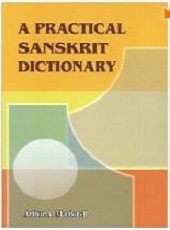
• A Practical Sanskrikt Dictionary,
by A. A. Macdonell, 1893,
http://www.sanskrit-lexicon.uni-koeln.de/scans/MDScan/index.php?sfx=jpg;
1929.
-
Nataraj ed., 1st in 2006, 2012.
-
https://dsal.uchicago.edu/dictionaries/macdonell/ 190516
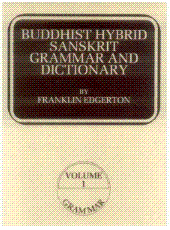
• The Buddhist Hybrid Sanskrit Grammar and
Dictionary, BHS, vol.2, by F. Edgerton,
pp. 627.
-
FEdgerton-BHSD<Ô> /
Bkp<Ô> (link chk 180627)
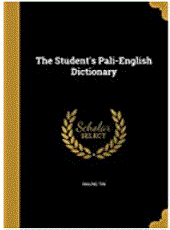
• The Student's Pali English dictionary ,
by U Pe Maung Tin, 1920.
- (ref: UPMT-PEDxxx).
Downloaded copies in TIL
HD-PDF and SD-PDF libraries:
-
UPMT-PaliDict1920<Ô> /
bkp<Ô> (link chk 190113)
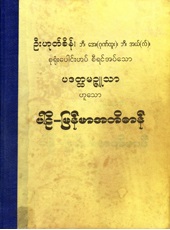
• Pali-Myanmar Dictionary
(in Pal-Myan), by U Hoke Sein,
- (ref: UHS-PMD). The dictionary in printed form is in TIL Research Library.
• Latin-English Vocabulary II, by Hans H Ørberg, 1998
-
HHOrberg-LinguaLatina<Ô> /
Bkp<Ô> (link
chk 190624)
Edited by U Kyaw Tun (UKT) (M.S., I.P.S.T., USA),
Daw Khin Wutyi, Daw Thuzar Myint, Daw Zinthiri Han
and staff of Tun Institute of Learning (TIL).
Not for sale. No copyright. Free for everyone.
Prepared for students and staff of TIL
Research Station, Yangon, MYANMAR
-
http://www.tuninst.net ,
www.romabama.blogspot.com
MC-indx.htm |
Top
MCpp-indx.htm
 {ni.Da.}
p140c3-b12
p141-c1
 {ni.na.}
 {ni.pa.}
 {ni.ba.}
p141-c2
 {ni.Ba.}
 {ni.ma.}
 {ni.ya.}
p141-c3
 {ni.ra.}
UKT notes :
• Azadirachta
indica
 {ta.ma} • Bhishma
• Sutta Nipāta
{ta.ma} • Bhishma
• Sutta Nipāta
• Vowel sounds checked by killed
approximants in BEPS
 {ni.Da.}
p140c3-b12/ p088
• निधि nidhi [ ni-dhí ]
-- m. putting down; food set down; receptacle; fig. embodiment;
(hidden) treasure: apâm --, receptacle of waters, ocean;
निधि ni-dhí
putting down; food set down; receptacle; fig. embodiment;
(hidden) treasure: apâm --, receptacle of waters, ocean;
kalânâm --, full moon; -guhyaka̮adhipa, m. ep. of Kubera;
-datta, m. N. of a merchant; -pa, m. guardian of treasure;
-patidatta, m. N.; -paN, -pâla, m. guardian of a treasure;
-pâlita, m. N.; -maya, a. (î) consisting of treasures;
-vâda, m. art of finding treasure.
( end p140c3 )
( p141c1-top
 )
)
p141c1-b01/ p088
• निधुवन
nidhuvana [ ni-dhuvana ]
-- n. copulation.
निधुवन
ni-dhuvana copulation.
p141c1-b02/ p088
• निध्यर्थिन्
nidhyarthin [ nidhi‿arthin ]
-- a. treasure-seeking.
निध्यर्थिन्
nidhi̮arthin treasure-seeking.
p141c1-b03/ p088
• निध्रुवि
nidhruvi [ ní-dhruvi ]
-- a. constant, faithful.
निध्रुवि
ní-dhruvi constant, faithful.
{ni.na.}
p141c1-b04/ p088
• निनद ninada [ ni-nada ]
-- m. n. sound, noise, cry; -nayana,
n. pouring out; performance of (--°).
निनद ni-nada
sound, noise, cry; -nayana, n. pouring out; performance of
(--°).
• निनर्तिषा
ninartisa [ ni-nart-ish-â ]
-- f. desire to dance.
निनर्तिषा
ni-nart-ish-â desire to dance.
p141c1-b06/ p088
• निनाद ninada [ ni-nâda ]
-- m. sound, noise; cry; buzzing; -nâdin,
a. (--°) sounding like; playing (an instrument);
accompanied by the sound of.
निनाद ni-nâda
sound, noise; cry; buzzing; -nâdin, a. (--°) sounding like;
playing (an instrument); accompanied by the sound of.
p141c1-b07/ p088
• निनिद्रासु
ninidrasu [ ni-nidrâ-su ]
-- des. a. sleepy.
निनिद्रासु
ni-nidrâ-su sleepy.
p141c1-b08
• निनीषा
ninisa [ ni-nî-shâ ]
-- f. desire to carry off (--°); -shu, des.
a. wishing to carry off (ac.); -to bring to (ac. ± prati).
निनीषा ni-nî-shâ
desire to carry off (--°); -shu, des. a. wishing to carry
off (ac.); -- to bring to (ac. ± prati).
p141c1-b09/ p088
• निनृत्ति
ninrtti [ ni-nritti ]
-- f. repetition.
निनृत्ति ni-nritti
repetition.
p141c1-b10/ not online

• [NIND] I. P. (E. also Â.)
-- ninda , deride, abuse, despise, blame; surprise:
pp. nindita , reprehended, censured, blameworthy;
despised; forbidden; inauspicious
p141c1-b11/ p088
• निन्दक nindaka [ nind-aka ]
-- a. blaming; defaming; m. caviller, mocker, scorner, scoffer (gnly. --°);
-ana, n. blame; abuse; -ấ, f. defamation;
cavilling; abuse; censure, blame, condemnation; disgrace.
निन्दक nind-aka
blaming; defaming; m. caviller, mocker, scorner, scoffer
(gnly. --°); -ana, n. blame; abuse; -aN, f. defamation;
cavilling; abuse; censure, blame, condemnation; disgrace.
p141c1-b12/ p088
• निन्द्य
nindya [ nínd-ya (or -yã) ]
-- fp. blameworthy, contemptible; infamous, disgraceful; forbidden: -tâ,
f. infamy, reproach.
निन्द्य nínd-ya
(or -yã) blameworthy, contemptible; infamous,
disgraceful; forbidden: -tâ, f. infamy, reproach.
{ni.pa.}
p141c1-b13/ p088
• निपतन nipatana [ ni-patana ]
-- n. falling; flying, flight; -pâta,
m. fall; descent; cast (of a look); falling from (ab.) on (--°);
alighting (of a bird); fall (fig.); assault, attack; death;
incidental mention; irregularity (gr.); particle (gr.);
-pâtana, n. causing to fall or descend; falling down;
flying down (of a bird); beating, striking; destroying, killing;
incidental mention, esp. of an irregular or rare form (gr.):
-pratîkâra, m. repelling of assaults;
-pâtin, a. falling down; dropping; alighting, on (--°);
striking down, destroying, consuming; -pâdá, m. lowland, valley;
-pâna, n. drinking; trough; trench, tank, pool: -vat,
a. abounding in pools, -saras, n. drinking-pool.
निपतन ni-patana
falling; flying, flight; -pâta, m. fall; descent; cast (of a
look); falling from (ab.) on (--°); alighting (of a bird);
fall (fig.); assault, attack; death; incidental mention;
irregularity (gr.); particle (gr.); -pâtana, n. causing to
fall or descend; falling down; flying down (of a bird);
beating, striking; destroying, killing; incidental mention,
esp. of an irregular or rare form (gr.): -pratîkâra, m.
repelling of assaults; -pâtin, a. falling down; dropping;
alighting, on (--°); striking down, destroying, consuming;
-pâdá, m. lowland, valley; -pâna, n. drinking; trough;
trench, tank, pool: -vat, a. abounding in pools, -saras, n.
drinking-pool.
See my note on Sutta Nipāta in Sanskrit in Eastern Turkistan
p141c1-b14/ p088
• निपुण nipuna [ ni-puna ]
-- a. skilful, adroit, clever, conversant (with lc., inf., or --°);
suitable for, capable of (--°); perfect, complete: -m,
ad. cleverly; delicately; absolutely, completely; exactly,
thoroughly, carefully; -taram, ad. id.; -tâ,
f. skill, cleverness; carefulness: in. carefully.
निपुण ni-puna
skilful, adroit, clever, conversant (with lc., inf., or
--°); suitable for, capable of (--°); perfect, complete: -m,
ad. cleverly; delicately; absolutely, completely; exactly,
thoroughly, carefully; -taram, ad. id.; -tâ, f. skill,
cleverness; carefulness: in. carefully.
p141c1-b15/ not online

• [nipun-ikâ]
-- f. N.
{ni.ba.}
p141c1-b16/ not online

• [ni-banddhri]
-- m. author; -bandha , m. fastening, binding; bondage; bond, fetter;
foundation, fixed property; literary composition. fixed property; literary
composition; -bandhna, z. (i) blinding; n. fastening ...
p141c1-b17/ p088
• निबिड nibida [ nibida ]
-- a. [ni-vila, without interstices], dense, thick, impenetrable; uninter-
(end p141c1 )
(p141c2-top )
rupted; rigid, firm; fast, close (embrace, etc.);
full of (in. or --°); low.
निबिड nibida
[ni-vila, without interstices], dense, thick, impenetrable;
uninterrupted; rigid, firm; fast, close (embrace, etc.);
full of (in. or --°); low.
p141c2-b01/ p088
• निबिडय
nibidaya [ nibida-ya ]
-- den. P. embrace closely: pp. nibidita,
become dense; closely pressed.
निबिडय nibida-ya
P. embrace closely: pp. nibidita, become dense; closely
pressed.
p141c2-b02/ p088
• निबोद्धव्य
niboddhavya [ ni-boddhavya ]
-- fp. to be regarded as (nm.).
निबोद्धव्य
ni-boddhavya to be regarded as (nm.).
{ni.Ba.}
p141c2-b03/ p088
• निभ nibha [ ni-bha ]
-- a. like, resembling (--°, often redundant after
an adjective or with synonyms); ɴ. appearance, pretext
(only in. and ab.); -bhrita, pp. √bhri:
-m, ad. secretly, apart; out of sight; n. secrecy.
निभ ni-bha like,
resembling (--°, often redundant after an adjective or with
synonyms); n. appearance, pretext (only in. and ab.);
-bhrita, pp. √bhri: -m, ad. secretly, apart; out of sight;
n. secrecy.
{ni.ma.}
p141c2-b04/ p088
• निमज्जन
nimajjana [ ni-maggana ]
-- n. immersion; -man trana, n. invitation;
-mantrya, fp. to be invited; to be offered something
(in.); -maya, m. [√mâ] barter, exchange (of,
g., for, in.); -mâtavya, fp. to be bartered
or exchanged for (in.).
निमज्जन ni-maggana
immersion; -mantrana, n. invitation; -mantrya, fp. to be
invited; to be offered something (in.); -maya, m. [√mâ]
barter, exchange (of, g., for, in.); -mâtavya, fp. to be
bartered or exchanged for (in.).
p141c2-b05/ not online

• [nimi]
-- n. N. of various kings
p141c2-b06/ p088
•
निमित्त
nimitta [ ni-mitta ]
-- n. aim, mark;
sign, token; omen; cause, occasion; motive; instrument, efficient cause; --°
a. having -as a cause, caused by: -m yâ, be the
occasion, bear the blame; ac., in., d. on account of; -tas,
ad. by a special cause; -tva, n. causality; -hetu,
m. efficient cause: -tva, n. abst.
ɴ.
निमित्त ni-mitta
aim, mark; sign, token; omen; cause, occasion; motive;
instrument, efficient cause; --° a. having -- as a cause,
caused by: -m yâ, be the occasion, bear the blame; ac., in.,
d. on account of; -tas, ad. by a special cause; -tva, n.
causality; -hetu, m. efficient cause: -tva, n. abst. n.
p141c2-b07/ not online

• [nimittî-kri]
-- turn into a cause; become the occasion of (lc.); ...
p141c2-b08/ p088
• निमिष् nimis [ ni-mísh ]
-- f. twinkling of the eye; -misha, n. twinkling of the eye;
winking; moment; -mîlana, n. closing of the eyes; closing of
a flower; -mîlikâ, f. id. (--°); -mîlin, a.
closing the eyes; -meshá, m. winking, closing of the eye;
moment.
निमिष् ni-mísh
twinkling of the eye; -misha, n. twinkling of the eye;
winking; moment; -mîlana, n. closing of the eyes; closing of
a flower; -mîlikâ, f. id. (--°); -mîlin, a. closing the
eyes; -meshá, m. winking, closing of the eye; moment.
p141c2-b09/ p088
• निमृग्र
nimrgra [ ní-mrig-ra ]
-- a. subsiding, flowing away (waters).
निमृग्र ní-mrig-ra
subsiding, flowing away (waters).
p141c2-b10/ p088
• निम्न nimrukti [ ni-mná ]
-- n. low ground, hollow; a. concave; low-lying, depressed, deep:
-gata, pp. situated in hollows; n. low ground;
-gâ, f. (going to the lowlands), river: -pati,
m. lord of rivers, sea, -suta, pp. m. Bhîshma
(son of the river, i. e. of the Ganges); -‿un nata,
pp. depressed and elevated; n. pl. hill and dale.
निम्न ni-mná low
ground, hollow; a. concave; low-lying, depressed, deep:
-gata, pp. situated in hollows; n. low ground; -gâ, f.
(going to the lowlands), river: -pati, m. lord of rivers,
sea, -suta, pp. m. Bhîshma (son of the river, i. e. of the
Ganges); -̮unnata, pp. depressed and elevated; n. pl. hill
and dale.
See my note on the birth of Bhishma - one of the most illustrious characters in Mahabharata
p141c2-b11/ not online

• [nimba]
-- m. N. of a tree with bitter fruit ( Azadirachta indica ):
-vat-î , f. N.
See my note on
See
p141c2-b012/ p088
• निम्रुक्ति
nimrukti [ ní-mrukti ]
-- f. sunset, evening; -mrúk, f. id.
निम्रुक्ति
ní-mrukti sunset, evening; -mrúk, f. id.
{ni.ya.}
See my note on Vowel sounds checked by killed approximants in BEPS
p141c2-b13/ p088
• नियत niyata [ ni-yata ]
-- pp. √yam: -m, ad. certainly, assuredly;
n. pl. organs of sense (ph.); -kâla, a. lasting
for a limited time, temporary; -vasati, a. having
his permament abode anywhere; -vishaya-vartin,
a. steadily abiding in his appointed sphere; -vrata,
a. faithful to one's vow; -‿âtman,
a. self-controlled.
नियत ni-yata
√yam: -m, ad. certainly, assuredly; n. pl. organs of sense
(ph.); -kâla, a. lasting for a limited time, temporary;
-vasati, a. having his permament abode anywhere;
-vishaya-vartin, a. steadily abiding in his appointed
sphere; -vrata, a. faithful to one's vow; -̮âtman, a.
self-controlled.
p141c2-b14/ p088
• नियति niyati [ ni-yati ]
-- f. fixed order of things, necessity, destiny; Fate.
नियति ni-yati
fixed order of things, necessity, destiny; Fate.
p141c2-b15/ p088
• नियतेन्द्रिय
niyatendriya [ niyata‿indriya ]
-- a. having one's senses restrained.
नियतेन्द्रिय
niyata̮indriya having one's senses restrained.
p141c2-b16/ p088
• नियन्तव्य
niyantavya [ ni-yantavya ]
-- fp. to be restrained or held in check; -guided; -enforced;
-yantrí, m. restrainer, ruler; charioteer:
-tva, n. faculty of restraining; -yantrana,
n. restraining; limitation.
नियन्तव्य
ni-yantavya to be restrained or held in check; -- guided; --
enforced; -yantrí, m. restrainer, ruler; charioteer: -tva,
n. faculty of restraining; -yantrana, n. restraining;
limitation.
p141c2-b17/ p088
• नियम
niyama [ ni-yama ]
-- m. restraint,
limitation; restriction to (lc. or prati with ac.); fixed rule,
certainty, absolute necessity (in a particular case); contract, promise;
vow; self-imposed (religious) observance, minor (occasional) duty:
ab. necessarily, certainly; in. id.; with certain limitations;
-yamana, n. restraining, subduing; restriction; -yama-vat,
a. practising religious observances; -yamya, fp. to
नियम ni-yama
restraint, limitation; restriction to (lc. or prati with
ac.); fixed rule, certainty, absolute necessity (in a
particular case); contract, promise; vow; self-imposed
(religious) observance, minor (occasional) duty: ab.
necessarily, certainly; in. id.; with certain limitations;
-yamana, n. restraining, subduing; restriction; -yama-vat,
a. practising religious observances; -yamya, fp. to be
restrained, -- subdued; -- limited; -- restricted; -yaNna,
n. going in, entry; -yâmaka, a. (ikâ) restraining, checking;
restricting.
( end p141c2 ) (
p141c3-top
 )
)
be
restrained, -subdued; -limited; -re stricted; -yấna, n.
going in, entry; -yâma ka, a. (ikâ) restraining, checking;
restricting.
p141c3-b01/ p088
• नियुक्त
niyukta [ ni-yukta ]
-- pp. √yug; m. public functionary, official; -yukti,
f. appointment, employment (for, -artham); -yú-t, f. bestowal;
series; team, steed, esp. of Vâyu: pl. verses, poem; -yuta,
pp. √yu; n. a certain large number, gnly. million;
-yuddha, n. fight, esp. with fists.
नियुक्त ni-yukta
√yug; m. public functionary, official; -yukti, f.
appointment, employment (for, -artham); -yú-t, f. bestowal;
series; team, steed, esp. of Vâyu: pl. verses, poem; -yuta,
pp. √yu; n. a certain large number, gnly. million; -yuddha,
n. fight, esp. with fists.
p141c3-b02/ p088
• नियोक्तव्य
niyoktavya [ ni-yoktavya ]
-- fp. to be applied or directed to; -commissioned or
appointed to (lc.); -called to account.
नियोक्तव्य
ni-yoktavya to be applied or directed to; -- commissioned or
appointed to (lc.); -- called to account.
p141c3-b03/ p088
• नियोग
niyoga [ ni-yoga ]
-- m. fastening; appointed duty, function;
employment, appointment, commission, business;
order, injunction; necessity, certainty; destiny:
in. necessarily, certainly; -krit,
a. acting in one's behalf, agent; -samsthita,
pp. being in office; -stha,a. being under
the orders of (g.); -‿artha, m. commission.
नियोग ni-yoga
fastening; appointed duty, function; employment,
appointment, commission, business; order, injunction;
necessity, certainty; destiny: in. necessarily, certainly;
-krit, a. acting in one's behalf, agent; -samsthita, pp.
being in office; -stha, a. being under the orders of (g.);
-̮artha, m. commission.
p141c3-b04/ p088
• नियोगिन्
niyogin [ niyog-in ]
-- m. authorised person, deputy, agent, functionary;
-i‿artha-graha‿u pâya, m. resource
of confiscating the property of public functionaries.
नियोगिन्
niyog-in authorised person, deputy, agent, functionary;
-i̮artha-graha̮upâya, m. resource of confiscating the
property of public functionaries.
p141c3-b05/ p088
• नियोजन
niyojana [ ni-yógana ]
-- n. tying up; cord; injunction, commission;
-yogayitavya, cs. fp. to be punished with (in.);
to be urged to (lc.); -yogya, fp. to be fastened;
-endowed with; -instructed in (in.); -commissioned; -entrusted;
m. servant, dependent; -yodhaka, m. pugilist.
नियोजन ni-yógana
tying up; cord; injunction, commission; -yogayitavya, cs.
fp. to be punished with (in.); to be urged to (lc.); -yogya,
fp. to be fastened; -- endowed with; -- instructed in (in.);
-- commissioned; -- entrusted; m. servant, dependent;
-yodhaka, m. pugilist.
{ni.ra.}
p141c3-b06/ not online

• [nir]
-- = nis before soft letters
p141c3-b07/ p088
• निरंशक
niraṃsaka [ nir-amsa-ka ]
-- a. receiving no portion.
निरंशक nir-amsa-ka
receiving no portion.
p141c3-b08/ p088
• निरक्षर
niraksara [ nir-akshara ]
-- a. illiterate; -agni, a. having no domestic fire;
-agha, a. blame less; -aṅkusa,
a. unfettered, unrestricted, perfectly free; extravagant:
-tva, n. abst. ɴ.
निरक्षर
nir-akshara illiterate; -agni, a. having no domestic fire;
-agha, a. blameless; -aṅkusa, a. unfettered, unrestricted,
perfectly free; extravagant: -tva, n. abst. n.
p141c3-b09/ p088
• निरङ्कुशय
nirankusaya [ niraṅkusa-ya ]
-- den. P. unfetter, set free.
निरङ्कुशय
niraṅkusa-ya P. unfetter, set free.
p141c3-b10/ p088
• निरङ्ग
niranga [ nir-aṅga ]
-- a. incomplete; devoid of expedients, resourceless,
thrown on one's own resources; -aṅguli,
a. fingerless; -añgana,
a. (without paint=) guileless, sincere.
निरङ्ग nir-aṅga
incomplete; devoid of expedients, resourceless, thrown on
one's own resources; -aṅguli, a. fingerless; -añgana, a.
(without paint=) guileless, sincere.
p141c3-b11/ p088
• निरति
nirati [ ni-rati ]
-- f. addiction to
(--°).
निरति ni-rati
addiction to (--°).
p141c3-b12/ p088
• निरतिशय
niratisaya [ nir-atisaya ]
-- a. not to be surpassed, greatest, supreme; without
distinctive marks; -atyaya, a. free from danger, safe;
successful; infallible; -adhishthâna, a. untenable;
independent; -anukrosa, m. pitilessness
(-tas, ad. pitilessly); a. pitiless (towards, lc.);
-anuga, a. having no retinue; -anugraha,
a. showing no favour or pity; -anuyogya,
fp. irreproachable, valid (argument); -anurodha,
a. regardless of, indifferent to (lc.); -anusaya,
a. having no residuum of the consequences of action left.
निरतिशय nir-atisaya
not to be surpassed, greatest, supreme; without distinctive
marks; -atyaya, a. free from danger, safe; successful;
infallible; -adhishthâna, a. untenable; independent;
-anukrosa, m. pitilessness (-tas, ad. pitilessly); a.
pitiless (towards, lc.); -anuga, a. having no retinue;
-anugraha, a. showing no favour or pity; -anuyogya, fp.
irreproachable, valid (argument); -anurodha, a. regardless
of, indifferent to (lc.); -anusaya, a. having no residuum of
the consequences of action left.
p141c3-b13/ p088
• निरन्तर
nirantara [ nir-antara ]
-- a. having no interstice. contiguous, successive,
continuous, uninterrupted, constant; dense;
thickly set with, full of (in. or --°); faithful (friend);
without a difference, identical: -m, ad. tightly (embrace);
continually; forthwith; -anna, a. having nothing to eat; fasting;
yielding no food; -anvaya, a. having no descendants; unrelated,
unconnected: -m, ad. behind any one's back.
निरन्तर
nir-antara having no interstice. contiguous, successive,
continuous, uninterrupted, constant; dense; thickly set
with, full of (in. or --°); faithful (friend); without a
difference, identical: -m, ad. tightly (embrace);
continually; forthwith; -anna, a. having nothing to eat;
fasting; yielding no food; -anvaya, a. having no
descendants; unrelated, unconnected: -m, ad. behind any
one's back.
p141c3-b11/ p088
• निरप nirapa [ nir-apa ]
-- a. waterless; -apatya, a. childless;
-apatrapa, a. shameless; -aparâ dha,
a. harmless, innocent; -apavâda, a. blameless;
subject to no exception; -apâya, a. imperishable;
unfailing; unharmed, safe; -apâyin, a. imperishable;
-apeksha, a. regardless of, indifferent to (lc. or
--°); caring
( end p141c3 )
( p142c1-top
 )
)
for nothing, indifferent to worldly
objects; independent of (--°): -m, ad. without having any
regard, without troubling about a thing, -ka, a.
independent, -tâ, f. regardlessness; indifference towards
(lc.), -tva, n. indifference; independence;
-apekshâ, f. indifference towards (lc.);
-apekshita, pp. disrearded; regardless of (--°); indifferent
towards (lc.); -apekshya, fp. not to be troubled about.
UKT: p141c3-b11 moved to next file.
UKT: नीम Neem (Hindi-Devanagari: नीम Neem , Bangla-Bengali: নিম
Nim )
Remember: Devanagari script and Bengali scripts are different - Wiki spellings
have dropped out the viram at the end.
See also
{ta.ma}
in
http://www.tuninst.net/MyanMedPlants/TIL/r4c1ta/r4c1ta.htm#ta-ma 120522
From Wikipedia: http://en.wikipedia.org/wiki/Azadirachta_indica 120522
 Azadirachta
indica (Hindi-Devanagari: नीम Neem , Bangla-Bengali: নিম Nim )
[UKT: note Devanagari script and Bengali scripts are different - Wiki spellings
have dropped out the viram at the end.] is a tree in the mahogany family
Meliaceae. It is one of two species in the genus Azadirachta, and is
native to India, Pakistan and Bangladesh growing in tropical and semi-tropical
regions. Its fruits and seeds are the source of neem oil.
Azadirachta
indica (Hindi-Devanagari: नीम Neem , Bangla-Bengali: নিম Nim )
[UKT: note Devanagari script and Bengali scripts are different - Wiki spellings
have dropped out the viram at the end.] is a tree in the mahogany family
Meliaceae. It is one of two species in the genus Azadirachta, and is
native to India, Pakistan and Bangladesh growing in tropical and semi-tropical
regions. Its fruits and seeds are the source of neem oil.
Neem is a fast-growing tree that can reach a height of 15–20 metres (49–66 ft), rarely to 35–40 metres (115–130 ft). It is evergreen, but in severe drought it may shed most or nearly all of its leaves. The branches are wide spread. The fairly dense crown is roundish or oval and may reach the diameter of 15–20 metres (49–66 ft) in old, free-standing specimens.
UKT: More in Wikipedia article
Go back A-indica-note-b
- one of the most illustrious characters in Mahabharata
From Wikipedia: http://en.wikipedia.org/wiki/Bhishma 120522
 Bhishma
(Bheeshma or Devavrata or 'Bhishma Pitamah') was the eighth
son of Kuru King
Shantanu
who was blessed with wish-long life and had sworn to serve the ruling Kuru king.[1]
He was one of the most prominent characters of the great Indian epic, the
Mahabharata. He was the grand uncle of both the
Pandavas and
the Kauravas.
An unparalleled archer, he once vanquished the mighty
Parasurama.
Bhishma
(Bheeshma or Devavrata or 'Bhishma Pitamah') was the eighth
son of Kuru King
Shantanu
who was blessed with wish-long life and had sworn to serve the ruling Kuru king.[1]
He was one of the most prominent characters of the great Indian epic, the
Mahabharata. He was the grand uncle of both the
Pandavas and
the Kauravas.
An unparalleled archer, he once vanquished the mighty
Parasurama.
The legend behind Bhishma's birth is as follows — once the eight Vasus ("Ashtavasus") visited Vashishta's ashram accompanied by their wives. [UKT ¶ ]
The eight Vasus ("Ashtavasus") are included in the 33-devas the companions of Indra, and they were visiting Vashishta a powerful rishi.
-- http://en.wikipedia.org/wiki/Vasus 120522
-- http://en.wikipedia.org/wiki/Vashishta 120522
One of the wives took a fancy to Nandini, Vashishta's wish-bearing cow and asked her husband Prabhasa to steal it from Vashishta. Prabhasa then stole the cow with the help of the others who were all consequently cursed by Vashishta to be born in the world of men. [UKT ¶ ]
Upon the Vasus appealing to Vashishta's mercy, the seven Vasus who had assisted in stealing Nandini had their curse mitigated such that they would be liberated from their human birth as soon as they were born; however, Prabhasa being protagonist of the theft, was cursed to endure a longer life on the earth. The curse, however is softened to the extent that he would be one of the most illustrious men of his time. It was this Prabhasa who took birth as Devavrata (Bhishma).
UKT: More in the Wikipedia article.
Go back Bhisma-note-b
From Wikipedia: http://en.wikipedia.org/wiki/Sutta_Nipata 120522
The Sutta Nipata[1] is a Buddhist scripture, a sutta collection in the Khuddaka Nikaya, part of the Pali Canon of Theravada Buddhism. All its suttas consist largely of verse, though some also contain some prose. It is divided into five sections:
• Uraga Vagga
• Cula Vagga
• Maha Vagga
• Atthaka Vagga
• Parayana Vagga
Some scholars[2] believe that it describes the oldest of all Buddhist practices. Others agree that it contains much very early material.
• Tr V. Fausbøll, in Sacred Books of the East, volume X, Clarendon/Oxford, 1881; reprinted by Motilal Banarsidass, Delhi (?and by Dover, New York)
• Buddha's Teachings, tr Lord Chalmers, Harvard Oriental Series, 1932
• Woven Cadences, tr E. M. Hare, 1945, out of print
• The Group of Discourses, tr K. R. Norman, 1984, Pali Text Society[1], Bristol; the original edition included alternative translations by I. B. Horner & Walpola Rahula; these are currently available in the paperback edition under the title The Rhinoceros Horn and Other Early Buddhist Poems; the current edition under the original title omits these, but includes instead the translator's notes, not included in the paperback
• Tr Saddhatissa, Curzon, London/Humanities Press, New York, 1985
• Tr N. A. Jayawickrama, University of Kelaniya, 2001
UKT: End of Wikipedia article
From: http://www.jstor.org/discover/10.2307/25189480?uid=3739448&uid=2129&uid=2&uid=70&uid=3737720&uid=4&sid=47699023436077 120522
XVIII
The Sutta Nipata in a Sanskrit version from Eastern Turkestan -- A. F. Rudolf
Hoernle
While preparing a descriptive register of the manuscript fragments recovered by Sir Aurel Stein from the sand-buried ruins of Khadalik in the course of his second tour of exploration in Eastern Turkestan, I have recently discovered a portion of the Sanskrit version of the Sutta Nipāta. It is contained in fragments of five consecutive folios. ¹ According to Fausböll, in the reasoned statement in the Introduction of his Translation of the Sutta Nipāta (in SBE., vol. x), certain portions of that work, including the Aṭṭhavagga, are "very old", containing as they do "some ramnants of the Primitive Buddhism" (loc. cit., p. xi). It is just the Aṭṭhavagga which happens to be preserved in the fragments, and it is this fact which imparts a particular interest to the discovery.
The fragments measure about 6x3 inches [UKT: what material were they made of ? palm-leaf, wood, ivory, brass, parchment? The size 6x3 is interesting.], and are corresponding parts of the middle of their respective folios. Their right and left ends are broken off, and with the left end the folio numbers and string-holes are lost. As may be seen from the first fragment (obv., II. 5, 6; rev., II. 1. 2, quoted below), the maximum number of the surviving akṣaras in a line is 21-3. The text of that fragment is written in śloka verses; and that fact enables us, by comparing the surviving Sanskrit text with the full Pāli text, to determine that the full number of akṣaras in [{p46end}]
¹ By Sir A. Stein they are marked Kha. 0012.b; and belong to those Khadalik finds which he purchased from the Khotanese trader Badruddin; see his Ruins of Desert Cathay , vol. i, pp. 236-y. In the Register they are No. 517.
Go back Sutta-Nipāta-note-b
UKT 120610
This note will have to be updated again and again.

I am very much intrigued by vowels checked by killed approximants. In the
inset above I have given the basic vowels. For this discussion the reader must
use them to change
 {na.}
into
{na.}
into  {ni.},
etc.
{ni.},
etc.
{i.} -->
The Bur-Myan nasals are very complex to non-natives. I myself got into trouble with them until I realized that the nasal-onsets in Bur-Myan phonology, CnV (where Cn is the nasal consonant and V the nuclear vowel), should be treated like the regular vowels.
{nu.} /nu/ (back close, round),
{nau:} /nɑ/ (back open, round)
{ni.} is the very first very-close front vowel. It is an allophone of /ni/, and
 {ya.} is
the very first approximant-consonants of row(s) #6:
{ya.},
{ya.} is
the very first approximant-consonants of row(s) #6:
{ya.},
 {ra.},
 {la.},
 {wa.},
 {þa.},
 {ha.}.
The vowel is to be checked by the 'killed' consonants to form the rime of the
canonical form, VÇ. When the intrinsic-vowel of the consonants are killed we
get:
{ha.}.
The vowel is to be checked by the 'killed' consonants to form the rime of the
canonical form, VÇ. When the intrinsic-vowel of the consonants are killed we
get:
 {y},
{y},
 {r},
{r},
 {l},
{l},
 {w},
{w},
 {þ},
{þ},
 {h}.
{h}.
There is perfect agreement on the first four members between Bur-Myan,
Eng-Lat, and Skt-Dev. However on
{þa.},
there is serious disagreement between Bur-Myan and Skt-Dev because Burmese is
thibilant whereas Sanskrit is sibilant, with English being both.
There is serious disagreement also on
{ha.}
between English (an IE (Indo-European) language), and Burmese (a Tib-Bur
(Tibeto-Burman) language). The Burmese
{ha.}
comes from deep down the throat, whereas the English <h> can be both an aspirate
(in Cockney dialect) and a non-aspirate (in Received Pronunciation).
Go back vow-checked-by-approx-note-b
End of TIL file