p096-2.htm
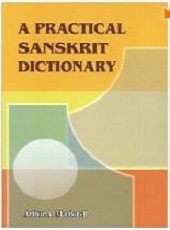
• A Practical Sanskrikt Dictionary,
by A. A. Macdonell, 1893,
http://www.sanskrit-lexicon.uni-koeln.de/scans/MDScan/index.php?sfx=jpg;
1929.
-
Nataraj ed., 1st in 2006, 2012.
-
https://dsal.uchicago.edu/dictionaries/macdonell/ 190516
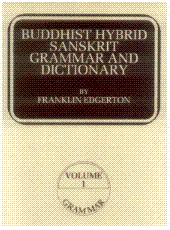
• The Buddhist Hybrid Sanskrit Grammar and
Dictionary, BHS, vol.2, by F. Edgerton,
pp. 627.
-
FEdgerton-BHSD<Ô> /
Bkp<Ô> (link chk 180627)
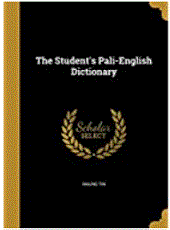
• The Student's Pali English dictionary ,
by U Pe Maung Tin, 1920.
- (ref: UPMT-PEDxxx).
Downloaded copies in TIL
HD-PDF and SD-PDF libraries:
-
UPMT-PaliDict1920<Ô> /
bkp<Ô> (link chk 190113)
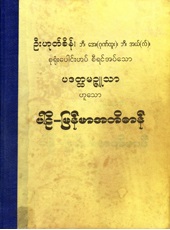
• Pali-Myanmar Dictionary
(in Pal-Myan), by U Hoke Sein,
- (ref: UHS-PMD). The dictionary in printed form is in TIL Research Library.
• Latin-English Vocabulary II, by Hans H Ørberg, 1998
-
HHOrberg-LinguaLatina<Ô> /
Bkp<Ô> (link
chk 190624)
Edited by U Kyaw Tun (UKT) (M.S., I.P.S.T., USA),
Daw Khin Wutyi, Daw Thuzar Myint, Daw Zinthiri Han
and staff of Tun Institute of Learning (TIL).
Not for sale. No copyright. Free for everyone.
Prepared for students and staff of TIL
Research Station, Yangon, MYANMAR
-
http://www.tuninst.net ,
www.romabama.blogspot.com
MC-indx.htm |
Top
MCpp-indx.htm
 {hsa.} छ :
pronounced as Palatal-affricate
/
{hsa.} छ :
pronounced as Palatal-affricate
/ {hkya.}/
p096-2c1
 {hsa.ga.}
 {hsa.Ta.}
 {hsa.ta.}
 {hsa.da.}
p096-2c2
p096-2c3
 {hsa.na.}
UKT notes :
• Umbrella as a sign of rank,
and the story of my great-grandfather U Yan Shin.
{hsa.} छ :
pronounced as Palatal-affricate
/ {hkya.}/
• छ «cha»
BPal:
{hsa.} - UHS-PMD0399
UKT from UHS: mfn. numeral six, six items
UKT 160305, 180606: There are several problems in connection with the palatal plosive-stops, even without including Mon-Myan. The problem increases three-fold because Mon-Myan has not only /a/ or /æ/ as the intrinsic vowel, but also /é/ or /è/. Because of this problem, it is probably best to leave out Mon-Myan from BEPS consonants. Listen to Mon-Myan affricates:
- bk-cndl-{sa.}-row<))Mon pronounce
{sa.}/
{c} as /
{kya.}/. Remember
{a.þût} sign. To close this problem we may have to introduce new dedicated glyphs for Palatal affricates:
{ca.}. This will be pronounced by native English speakers (who could not differentiate the tenuis from the voiceless) as Cha /ʧ/ as in English <church> /ʧɜːʧ/ (DJPD16-097).
Firstly, the Engl-Latin and Skt-Dev speakers, pronounce both the first
{sa.}, the 2nd
{za.} as Affricates.
See p090-2.htm for
Secondly, the Engl-Latin speakers "heard" the
- http://en.wikipedia.org/wiki/Sapir-Whorf_hypothesis 070914Thirdly, to include Mon-Myan under the umbrella of BEPS, we may have to introduce dedicated glyphs for Palatal affricates. However this matter is still tentative until I have a working knowledge of Mon-Myan phonology which because of its being Aus-Asi is different from Bur-Myan which is Tib-Bur. It is probably that Mon-Myan does not have voiced consonants which explains why they pronounce the {Ga.} as /ché/.
Palatal-stops
Bamah:{ka.},
{hka.}, ---
{ga.},
{Ga.}
Bamah:{gya.}
Bamah:{Za.}

Notice the difference between
{Sya.} (Ya'pín {ya.pín} modified
{Sa.}/
{S}
Palatal-affricates - tentative (180607)
Mon:
Mon:{ca.},
{hca.},
{jé.}, {hcé}
There are other problems, but for the time being, I'll just name these three. Just note that I am not giving both IPA and IAST transliterations to avoid more problems, and also that Romabama transcriptions are based on Bur-Myan phonology and not on that of Mon-Myan.
{hsa.ga.}
p096-2c1-b00
p096-2c1-b00/ p069-023
• छगल [ khaga-lá ]
Skt: छगल (pronounce as
/ {cha.ga.la.}/)
-- m. goat: î, f. she-goat. -- Mac096c1
{cha.ga.la.}/)
-- m. goat: î, f. she-goat. -- Mac096c1
23)
Pal:
 {hsa.ga.la.} -- UHS-PMD0399
UKT from UHS: m. goat
{hsa.Ta.}
p096-2c1-b01/ p069-022
• छटा [ khatâ ]
- f. lump, mass, multitude; brilliance.
22)
• छट्ठ «chaṭṭha»
= छ ट ् ठ
Skt: षाष्ठ
«ṣāṣṭha» -
adj. sixth - SpkSkt
Pal: छट्ठ
«chaṭṭha» - numeral
(ordinal) sixth -
https://en.wiktionary.org/wiki/... 170726
BPal:
 {hsûT~HTa.} - UHS-PMD0399
UKT from UHS: mfn. the sixth .
Note the horizontal conjunct.
{hsa.ta.}
p096-2c1-b02/ p069-021
• छत्त्र
[ khat-tra ]
- n. [shader], umbrella (one of the insignia of royalty): -grâhinî,
f.
female umbrella-bearer; -dhâra, m. umbrella-bearer: -tva,
n. office of --; -dhârana,
n. use of an umbrella; -dhârin, m. umbrella-bearer; -vat,
a. having an umbrella;
-vriksha, m. N. of a tree.
21)
© छत्त्र
chattra [ khat-tra ]
= छ त ् त ् र
Skt: छत्त्र
[ khat-tra ]
-- n. [shader], umbrella (one of the insignia of royalty) -- Mac096c1
BPal:
 {hsût~ta.} -- UHS-PMD0399
UKT from UHS: n. royal umbrella, mushroom
See my note on the Use of Umbrella
as a sign of rank, and the story of my great-grandfather U Yan Shin.
p096-2c1-b03/ p069-047
• छत्त्राक [ khattr-âka ]
- n. mushroom; -ikâ, f. small umbrella; -in, a. having an umbrella
(prince): (i)-nyâya, m. way of calling a king an umbrella-bearer = excusable
tautology.
47)
p096-2c1-b04

• [khattrî-kri ]
-- turn into or use as an umbrella
{hsa.da.}
p096-2c1-b05

• छद् [¹. khad ]
- of the simple stem only pp. khanna, covered, concealed; obscured,
eclipse; unobserved, disguised; covert: -m or -°, ad. secretly,
tacitly; cs. khâdáya, P. (E. also Â.) cover; spread (as
a cover); conceal; protect.
ava, pp. covered up; covered with (in.); cs. cover up; conceal, keep secret; pp. khâdita. â, cs. cover; conceal; obscure; clothe; put on (clothes, ac.: P. Â.); dress oneself (Â.).
upa, pp. covered, concealed, hidden. pari, pp. covered; disguised in (-°); cs. cover. pra, pp. covered; concealed; disguised; unobserved; secret: -m or °-, privately, secretly; cs. cover. pra, pp. covered; concealed; disguised; unobserved; secret: -m or °-, privately, secretly; cs. cover; conceal; keep secret; envelope oneself in (in.)
prati, pp. covered; shrouded, concealed, hidden; unrecognised; cs. envelope. sam, pp. id.
© छादित [khâdita] [UKT180604: my rendition - need to check]
Skt: छादित [khâdita] - pp. of छद् [¹. khad ] - Mac096c1
e.g. छादित वाहन «chādita vāhana» - railway covered wagon
- SpkSkt
p096-2c2-b01

• छद् [ ². khad ]
- x. [ khadáya] ,
[ khand ], x. [ khandáya ] (V.E) appear, seem; seem good; please;
P. khandays, offer something (in.) to (ac. or rarely g.).
upa, P. offer anything (in.) to (ac.); try to seduce (ac.).
p096-2c2-b02/ p069-046
• छद [ khad-a ]
- a. covering (--°); m. cover, covering; wing; leaf; n. plumage;
-ana,
n. cover,
covering; wing; leaf; -i, -in, a. covering (--°); -ís,
n. cover (also of a
wagon); roof.
46)
p096-2c2-b03/ p069-045
• छद््मन् [ khad-man ]
- n. roof; guise, disguise; plea, pretext; fraud, hypocrisy; --°, the
mask of--; °--, only in appearance, fraudulent, hypocritical.
45)
p096-2c3-b00/ p069-044
• छद््मरूपिन् [ khadma-rûpin ]
- a. disguised in the form of (--°); -sthita, pp. feigning (--°).
44)
p096-2c3-b01/ p069-043
• छद््मिन् [ khadm-in ]
- a. disguised as (--°).
43)
{hsa.na.}
p096-2c3-b02/ p069-042
• छनच्छनिति [ khana-kkhan-iti ]
- ad. hissing.
42)
p096-2c3-b03/ p069-041
• छन्द् [ khand ]
- v. √2. khad .
41)
p096-2c3-b04/ p069-040
• छन्द [ khánd-a or khand-á ]
- a. pleasing, alluring; m. appearance, form; pleasure, will: in. or
-tas,
independently, according to one's own pleasure, at one's will; in., ab., or
-tas,
according to the will of (--°, g.).
40)
p096-2c3-b05/ p069-039
• छन्दक khanda-ka, -˚न [ -na ]
- a. pleasing, winning.
39)
p096-2c3-b06/ p069-038
• छन्दस् [ khánd-as ]
- n. pleasure, desire, will; magical or sacred hymn; hymn which is not
Rik, Sâman, or
Yagus; Vedic text, Veda; metre, prosody: (h)-sâstra, n. manual of prosody (esp. Piṅgala's); (s)-krita,
pp. composed in metre; (h)-sûtra, n. (Piṅgala's)
sûtra on prosody.
38)
p096-2c3-b07/ p069-037
• छन्दानुगामिन् [
khanda‿anugâmin ]
- a. complaisant, obedient; -‿anuvritta, n. complaisance.
37)
-- UKT 141101, 170726
My father, U Tun Pe, used to tell me that his grandfather U Yan Shin of Salé township in Magwé Division (near Mount Popa in central Myanmarpré) had the use of customary umbrella. According to my father who used to describe the funerals of both his grandmother - the first wife of U Yan Shin, and U Yan Shin himself. Though his grandfather married again - a Shan descendant of Gyobingauk in southern Myanmarpré, my father seemed to have very little affection his step grandmother.
U Yan Shin and his first wife together with children were refugees in southern Myanmarpré after being reported to the King (probably King Mindon or Thibaw) by the mayor of Salé as a leader of a revolt. The intrigue was started by the mayor who used to be a childhood friend. Because of that report U Yan Shin came to be known as Nga Yan Shin in court-parlance, or Bo Yan Shin among his people as the head of a rebellion.
U Yan Shin had no choice but to flee from his native lands - toddy plantations extending from Myingyan to Salé. After seeing that his family was safe in Gyobingauk in southern Myanmarpré then under the rule of British, he promptly went back to Salé and had the Mayor invited to a Toddy-drinking party. He then executed the Mayor (by beheading him with his long sword) at the junction of the road from Salé to Kyaukpadaung. It is obvious that U Yan Shin had indeed armed men under him but whether he was planning to revolt the then king, we do not know.
U Yan Shin because of his intimate knowledge of the jungles of Pegu Yoma took to his horse, at times feeling his way on the trunks and barks of trees and shrubs at night. He was also a practitioner of Indigenous Medicine and had visited the depths of the forests in search of medicinal plants accompanied by his trusted pupil, U Sein, who later came to be his son-in-law.
My great grandmother who passed away before my father was five had two funeral
objects buried with her. One was the "fruit & vegetable basket" for carrying
picked fruits and vegetables, and the other a
 {tän-hkyu} - a long bamboo pole with a small basket and sickle at the top end to
pick and collect the fruit from top branches. My father had described his
grandmother as a member of a Burmese-tribe known as
{tän-hkyu} - a long bamboo pole with a small basket and sickle at the top end to
pick and collect the fruit from top branches. My father had described his
grandmother as a member of a Burmese-tribe known as
 {taún þu myo:} or "agriculturalists" probably of the same group as
 {taún-þu-kri:mín:} of ancient Pagan. And these funeral objects were the
insignia of her tribe. If so she was a worshipper of Naga
{taún-þu-kri:mín:} of ancient Pagan. And these funeral objects were the
insignia of her tribe. If so she was a worshipper of Naga
 {na.ga:}
'the hooded-serpent deity' worshipped in Ancient Pagan and Ancient Tagaung.
{na.ga:}
'the hooded-serpent deity' worshipped in Ancient Pagan and Ancient Tagaung.
My father who by that time was about ten remembered his grandfather's funeral very well. The forehead of the body was plastered with genuine gold-leaf, and his hearse had four golden umbrellas at the corners as a sign of rank.
When I described the funerals to Hanthawaddy U Ba Yin - a noted scholar of his day, U Ba Yin had said that my great grandfather was not of linage of kings, but of Burmese chieftains - or Kalan - the same as that of Kyansittha who later became a famous king of Pagan.
The umbrellas were of many kinds. At the top is the White Umbrella with multiple tiers reserved for the Buddha. Then came the White Umbrella of the King, and then the Golden Umbrella of royal princes (both hereditary and appointed), and those of Kalan. Respected elders, both monks and laymen, are allowed the use of Umbrellas of Ranks especially at their funerals.
Go back umbrella-note-b
End of TIL file
