p088-2.htm
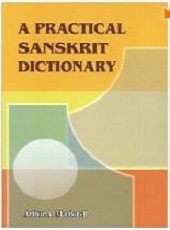
• A Practical Sanskrikt Dictionary,
by A. A. Macdonell, 1893,
http://www.sanskrit-lexicon.uni-koeln.de/scans/MDScan/index.php?sfx=jpg;
1929.
-
Nataraj ed., 1st in 2006, 2012.
-
https://dsal.uchicago.edu/dictionaries/macdonell/ 190516
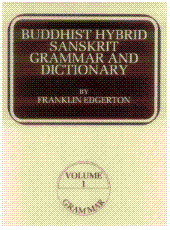
• The Buddhist Hybrid Sanskrit Grammar and
Dictionary, BHS, vol.2, by F. Edgerton,
pp. 627.
-
FEdgerton-BHSD<Ô> /
Bkp<Ô> (link chk 180627)
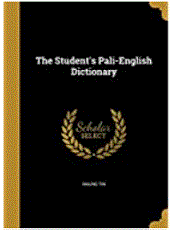
• The Student's Pali English dictionary ,
by U Pe Maung Tin, 1920.
- (ref: UPMT-PEDxxx).
Downloaded copies in TIL
HD-PDF and SD-PDF libraries:
-
UPMT-PaliDict1920<Ô> /
bkp<Ô> (link chk 190113)
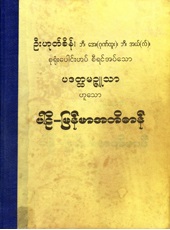
• Pali-Myanmar Dictionary
(in Pal-Myan), by U Hoke Sein,
- (ref: UHS-PMD). The dictionary in printed form is in TIL Research Library.
• Latin-English Vocabulary II, by Hans H Ørberg, 1998
-
HHOrberg-LinguaLatina<Ô> /
Bkp<Ô> (link
chk 190624)
Edited by U Kyaw Tun (UKT) (M.S., I.P.S.T., USA),
Daw Khin Wutyi, Daw Thuzar Myint, Daw Zinthiri Han
and staff of Tun Institute of Learning (TIL).
Not for sale. No copyright. Free for everyone.
Prepared for students and staff of TIL
Research Station, Yangon, MYANMAR
-
http://www.tuninst.net ,
www.romabama.blogspot.com
MC-indx.htm |
Top
MCpp-indx.htm
 {Ga.}
{Ga.}
p088-2c1-2c2-2c3
 {Ga.Ta.}

UKT notes :
• Column #c4 in Akshara matrix: uniqueness
•
Vedic Rishi honoured by Gautama Buddha
• Words from Turner's Népali Dictionary
 {Ga.}
{Ga.}
UKT 141113, 170705, 190327: The glyph r1c4
{hké} /kʰ/ in Mon-Myan. Because of this it is assumed to be an "aspirate". This is similar to
{ha.hto:} sound. However, it is not so in Bur-Myan and Pali-Myan. Theravada Buddhist monks doubly make sure that we pronounce
The Pali-Myan (Tib-Bur) dictionary by UHS begins this section with entries on
{Gän} which is not the case with Macdonell Skt-Dev (IE), and F. Edgerton with BHS-Lat (Tib-Bur?). However, for the sake of Pal-Myan (Tib-Bur) readers, I shall begin with an entry from U Hoke Sein UHS-PMD, and entries from Népali languages, particularly Néwari (Tib-Bur), which I conjecture are directly descended from Old Magadhi (Tib-Bur) - the mother-tongue of Gautama Buddha. Unfortunately, I am still in the process of going through A Comparative and Etymological Dictionary of Nepali Language by R L Turner. It is on Gohkali (IE influenced by Tib-Bur). Downloaded files TIL HD-nonPDF and SD-nonPDF libraries:
- Turn-NepalDict<Ô> / bkp<Ô> (link chk 170805)
> p152.htm to p161.htm
¤घङौरो ghaṅauro - s A partic. kind of small thorny tree. - Turn152
¤घ्वार् ghwār - s. Snoring. -Turn161 • घंषति
BPal:{Gän-þa.ti.} -- UHS-PMD0374
UKT from UHS: rub, abrasive, push into, sharpen, restrictive
See also my note on: Column #c4 in Akshara matrix: uniqueness
p088-2c123-b00/ p064-126
• घ ¹. [gha], घा [ ghâ ]
 {Ga} घा
- V. enc. pcl. (almost entirely limited to the RV.), just, indeed,
certainly: gnly. to be rendered by stress only; used after other pcls., prns., &
prps., & before îm & íd.
126)
p088-2c123-b01/ p064-125
• घ [ ². gha ]
- a. striking, killing (--°).
125)
 {Ga.Ta.}
p088-2c123-b02/ not online
घट् [ghat ]
- i. â. ghata , be zealous or active; work, strive for (ac., d., lc.,
or prati, -artham, -arthe); take place; be possible, succeed; be suitable or
appropriate; accumulate; unite with (in.); cs. ghataya,
(Ā.) P. join, unite (with, in.); hug closely; place upon (lc.);
fetch; make, fashion, produce; perform; do anything (ac.) for (g.);
pp. ghatita, made of (-°). ud, cs. ghâtaya,
open; uncover; disclose, betray; begin. sam-ud, cs. open; uncover
the head = be able to show oneself in public. pari, cs. strike
or sound (a musical instrument). vi, go or fly asunder,
disperse, separate; be interrupted, marred, or frustrated; cs. -ghâtaya,
tear, rend; separate; frustrate, ruin. pra-vi, pp. hewn off; cs.
disperse. sam, assemble; cs. -ghâtaya, collect,
assemble; strike, sound (a note).
UKT 160118, 160223, 170702, 190327:
Caution: To avoid confusion, neither IPA nor IAST transcriptions are given.
Only Romabama transcription is used.
Remember, the following is my conjecture, and it may change as my study of Skt-Dev progresses.
We will now look at the shapes of the glyphs in the written language aka script.
#1. Devanagari Velar r1c4
घ {Ga.} &
dental r4c4 ध
{Da.}:
Both shapes and pronunciation are so similar that they can be mistaken one for
the other.
#2. Myanmar Velar r1c4
{Ga.} & retroflex r3c4
 {Ða.}:
Related shapes, but in different in pronunciation.
Now, listen to Mon-Myan, concentrating on the vowel part /é/:
Mon
/ {hké}: Mon-r1<))
Mon/ {hté}: Mon-r3<))
 Based
on shapes and pronunciations, I've to conclude that there is something
noteworthy in column c4.
Based
on shapes and pronunciations, I've to conclude that there is something
noteworthy in column c4.
We also find a similar but of a different kind of uniqueness when we compare row r3 to the more commonly used row r4. This has prompted many in Myanmarpré to suggest that row r3, and column c4 are only applicable to Pali, and not to Burmese, and should be excluded from Bur-Myan akshara table.
They have forgotten that Pali or more precisely Pali-Lanka
is invented only in the time of King Asoka
 {a-þau:ka. mín:}. Pali-Lanka was invented from Old Magadhi (the mother tongue of Gautama Buddha)
and Lanka language. Old Magadhi have belonged to
Myanmarpré - the land - long before the Buddhist era - to the time of King Abhiraza
{a-þau:ka. mín:}. Pali-Lanka was invented from Old Magadhi (the mother tongue of Gautama Buddha)
and Lanka language. Old Magadhi have belonged to
Myanmarpré - the land - long before the Buddhist era - to the time of King Abhiraza
 {a.Bi.ra-za mín:} of
Tagaung.
{a.Bi.ra-za mín:} of
Tagaung.
 Moreover, even before the time of King Abhiraza
{a.Bi.ra-za mín:}, when humans and land-animals have been
criss-crossing over the mountains between northern India and northern Myamarpré.
The foothills of the Himalayan ranges extending from the west to east, and
bending south Myanmarpré is the heartland of Tibeto-Burman languages. See
Section 08: (link chk 190328)
Moreover, even before the time of King Abhiraza
{a.Bi.ra-za mín:}, when humans and land-animals have been
criss-crossing over the mountains between northern India and northern Myamarpré.
The foothills of the Himalayan ranges extending from the west to east, and
bending south Myanmarpré is the heartland of Tibeto-Burman languages. See
Section 08: (link chk 190328)
¤ Geology
 {Bu-mi.bé-Da.} - geol-indx
> myan-geol.htm
{Bu-mi.bé-Da.} - geol-indx
> myan-geol.htm
¤ Geography
 {pa.hta.wi-wín}
-
geog-indx > fossil.htm
{pa.hta.wi-wín}
-
geog-indx > fossil.htm
My caution is that if you forget to mention the close relation between north-eastern India and northern Myanmarpré, you will fail to impress upon the common people the close relationship that exists between the cultures of South Asia and SEAsia.
 Even now we
have differences and misunderstanding enough,
even within the country of Myanmarpré.
Destroying this
unique relationship which we
have inherited from the most humane king,
the Buddhist Emperor Asoka
{a-þau:ka. mín:} aka
Asoka-the-Great who had rightfully belonged
to our area.
Even now we
have differences and misunderstanding enough,
even within the country of Myanmarpré.
Destroying this
unique relationship which we
have inherited from the most humane king,
the Buddhist Emperor Asoka
{a-þau:ka. mín:} aka
Asoka-the-Great who had rightfully belonged
to our area.
It is also significant that
{Ga.} घ &
{Ga} घा almost entirely
limited to the Rig Veda suggests that
there was a common language from which
Pal-Myan (Mag-Myan or Mag-Asokan) are
derived. It is language of
 {I.þi.} or
 {iRi.þi} or - the Védic language.
See my note on Rig Véda
{iRi.þi} or - the Védic language.
See my note on Rig Véda
-
MCv2pp-indx.htm >
p056-2.htm (link chk 190328)
This has led me to suggest that there was a parent language, say the language
of the Rishis, from which the Asokan (Brahmi) and its
related languages such as Bur-Myan and Néwari had
descended.

In my note I have quoted Gautama Buddha's
position on Rig Veda Rishis
"In the Buddhist Vinaya
Pitaka of the Mahavagga (I.245)
[7]
section the Buddha pays respect to
Vishwamitra
 {waiþ~þa mait~ta. ra.þé.} by declaring that the Veda
in its true form * became known
{waiþ~þa mait~ta. ra.þé.} by declaring that the Veda
in its true form * became known was declared
to the Vedic rishis [because of their
 {þa.ma.hta.}-practice*] "Atthako,
Vâmako, Vâmadevo, Vessâmitto,
Yamataggi, Angiras, Bhâradvâjo, Vâsettho,
Kassapo, and Bhagu"
[ten in number]
[8] and because that true Veda was
altered by some priests he refused to
pay homage to the altered version.
[9] "
{þa.ma.hta.}-practice*] "Atthako,
Vâmako, Vâmadevo, Vessâmitto,
Yamataggi, Angiras, Bhâradvâjo, Vâsettho,
Kassapo, and Bhagu"
[ten in number]
[8] and because that true Veda was
altered by some priests he refused to
pay homage to the altered version.
[9] "
-- Wikipedia:
http://en.wikipedia.org/wiki/Vishvamitra
150529
* UKT 170702:
I am quite used to it: only taking pure water - no sugar drinks - for as many as 150 hours at a stretch.
The body's stomach
juices begin attacking the small
intestines and the whole digestive
track leading to passing what is known
"black tarry stools" which
alarms the Western-trained physicians.
 I had taken a vow to myself not to break
the fast for full 150 hours (150/24 =
over 6 days.). Since the recovery
procedure was well-known to me, nothing
had alarmed me. During this period I
concentrated my mind on a particular
problem, and I can get a solution to
it or an understanding of its
nature. I presume, it was because
of such practices the ancient rishis
came to know the true Veda. I
maintain it is not some unseen entity
who has revealed the secret.
I had taken a vow to myself not to break
the fast for full 150 hours (150/24 =
over 6 days.). Since the recovery
procedure was well-known to me, nothing
had alarmed me. During this period I
concentrated my mind on a particular
problem, and I can get a solution to
it or an understanding of its
nature. I presume, it was because
of such practices the ancient rishis
came to know the true Veda. I
maintain it is not some unseen entity
who has revealed the secret.
I presume the story of Bhrigu Rishi
« bhṛgu» aka Bhagu kicking
Vishnu Déva-god in the chest, and another story of the same rishi chastising
Shiva Deva-god with a curse to be remembered only a lingam stuck in a yoni, because
the two Devas are said to have taken the
task of looking after the human-world,
yet failing in their duties. I've downloaded 2 Hindu Devas chastise by a human
rhisi.
- BhriguLaxmiVishnu<Ô>
(link chk 190327)
- BhriguParvatiShiva<Ô>
(link chk 190327)
Go back Col-c4-note-b
 The Vedic Rishi honoured by Gautama Buddha
are 10 in number. The names given in
Vinaya Pitaka of the Mahavagga
(I.245)
[7]: "Atthako, Vâmako,
Vâmadevo, Vessâmitto, Yamataggi,
Angiras, Bhâradvâjo, Vâsettho, Kassapo,
and Bhagu" . The same 10 Rishis are mentioned in Sixth
Synod version of Anguttara Nikaya
The Vedic Rishi honoured by Gautama Buddha
are 10 in number. The names given in
Vinaya Pitaka of the Mahavagga
(I.245)
[7]: "Atthako, Vâmako,
Vâmadevo, Vessâmitto, Yamataggi,
Angiras, Bhâradvâjo, Vâsettho, Kassapo,
and Bhagu" . The same 10 Rishis are mentioned in Sixth
Synod version of Anguttara Nikaya

Go back Rishi-honour-Buddha-note-b
घंच-मंच ghaṁca-maṁca
, v. ghaca-maca.
घंटा ghaṁṭā
, v. ghaṇṭā.
घंसान् ghaṁsān
, v. ghamsān
घङौरो ghaṅauro
, s. A partic. kind of small thorny tree.
घचेटाइ ghaceṭāi
, or ghaceṭeĩ, s. Thrust, push. [der. ghaceṭnu.]
...
End of TIL file