p084.htm
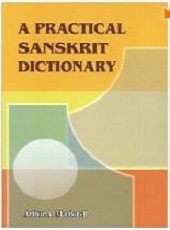
• A Practical Sanskrikt Dictionary,
by A. A. Macdonell, 1893,
http://www.sanskrit-lexicon.uni-koeln.de/scans/MDScan/index.php?sfx=jpg;
1929.
-
Nataraj ed., 1st in 2006, 2012.
-
https://dsal.uchicago.edu/dictionaries/macdonell/ 190516
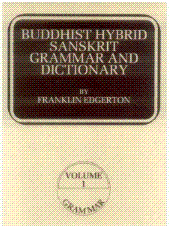
• The Buddhist Hybrid Sanskrit Grammar and
Dictionary, BHS, vol.2, by F. Edgerton,
pp. 627.
-
FEdgerton-BHSD<Ô> /
Bkp<Ô> (link chk 180627)
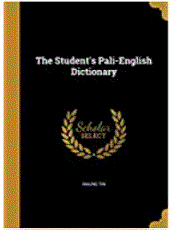
• The Student's Pali English dictionary ,
by U Pe Maung Tin, 1920.
- (ref: UPMT-PEDxxx).
Downloaded copies in TIL
HD-PDF and SD-PDF libraries:
-
UPMT-PaliDict1920<Ô> /
bkp<Ô> (link chk 190113)
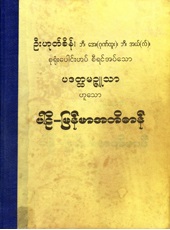
• Pali-Myanmar Dictionary
(in Pal-Myan), by U Hoke Sein,
- (ref: UHS-PMD). The dictionary in printed form is in TIL Research Library.
• Latin-English Vocabulary II, by Hans H Ørberg, 1998
-
HHOrberg-LinguaLatina<Ô> /
Bkp<Ô> (link
chk 190624)
Edited by U Kyaw Tun (UKT) (M.S., I.P.S.T., USA),
Daw Khin Wutyi, Daw Thuzar Myint, Daw Zinthiri Han
and staff of Tun Institute of Learning (TIL).
Not for sale. No copyright. Free for everyone.
Prepared for students and staff of TIL
Research Station, Yangon, MYANMAR
-
http://www.tuninst.net ,
www.romabama.blogspot.com
MC-indx.htm |
Top
MCpp-indx.htm
 {gaan~} : cont
p084c1
 {ga-ma.}
 {ga-ya.}
 {ga-ra.}
 {gaar~}

 {ga-la.}
 {ga-ha.}
p084c2
 {gi.}
{gi.}
 {gu.}
{gu.}
 {gu.ga.}
 {gu.sa.}
p084c3
 {gu.Ta.}
 {gu.ða.}
 {gu.Na.}
UKT notes :
• Ablaut in Sanskrit and PIE
• Gaya the
Gandharva
• Gayatri Mantra (Védic-Hinduism)
- and Mora Sutta
(Theravada Buddhism)
• Necklace of Red Seeds
• Perfume vendors
• Rishi Gritsamada
- the rishi who had his family (just a name change - not a genetic
change)
changed by Indra.
Important info on this page:
UKT 140907, 170515, 180323: The{braah~ma.Na. poaN~Na:} (who believe in Vishnu-déva
{baiþ~þa.no: nût} {braah-ma.Na. poaN~Na} as the Supremo) and the
{þi-wa. poaN~Na:} who believe in Shiva-déva
{þi-wa. nût} as the Supreme God and Creator) "family" need not be of a group of genetically related people, but a "group" formed by the king - the heavenly king - for easy classification probably for administrative purpose. Therefore, a name change does not mean a change of genes. It is probably, just a name change done by the
For us scientists who would have none of "axiomatic beliefs" such as "the heavenly king", it is the religionists (human) themselves who are doing the "family changes" to suit their own purpose.
UKT 170530, 190307: The grammarian Gālava is mentioned by Panini along with other persons:
"In the Aṣṭādhyāyī{ûT~HTa.Da-yi} [usually shortened to ]
{ûT~HTa.Da-yi}, Pāṇini
{pa-Ni.ni. hsa-ra} mentions by name ten other persons, all presumably grammarians: Āpiśali, Kāśyapa, Gārgya, Gālava, Cakravarman, Bhāradvāja, Śākaṭāyana, Śākalya, Senaka, Spoṭāyana. The most complete survey of information of these appears in Yudhiṣṭhira Mimaṃsaka (1973: I: 034-77); ..."
from George Cardona, Panini: a survey of research, 1976, p146.
• Truth as Witness :
 {þic-sa-hso-hkrín:}
• Two-three tone problem
•
Védic language poetic meter :
to be compared with that of Bur-Myan as
a Tib-Bur language
{gaín} : consider an alternate {gûín}
p084c1-b01/ not online
• [gândhâri]
- m. pl. N. of a people
p084c1-b02/ p063-047
• गान्धिक [ gândh-ika ]
- m. vendor of perfumes; n. perfumes.
47)
See my note on perfume vendors
{ga-ma.}
p084c1-b03/ p063-046
• गामिन् [ gâm-in ]
- a. going anywhere (ad., prati, or *ac.); gnly. --°, going, moving,
walking (in, to, like); having sexual intercourse with; reaching or extending
to; devolving on; befitting, behoving; obtaining; directed to; relating to.
46)
p084c1-b04/ p063-045
• गाम्भीर्य [ gâmbhîr-ya ]
- n. depth; profoundness; dignity, sereneness.
45)
{ga-ya.}
p084c1-b05/ not online
• गाय [ gâya ]
- ¹. a. striding; ². m. song; ³. a. relating
to Gaya
UKT 120727: After listening to Gayatri Mantra, - bk-cndl-gayatri<)) , many times to pick up how the Hindi-speakers and the Tamil-speakers pronounce Skt-Dev words - in my study of languages: not religion - I came to notice a possible of source of error in understanding due to English transcriptions. We can have the following words:
{ga.ya.} गय ,
{ga.ya} गया
{ga-ya} गाया
Now my curiosity is aroused. To whom, to which god, to which worshipful was the Gayatri Mantra dedicated? Wikipedia provides no satisfactory answer.
See my note on Gaya from Wikipedia.
p084c1-b06/ p063-044
• गायक [ gây-aka ]
- m. singer; î, f. songstress.
44)
p084c1-b07/ p063-077
• गायत्र
[ gâya-trá ]
- m. n. song, hymn; a. relating to
or composed in gâyatrî.
77)

UKT 160104, 170526: See my notes on Védic language poetic meter
extending into Vedic accent in comparison to that of Bur-Myan. And on Gayatri mantra
Listen to Gayatri Mantra - bk-cndl-gayatri<)) (link chk 190304)
and its equivalent the Mora Sutta of Buddhism by Mingun Sayadaw
- bk-cndl-Mingun<)) (link chk 190304)
In both, the "prayer" is directed to the Sun - the source of Energy and Knowledge.
p084c1-b08/ not online
• गायत्री
gāyatrī [gâya-trî']
-- f. a metre; the gâyatrî verse (RV. III, lxii. 10)
p084c1-b09/ p063-076
• गायन [ gây-ana ]
- m. public singer; n. song.
76)
{ga-ra.}
p084c1-b10/ p063-127
• गारुड [ gâruda ] alt. spelling गारुड [ gâruda ]
on
p082.htm
- a. having the form of, referring to or coming from Garuda; n. emerald.
127)
p084c1-b11/ p063-116
• गारुत्मत [ gârutmata ]
- a. referable or sacred to Garuda: w. asman, emerald (as an antidote).
116)
{gaar~} : repha
UKT 190304: Though Repha after a short vowel is a problem, which makes me define the vowel as shown, long vowel preceding the Repha, can be represented with aa .
See also p063-2.htm .
p084c1-b12/ p063-127
• गार्ग्य [ gârg-ya ]
- m. pat. from Garga; N.: -‿âya-na, m. pat. from Gârgya; N. of a
teacher.
115)
p084c1-b13/ p063-075
• गार्त्समद [ gârtsamad-a ]
- a. referring to Gritsamada; m. pat. descendant of Gritsamada.
75)
UKT 160106: See my note on Rishi Gritsamada
p084c1-b14/ p063-074
• गार्दभ [ gârdabha ]
- a. referring to an ass; drawn by asses (yâna).
74)
p084c1-b15/ p063-073
• गार्द्ध्य [ gârddh-ya ]
- n. greed.
73)
p084c1-b16/ p063-072
• गार्भ [ gârbha ]
- a. born from a womb; referring to an embryo, performed during pregnancy;
i-ka, a. relating to the womb, uterine.
72)
p084c1-b17/ p063-071
• गार्हपत [ gârhapatá ]
- n. dignity of a house holder.
71)
p084c1-b18/ p063-070
• गार्हपत्य [ gãrhapat-ya ]
- a. (sc. agni) house holder's (western sacred) fire; m. n. its place;
n.
domestic authority; household.
70)
p084c1-b19/ p063-069
• गार्हस्थ्य [ gârhasth-ya ]
- a. behoving a house holder; n. position of paterfamilias or materfamilias; household.
69)
p084c1-b20/ p063-068
• गार्ह्य [ gârh-ya ]
- a. domestic.
68)
{ga-la.}
p084c1-b21/ p063-067
• गाल [ gâla ]
- a. produced with the throat.
67)
p084c1-b22/ p063-066
• गालन [ gâlana ]
- n. straining, clarifying.
66)
p084c1-b23/ not online
• गालव [gâlava]
- m. N. of an old sage: pl. his descendants
{ûT~HTa.Da-yi þûd~da-kyûm:}, PāṇiniUKT 160115, 170530: There are many stories of ancient Rishis of Mahabharata period with mix ups between one and another. Rishi Galava is such a one. He was supposed to be a son or a pupil of Rishi Viswamitra
{waiþ~þa mait~ta. ra.þé.}. There was also a teacher of the White Yajurveda named Galava, and also an old grammarian named by Panini with others.
- based on http://www.jatland.com/home/Galava 160115
- from George Cardona, Panini: a survey of research, 1976, p146.
"In the Aṣṭādhyāyī
{pa-Ni.ni. hsa.ra}, mentions by name ten
other persons, all presumably grammarians: Āpiśali, Kāśyapa, Gārgya, Gālava,
Cakravarman, Bhāradvāja, Śākaṭāyana, Śākalya, Senaka, Spoṭāyana. The most
complete survey of information of these appears in Yudhiṣṭhira Mimaṃsaka
(1973: I: 034-77); ..."p084c1-b24/ p063-065
• गालि [ gâli ]
- f. pl. execration [curse]: -dâna, n. abuse; -mat,
a. using execrations.
65)
ex·e·cra·tion - n. ¹. The act of cursing. ². A curse. ³. Something that is cursed or loathed. - AHTD
See my note on Truth as Witness
p084c1-b25/ not online
• गली [gâlî]
- f. pl. = gâli
{ga-ha.}
p084c1-b26/ not online
• गाह् [gâh]
-- i â. (p.) plunge or dive into, bathe in, enter; fall into or be plunged in
(ac.) : pp.gâdha,q.v. ava or va, dive, plange,
penetrate, betake oneself, into (ac.); fathom, comprehend: pp.
used for bathing in; immersed or plunged in, having penetrated into
(ac., g., lc.,--°); lying deep; deeply impressed; hidden; vanished. ud,
emerge; pp.excessive, violent; overflowing with (--°). pra, pp.
advanced. late (time). prati, betake oneself into (ac.) vi,
bathe in, plunge, penetrate, betake oneself, into (ac. lc.); pierce; obtain; be
engrossed in, ponder; fall (night): kakahâm -, = be a match for (g.): pp. having
begun or entered. abhi-vi, penetrate.
p084c2-b00/ p063-064
• गाहन [ gâh-ana ]
- n. immersion, bathing; -anîya, fp. n. one must plunge.
64)
{gi.}
p084c2-b01/ not online
• गिर्
gir [ ¹. GIR, girate, etc., ]
-- v. गॄ ¹. grî , call
p084c2-b02/ not online
• गिर्
gir [ ². GIR ]/ not online
-- v. गॄ ². grî , swallow
p084c2-b03/ p063-063
• गिर् [ ³. gír ]
- f. call; voice; speech; word; praise; hymn: in. on the advice, in the
name of (g., --°).
63)
p084c2-b04/ p063-062
• गिर् [ 4. gir ]
- a. swallowing (--°).
62)
p084c2-b05/ not online
• गिर [1. gira]
-- ¹ --° a. = gir, voice
p084c2-b06/ not online
• गिर [2. gira]
-- ² --° ad. = giri , mountain
p084c2-b07/ p063-061
• गिरि [ gir-í ]
- m. [the heavy], mountain.
61)
p084c2-b08/ p063-094
• गिरिकुहर [ giri-kuhara ]
- n. mountain cave; -kshít, a. dwelling on mountains; -kakravartin,
m.
prince of mountains, the Himâlaya; -kará, a. mountain-roaming; m. wild
elephant; -ga, a. mountain-born: â, f. daughter of the mountain,
ep. of Pârvatî;
-nadî, f. mountain stream; -trá, a. mountain-ruling,
ep. of Siva; -durga, a.
inaccessible owing to mountains; n. hill-fort; -dhâtu, m. pl. mountain ores;
-nadikâ,
f. mountain brook; -nadî, f. = giri-nadî; -pati,
m. king of mountains, lofty
mountain; -prishtha, n. mountain ridge; -prapâta, m. precipice;
-prastha, m.
mountain plain, plateau; -bhid, a. mountain-piercing; -râg,
m. king of
mountains, lofty mountain; -vâsin, a. dwelling in the mountains;
-sá, a.
dwelling in the mountains, ep. of Siva; -shad, a. sitting on mountains (Rudra);
-shthã, a. = giri-vâsin; -sutâ, f. daughter of the mountain,
ep. of
Pârvatî.
94)
p084c2-b09/ p063-093
• गिरीन्द्र [ giri‿indra ]
- m. lord of mountains = high mountain; -‿îsa, m. lord of mountains, great
mountain; ep. of Siva.
93)
p084c2-b10/ p063-092
• गिर्वणस् [ gír-vanas ]
- a. rejoicing in praise.
92)
p084c2-b11/ not online
• [gil]
-- gilati , etc., v. गॄ 2. grî , swallow
p084c2-b12/ p063-091
• गीत [ gî-tá ]
- pp. (√gai) n. song: -ka, n. id.; -kshama,
a. capable of being
sung; -govinda, n. Krishna in song: T. of an idyllic drama; -nritya,
n. song
and dance; -vâdana, n. song and (instrumental) music.
91)
p084c2-b13/ p063-090
• गीता [ gî-tâ ]
- (pp.) f. song or poem containing an inspired doctrine, esp. the Bhagavad gîtâ.
90)
p084c2-b14/ p063-089
• गीताचार्य [ gîta‿âkârya ]
- m. teacher of singing.
89)
p084c2-b15/ p063-088
• गीति [ gî-ti ]
- f. song; a metre: -‿âryâ, f. a metre.
88)
p084c2-b16/ p063-087
• गीथा [ g&isharp;-thâ ]
- f. song.
87)
p084c2-b17/ p063-086
• गीर्ण [ gîr-na ]
- pp. √grî, swallow.
86)
p084c2-b18/ p063-085
• गीर्वाण [ gîr-vâna ]
- m. [probably = V. girvanas] god: -vartman, n. sky.
85)
{gu.}
p084c2-b19/ not online
• गु [ ¹. gu]
- only intv. goguve and goguvâna , cause to
sound, proclaim
p084c2-b20/ p063-084
• गु [ ². gu ]/
- a. coming, going (--°).
84)
p084c2-b21/ not online
• गु [ ³. gu ]
-° a. = go, ox, cow; earth; ray
{gu.ga.}
p084c2-b22/ p063-083
• गुग्गुलु
[ gúggulu ]
= ग ु ग ् ग ु ल ु
- m. (C.), n. fragrant gum, resin, bdellium.
83)
UKT: There are silent letters in English: bdellium is one where <b> is silent:
bdel·li·um n. 1. An aromatic gum resin similar to myrrh, produced by certain Asian and African shrubs or trees of the genus Commiphora. [Middle English from Latin from Greek bdellion -- AHTD]
p084c2-b23/ p063-082
• गुङ्गु [ guṅgú ]
- m. N. of a man: pl. his descendants; &usharp;, f. the personified new
moon.
82)
{gu.sa.}
p084c2-b24/ p063-081
• गुच्छ [ gukkha ]
= ग ु च ् छ -->

Skt: m. shrub; bunch, cluster of
blossoms: -ka, m. (?) id. --
Mac084c2
81)
BPal:
 {goac~hsa.} - UHS-PMD0367
- 
- UKT from UHS: m. bunch, a pearl necklace of 32 strands
p084c2-b25/ not online
• [GUÑG] I. P.
-- guñga , hum, buzz
p084c2-b26/ p063-080
• गुञ्ज
[ guñg-a ]
= ग ु ञ ् ज
- m. humming, buzzing.
80)
p084c3-b00/ p063-079
• गुञ्जा
[ guñgâ ] = ग ु ञ ् ज ा
Skt: गुञ्जा
[ guñgâ ] - f. a small shrub; guñgâ-berry:
used as a measure of weight. - Mac084c3
79)
BPal:
 {goañ~za} - UHS PMD
UKT from UHS - f.
 {hkyïn-rwé: pín} Abrus precatorious
See my note on Necklace of Red Seeds .
p084c3-b01/ p063-078
• गुञ्जित [ guñg-ita ]
- (pp.) n. humming, buzzing.
78)
{gu.Ta.}
p084c3-b02/ p063-060
• गुटिका [ gut-ikâ ]
- f. pellet; pill; pearl: -‿añgana, n. collyrium in globules;
-pâta, m.
fall of the ball, casting lots; -‿astra, n. bow discharging clay pellets.
60)
{gu.ða.}
p084c3-b03/ p063-103
• गुड [ guda ]
- m. ball; molasses; pill: pl. N. of a people: -ka, m. ball;
-gihvikâ-nyâya,
m. the manner of sugar and the tongue = first but fleeting impression, opinion
recommending itself for the moment; -pishta, n. pastry made of flower and
sugar; *-dhânâ, f. pl. grains of corn with sugar; -maya, a. (î) consisting of
sugar; -sarkarâ, f. sugar; (â)-kesa, m. ep. of Arguna.
103)
p084c3-b04/ p063-102
• गुडिका [ gud-ikâ ]
- f. pill.
102)
p084c3-b05/ p063-101
• गुडोदक [ guda‿udaka ]
- n. sugar-water.
101)
p084c3-b06/ p063-100
• गुडौदन [ guda‿odana ]
- n. boiled rice with sugar.
100)
{gu.Na.}
p084c3-b07/ p063-099
• गुण [ gun-á ]
- m. strand, thread, string, rope;
wick; bow-string; lute-string; species;
constituent of policy (of which there are
six or four), subordinate element, accessory;
secondary dish, seasoning; remote object
(of a verb); property, quality; elemental
quality (sound, feeling, colour, taste,
smell); fundamental quality (sattva,
ragas, tamas); good quality,
virtue, merit, excellence; high degree of
(--° = excessive); external articulation (of
letters); first strong grade of vowels (a, ar,
al, e, o); time (with numerals); multiple:
almost always --° a. after numerals
= -fold (lit. having so many strands),
so many times as much as or more than (in.
or ab.).
99)
UKT 120204: in words connected to गुण
http://en.wikipedia.org/wiki/Upanayana 120204The term गुण
p084c3-b08/ not online
• [guna-ka]
-- --° a. quality
p084c3-b09/ p063-098

• गुणकर्मन्
[ guna-karman ]
- n. unessential secondary action;
remote object (gr.); -kalusha,
n. coalescence of the three fundamental
qualities; -kritya, n. function
of a bow-string; -gana, m. multitude
of excellences; -grihya, a.
appreciating excellences; -grahana,
n. recognition of merit, eulogy; -grâma, m. multitude of virtues;
-grâhin, a. appreciating merit;
-ghâtin, a. detracting from merit;
-kkheda, m. breaking of the rope
and disappearance of virtue; -gña,
a. recognising merits: -tâ, f.
abst. ɴ.; -tantra, a. guided
by virtue; -tas, ad. conformably
to the fundamental qualities; with regard to
good qualities; -tâ, f.
subordinateness; excellence; -tyâgin,
a. forsaking virtue; -tva,
n. consistency of a rope; accessoriness;
excellence; -deva, m. N. of a
pupil of Gunâdhya.
98)
UKT 170529: Gunâdhya : The story is told in C. R. Lanman - A Sanskrit Reader, Vol. 1, 1884, and also in Sabine Baring-Gould - Curious Myths of the Middle Ages , 2012. The following excerpt is from Curious Myths, p.245:
"In Sanskrit, it is told of Gunâdhya, in connection with the Sibylline books story. The poet Gunâdhya, an incarnation of Mâljavân, writes with his own blood, in the forest, a mighty book of tales, in seven hundred thousand slokas. He then sends the book by his two pupils, Gunadeva and Nandideva, to king Sâtavâhana, but he rejects it as being composed in the Pisâcha dialect. ..."
p084c3-b10/ p063-097
• गुणन [ gun-ana ]
- n. panegyric, exaltation; -anikâ, f. repetition.
97)
pan·e·gyr·ic - n. ¹. A formal eulogistic composition intended as a public compliment. ². Elaborate praise or laudation; an encomium. -- AHTD
p084c3-b11/ p063-096
• गुणनिधि [ guna-nidhi ]
- m. treasury of virtue, very virtuous man; -baddha, pp. bound with ropes
and captivated by virtues; -bhadra, m. N. of an author; -bhâg,
a. possessing
merits; -bhûta, pp. subordinate, dependent, secondary; -maya,
a. consisting of
threads, fibrous; virtuous; based on the fundamental qualities.
96)
p084c3-b12/ p063-095
• गुणय [ guna-ya ]
- den. P. multiply: pp. gunita, multiplied, by (in. or --°);
increased by, filled with (--°).
95)
p084c3-b13/ p063-108
• गुणयुक्त [ guna-yukta ]
- pp. tied to a rope and endowed with virtues; -râga, m. delight in
virtues; -vakana, m. n. adjective; -vat, a. furnished with a thread; having the
elemental qualities; possessing good qualities, virtuous, excellent: -tâ,
f.
possession of virtues; -varman, m. N.; -vâkaka, a. expressing a quality;
-sata-sâlin,
a. possessing hundreds of virtues; -sabda, m. adjective; -samyukta,
pp. endowed
with good qualities; -samskâra, °--, quality and preparation; -sampanna,
pp. endowed with
good qualities; -sâgara, m. a perfect ocean of virtues; -hâni,
f. lack of
virtues; -hîna, pp. devoid of virtues.
108)
UKT 120730, 170515, 190304:
 In the dictionary entry on
{gu.Na.} गुण ,
Macdonell uses the examples of
the first strong grade of vowels as:
In the dictionary entry on
{gu.Na.} गुण ,
Macdonell uses the examples of
the first strong grade of vowels as:
 /a/,
/a/,
 /ar/,
/ar/,
 /al/ ,
 /e/ ,
/e/ ,
 /o/ . I
had thought that it
would be very easy for me to represent these sounds in Myanmar script, until I
realized that it would be easy only if /a/ had been for long vowel
{a} (2 blnk),
but not for short
/o/ . I
had thought that it
would be very easy for me to represent these sounds in Myanmar script, until I
realized that it would be easy only if /a/ had been for long vowel
{a} (2 blnk),
but not for short
 {a.} (1 blnk). For short vowel, I'd to come up with a definition:
{aar~}, see:
I haven't heard of ablaut, for the simple reason that my home-language, Bur-Myan is totally free from inflections, whereas ablaut is for inflexional languages. Moreover, my second mother-tongue, Eng-Latin, which my parents used when they were talking between themselves, has very little use of ablaut. It was when I started learning Skt-Dev, I came to know about this very unfamiliar process.
From Wikipedia: https://en.wikipedia.org/wiki/Indo-European_ablaut 120730, 170529, 190305
In linguistics, the Indo-European ablaut (pronounced /ˈæblaʊt/) is a system of apophony (regular vowel variations) in the Proto-Indo-European (PIE) language. All modern Indo-European (IE) languages [e.g. Eng-Lat and Skt-Dev] have inherited the feature, though its prevalence and productivity strongly varies.
An example of ablaut in English is the strong verb sing, sang, sung and its related noun song, a paradigm inherited directly from the Proto-Indo-European stage of the language.
Wikipedia: https://en.wikipedia.org/wiki/Germanic_strong_verb 190305
"In the Germanic languages, a strong verb is a verb that marks its past tense by means of changes to the stem vowel (ablaut). The majority of the remaining verbs form the past tense by means of a dental suffix (e.g. -ed in English), and are known as weak verbs.
"In modern English, strong verbs include sing (present I sing, past I sang, past participle I have sung) and drive (present I drive, past I drove, past participle I have driven), as opposed to weak verbs such as open (present I open, past I opened, past participle I have opened). Not all verbs with a change in the stem vowel are strong verbs, however; they may also be irregular weak verbs such as bring, brought, brought or keep, kept, kept. The key distinction is that most strong verbs have their origin in the sound system of Indo-European, whereas weak verbs use a dental ending (in English usually -ed or -t) that was introduced later, during the development of the Germanic languages."
The term ablaut (from German ab- in the sense "down, reducing, gradated" + Laut "sound", thus literally meaning "sound gradation") was coined in the early nineteenth century by linguist Jacob Grimm.
However, the phenomenon itself was first
observed more than 2,000 years earlier
by the Sanskrit phonetician-grammarians and codified by
Pāṇini in his
Ashtadhyayi, where the terms
«guṇa» गुण
{gu.Na.}, and «vṛddhi» वृद्धि
 {wRRaid~Di.}
[= व ृ द ् ध ि
] 'growth'. In Pāṇini's Sanskrit grammar, it is a technical term for long vowels
produced by
ablaut (vowel gradation), e.g.
{wRRaid~Di.}
[= व ृ द ् ध ि
] 'growth'. In Pāṇini's Sanskrit grammar, it is a technical term for long vowels
produced by
ablaut (vowel gradation), e.g.
bhṛ-tá- 'carried' ("base form", nowadays called zero grade)
bhár-aṇa- 'burden' (guṇa, full grade)
bhār-yà- 'to be carried' (vṛddhi, lengthened grade)
They were used to describe the phenomena now known as the full grade and lengthened grade, respectively.
Go back Ablaut-note-b
UKT: Searching the Net on Gaya brought up: http://en.wikipedia.org/wiki/Gaya 120727
In India:
• Gaya district, Bihar, India
• Gaya, India, a city in Bihar, India
• Gaya (Lok Sabha constituency), Bihar, India
• Gayopakhyanam (Story of Gaya) is a popular Telugu drama
Of the above four, Gayopakhyanam - the Story of Gaya - based on Hindu religion is of interest.
From Wikipedia: http://en.wikipedia.org/wiki/Gayopakhyanam 120727, 170517
Gayopakhyanam (Telugu: గయోపాఖ్యానం) is a Telugu play written by Chilakamarti Lakshmi Narasimham in 1890. [1] It is also called Prachanda Yadavam (The story of fierce Yadava King - Sri Krishna). This play is the forerunner in presenting fictional themes in the Hindu Epics. The plot is based on war between Nara-Narayana, the incarnation of Arjuna and Sri Krishna induced by Gaya, a Gandharva King.
Gaya, a Gandharva king, while moving across the skies, spits the pan down his divine plane. It falls into the open palms of Sri Krishna [UKT 140908: a human king reciting Gayatri Mantra early in the morning.], offering prayers to Sun god (Surya). Sri Krishna gets very angry and vows to kill the Gandhava king. [UKT ¶ ]
UKT120727, 140908, 170517:
Misuse of titles and epithets covers up the underlying meanings in a language. I figured that Krishna was a human king, reciting Gayatri Mantra (the equivalent of the Buddhist Mora Sutta Paritta), at the rising Sun the giver of Energy, and hence Knowledge. Krishna of the story is not necessarily a déva-god.
"The criticism that the poet sacrificed the sublime nature of the great characters like Krishna and Arjuna. The poet has natural tendency to dilute the expression, caring more for the common man. He is familiar with the idioms and proverbs familiar to him in the daily life. This may be main reason for the success of his play at root level of the audience. [3] " - https://en.wikipedia.org/wiki/Gayopakhyanam 170517
UKT 170517: Reading the above criticism, I remember The Last Temptation of Christ - a 1988 American epic drama film. I am disturbed by modern authors, playwrights, and movie directors who claimed their work as "art" and not "fact" when they distorted religious stories. See:
¤ - https://en.wikipedia.org/wiki/The_Last_Temptation_of_Christ_(film) 170517
¤ - http://www.rogerebert.com/reviews/the-last-temptation-of-christ-1988 170517Gandharvas are not Dévas. They may even be humans of one of the exotic tribes of ancient India. See Wikipedia: http://en.wikipedia.org/wiki/Exotic_tribes_of_ancient_India 140908
Yet Burmese Buddhists refer to them as
{gûn~Dûb~ba. nût}. (UHS-PMD0357).
{gûn~Dûb~ba} is Pal-Myan, and
To the Burmese,
{dé-va.} are not the same. Thus
Gaya is a great devotee of Krishna.
Krishna could not take back his vow. Narada [ नारद,
«nārada» - the singing rishi
 {na-ra.da. ra.þé.}]
advices Gaya to approach Arjuna and first seek his assurance
of protecting him, before revealing
about the person set to take his life. As per Narada's advice, the king takes Arjuna's promise
for his protection before revealing Krishna's vow to kill him. Arjuna, though
surprised, sticks to his word to Gaya. Any number of dialogues between both
sides makes no dent in the situation. Intervention of
Subhadra,
Narada, Rukmini
and others fail resulting in direct combat.
{na-ra.da. ra.þé.}]
advices Gaya to approach Arjuna and first seek his assurance
of protecting him, before revealing
about the person set to take his life. As per Narada's advice, the king takes Arjuna's promise
for his protection before revealing Krishna's vow to kill him. Arjuna, though
surprised, sticks to his word to Gaya. Any number of dialogues between both
sides makes no dent in the situation. Intervention of
Subhadra,
Narada, Rukmini
and others fail resulting in direct combat.
Rishi Narada
Subhadrā ( सुभद्रा ) is an important character in the Mahābhārata. She is the half-sister of Krishna, wife of Arjuna, and mother of Abhimanyu. She is considered the incarnation of Bhuvaneshvari or Shakti. -- http://en.wikipedia.org/wiki/Subhadra 120727
When they are almost out for a head on collision,
Deva-god Siva * appears
before them and averts a possible disaster to the world. Lord Krishna explains
this situation as a test for Arjuna before the impending Mahabharata war [in
which King Krishna acted as the charioteer of the Pandava Prince Arjuna].
* Remember this is an South Indian play. In the southern parts of India where
Hindu-Shaivism prevails, Siva-déva is the supreme god - Creator, Administrator
and Destroyer all combined - and Mahabrahma-déva and Vishnu-déva are minor gods.
Go back Gaya-note-b
- by UKT: 120727
I have concentrated on Gayatri Mantra as
a source for learning the pronunciations
of Skt-Dev. They can be can be easily
learned listening online to :
•
http://www.youtube.com/watch?v=F_3CWGTlzws&feature=fvwrel
120708
•
http://www.youtube.com/watch?v=qlFCdErr1x4&NR=1&feature=fvwrel
120708
•
http://veda.wikidot.com/gayatri-mantra/
120727 .
Listen to my downloaded Gayatri Mantra - bk-cndl-gayatri<))
The Theravada Buddhist equivalent in Pal-Myan
to Hindu in Skt-Dev Gayatri Mantra
is Mora Sutta - Paritta#05. You may
listen to Mingun Sayadaw U Vicittasarabivamsa
Mingun Sayadaw

 {U: wi.sait~ta.þa-ra-Bi.wän-þa.} reciting by
- bk-cndl-Mingun<)) (link chk
190305).
{U: wi.sait~ta.þa-ra-Bi.wän-þa.} reciting by
- bk-cndl-Mingun<)) (link chk
190305).
A brief biography of the Sayadaw is
presented by
Wikipedia:
http://en.wikipedia.org/wiki/Mingun_Sayadaw
120728
Being an educational website it is deemed
proper to include other Pali recitation of
Mora Sutta Paritta
- 巴利文孔雀經 - by
Rev. Jandure Pagngnananda Thero
(釋明高)
- .
Watch and listen to:
https://www.youtube.com/watch?v=kSj0KKIUfe4
140905
or for offline listening:
- bk-cndl-Chinese<)) (link
chk 190305)
The Theravada recitations are not singing, and there is no accompanying music of any kind. Being not only of different religions but opposing fundamental doctrines -- Atta (Hinduism) vs. Anatta (Buddhism), the texts and the meanings are entirely different. The Buddhist version is about Mora - the Peacock (who would eventually become the Gautama Buddha many existences later) worshipping the Sun everyday at sunrise and sunset.
As a young child going to a village school,
ran by Saya Kywè
 {sa.ra krwèý} in Kyaik-htaw Village in
Kungyangon Township, Hanthawaddy District,
during the early days of World World II,
I came to learn (and soon forget) this Sutta
which we had to recite everyday at school
-- once in the morning at the beginning
of the school day, and then again in
the evening at the end of the school day.
{sa.ra krwèý} in Kyaik-htaw Village in
Kungyangon Township, Hanthawaddy District,
during the early days of World World II,
I came to learn (and soon forget) this Sutta
which we had to recite everyday at school
-- once in the morning at the beginning
of the school day, and then again in
the evening at the end of the school day.
The inset shows one of the TIL logos
(under copyright for commercial products
of TIL ) glorying the Mantra as well as the
Sutta. The logo shows not the Peacock of the
Sutta, but the King of Nagas (astrologically representing the akshara
 {hta.}
of the family name Tun
{hta.}
of the family name Tun
 {htûn:}) -- a figment of
imagination of an artist. Such creations
in art and literature can -- and do -- give
rise to unintended texts being into
introduced into the real teachings of the
Vedas and teachings of Gautama Buddha.
{htûn:}) -- a figment of
imagination of an artist. Such creations
in art and literature can -- and do -- give
rise to unintended texts being into
introduced into the real teachings of the
Vedas and teachings of Gautama Buddha.
The question now is, how old are the Vedas,
starting from the Rigveda itself. Are the
teachings of the Rigveda the same as those
of a loose combination of theological
writings or oral recitations which have come
be taken as the Hindu religion by the time
of Panini
{pa-Ni.ni. hsa.ra} ? Why did Panini had to formulate
his Ashtadhyayi
(अष्टाध्यायी
Aṣṭādhyāyī,
meaning "eight chapters"),
the foundational text of the Classical Sanskrit?
What are the principal difference between Vedic
-- I don't consider it to be Sanskrit at all
-- from the Classical Sanskrit? See
http://en.wikipedia.org/wiki/Vedic_Sanskrit#Principal_differences_from_Classical_Sanskrit
120727
The following rendition of the Gayatri Mantra -- from Rigveda and the oldest of the Vedic hymns -- is mine from the above sources. I have used only the IASP transcription, but even then it is better to ignore it and concentrate on Devanagari script from which you can relate to Myanmar script. There were two glyphs, ॑ and ॒, which are not important to us. They may be removed. I have included Skt-Myan & its Romabama in the table to help the Bur-Myan readers. I hope my rendition is correct.
ॐ «oṃ»
------------------------
 {OÄn} 'Brahma'
भूर् «bhūr»
= भ ू र ्
--------
 {Buur} 'embodiment of vital spiritual
energy (pran)'
{Buur} 'embodiment of vital spiritual
energy (pran)'
भुवः «bhuvaḥ»
= भ ु व ः
--
 {Bu.wa.:} 'destroyer of sufferings'
स्वः «svaḥ»
= स ् व ः
------
 {þwa:.} 'embodiment of happiness'
तत् «tát»
= त त ्
-----------------------------
 {tût} 'that'
स॑वितुर्
«savitúr»
= स ॑ व ि त ु र ्
-----
 {þa.wi.tur} 'bright like sun'
वरे॑ण्यं
«váreṇ(i)yaṃ»
= व र े ॑ ण ् य ं
--
 {wa.ré-Nyän} 'best choicest'
भ॒र्गो॑
«bhárgo»
= भ ॒ र ् ग ो ॑
-------
 {Bar~gau:} 'destroyer of sins'
दे॒वस्य॑
«devásya»
= द े ॒ व स ् य ॑
--
 {de-wa.þya.} 'divine'
धीमहि
«dhīmahi»
= ध ी म ह ि
--------
 {Di-ma.hi.} 'may imbibe'
धियो॒ «dhíyo»
= ध ि य ो ॒
----------------------------------
 {Di.yau:} 'intellect'
यो «yó» = य ो
--------------------------------------------------
 {yau:} 'who'
नः॑ «naḥ»
= न ः ॑
----------------------------------------------
 {na:.} 'our'
प्रचो॒दया॑त्
«pracodáyāt»
= प ् र च ो ॒ द य ा ॑ त ्
---
 {pra.sau:_da.yaat} 'may inspire'
Let's see what Wikipedia has to say:
From Wikipedia: http://en.wikipedia.org/wiki/Gayatri_Mantra 120708
The Gāyatrī Mantra is
a highly revered mantra, based on a Vedic
Sanskrit verse from a hymn of the Rigveda
(3.62.10), attributed to the
Rishi (sage)
Viśvāmitra.
{waiþ~þa mait~ta. ra.þé.} [UKT ¶ ]
UKT 170527: In the Buddhist Vinaya Pitaka of the Mahavagga (I.245) section the Buddha pays respect to the following rishis, who because of their yogic practices came to know the true Véda 'natural laws' :
"Atthako, Vâmako, Vâmadevo, Vessâmitto, Yamataggi, Angiras, Bhâradvâjo, Vâsettho Vâsettho, Kassapo, and Bhagu". He accused the later priests - obviously referring to Hindu religionists Vaishnavites (worshippers of Vishnu-déva) and Shavites (worshippers of Shiva-déva) of corrupting the Védas. We must note that Vishnu and Shiva were minor gods in the ancient Védas from the number of hymns directed to them when compared the Indra{ain~dRa. dé-va.} - the king of Heaven.
The mantra is named for its vedic gāyatrī metre. [1] [UKT ¶ ]
UKT 190305: The English word <metre> came into my childhood vocabulary with the study of Science. It is a measurement of length. I was already used to <foot>
{pé} equal to 12 in. in the British system in use in Myanmarpré under the British. I was already familiar with the customary Burmese unit of
{htwa} 'hand span' equal to 9 in. And so when I came across the word <metre>
{mi-ta} with the study of English verse, I was perplexed but I soon learned to ignore it. Now I am confronted again in my study of Linguistics. This time I can no longer ignore it.
"In poetry, metre (meter in American English) is the basic rhythmic structure of a verse or lines in verse. [UKT ¶]
"Many traditional verse forms prescribe a specific verse metre, or a certain set of metres alternating in a particular order. The study of metres and forms of versification is known as prosody. (Within linguistics, "prosody" is used in a more general sense that includes not only poetical metre but also the rhythmic aspects of prose, whether formal or informal, which vary from language to language, and sometimes between poetic traditions.)" -- Wikipedia: http://en.wikipedia.org/wiki/Meter_poetry 120729
The study of meter, is one of the six Vedanga
{wé-dïn~ga.} disciplines, or "organs of the vedas" in the study of Vedic and Classical Sanskrit. The following is from Wikipedia: http://en.wikipedia.org/wiki/Gayatri_metre 120729
• jágatī: 4 padas of 12 syllables
• triṣṭubh: 4 padas of 11 syllables
• virāj: 4 padas of 10 syllables
• anuṣṭup: 4 padas of 8 syllables, this is the typical shloka of classical Sanskrit poetry
• gāyatrī: 3 padas of 8 syllablesFour padas seem to be the norm in Classical Sanskrit. My question is: Does the 3 padas of gāyatrī shows that Vedic is quite different from Sanskrit?
As the verse can be interpreted to invoke the deva Savitr, it is often called Sāvitrī. [2] Its recitation is traditionally preceded by ॐ «oṃ» and the formula bhūr bhuvaḥ svaḥ, known as the mahāvyāhṛti ("great utterance").
The Gayatri Mantra is repeated and cited very widely in vedic literature, [3] and praised in several well-known classical Hindu texts such as Manusmṛti, [4] Harivamsa, [5] and the Bhagavad Gita. [6] [7] [UKT ¶ ]
The mantra is an important part of the upanayanam ceremony for young males in Hinduism, and has long been recited by Brahmin males as part of their daily rituals. Modern Hindu reform movements spread the practice of the mantra to include women and all castes and its use is now very widespread. [8] [9]
Recitation of the Gayatri Mantra is preceded by oṃ (ॐ) and the formula bhūr bhuvaḥ svaḥ (भूर् भुवः स्वः), known as the mahāvyāhṛti ("great utterance"). This prefixing of the mantra proper is described in the Taittiriya Aranyaka (2.11.1-8), which states that scriptural recitation was always to begin with the chanting of the syllable oṃ, followed by the three Vyahrtis and the Gayatri verse. [10] Following the mahāvyāhṛti is then the mantra proper, the verse RV 3.62.10:
ॐ भूर्भुवः॒ स्वः ।
Oṃ bhūr bhuvaḥ svaḥतत्स॑वितुर्वरे॑ण्यं ।
tát savitúr váreṇ(i)yaṃभ॒र्गो॑ दे॒वस्य॑ धीमहि। ।
bhárgo devásya dhīmahiधियो॒ यो नः॑ प्रचो॒दया॑त्॥ ।
dhíyo yó naḥ pracodáyātWhereas in principle the gāyatrī metre specifies three pādas of eight syllables each, the text of the verse as preserved in the Rigveda Samhita is one syllable short, the first pāda counting seven instead of eight. Metrical restoration would emend the attested tri-syllabic vareṇyaṃ with a tetra-syllabic vareṇiyaṃ. [11]
A literal translation of the Gayatri verse proper can be given as:
"May we attain that excellent glory of Savitar the god:
So may he stimulate our prayers."
—The Hymns of the Rigveda (1896), Ralph T. H. Griffith [12]
with this analysis of the constituent words: [13]
• dhīmahi "may we attain" (1st person plural middle optative of dhā- 'Unify' etc.)
• tat vareṇiyam bharghas ' "that excellent glory" (accusatives of tad (pronoun), vareniya- 'excellent' and bhargas- 'radiance, splendour, glory')
• savitur devasya "of the lord savitar " (genitives of savitr-, 'stimulator; name of a sun-deity' and deva- 'god, deity')
• yaḥ pracodayat "who has the ability to encourage" (nominative singular of relative pronoun yad-, causative 3rd person of pra-cud- 'set in motion, encourage, urge, impel')
• dhiyaḥ naḥ "our prayers" (accusative plural of dhi- 'mind, thought, meditation' and naḥ enclitic personal pronoun)
UKT120730
Is नः «naḥ» [{gnaa.}? My guess is based on the way the Indic speakers pronounce the word
To find an answer to my question, I have no choice but to study Sanskrit grammar.
The literal translation of the Mahāvyāhṛti formula bhūr bhuvaḥ svaḥ prefixed to the verse is " earth, air, heaven". [14] These are the names of the first three of the seven vyāhṛti or higher worlds of Hindu cosmology.
UKT: More in the Wiki article.
Go back Gayatri-note-b

 UKT 120203:
See
{rwé:} aka
{hkín-rwé:} ¤ MMPD Bur-Myan Akshara index in Para-Medicine - by U Kyaw Tun & U Pe Than, Tun Institute of Learning (TIL) .
-- MP-Para-indx.htm > MMPD-indx.htm
and click onMedial • {hka.}
Gunja - Abrus precatorius, jequirity (or wild-liquorice). A
vine with clusters of pink flowers and seed pods containing scarlet
berries. The berries are said to represent service to Srîmatî Rådhårånî, so
Krishna often wears a garland of
guñjå berries.
--
http://www.salagram.net/sstp-Gunja-malas.html 120203
Rådhårånî is
another name of Radha राधा - the
childhood love of Krishna though not his queen.
[UKT: Krishna, like Rama, was a human king,
who was later worshipped as a Déva-god] -
http://en.wikipedia.org/wiki/Radha 140906
"Radha राधा
«rādhā», also called Radhika, Radharani and
Radhikarani, is almost always depicted alongside Krishna and
features prominently within the theology of today's
Vallabha and
Gaudiya Vaishnava sects, which regards Radha as the original ...
Shakti." [UKT 140906: I hold that Shakti was the Mother-Goddess of
Tib-Bur speakers taken over by IE speaking newcomers.]
Go back NecklaceRedSeeds-note-b
UKT 141003, 141114, 170525, 190304:

Those of us who have been
very young children in the days before
WWII, particularly those in Rangoon,
remember Indian perfume venders coming
to Burmese towns (with sizeable Indian
population). They were very tall and
with their turbans were a frightening
sight. They usually come in winter months,
round about December. Our elders make
them bogeyman for us, calling them
 {pa.þhyu:hkaún:hprût} 'head-hunters
from the land of
{pa.þhyu:hkaún:hprût} 'head-hunters
from the land of
 {pa.þhyu:}).
UKT 190304:
The word
{pa.shu:}
Now I realised that the word
{pa.shu:} need not represent a country,
but the Axe of Parashurama (IE) who hated the Kshtriyas
 {hkût~ti.ya.} (Tib-Bur)
until he met Rama (husband of Sita) who was
a Kshriya. Parashurama is known as
{hkût~ti.ya.} (Tib-Bur)
until he met Rama (husband of Sita) who was
a Kshriya. Parashurama is known as
 {pic-þhyu:ra-ma.}
UKT 190304: See Wikipedia on Parashurama: https://en.wikipedia.org/wiki/Parashurama 190304
"Parashurama , परशुराम «paraśurāma» lit. Rama with an axe , is the sixth avatar of Vishnu in Hinduism [Vaishnavism]. Born as a brahmin, ..."
December is the month when
 {þa-zín}-flowers bloom.
{þa-zín} is a tree orchid, and the cyme
(compound flower) with a little bulb as
the root, resembles a sickle - a perfect
instrument to cut off a head.
{þa-zín}-flowers bloom.
{þa-zín} is a tree orchid, and the cyme
(compound flower) with a little bulb as
the root, resembles a sickle - a perfect
instrument to cut off a head.
And we associate the
{pa.þhyu:hkaung:hprût} with the {þa-zín}-flowers.
My wife Daw Than Than and I used to recall
the story many times: she was from Rangoon
proper and I from Kungyangon. We checked
the story with others of our age: yes the
Head hunters
{pa-þhyu:hkaún:hprût} were really a
frightful sight.
Go back perfume-vendors-note-b
- UKT 120203, ... , 141004, 160106, 190305:
Our teacher, Gautama Buddha, who himself may be termed a Rishi, did respect
Rishis who preceded him by thousands of years. He mentioned ten of them by name:
01. Atthaka, 02. Vamaka, 03. Vamadeva, 04. Vessamitta
{waiþ~þa mait~ta. ra.þé.}, 05. Yamataggi, 06.
Angirasa, 07. Bharadvaja, 08. Vasettha, 09. Kassapa, and 10. Bhagu
 {Ba.gu. ra.þe.}.
"13. Well then, Vasettha, those ancient sages versed in ancient scriptures, the authors of the verses, the utterers of the verses, whose, ancient form of words so chanted, uttered, or composed, the priests of today chant over again or repeat; intoning or reciting exactly as has been intoned or recited- to wit, Atthaka, Vamaka, Vamadeva, Vessamitta, Yamataggi, Angirasa, Bharadvaja, Vasettha, Kassapa, and Bhagu [11] – did even they speak thus, saying: "We know it, we have seen it", where the creator is whence the creator is?" -- https://en.wikipedia.org/wiki/Buddhism_and_Hinduism 160106
Does it mean that Gautama Buddha accept the existence of the Creator? The same article notes that "The Buddha approved many of the terms already used in philosophical discussions of his era; however, many of these terms carry a different meaning in the Buddhist tradition."
UKT 180323: My understanding of "where the creator is whence the creator is" may be slightly different from the article. This phrase is unnecessary. "We know it" is enough. How? By Thamahta
{þa.ma.hta.} mental concentration.
I am holding the above view as one who have practiced Thamahta
From Wikipedia: https://en.wikipedia.org/wiki/Gritsamada 160106
Gritsamada , गृत्समद is a rishi, credited with most of Mandala 2 of the Rigveda (36 out of 43, hymns 27-29 being attributed to his son Kurma and 4-7 to Somahuti). Grtsamada was a son of Shunahotra of the family of Angiras, but by Indra's will he was transferred to the Bhrigu family.
UKT 180323: What does by Indra's will means? I hold that Indra the king of heaven is nothing more than an axiomatic being created by the human priests (be they of Tib-Bur speakers or of IE speakers). Indra
{ain~dra.} is the head of administration or government, and probably for administration purposes must have made the transfer of individuals from one group of priests to another.
In the plural, the name refers to the clan of Grtsamada, so used in RV 2.4, 19, 39, 41.
UKT: End of Wiki stub
The
so-called "families" of
{braah-ma.Na. poaN~Na}
and
{þi-wa.poaN~Na}
need not be of a group of genetically related people, but a
"group" formed by themselves, and purported as being decreed by Indra
{ain~dra.}, the heavenly king - for easy classification
probably for administrative purposes.
For us scientists who would have none of "axiomatic beliefs" such as "the
heavenly king", it is the religionists (human) themselves who are doing the
"family changes" to suit their own purpose. It only shows how the
self-styled representatives of heavenly entities are just out there "to pull
wool over the eyes of their followers".
See Wikipedia:
https://en.wikipedia.org/wiki/Marxism_and_religion 170516
"... Karl Marx [the philosopher], ... had an ambivalent and complex attitude to
religion,
[1] viewing it primarily as "the
soul of soulless conditions", the "
opium of the people" ..."
As a budding scientist in the 1950, coming face to face with Socialism and Communism, and the ideas of Marx and Lenin, I had to re-examined my religious views of Theravada Buddhism. Finally, I ignore most of beliefs as "scientifically unproven" retaining only my belief on the Four Noble Truths and the Anatta Principle. Later, I added the Twenty-four basic thoughts: greed, anger, ignorance (mostly of layman), anti-greed, anti-anger, and anti-ignorance (mostly of ascetic). When I say "I ignore", I do not say "I don't accept", or, "I do accept". These beliefs are still open-questions.
Go back Gritsamada-note-b
UKT 140906, 141004:

In Bur-Myan Buddhist culture, the act of cursing
 {kaín-sa-teik-hkrín:} with evil intent is deemed to be very effective and harmful if done by one who has
been a benefactor such as a teacher, a parent, or a someone who had looked
after the person being cursed.
{kaín-sa-teik-hkrín:} with evil intent is deemed to be very effective and harmful if done by one who has
been a benefactor such as a teacher, a parent, or a someone who had looked
after the person being cursed.
Similar to cursing
{kaín-sa-teik-hkrín:} done with evil intent, due to a different situation is
{þic-sa-hso-hkrín} in which the affected person calls upon unseen forces to
stand as witness to the truth of what he has been saying.
The acts of
{kaín-sa-teik-hkrín:} and
{þic-sa-hso-hkrín:} are deemed highly effective, especially, if the benefactor
called on the good Dévas who must have witnessed the good deeds done
to the to person being cursed, reminiscent of the newly accomplished Gautama
Buddha (by then he was no longer the Prince-recluse Siddhartha) calling on
the Mother-goddess of the Earth to bear witness when he was challenged by Maara.
The Vedic peoples of India also calls on Fire-god Agni अग्नि to stand as
witness in
{þic-sa-hso-hkring}. See
http://en.wikipedia.org/wiki/Agni 141114 , from which I have taken
the following info:
"Agni is the first word of the first hymn of the Rigveda (Sukta I.i.1)
revealed to Rishi Madhuchchandah Vaishvamitah
 {waiþ~þa mait~ta. ra.þé.} [UKT: a king turned rishi -
not a Brahmana Poannar] in Gayatri metre, which reads:
{waiþ~þa mait~ta. ra.þé.} [UKT: a king turned rishi -
not a Brahmana Poannar] in Gayatri metre, which reads:
अग्नि॒म् ई॑ळे पुरो॒हि॑तं यज्ञ॒स्य॑ देव॒म् ऋत्वि॒ज॑म् |
होता॑रं रत्नधा॒त॑मम् ||
The first line consists of six words, beginning with «agnimeeley», made of two words «agni» (energy) and «eeley» (initiate or pray). Agnipariksha or 'the Fire ordeal' has Agni as the witness. Sita was forced to undergo this ordeal to prove her virtue. Agni redeemed the original Sita from the wrath and condemnation of her husband [King Rama] and her community. [25]."
When Theravada Buddhists in Myanmarpré recite the Parittas for protection,
they do so as calling on Truth to stand Witness, just as Gautama Buddha had
done. The specific Paritta in the Eleven Parittas usually recited by Myanmar
Theravada-Buddhists is
 {wuT~Ta. þoat} about a little bird too young to fly
away from a forest fire. The following in International Pali is from:
{wuT~Ta. þoat} about a little bird too young to fly
away from a forest fire. The following in International Pali is from:
-
http://www.tathagata.org/sites/default/files/ParittaSutta%20v2.1%20-%20Sayadaw%20U%20Silananda.pdf
190305
75. Āvajjetvā Dhammabalaṁ, Saritvā pubbake jine, Saccabala-mavassāya, Sacca-kiriya-makāsahaṁ.
Having reflected upon the power of the Dhamma and having remembered the Victorious Ones of old, I made an asseveration relying on the power of truthfulness:
76. Santi pakkā apatanā, Santi pādā avañcanā, Mātāpitā ca nikkhantā, Jātaveda paṭikkama.
"I have wings, but I cannot fly. I have feet, but I
77. Saha sacce kate mayhaṁ, Mahāpajjalito sikhī, Vajjesi soḷasakarīsāni, Udakaṁ patvā yathā sikhī. Saccena me samo natthi, Esā me Sacca-pāramī.
cannot walk. My mother and my father have left me. Oh forest fire! Go back (stop)!" As soon as I have made this asseveration, the great flames of the fire avoided me from sixteen karīsas, like a fire coming to the water. There is nothing equal to my truthfulness. This is my Perfection of Truthfulness."
Go back Truth-Witness-note-b
- UKT 120202, 120708, 170516:

The two-three tone problem must have been present between Pal-Myan and Bur-Myan since Pagan period when religious interchange between Lanka and Pagan was almost routine. Yet the Bur-Myan speakers are so used to it that they do not even notice its existence.
Now a closer look at the problem beginning with a side note:
As a child living in Kungyangon, I had observed the innate fear of the sea, its waves, and heavy rains, shown by my visiting uncles from Upper Burma. I wonder how Burmese monks from Upper Burma must fared when they were visiting Sri Lanka across the Bay of Bengal. It is probable that it was not they who had visited Lanka, but Mon monks living in Pagan to carry on the religious interchange.
Or, Buddhism was already known since the days of the Buddha Gautama, and the Magadha language - the native language of the Buddha, was known in Upper Burma, long before the Buddha was born. It must have been since the days of King Abiraza of Tagaung, or long before that due to constant over-land travels across the Western Yoma.
Not only the humans, animals must
have made such land travels.
See
Afrasia djijidae is a fossil primate that lived in Myanmarpré
approximately 37 million years ago, during the late middle Eocene in
¤ Geography, Geology, Fossils --
geo-indx.htm > fossil.htm
(link chk 170516).
Go back Two3tone-note-b
- UKT 160104
It is said that originally Gayatri Mantra had 3 padas of 8 syllables containing 24 syllables in each stanza, whilst other Sanskrit verses are of the 4 pada form. This is the distinguishing feature of Védic language from the Classical Sanskrit language of Panini. And that the word Om was added to make the Gayatri mantra conform to the later Classical Sanskrit verses. This is the basis on which it is proposed that Vedic is different from Sanskrit.
I extended the proposal further that Vedic was the language with a very simple grammar of the original peoples, the Tib-Bur speakers, of the Indian subcontinent extending into Myanmarpré. And that secondly, Magadhi was the major dialect. The grammar is so simple that even animals such as the higher ones, the apes, the bears, and the birds could understand it. It is claimed that they could also speak it. To many in Myanmarpré Magadha-language, Magadhi, means the language of the animals. What they do not generally understand is that it was also the language of our teacher the Gautama Buddha.
Magadhi is similar to the modern Bur-Myan in grammar, which the new comers, the IE speakers, could not pronounce properly and that many grammarians amongst them set out to transform Vedic sic Magadhi into a refined language. The most successful one was Panini and that his grammar became the standard, the Classical Sanskrit. I emphasize that the above is just my conjecture, and I still need more evidence to confirm it. My work on BEPS is my attempt to provide one.
From: https://en.wikipedia.org/wiki/Vedic_meter 160104
The verses of the Vedas have a variety of different meters. They are grouped by the number of padas in a verse, and by the number of syllables in a pada. Chandas (छन्दः), the study of Vedic meter, is one of the six Vedanga disciplines, or "organs of the vedas".
There are several Chandas. The seven main ones are:
• Gayatri: 3 padas of 8 syllables containing 24 syllables in each stanza.
• Ushnuk : 4 padas of 7 syllables containing 28 syllables in each stanza.
• Anustubh: 4 padas of 8 syllables containing 32 syllables in each stanza. The typical shloka of classical Sanskrit poetry is in this category.
• Brihati : 4 padas (8 + 8 + 12 + 8) containing 36 syllables in each stanza.
• Pankti : 4 padas (sometimes 5 padas) containing 40 syllables in each stanza.
• Tristubh: 4 padas of 11 syllables containing 44 syllabes in each stanza
• Jagati: 4 padas of 12 syllables containing 48 syllables in each stanza
There are several others such as:
• Virāj: 4 padas of 10 syllables
• Kakubh
[Now a direct quotation from E. V. Arnold,
Vedic metre in its historical development, Cambridge, UP, 1905 ] -
There is, however, considerable freedom in relation to the strict metrical
canons of Classical Sanskrit prosody, which Arnold (1905) holds to the credit of
the Vedic bards:
"It must be plain that as works of mechanical art the metres of the Rigveda stand high above those of modern Europe in variety of motive and in flexibility of form. They seem indeed to bear the same relation to them as the rich harmonies of classical music bear to the simple melodies of the peasant. And in proportion as modern students come to appreciate the skill displayed by the Vedic poets, they will be glad to abandon the easy but untenable theory that the variety of form employed by them is due to chance, or the purely personal bias of individuals; and to recognize instead that we find all the signs of a genuine historical development."
UKT: more in the Wiki article. You should continue further by reading on Vedic
accent - keeping mind that of Bur-Myan - in Wikipedia:
-
https://en.wikipedia.org/wiki/Vedic_accent 160104
Go back Vedic-meter-note-b
End of TIL file
