p070-1.htm
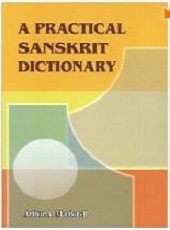
• A Practical Sanskrikt Dictionary,
by A. A. Macdonell, 1893,
http://www.sanskrit-lexicon.uni-koeln.de/scans/MDScan/index.php?sfx=jpg;
1929.
-
Nataraj ed., 1st in 2006, 2012.
-
https://dsal.uchicago.edu/dictionaries/macdonell/ 190516
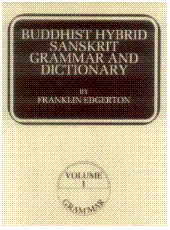
• The Buddhist Hybrid Sanskrit Grammar and
Dictionary, BHS, vol.2, by F. Edgerton,
pp. 627.
-
FEdgerton-BHSD<Ô> /
Bkp<Ô> (link chk 180627)
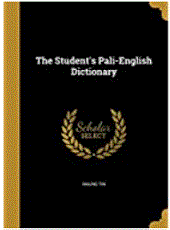
• The Student's Pali English dictionary ,
by U Pe Maung Tin, 1920.
- (ref: UPMT-PEDxxx).
Downloaded copies in TIL
HD-PDF and SD-PDF libraries:
-
UPMT-PaliDict1920<Ô> /
bkp<Ô> (link chk 190113)
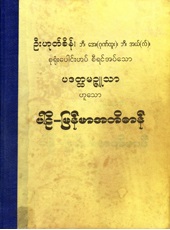
• Pali-Myanmar Dictionary
(in Pal-Myan), by U Hoke Sein,
- (ref: UHS-PMD). The dictionary in printed form is in TIL Research Library.
• Latin-English Vocabulary II, by Hans H Ørberg, 1998
-
HHOrberg-LinguaLatina<Ô> /
Bkp<Ô> (link
chk 190624)
Edited by U Kyaw Tun (UKT) (M.S., I.P.S.T., USA),
Daw Khin Wutyi, Daw Thuzar Myint, Daw Zinthiri Han
and staff of Tun Institute of Learning (TIL).
Not for sale. No copyright. Free for everyone.
Prepared for students and staff of TIL
Research Station, Yangon, MYANMAR
-
http://www.tuninst.net ,
www.romabama.blogspot.com
MC-indx.htm |
Top
MCpp-indx.htm
 {ku.hta.}
p070c1
 {ku.da.} /
 {koad}
 {ku.na.} /
 {koan}
 {ku.pa.} कुप
 {ku.ba.} /
 {ku.wa.} /
 {ku.va.} कुब
 {ku.Ba.} कुभ
p070c2
 {ku.ma.} कुम /
 {koam}
 {kûm~}
UKT notes :
• Bilus of Myanmarpré
• Kuntala - country
• Makara : the sea-goat
{ku.hta.}
• p070c1-b01/ not online
कुथ् [ kuth ] -->
 {koaht}
- stink; pp.
-ita , fetid;
cs. kothaya , cause to
putrefy
• p070c1-b02/uchg p055-
कुथ kutha
Skt: कुथ [kutha]
- m., â, f. coloured woollen blanket. -- Mac070c1
BPal:
{ku.hta.} - UHS-PMD0326
- 
UKT from UHS: m. mattress on elephant's
back, a kind of sacred grass Poa cyanosuroides
UKT 140316: Poa cyanosuroides Retzius is Kusha grass
-- http://ecoheritage.cpreec.org/Viewcontall.php?$mFJyBfK$MA5hj$m1Rt&wm 140316
{ku.da.} /
{koad}
• कुदार «kudāra»
Skt: कुदार
«kudāra » - adj. having a
bad wife -- SpkSkt
BPal:  {ku.da-ra.} - UHS-PMD0326
- 
UKT from UHS: m. bad wife,
detestable wife. mfn. having
a bad wife.
• p070c1-b03/chg p055-
कुदारदार [ ku-dâra-dâra ]
- m. pl. bad wife as a wife;
-drishta, pp. imperfectly seen;
-drishti, f.
defective sight; false system; a. heterodox;
-desa, m. bad country;
-daisika, m.
bad guide.
• p070c1-b04/ not online
कुद्दाल [kuddâla] कुद्दाल
= क ु द ् द ा ल
- hoe, spade
• p070c1-b05/uchg p055-
कुद्रव्य
[ ku-dravya ]
- n. bad wealth;
-dvâra,
n. back-door;
-dhî, a.
foolish; m. fool;
-nakha,
-nakhín, a. having deformed
nails;
-nadikâ, f.
insignificant rivulet;
-nadî, f.
id.;
-na ra‿indra,
-‿îsvara, m.
bad king; -nîta, n. bad
guidance;
-nripa, -nripati,
m. bad king.
{ku.na.} /
{koan}
• p070c1-b06/uchg p055-
कुन्त
[ kunta ]
- m. spear, lance.
• p070c1-b07/uchg p055-
कुन्तल [ kuntala ]
= क ु न ् त ल -->
 {koan~ta.la.}
- m. hair of the head; m. pl. N. of a people.
See my note on Kuntala
UKT 171224: The word «kuntalā» reminds me of the play (with verses to be sung) by Kalidasa. The play Shakuntala «śakuntalā» is based on a mythical story. The name of play is derived from Shakunta शकुन्त «śakunta».
See Wikipedia: - https://en.wikipedia.org/wiki/Shakuntala 170316
You can read a translation of the play by A. W. Ryder (1877-1938) in TIL HD-PDF and SD-PDF libraries
- AWRyder-KalidasShakuntala<Ô> / bkp<Ô> (link chk 200229)
Prologue: The siris-blossoms fair, / With pollen laden, //
------------ Are plucked to deck her hair / By many a maiden, //
------------ But gently; flowers like these / Are kissed by eager bees. //
• p070c1-b08/ p055-कुन्तवनमय
कुन्तवनमय
[ kunta-vana-maya ]
- a. consisting of a forest of spears.
•
p070c1-b09/ not online
[kúntâpa]
- n. N. of twenty organs alleged to be
in the abdomen; a certain section of
the Atharva-veda अथर्ववेद
UKT 190115: See Wikipedia: https://en.wikipedia.org/wiki/Atharvaveda 190115
See also a downloaded txt in TIL HD-PDF & SD-PDF libraries:
- SAKSIVAC-AthavaVeda<Ô> / Bkp<Ô> (link chk 190115)
SAKSIVAC is of the opinion that Atharva Véda seems to be misunderstood by Westerners.
• p070c1-b10/uchg p055-
कुन्ति
[ kunti ]
- m. pl. N. of a people; sg.
king of the Kuntis;
-bhoga, m.
N. of a king of the Kuntis, who adopted
Kuntî.
• p070c1-b11/uchg p055-
कुन्ती
[ kuntî ]
- f. ep. of Prithâ, wife of Pându;
-suta, m. son of Kuntî
(ep. of the sons of Pându).
• p070c1-b12/uchg p055-
कुन्द [ kunda ]
- m. kind of jasmine; n. its flower;
-latâ, f. jasmine creeper.
( end of old p070-1.htm )
{ku.pa.} कुप
•
p070c1-b13/ not online
कुप् [ kup ]
- iv. kupya , become agitated;
grows angry, be angry with (...

• p070c1-b14/uchg p055-
कुप [ kup-á ]
- m. beam of a balance.
UKT 171224: The beam of the balance has two dampers, one on the left and the other on the right.
• p070c1-b15/uchg p055-
कुपट [ ku-pata ]
- m. poor garment;
-patu, a. stupid; -pathita, pp. who has learnt (his
part) badly;
-pati, m. bad husband; bad king;
-parigñâta,
pp. ill-comprehended;
-parîksha-ka, a. estimating badly; m. bad estimator;
-parîkshita,
pp.
ill-investigated;
-pâtra, n. unworthy person; -putra, m. bad son;
-purusha, m.
contemptible man; coward.
• कुपण्डित «kupaṇḍita»
- m. bad scholar - SpkSkt
• p070c1-b16/uchg p055-
कुप्य [ kupya ]
- n. base metal, i.e. any but gold and silver; m. N.;
-ka, --°,
a.
base metal.
• p070c1-b17/uchg p055-
कुप्रभु
[ ku-prabhu ]
- m. bad lord;
-plava, m. unsafe boat.
{ku.ba.} /
{ku.wa.} /
{ku.va.} कुब
p070c1-b18/uchg p055-
कुबन्ध [ ku-bandha ]
- m. degrading brand;
-buddhi, f. wrong view; a. wickedly disposed;
stupid.
• p070c1-b19/uchg p055-
कुबेर [ kúbera ]
- m. N. of the regent of the spirits of the lower regions and of darkness
(V.); god of wealth, the world guardian of the North;
-datta, m. N. of a
mythical being;
-vallabha, m. N. of a Vaisya.
© कुबेर [ kúbera ] -->
 {ku.wé-ra.}
Skt: कुबेर
[ kúbera ] - m. N. of the regent of
the spirits of the lower regions and of
darkness (V.);
god of wealth, the world
guardian of the North; - Mac070c1
BPal:
{ku.wé-ra.} - UHS PMD0331

UKT from UHS: - m.
 {wíþ~þa.wûN nût}, ruler of the North of
Mt. Méru, ruler of the Ogres
{wíþ~þa.wûN nût}, ruler of the North of
Mt. Méru, ruler of the Ogres
 {Bi-lu:}.
See my notes on
Bilus of Myanmarpré
According to J. George Scott, a noted author on Burma, the Bilus of
Myanmarpré are a people of extreme north.
• p070c1-b20/uchg p055-
कुब्ज [ kubgá ]
- a. hunch-backed; crooked;
(a)-ka, a. id.; m. an aquatic plant.
• p070c1-b21/uchg p055-
कुब्रह्मन्् [ ku-brahman ]
- m. bad Brâhman.
{ku.Ba.} कुभ
• p070c1-b22/ not online
कुभ् [kubh ]
- kumbh , be curved
• p070c1-b23/ not online
कुभर्तृ
[ku-bhartri]
- m. bad husband;
-bharya,
f. bad wife; -bhikahu, m. rogue
of a beggar;
-bhukta, n. bad meal;
-bhritya, m. bad servant;
-bhoga, poor enjoyment; -bhogana,
bad food; -bhogya, n. id.;
-bhratri, m. bad brother;
-mata,
false doctrine; -mati, f. wrong
opinion; stupidity; a. stupid;
-mantra, m. bad advice; evil spell; -mantrin,
m. bad counsellor.
© कुमत [ku-mata]
Skt: [ -mata] - false doctrine; -- Mac070c1
Skt: कुमत «kumata» - n. bad doctrine -- SpkSkt
• p070c2-b01/uchg p055-
कुभा [ kúbh-â ] = क ु भ ा
- f. N. of a river (Cabul).
UKT 200229: The word Cabul means:
"Cabul (Hebrew: כבול), classical spelling: Chabolo; Chabulon, is a location in the north-west of ancient Israel mentioned in the Hebrew Bible, now the Kabul local council in Israel, 9 or 10 miles (16 km) east of Acco." - Google search
On the other hand it can mean Kabul river - a river in Afghanistan.
See: https://en.wikipedia.org/wiki/Kabul_River 200229
{ku.ma.} कुम /
{koam}
• p070c2-b02/uchg p055-
कुमार [ ku-mârá ]
- m. [dying easily], (new born) child; boy; youth, son; prince; ep. of
Skanda;
(a)-ká, m. little boy, boy, youth; --°, a young --;
-tva, n.
boyhood, youth; sonship;
-datta, m. N.; (á)-deshna,
a. giving but fleeting
gifts;
-dhârâ, f. N. of a river;
-bhukti, f. apanage* of a crown prince;
-bhrityâ,
f. fostering of a child; midwifery;
-vana, n. Kumâra's grove;
-vikrama, a.
valiant as the god of war; -vrata, n. vow of chastity;
-sambhava,
m. birth of
the war-god: T. of a poem by Kâlidâsa;
-sena, m. N. of a minister;
-sevaka, m.
prince's servant.
* ap·pa·nage also ap·a·nage - n. ¹. A source of revenue, such as land, given by a sovereign for the maintenance of a member of the ruling family. ². Something extra offered to or claimed by a party as due; a perquisite: The leaders of the opposition party agreed to accept another government's appanages, and in doing so became an officially paid agency of a foreign power. ³. A rightful or customary accompaniment or adjunct. -- AHTD
© कुमारसंभव
«kumarasambhava»
- m. birth of the war-god: T. of a poem
by Kâlidâsa; - Mac072c2
See downloaded Kalidas's Kumarasambhavam
कुमारसंभवम् by M R Kalein, 1917 in TIL HD-PDF and SD-PDF libraries
- MRKale-Kumarasambhava<Ô> /
Bkp<Ô> (link
chk 171226, 190115, 200229)
• p070c2-b03/uchg p055-
कुमारिका
[ kumâr-ikã ]

- f. girl; N. of a part of
Bhâratavarsha;
-ín, a.
possessed of children.
UKT 171226: Searching for Bhâratavarsha, I came across Desi words speak of the Past (Indo-Aryans in the Ancient Near East), by Dr. Liny Srinivans, 2011 . Insert: from p.496
• p070c2-b04/uchg p055-
कुमारिदत्त
[ kumâri-datta ]
- m. N.;
-la: -bhatta,
-svâmin, m. N. of a Mîmâmsist.
• p070c2-b05/uchg p055-
कुमारी
[ ku-mârî ]
- f. girl, virgin; daughter;
(î)-pura, n. part
of harem where girls live;
-bhâga,
m. daughter's portion.
© कुमारी
ku-mari -->
 {ku.ma-ri}
Skt: कुमारी
[ku-mâri] - f. girl, virgin; daughter; -- Mac070c2
BPal:
{ku.ma-ri} - UHS-PMD0328
- 
UKT from UHS: f. maiden (bride), girl,
Aloe vera
UKT 140317: Aloes and Cactuses are not the same.
See also http://en.wikipedia.org/wiki/Aloe_vera 140317
• p070c2-b06/uchg p055-
कुमार्ग [ ku-mârga ]
- m. wrong way, evil courses;
-mâlana, m. N.; -mitra,
n. bad friend:
-mitra, n. bad friend as a friend.
• p070c2-b07/uchg p055-
कुमुद [ kú-muda ]
- n. (white) night lotus; m. N. of a Nâga; N. of a man:
-nâtha,
m. moon;
-maya, a. consisting entirely of white lotuses;
-‿âkara,
m. lotus group: -tâ, f. abst. ɴ.
© कुमुद
[kú-muda] -->
 {ku.mu.da.}
Skt: कुमुद
[kú-muda] - n. (white) night lotus; m.
N. of a Nâga; N. of a man: -- Mac070c2
BPal:
{ku.mu.da.} - UHS-PMD0328
- 
UKT from UHS: n. white lotus,
a numeral 1e105 (1 followed by 105 zeros),
{ku.mu.da.}-elephant
UKT 200229: To get more of Kumuda-elephant, refer to
http://www.mythfolklore.net/india/encyclopedia/lokapalas.htm 200229
"LOKAPALAS. [Source:
Dowson's
Classical Dictionary of Hindu Mythology] Supporters or guardians of
the world. The guardian deities who preside over the eight points of the
compass, ... (4.)
Surya's
[a Lokapala] at the southwest is
Kumuda
[elephant ?] and his female is Anupama. ..."
• p070c2-b08/ not online
कुमुदिका [kumud-ikâ]
- f. N.
• p070c2-b09/uchg p055-
कुमुदिनी [ kumud-inî ]
- f. night lotus; group of night lotuses:
-nâyaka, -vadhûvara,
m. lover
of lotuses, ep. of the moon.
• p070c2-b10/uchg p055-
कुमुद्वत्् [ kúmud-vat ]
- a. abounding in lotuses:
-î, f. night lotus; group of night lotuses; N.
• p070c2-b11/uchg p055-
कुमुहूर्त
[ ku-muhûrta ]
- m. evil hour.
{kûm~}UKT 170318: Below you'll see entries with glosses that seem to have no relations to each other: e.g. pot, testes (male-sex organ), frontal protuberances of an elephant, demon, raksha, common prostitute, Rishi Agastya, Rasi Kumbha, crocodile, etc. Unless you look into Astrology, Metrology, and Pali myths you will not understand their relationships.
• p070c2-b12/uchg p055-
कुम्भ [ kumbhá ]
- m. pot, jar, urn (--°, a. jar shaped); a measure of grain (=20
Dronas);
du. frontal protuberances of an elephant;
(a)ka, --°,
a. id.; m.
n. religious exercise consisting in closing the nostrils with the right hand to
suspend breathing:
-karna, m. N. of a Râkshasa (brother of Râvana);
-karnâya,
den. Â. resemble Kumbha-karna (in sleeping long);
-kâra, m. potter (a mixed
caste); -kârikâ, f. wife of a potter;
-ganman, m. ep. of Agastya;
-dâsî, f.
common prostitute; -dhânya, a. having only a potful of grain;
-yoni,
m. ep. of
Agastya; -sambhava, m. id.
© कुम्भ [ kumbhá ]
Skt: कुम्भ [ kumbhá ]
- m. pot, jar, urn (--°, a. jar shaped); a measure of grain (=20
Dronas); du. frontal protuberances of an elephant; - Mac070c2
BPali:  {koam~Ba.} - UHS PMD0328c1
UKT 170318: water pot (for carrying on the head of females), frontal
protuberances, 1/3 of a cart-load, Kumba Rasi aka Koam Rasi
 {koam ra-þi} (shorted to
{koam}).
{koam ra-þi} (shorted to
{koam}).
© कुम्भयोनि «kumbhayoni»
Skt: [-yoni ] -
m. ep. of
Agastya; - Mac070c2
Skt: कुम्भयोनि «kumbhayoni» - n. "born in a water-jar", Name of
agastya- -- SktDict:MonierWilliams
See my note on my Astrological-birth animal Makara
© कुम्भकार [kumbhá-kâra ]

Skt: -kâra, m. potter (a mixed caste) - Mac070c2
Skt: कुम्भकार «kumbhakāra» - m. potter - SpkSkt
BHS: kumbhakāraka - m. fem. °rikā . potter -
FE-BHS187c1-b13
BPali:  {koam~Ba. ka-ra.} - UHS PMD0328c2
UKT from UHS: m. potter
• p070c2-b13/ not online
कुम्भाण्ड [kumbha‿anda] «kumbhāṇḍa»
Skt: कुम्भाण्ड [kumbha‿anda]
- m. kind of demon - Mac070c2
Skt: Kumbhāṇḍa कुम्भाण्ड Pal: Kumbhaṇḍa कुम्भण्ड .
See https://en.wikipedia.org/wiki/Kumbhanda 200301
• p070c2-b14/uchg p055-
कुम्भिका [ kumbh-ikâ ]
- f. small pot or jar;
-ín, m. elephant (having frontal protuberances);
*-ila, m. thief.
• p070c2-b15/uchg p055-
कुम्भी [ kumbh&isharp; ]
- f. pot, jar, pan;
-dhânyaka, a. having grain in jars;
(î)-nása, m. kind
of snake;
-nasî, f. N. of a Râkshasî;
-pâka, m. sg. & pl. kind of hell.
• p070c2-b16/uchg p055-
कुम्भीर [ kumbhî-ra ]
- m. crocodile; *-la, m. id.
• p070c2-b17/uchg p055-
कुम्भोदर
[ kumbha‿udara ]
- m. (pot-bellied), N. of a servant
of Siva;
-‿udbhava, m.
ep. of Agastya; -‿udhûta,
m. id.
( end of old p070-2.htm )
UKT 170316, 190115, 200229:
According to J. George Scott's Gazetteer of Upper Burma and the Shan states,
the Bilu's are people of extreme north.
" (8) The Sôn
 {soan:} and Bilu
{Bi-lu:} people, who live beyond the Khunnongs. These wizards and ogres eat
dogs, and the Kachins north of the confluence and Hkami Lông trade with them
in that animal. This race would hardly be worth mentioning if it were not
for the Bilu city
{soan:} and Bilu
{Bi-lu:} people, who live beyond the Khunnongs. These wizards and ogres eat
dogs, and the Kachins north of the confluence and Hkami Lông trade with them
in that animal. This race would hardly be worth mentioning if it were not
for the Bilu city
 {Bi-lu: mro.} which used to exist near Mohnyin, according to Mong Yang and
Mông Kawng history. The Sôn, according to Kachin, are clever workers in
iron, which they get in their own country."
{Bi-lu: mro.} which used to exist near Mohnyin, according to Mong Yang and
Mông Kawng history. The Sôn, according to Kachin, are clever workers in
iron, which they get in their own country."


There are two kinds of Bilus in Myanmar mythology: the ferocious kind are the man-eaters who have bald heads and those who wear helmets. The Bilu of Ramayana are Nat-Bilus who have tiered helmets and are equals of the Dévas and Humans. The inset shows the Ogress (?) probably from Cambodia.
See Bilu island in Wikipedia:
https://en.wikipedia.org/wiki/Bilu_Island 190115
"Bilu Island
 {Bi-lu:kwyûn:}
 (Mon pronunciation) lit. "ogre island",
is a Deltaic island of Salween River
(Mon pronunciation) lit. "ogre island",
is a Deltaic island of Salween River

 {þän-lwín mric}. .. The island is roughly the size of
Singapore, and inhabited by 200,000 people."
{þän-lwín mric}. .. The island is roughly the size of
Singapore, and inhabited by 200,000 people."
UKT 190115: I wonder whether it is connected to the ancient kingdom of
 Srivijaya, "mentioned" in the written records of his 25-year travels
of the Chinese pilgrim monk Yijing (Chinese:
義淨 ; Wade–Giles: I Ching;
635–713 CE) was a Tang dynasty Chinese
Buddhist monk originally named Zhang
Wenming (Chinese: 張文明 ). See Wikipedia:
- https://en.wikipedia.org/wiki/Yijing_(monk) 181018, 190115
Srivijaya, "mentioned" in the written records of his 25-year travels
of the Chinese pilgrim monk Yijing (Chinese:
義淨 ; Wade–Giles: I Ching;
635–713 CE) was a Tang dynasty Chinese
Buddhist monk originally named Zhang
Wenming (Chinese: 張文明 ). See Wikipedia:
- https://en.wikipedia.org/wiki/Yijing_(monk) 181018, 190115
"In some 19th-century publications, Yijing's name may appear as I Tsing,
following an antiquated method of Chinese romanization. "
Go back Bilus-Myanmar-note-b
 UKT 140310: Surfing the Net with the
search string "kuntala people of
ancient India" brought me to
UKT 140310: Surfing the Net with the
search string "kuntala people of
ancient India" brought me to
¤
http://en.wikipedia.org/wiki/Satavahana_dynasty 140310
¤
http://en.wikipedia.org/wiki/History_of_Bellary 140310
Excerpts from the two:
"Chronology of Telugu people & Andhra history .... The territory of the empire covered much of India from 230 BCE onward. .... Apilaka, Meghasvati and Kuntala Satakarni, who are thought to have been under the suzerainty of ..... Ancient India."
" Bellary was once part of an area also known as Kuntala Desha (ಕುಂತಲ ದೇಶ) [1] [2] [3] or Kuntala Vishaya (ಕುಂತಲ ವಿಷಯ) (Vishaya – a territorial division or district of a kingdom). Many inscriptions refer to the Western Chalukyas as rulers of Kuntala or Kondala. [4] [5]
UKT 140310: Since the Telugu speakers were and are still mostly Hindus and Buddhists, I am wondering if these people had had a strong influence on the Mons of Myanmar who eventually earned the discredited name of Talaing .
Go back kuntala-note-b
UKT 170318, 200229: 


The Planet-god ruling Koam Rasi
{koam ra-þi} 'Aquarius' with the 'Water-carrier
Sign' is Saturn, who also rules the
preceding Rasi, the Maraka Rasi
मकर राशि

 {ma.ka.ra. ra-þi} 'Capricorn'. Note the Planet-god
Saturn is the ruler of 2 houses. The Animal Sign
of this house is the mythical aquatic animal
मकर «makara»
{ma.ka.ra. ra-þi} 'Capricorn'. Note the Planet-god
Saturn is the ruler of 2 houses. The Animal Sign
of this house is the mythical aquatic animal
मकर «makara»
 {ma.kar:} described as
Sea-goat
{ma.kar:} described as
Sea-goat
 {ma.kûn:}. See UTM PDMD225.
UKT 200229: It is usual to have the pronunciation change {r} --> {n} when going from Pali to Burmese: Thus
{maar} -->
{maan}
Incidentally, this animal is the animal vehicle of the river Goddess Ganga. She is also sometimes shown riding on a crocodile.
See also Wikipedia: https://en.wikipedia.org/wiki/Makara_(Hindu_mythology)
190116
"Some cryptozoologists suspect the legend of
the Makara may be based in fact, and associate it
with the
Trunko
sighting on South Africa's Indian Ocean coast.
[15] Some ancient sketches of Makara do tend to
resemble modern illustrated renditions of the
prehistoric mammal
Ambulocetus. A more reasonable identification
of the creature is that with the
South Asian river dolphin; an animal, which,
though now endangered, was once abundantly found
in the Ganges-Brahmaputra river system and with
which the Makara shares several visible
similarities. The makara could also be based on the
mugger crocodile or the
gharial. "
From: https://en.wikipedia.org/wiki/Irrawaddy_dolphin 200301
The Irrawaddy dolphin (Orcaella brevirostris)

 {É-ra-wa.ti lín:peín} is a
euryhaline
species of
oceanic dolphin found in discontinuous subpopulations near sea coasts and in
estuaries and rivers in parts of the Bay of Bengal and Southeast Asia.
{É-ra-wa.ti lín:peín} is a
euryhaline
species of
oceanic dolphin found in discontinuous subpopulations near sea coasts and in
estuaries and rivers in parts of the Bay of Bengal and Southeast Asia.
Irrawaddy dolphins have a seemingly mutualistic relationship of co-operative fishing with traditional fishers. Fishers in India recall when they would call out to the dolphins, by tapping a wooden key also known as a "lahai kway", 19] against the sides of their boats, asking the Irrawaddys to drive fish into their nets. [20] [UKT ¶]
In Burma, in the upper reaches of the Ayeyarwady River
{É-ra-wa.ti mric}, Irrawaddy dolphins drive
fish towards fishers using cast nets
in response to acoustic signals from them. The fishermen attempt to grasp the
attention of the dolphins through various efforts such as using a cone-shaped
wood stick to drum the side of their canoe, striking their paddles to the
surface of the water, jingling their nets, or making calls that sound
turkey-like. A herd of dolphins, who agree to work alongside the fisherman, will
entrap a school of fish in a semi-circle, guiding them towards the boat.
[21] In return, the dolphins are rewarded with some
of the fishers'
bycatch.
[22] Historically, Irrawaddy River fishers claimed particular dolphins were
associated with individual fishing villages and chased fish into their nets. An
1879 report indicated legal claims were frequently brought into native courts by
fishers to recover a share of the fish from the nets of a rival fisher which the
plaintiff's dolphin was claimed to have helped fill.
[5]
Myanmar's Department of Fisheries took charge in December 2005, and instituted a
protected region in a 74 km (46 mi) segment of the Ayeyarwady River between
Mingun
 {mín:kwûn:mro.}
[22°03′N
96°01′E] and
Kyaukmyaung and created multiple provisions as well.
[21] [UKT ¶]
{mín:kwûn:mro.}
[22°03′N
96°01′E] and
Kyaukmyaung and created multiple provisions as well.
[21] [UKT ¶]
UKT 200301: The stretch of Irrawaddy river from Mingun town
{poap~pa:taún}, an active volcano arose suddenly resulting an major eruption blowing out the plug to form the
{taún-ka.lûp}. The volcanic activity ceased and it became inactive to this day. The Proto-Irrawaddy was broken into
{sa.moän chaún:} which flows from south to north, and the Sittang river
{pyu} settlements with hot ash, killing many. It is said that because of sudden death, many humans had become
{kyat} "souls without material bodies who do not know that they had died. See also: Large rivers and orogens: The evolution of the Yarlung Tsangpo–Irrawaddy system and the eastern Himalayan syntaxis - by Ruth A.J. Robinson and others,
- https://www.sciencedirect.com/science/article/pii/S1342937X13002281 200301
Protective measures in the area include mandatory release of entangled dolphins, prohibition of the catching or killing of dolphins and trade in whole or parts of them and the prohibition of electrofishing and gillnets more than 91 metres (300 ft) long, or spaced less than 180 metres (600 ft) apart. [4] Mercury poisoning and habitat loss from gold mining dredging operations in the river have been eliminated [52]
Go back Makara-note-b
End of TIL file


