
p063-2.htm
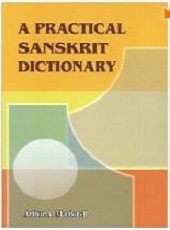
• A Practical Sanskrikt Dictionary,
by A. A. Macdonell, 1893,
http://www.sanskrit-lexicon.uni-koeln.de/scans/MDScan/index.php?sfx=jpg;
1929.
- Nataraj ed., 1st in 2006, 2012.
-
https://dsal.uchicago.edu/dictionaries/macdonell/ 190516
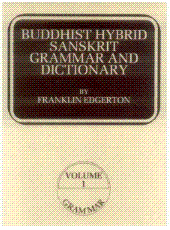
• The Buddhist Hybrid Sanskrit Grammar and
Dictionary, BHS, vol.2, by F. Edgerton,
pp. 627.
-
FEdgerton-BHSD<Ô> /
Bkp<Ô> (link chk 180627)
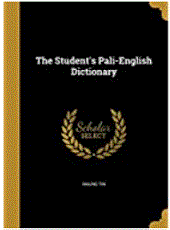
• The Student's Pali English dictionary ,
by U Pe Maung Tin, 1920.
- (ref: UPMT-PEDxxx).
Downloaded copies in TIL
HD-PDF and SD-PDF libraries:
-
UPMT-PaliDict1920<Ô> /
bkp<Ô> (link chk 190113)
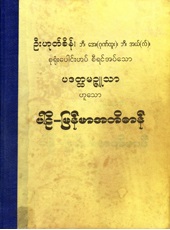
• Pali-Myanmar Dictionary
(in Pal-Myan), by U Hoke Sein,
- (ref: UHS-PMD). The dictionary in printed form is in TIL Research Library.
• Latin-English Vocabulary II, by Hans H Ørberg, 1998
-
HHOrberg-LinguaLatina<Ô> /
Bkp<Ô> (link
chk 190624)
Edited by U Kyaw Tun (UKT) (M.S., I.P.S.T., USA),
Daw Khin Wutyi, Daw Thuzar Myint, Daw Zinthiri Han
and staff of Tun Institute of Learning (TIL).
Not for sale. No copyright. Free for everyone.
Prepared for students and staff of TIL
Research Station, Yangon, MYANMAR
-
http://www.tuninst.net ,
www.romabama.blogspot.com
MC-indx.htm |
Top
MCpp-indx.htm
UKT 200120: The IE-speakers - Sanskrit and English - do not have the Bur-Myan (Tib-Bur) medials. They can only articulate
{ka.} and
{ya.} separately as
{ka.ya.}. At the most they have to use a schwa producing {ka·ya.}. However, after long exposure to Bur-Myan medials, and consciously trying they can successfully say
{kya.}. I'm speaking from my own experience with my north American friends pronouncing my name KYAW. Without exposure and without trying they always call me JOE.
Bur-Myan pronounces
{ra.} exactly the same or almost. There is no roticity in
{Ra.}. There is no way to differentiate the two sounds in the Myanmar script. Caveat: This note of mine is incomplete and will remain so until I've covered the
{ka.ya.} कय : disyllabic . The monosyllabic medial
{kya.}
is probably only found in Bur-Myan.
 {ka.ra.} कर : disyllabic
UKT notes :
• Medial sounds
alt caption
•
Checking vowels with killed-approximants :
The problem of Wathut
 {wa.þût} from:
 {wa.}/
 {w}
or {O} /ø/? -
{w}
or {O} /ø/? -
Refer to spelling of
 {pa.oO} 'a Myanmar ethnic group'.
• Polyandry and paternity in Ancient India
• Repha and Lepha - UKT151029: "Lepha" is my coined word.
• Rig Veda - Mandala 1 - Hymn 165
• Shaivism & Aghori sect : Human skulls &
 {auk-lûm:}
UKT 190226: Production of medial using an approximant, and Checking with killed approximant are different as shown below. We meet this on
{gya.} .
कय --> क ् य --> क्य
-------> क य ् --> कय्गय --> ग ् य --> ग्य
------> ग य ् --> गय्
The difference is on the position of the viram as shown above. See my note on medial sounds .
One of the differences between Pal-Myan and Skt-Dev is the checking of vowels in the syllables. In Bur-Myan (a typical Tib-Bur language), only the short vowel can be checked. However, in Skt-Dev (a typical IE language) both short and long vowels may be checked.
{ka.ya.}/
 {k~ya.}
 See disyllabic hanging consonant
{hswè:byæÑ:} found in Mon-Myan.
UKT 181216: Native English speakers cannot pronounce the monosyllabic
Similarly the Hindi-Dev speakers cannot pronounce the monosyllabic
• p063c1-b11/ not online
कयासुभीय
[kayâ-subh-îya]
- n. RV.I.165
Skt: कयासुभीय
[kayâ-subh-îya] - n. RV.I.165 - Mac063c1
Skt: कयाशुभीय
«kayāśubhīya» - n.
hymn - SpkSkt
UKT 200129: I'm looking into Rig Veda Hymn 165 to help me read Skt-Dev.
From: https://en.wikisource.org/wiki/The_Rig_Veda/Mandala_1/Hymn_165 200128
Translated by Ralph T.H. Griffith
From: http://www.gatewayforindia.com/vedas/rigveda/rigveda01165.shtml 200128
in Skt-Dev
See: RV1.165 in my notes
and also - p063c2-b17 below1. WITH what bright beauty are the Maruts jointly invested, peers in age, who dwell together?
From what place have they come? With what intention? Sing they their strength through love of wealth, these Heroes?1. कया शुभा सवयसः सनीळाः समान्या मरुतः सं मिमिक्षुः |
कया मती कुत एतास एते.अर्चन्ति शुष्मं वर्षणो वसूया ||1. kayā śubhā savayasaḥ sanīḷāḥ samānyā marutaḥ saṃ mimikṣuḥ |
kayā matī kuta etāsa ete.arcanti śuṣmaṃ vṛṣaṇo vasūyā ||You can see कया «káyā» (disyllabic) but not the monosyllabic medials
{kya} (2 blk).
{ka.Ra.} कर : disyllabic
• p063c1-b12/uchg p051-
कर [ ¹. kar-á ]
- a. (î, rarely â) doing, making; causing, producing (generally --°);
m. hand; elephant's trunk.
• p063c1-b13/uchg p051-
कर [ ². kar-a ]
- m. ray; duty, tax.
• p063c1-b14/uchg p051-
करक [ kara-ka ]
- m. water-pot; a tree.
• p063c1-b15/uchg p051-
करका [ kara-kâ ]
- f. hail:
-‿abhighâta, m. hail stroke.
• p063c1-b16/uchg p051-
करकिसलय [ kara-kisalaya ]
- n. (hand-sprout), finger;
-graha, m.,
-na, n. taking by the hand,
wedding.
•
Orphan /uchg p051-
करनिवेशित [ kara-nivesita ]
- pp. rendered tributary.
• p063c1-b17/uchg p051-
करङ्क [ karaṅka ]
- m. skull.
• p063c1-b18/uchg p051-
करज [ kara-ga ]
- m. finger-nail.
• p063c1-b19/ not online

[kárañga ]
- m. a tree
Skt: कारञ्ज «kārañja» - adj. produced by or coming fr. the tree karaJja
• p063c1-b20/uchg p051-
करट [ karat-a ]
- m. elephant's temple; crow:
-ka, m. crow (Pr.); N. of a jackal;
-in, m.
elephant.
• p063c1-b21/uchg p051-
करण [ kár-ana ]
- a. (î) making, producing, performing (--°); m. a certain mixed
caste; tune; word (gr.); n. making, doing; performing; producing; action; deed;
rite; business; organ of sense; body; instrument; legal document or evidence;
notion of the instrumental case (gr.):
-tâ, f., -tva,
n. instrumentality (gr.):
-rûpa, a. having the form of an instrument (ph.);
î-ya,
fp. to be done; n.
business.
• p063c1-b22/uchg p051-
करण्ड [ karanda ]
- n. basket; little box of wicker work;
-ka, n.,
i-kâ,
f. id.
• p063c1-b23/uchg p051-095
करतल [ kara-tala ]
- n. palm of the hand:
-gata,
pp. held in the hand,
-tâla,
clapping of the hands;
-da, a. paying
taxes, tributary; subordinate; -dhrita-sara,
a. holding an arrow in his hand;
-pattra, n. saw; -pallava,
m. finger; -pâda-danta, m.
hand, foot, or tooth;
-pâla, m.
receiver-general of taxes; -putî, f.
hollowed hand; -prâpta, pp. held in
the hand;
-badara, n. jujube berry
in the hand = perfectly obvious matter;
-bha,
m. elephant's trunk; camel; young elephant
or camel; hand between wrist and fingers:
-ka,
m. N. of a messenger;
-bhûshana,
n. bracelet; -bha‿urû, a.
f. having thighs like an elephant's trunk.
© करतल [ kara-tala ]


Skt: करतल [ kara-tala ]
- n. palm of the hand: - Mac063c1
Skt: करतल «karatala» - m. palm - SpkSkt
alt spelling: तल «tala» - m.n. palm - SpkSkt
UKT 170821: "Cheiro" - the professional
name of the 19th century Irish palmist and occultist
William John Warner (1866 - 1936), is obviously
related to the Skt-Dev करतल
«karatala».
See, The Language of the Hand - by Cheiro, first pub. 1894, in TIL HD-PDF and SD-PDF libraries from Forgotten Books
- Cheiro-LanguageOfHand<Ô> / Bkp<Ô> (link chk 171204)UKT 170821: Pix: Left-palm of 44th US President Barrack Hussein Obama on 2016Nov02 during campaigning. The major lines and shapes of hand and fingers are clearly visible for a prediction by a top palmist.
UKT 200130: Now that we have broached Palmistry, let's see what the left-palm of an Agori-Hindu monk.
"The Aghor get the flesh from corpses floating down the river (never directly off a burning pyre at a ghat), which family members push into the Ganges River if they don't have enough money for cremation. And under the privacy of the new moon, they chant mantras, make offerings to Shiva, and consume it. ' - Jun 16, 2017 Google search.
• p063c2-b01/uchg p051-
करम्भ
[ karambhá ]
= क र म ् भ
- m. pap, porridge;
-ka, n. id.; m. N.;
-bâlukâ-tâpa, m. pl. porridge of
scorching sand (a torment of hell).
• p063c2-b02/uchg p051-
• कररुह [ kara-ruha ]
- m. finger-nail;
-vîra, n. fragrant oleander.
• p063c2-b03/uchg p051-
करस्् [ kár-as ]
- n. deed.
• p063c2-b04/uchg p051-
• करस्थ [ kara-stha ]
- a. lying in the hand;
î-kri, place in the hand.
• p063c2-b05/uchg p051-
• करस्न [ kará-sna ]
- m. fore-arm.
 {ka.ra} करा
• p063c2-b06/uchg p051-
कराग्र [ kara‿agra ]
- n. tip of finger or ray;
-‿âghâta, m. blow of the hand;
-‿aṅguli,
f. finger of the hand.
• p063c2-b07/uchg p051-
• करायिका [ karâyikâ ]
- f. kind of crane.
• p063c2-b08/uchg p051-
कराल [ karâla ]
- a. prominent; gaping; formidable; m. N. of a locality; â,
f. ep. of Durgâ; N.;
-kesara, m. N. of a lion;
-tâ,
f. gaping condition; formidableness.
• p063c2-b09/uchg p051-
करालम्ब [ kara‿âlamba ]
- m. support for the hand = sheet anchor.
• p063c2-b10/uchg p051-
करालवदन [ karâla-vadana ]
- a. having a gaping or formidable mouth.
• p063c2-b11/ not online
[karâlâ-ya]
- â. become formidable
• p063c2-b12/uchg p051-
करालित [ karâl-ita ]
- pp. make formidable; increased.
• p063c2-b13/uchg p051-
कराहति [ kara‿âhati ]
- f. blow with the hand.
• p063c2-b14/ not online
• करिक [kari-ka ]
- -° = karin, m. elephant;
-kumbha-pîta , n.
elephant's frontal bone
• p063c2-b15/uchg p051-
करिन्् [ kar-in ]
- a. making, fashioning; m. elephant; (n)
î, f. female elephant.
• p063c2-b16/uchg p051-
करिष्णु [ kar-ishnu ]
- a. doing, performing (--°);
-ishyat, ft. pt. future.
• p063c2-b17/ not online
[karishya[h] ]
- 2 sg. ft. subj. √kri , RV. I. 165, 9
UKT 171205: See https://en.wikisource.org/wiki/The_Rig_Veda/Mandala_1/Hymn_165 171205
"1. WITH what bright beauty are the Maruts jointly invested, peers in age, who dwell together?
From what place have they come? With what intention? Sing they their strength through love of wealth, these Heroes? ..." See also p063c1-b11 कयासुभीय [kayâ-subh-îya] above
• p063c2-b18/ not online

[karî-kri]
- bring as a tribute
• p063c2-b19/uchg p051-
करीर [ karîra ]
- m. n. shoot of a bamboo; m. a leafless plant; n. its fruit.
• p063c2-b20/uchg p051-
करीष [ kárîsha ]
- n. refuse, (dry) cow-dung.
• p063c2-b21/uchg p051-
करुण [ karúna ]
- a. doleful, pitiable:
-m, ad.; m. a plant;
â, f. pity, compassion;
-dhvani,
m. wail;
-vedi-tâ, f. compassionate disposition.
• p063c2-b22/uchg p051-
करेणु [ karenu ]
- m. f. elephant:
-kâ, f. female elephant.
• p063c2-b23/uchg p051-
करोटि [ karoti ]
- f. basin, bowl; skull:
-ka, (--°, a.) skull, head.
UKT 140216: Certain Hindu sadhus use the human skull as a bowl from which to take their food and drink.
See my note on Shaivism & Aghori sect
• p063c2-b24/ not online
[karoti ]
- 3 sg. pr. of √kri , do; -karman ,
a. having as an action = verb of making
( end of old p063-2.htm )
 {kar~} : Repha forms - super R
UKT 200129: I'm postulating two forms of rhotic approximant:
{r} for Bur-Myan, and
{R} for Pal-Myan. Bur-Myan
Bur-Myan:
{ý} (as in
{kèý) in Irrawaddy dialect. However, it is pronounced with a rhotic accent in Rakhine dialect similar to Pal-Myan.
When a consonant such as
Visible viram:
{kaR} - similar in form to
Super form:{kín-si:}
Remember Super R is introduced into BEPS to represent the Repha of Skt-Dev. It is a superscript like
Refer to spelling of
Then I will have to spell the 'Taoist religion' as{tauO}: at present it is being spelled as
{tauk}.
Also, see{gaO}
-- UKT 120725 , ... , 190301, 190415, 200130
Medials in BEPS consonants are those that give coloration to the syllables. The syllables in Alphabet-Letter system are of CVC form, where there is no differentiation between the onset and coda consonants. However, in the Abugida-Akshara system the syllables are of the form CVÇ where the coda Ç = 0, 1, 2. Remember, the intermediate language, Romabama, follows the Abugida-Akshara system.
How to differentiate the two English words or syllables,
<saw> and <sao>, and the confusion with Wathut
{wa.þût}, is not easy to solve. In Bur-Myan, the English
w is represented by
{wa.}/
{w}. Therefore <saw> must be transliterated as
 {séw} from the word
 {sé}. The alternative is not to use
{wa.}/
{w} at all, but to use u , and <saw> will
come out as {sau}.
{sé}. The alternative is not to use
{wa.}/
{w} at all, but to use u , and <saw> will
come out as {sau}.
Not so fast - I must add. The Eng-Lat cannot differentiate
 {sa.}/
 {c} and
 {hsa.}/
 {hs} for two reasons. First English cannot differentiate
the tenuis voiceless from the ordinary voiceless, and
secondly it cannot pronounce the Palatal stops.
Bur-Myan Palatal stops become their Palatal affricates.
Now, don't blame the Eng-Lat alone. Bur-Myan is also to
be blamed. We do not have Dental fricatives such
as the hisser
{hs} for two reasons. First English cannot differentiate
the tenuis voiceless from the ordinary voiceless, and
secondly it cannot pronounce the Palatal stops.
Bur-Myan Palatal stops become their Palatal affricates.
Now, don't blame the Eng-Lat alone. Bur-Myan is also to
be blamed. We do not have Dental fricatives such
as the hisser
 {Sa.}/
 {S} which the Eng-Lat has. Thus, I've no choice, but to
come up innovations, such as
,
which I hate, and which I keep to a bare minimum.
{S} which the Eng-Lat has. Thus, I've no choice, but to
come up innovations, such as
,
which I hate, and which I keep to a bare minimum.
Now, let's return to difference in the two systems: Alphabet-Letter system in which the syllables are of CVC form, and Abugida-Akshara system the syllables are of the form CVÇ .
We first run into syllables with no coda, i.e.
CV (coda Ç = 0). There cannot be a consonant after CV,
as in Tao (the religion).
I propose to use
{tauO} which is now spelled in Myanmarpré as
{tauk}.
Next comes syllables with a single coda - a killed approximant (coda Ç = 1):
{ý},
{r},
 {l},
{w},
{l},
{w},
 {þ}, &
 {h} .
{h} .
Third, loan-words with two codas (Ç = 2) : which are mostly from English.
First, we have to note that in Bur-Myan phonology
with the exception of
 {þa.}, the others
{ya.},
{ra.},
{þa.}, the others
{ya.},
{ra.},
 {la.},
{wa.}, &
{la.},
{wa.}, &
 {ha.} are medial formers. Medial sounds are
monosyllabic, and are unique to Bur-Myan.
{ha.} are medial formers. Medial sounds are
monosyllabic, and are unique to Bur-Myan.
The most troublesome medial sound for
non-indigenous Bur-Myan speakers and foreigners
including the Hindi speakers is the
 {ya.pín.} sound represented by the glyph
 .
These speakers when they tried to articulate this
sound could produce the disyllabic conjunct
only, which is known as
.
These speakers when they tried to articulate this
sound could produce the disyllabic conjunct
only, which is known as
 {ya.hswè:} written as
 .
.
Hanging-Ya
{ ~ya.} is one of the Hanging-consonants
 {byæÑ:hswè:} in Mon-Myan. For these representations
see
{byæÑ:hswè:} in Mon-Myan. For these representations
see
¤ Basic Mon-Myanmar Language (in Burmese) by
Naing Maung Toe, Rangoon, 2007. See downloaded pages
in TIL HD-PDF and SD-PDF libraries -
NaingMgToe-MonMyan<Ô> /
Bkp<Ô> (link chk 200130)
¤ Mon-Myan Language: Speech and Script -
spk-all-indx.htm (link chk 200130)
From the point of view of the syllable structure,
CVÇ, the approximant-coda Ç is:
{y},
{r},
{l},
{w},
{þ}, &
{h}. Now that, I've confirmed that Nya-major
 {Ña.}/
 {Ñ} is also an approximant, I'll have to extend
the above list to include
{Ñ}.
{Ñ} is also an approximant, I'll have to extend
the above list to include
{Ñ}.
 Now,
look again into my IPA table of consonants (last
revised on 160218). The Thibilant /θ/, and
the Glottal /h/ (or Pharyngeal /ħ/) are
grouped with Fricatives - Not with Approximants.
It was I who have put the Bur-Myan
{ha.}/
{h} with the Approximants. It calls for a revision of my table: moving
{ha.}/
{h} to Fricatives. However, I'll have to wait for more
evidence before revising my IPA table of 160218.
Now,
look again into my IPA table of consonants (last
revised on 160218). The Thibilant /θ/, and
the Glottal /h/ (or Pharyngeal /ħ/) are
grouped with Fricatives - Not with Approximants.
It was I who have put the Bur-Myan
{ha.}/
{h} with the Approximants. It calls for a revision of my table: moving
{ha.}/
{h} to Fricatives. However, I'll have to wait for more
evidence before revising my IPA table of 160218.
In Bur-Myan, the coda do influence the nuclear vowel V, resulting in a change from «a» to some other vowel effecting the pronunciation. In simple transliteration this problem does not arise and the rime is simply written as «ay», «ar», «al», «aw», «aþ» & «ah». Remember the simple transliteration do not give the pronunciation.
Since Romabama is a transcription, «a» has
to be changed (with some compromise for inclusion
of English and Sanskrit) to reflect the Bur-Myan
pronunciation. In some instances a would
have to be changed to æ as in
 {æÑ} .
UKT 190228: we have been writing
{ÉÑ} (2 eye-blnk} in
{ÉÑ.þÑ} 'visitor' for a long time. Now, we will have:
Close:
{ÉÑ.} (1 blnk},
Open:{æÑ.} (1 blnk},
With inclusion of Eng-Lat and Skt-Dev, the problem
of rhoticity comes in. Remember, Bur-Myan is
non-rhotic, and Pal-Myan is slightly rhotic. We
have to deal with Skt-Dev words involving the repha.
With plosive-stops of
 {wag}-consonants, the problem is solved when we
note that a word such as «karma»
or कर्मन्
«kar-man» is changed to
{wag}-consonants, the problem is solved when we
note that a word such as «karma»
or कर्मन्
«kar-man» is changed to
 {kûm~ma.}, where the repha is changed to
the onset of the second syllable. See
p063.htm &
p064.htm.
{kûm~ma.}, where the repha is changed to
the onset of the second syllable. See
p063.htm &
p064.htm.
However, here with
{y},
{r},
{l},
{w}, we are meeting the
 {awag}-consonant. In Skt --> Pali, we are meeting:
Skt:
{gar~wa.} -->
{gar~ba.} --> Pal:
{gûb~ba.}
Here I was expecting a vertical conjuncts of two
{wa.}, as
 {gæw~wa.} implying a
{wa.þût}. Instead of which, I'm finding a change from
{wa.} व to
{gæw~wa.} implying a
{wa.þût}. Instead of which, I'm finding a change from
{wa.} व to
 {ba.} ब . Obviously, ancient Sanskrit-grammarians
must have faced the same problem, and they had to
improvise a new akshara:
{ba.} ब . Obviously, ancient Sanskrit-grammarians
must have faced the same problem, and they had to
improvise a new akshara:
व + diagonal line --> ब
Skt-Dev speakers seems to get confused between
{va.} instead of bilabial
See Grapheme-shape hypothesis .
This immediately poses the problem of Romabama vowel.
Are we were to say,
is {gaw~wa.} or {gæw~wa.}? The first is unacceptable
because of the confusion from English diphthong such
as <cow>. So we will tentatively say {gæo}, or
alternatively as {gæw}. Checking with DJPD16-010 shows
that <aeo> is realized in
/iˈɒ ((US)) iˈɑː/ <archaeology> /ˌɑː.kiˈɒl.ə.ʤi/ (US) /ˌɑːr.kiˈɑː.lə-/
/iəʊ ((US)) ioʊ, iə/ <palaeotype> /'pæl.əʊ.taɪp/ (US) /'peɪ.li.oʊ-, -ɚ-/
This amounts to saying, {gæo} for
 {ga.wa.þût}. Still it is unsatisfactory. Going back to
a simple {gao} maybe preferable, or better still
{gaO}. We now have
{ga.wa.þût}. Still it is unsatisfactory. Going back to
a simple {gao} maybe preferable, or better still
{gaO}. We now have
 {ga.} with killed-approximants
tentatively with
its tenuis-voiceless counterpart
{ka.} as:
{ga.} with killed-approximants
tentatively with
its tenuis-voiceless counterpart
{ka.} as:
The Chinese religion Tao (present in Myanmarpré}
- http://en.wikipedia.org/wiki/Taoism 120725
is presently spelled
UKT 120725: I do hope that my Taoist friend Daw Win (deceased) and her husband U Sai Latt would be satisfied.
From the above, we arrived at Skt
{gar~wa.} --> Pal
{gûb~ba.}
Go back medial-sounds-note-b / check-vow-approx-note-b
-- UKT 120124, 140216 : It is still an incomplete article
 After going through Mahabharata, I have concluded
that identifying a person with the father's name
is not reliable: the natural (or genetic father)
can be anyone other than the 'official' father. Thus,
Queen Kunti's six sons, Karna, and the
five Pandavas have different gods as
fathers, who because of Kunti's mantra,
had to 'impregnate' her. King Pandu the
official father of the five Pandavas was
not the natural father of any of his
'sons'. This reminds one of the Christian
Virgin Mary and her immaculate conception.
After going through Mahabharata, I have concluded
that identifying a person with the father's name
is not reliable: the natural (or genetic father)
can be anyone other than the 'official' father. Thus,
Queen Kunti's six sons, Karna, and the
five Pandavas have different gods as
fathers, who because of Kunti's mantra,
had to 'impregnate' her. King Pandu the
official father of the five Pandavas was
not the natural father of any of his
'sons'. This reminds one of the Christian
Virgin Mary and her immaculate conception.
From: Bheel Mahabharata: Kunti and the Birth of the Sun God's Child
by Satya Chaitanya, http://www.boloji.com/index.cfm?md=Content&sd=Articles&ArticleID=1190 140216
"The tribal Bheels have a Mahabharata version of their own, episodes of which are narrated or sung during their festivals, usually accompanied by music and sometimes with dance – a captivating version that never fails to thrill, one of the secrets of its allure being its truly enchanting folktale-like quality. This article tries to understand an episode from it, on its own and in relation to Vyasa’s epic. "UKT 140216 : The Bheels were a militarily defeated people of Ancient India, and they are counted as Sudras 'the servants". They were the original Tib-Bur speakers of Ancient India.
Kunti's first son was Karna कर्ण «karna»
 {kar~Na.} 'ear'. His father - the one who
impregnate his mother - was the
Sun-god.
{kar~Na.} 'ear'. His father - the one who
impregnate his mother - was the
Sun-god.
Skt: कर्ण karna = क र ् ण -->
BPal:{kûN~Na.} - UHS-PMD028
-
UKT from UHS: m. ear, ear-lobe, border, angle
From this and other examples we can reliably say:
"Sanskrit repha is changed into a conjunct of two syllables in Pali.
"The onset of the second syllable has the same form as the consonant under the repha.
"The coda of the first syllable, which was the repha, is the same as the onset of the second syllable."
This rule holds true for the
{wag}-consonants. But for the
{a.wag}-consonants, the rule breaks down. -- UKT120724
Go back Polyandry-note-b
UKT 151029, 171210, 190307:

UKT 151029: In transliterating words like • कल्क [ kalka ] which we will meet on page p064-2.htm, I have to keep in mind the presence of highly rhotic close-vowel, ऋ {iRi.}. This vowel is not present in Bur-Myan, and probably also in Pal-Myan.
UKT 190307: Now that we've recognized the presence of highly rhotic close-vowel, we must assume the presence of rhotic-open vowel with slightly less rhoticity. We find it in Repha-forms written with super-R. There are two kinds: Short-vowel Repha, and Long-vowel Repha. Examples are met in:
- p085.htmIts opposite number on the lateral-rhotic scale* is the highly lateral vowel, ऌ {iLi.}. It is almost absent in Skt-Dev. If there had been an original language from which Asokan and Myanmar akshara are derived, to have a balance in vowels, there would have been words with ऌ {iLi.}.
Lateral-Rhotic scale* : Rāhula
{ra-hu.la.} is the form of the name we are accustomed to. I had never imagine that Lāghula
{la-Gu.la.} is another form. Now I can cite this as evidence for pronunciations of Lateral (L-like) plane changing into those of Rhotic (R-like) plane.
Here we are not talking about ऋ {iRi.}, but the lesser rhotic Repha. Since it is a fact that there are a few words with ऌ {iLi.} in Skt-Dev, then there must be lesser lateral Lepha. Remember Lepha is my coined word which I will use in my transliteration work. Because of opposing pronunciation, we can expect opposing meanings, e.g. Repha on short a , कर्क «karka» 'white, good', opposite of Lepha on short a , कल्क «kalka» 'wicked, sinful'.
I suspect Repha has come into our languages because of the IE speakers who are used to rhotic accents. Then the question which follows is the influence of speakers like the Chinese, who are used to lateral accents.
In Buddhist Hybrid Sanskrit Grammar and
Dictionary by Franklin Edgerton (1885-1963),
Yale Univ., Sec.1.22, we find
"Lāghula
= Rāhula
(
fn003-09); l for
r does indeed agree with
Māgadhī, ...". He was referring to
• Ambalatthika-rahulovada Sutta (Instructions
to Rahula at Mango Stone).
-
BHS-indx.htm >
i02original.htm (link chk 151029).
Also, it is a common joke in North America on the Chinese who are recent immigrants from China. In their eateries, "fried rice" becomes "flied lice". If the Indians from India has given us the Repha, then the Chinese from China should have given us "Lepha". I need to consider it how to transliterate words like • कल्क [ kalka ] which we will meet page p064.
Go back Repha-Lepha-note-b
- UKT 200128
We keep on hearing about Rig Veda. The original
Rig Veda which might be a collection of hymns of
the Tib-Bur (of Bronze Age) to their gods which
were taken over by
 {poaN~Na:} (of the Iron Age).
From: https://en.wikisource.org/wiki/The_Rig_Veda/Mandala_1/Hymn_165 200128
Translated by Ralph T.H. Griffith
From: http://www.gatewayforindia.com/vedas/rigveda/rigveda01165.shtml 200128
in Skt-Dev
1. WITH what bright beauty are the Maruts jointly
invested, peers in age, who dwell together?
From what place have they
come? With what intention? Sing they their strength
through love of wealth, these Heroes?
1. कया शुभा सवयसः सनीळाः समान्या मरुतः सं मिमिक्षुः |
कया मती कुत एतास एते.अर्चन्ति शुष्मं वर्षणो वसूया ||1. kayā śubhā savayasaḥ sanīḷāḥ samānyā marutaḥ saṃ mimikṣuḥ |
kayā matī kuta etāsa ete.arcanti śuṣmaṃ vṛṣaṇo vasūyā ||
2. Whose prayers have they, the Youthful Ones, accepted? Who to his sacrifice
hath turned the Maruts?
We will delay them on their journey sweeping--with what
high spirit!--through the air like eagles.
2. कस्य बरह्माणि जुजुषुर्युवानः को अध्वरे मरुत आ ववर्त |
शयेनानिव धरजतो अन्तरिक्षे केन महा मनसा रीरमाम ||2. kasya brahmāṇi jujuṣuryuvānaḥ ko adhvare maruta ā vavarta |
śyenāniva dhrajato antarikṣe kena mahā manasā rīramāma ||
3. Whence comest thou alone, thou who art mighty, Indra, Lord of the Brave? What
is thy purpose?
Thou greetest us when meeting us the Bright Ones. Lord
of Bay Steeds, say what thou hast against us.
3. कुतस्त्वमिन्द्र माहिनः सन्नेको यासि सत्पते किं त इत्था |
सं पर्छसे समराणः शुभानैर्वोचेस्तन नो हरिवो यत्ते अस्मे ||3. kutastvamindra māhinaḥ sanneko yāsi satpate kiṃ ta itthā |
saṃ pṛchase samarāṇaḥ śubhānairigvedaocestan no harivo yatte asme ||
4. Mine are devotions, hymns; sweet are libations. Strength stirs, and hurled
forth is my bolt of thunder.
They call for me, their lauds are longing for me. These
my Bay Steeds bear me to these oblations.
4. बरह्माणि मे मतयः शं सुतासः शुष्म इयर्ति परभ्र्तो मे अद्रिः |
आ शासते परति हर्यन्त्युक्थेमा हरी वहतस्ता नो अछ ||4. brahmāṇi me matayaḥ śaṃ sutāsaḥ śuṣma iyarti prabhṛto me adriḥ |
ā śāsate prati haryantyukthemā harī vahatastā no acha ||
5. Therefore together with our strong companions, having adorned our bodies, now
we harness,
Our spotted deer with might, for thou, O Indra, hast
learnt and understood our Godlike nature.
5. अतो वयमन्तमेभिर्युजानाः सवक्षत्रेभिस्तन्वः शुम्भमानाः |
महोभिरेतानुप युज्महे नविन्द्र सवधामनु हि नो बभूथ ||5. ato vayamantamebhiryujānāḥ svakṣatrebhistanvaḥ śumbhamānāḥ |
mahobhiretānupa yujmahe nvindra svadhāmanu hi no babhūtha ||
6. Where was that nature then of yours, O Maruts, that ye charged me alone to
slay the Dragon?
For I in truth am fierce and strong and mighty. I bent
away from every foeman's weapons.
6. कव सया वो मरुतः सवधासीद यन मामेकं समधत्ताहिहत्ये |
अहं हयूग्रस्तविषस्तुविष्मान विश्वस्य शत्रोरनमं वधस्नैः ||6. kva syā vo marutaḥ svadhāsīd yan māmekaṃ samadhattāhihatye |
ahaṃ hyūghrastaviṣastuviṣmān viśvasya śatroranamaṃ vadhasnaiḥ ||
7. Yea, much hast thou achieved with us for comrades, with manly valour like
thine own, thou Hero.
Much may we too achieve, O mightiest Indra, with our
great power, we Maruts, when we will it.
7. भूरि चकर्थ युज्येभिरस्मे समानेभिर्व्र्षभ पौंस्येभिः |
भूरीणि हि कर्णवामा शविष्ठेन्द्र करत्वा मरुतो यद्वशाम ||7. bhūri cakartha yujyebhirasme samānebhirigvedaṛṣabha pauṃsyebhiḥ |
bhūrīṇi hi kṛṇavāmā śaviṣṭhendra kratvā maruto yadvaśāma ||
8. Vrtra I slew by mine own strength, O Maruts, having waxed mighty in mine
indignation.
I with the thunder in my hand created for man these
lucid softly flowing waters.
8. वधीं वर्त्रं मरुत इन्द्रियेण सवेन भामेन तविषो बभूवान |
अहमेता मनवे विश्वश्चन्द्राः सुगा अपश्चकर वज्रबाहुः ||8. vadhīṃ vṛtraṃ maruta indriyeṇa svena bhāmena taviṣo babhūvān |
ahametā manave viśvaścandrāḥ sughā apaścakara vajrabāhuḥ ||
9. Nothing, O Maghavan, stands firm before thee; among the Gods not one is found
thine equal.
None born or springing into life comes nigh thee. Do
what thou hast to do, exceeding mighty?
9. अनुत्तमा ते मघवन नकिर्नु न तवावानस्ति देवता विदानः |
न जायमानो नशते न जातो यानि करिष्या कर्णुहिप्रव्र्द्ध ||9. anuttamā te maghavan nakirnu na tvāvānasti devatā vidānaḥ |
na jāyamāno naśate na jāto yāni kariṣyā kṛṇuhipravṛddha ||
10. Mine only be transcendent power, whatever I, daring in my spirit, may
accomplish.
For I am known as terrible, O Maruts I, Indra, am the
Lord of what I ruined.
10. एकस्य चिन मे विभ्वस्त्वोजो या नु दध्र्ष्वान कर्णवै मनीषा |
अहं हयूग्रो मरुतो विदानो यानि चयवमिन्द्र इदीश एषाम ||10. ekasya cin me vibhvastvojo yā nu dadhṛṣvān kṛṇavai manīṣā |
ahaṃ hyūghro maruto vidāno yāni cyavamindra idīśa eṣām ||
11. Now, O ye Maruts, hath your praise rejoiced me, the glorious hymn which ye
have made me, Heroes!
For me, for Indra, champion strong in battle, for me,
yourselves, as lovers for a lover.
11. अमन्दन मा मरुत सतोमो अत्र यन मे नरः शरुत्यं बरह्म चक्र |
इन्द्राय वर्ष्णे सुमखाय मह्यं सख्ये सखायस्तन्वेतनूभिः ||11. amandan mā maruta stomo atra yan me naraḥ śrutyaṃ brahma cakra |
indrāya vṛṣṇe sumakhāya mahyaṃ sakhye sakhāyastanvetanūbhiḥ ||
12. Here, truly, they send forth their sheen to meet me, wearing their blameless
glory and their vigour.
When I have seen you, Maruts, in gay splendour, ye have
delighted me, so now delight me.
12. एवेदेते परति मा रोचमाना अनेद्यः शरव एषो दधानाः |
संचक्ष्या मरुतश्चन्द्रवर्णा अछान्त मे छदयाथा चनूनम ||12. evedete prati mā rocamānā anedyaḥ śrava eṣo dadhānāḥ |
saṃcakṣyā marutaścandravarṇā achānta me chadayāthā canūnam ||
13. Who here hath magnified you, O ye Maruts? speed forward, O ye lovers, to
your lovers.
Ye Radiant Ones, assisting their devotions, of these my
holy rites he ye regardful.
13. को नवत्र मरुतो मामहे वः पर यातन सखीन्रछा सखायः |
मन्मानि चित्रा अपिवातयन्त एषां भूत नवेदा म रतानाम ||13. ko nvatra maruto māmahe vaḥ pra yātana sakhīnrachā sakhāyaḥ |
manmāni citrā apivātayanta eṣāṃ bhūta navedā ma ṛtānām ||
14. To this hath Manya's wisdom brought us, so as to aid, as aids the poet him
who worships.
Bring hither quick! On to the sage, ye Maruts! These
prayers for you the singer hath recited.
14. आ यद दुवस्याद दुवसे न कारुरस्माञ्चक्रे मान्यस्य मेधा |
ओ षु वर्त्त मरुतो विप्रमछेमा बरह्माणि जरिता वोर्चत ||14. ā yad duvasyād duvase na kārurasmāñcakre mānyasya medhā |
o ṣu vartta maruto vipramachemā brahmāṇi jaritā voarcat ||
15. May this your praise, may this your song, O Maruts, sung by the poet, Mana's
son, Mandarya,
Bring offspring for ourselves with food to feed us. May
we find strengthening food in full abundance!
15. एष व सतोमो मरुत इयं गीर्मान्दार्यस्य मान्यस्य करोः |
एषा यासीष्ट तन्वे वयां विद्यामेषं वर्जनं जीरदानुम ||15. eṣa va stomo maruta iyaṃ ghīrmāndāryasya mānyasya karoḥ |
eṣā yāsīṣṭa tanve vayāṃ vidyāmeṣaṃ vṛjanaṃ jīradānum ||
Go back RV1-165-note-b
- UKT 140216, 170203, 200130


Shaivism, particularly the Aghori sect, because of its association with
human-skulls might be called the Left-Hand Path
{auk-lûm:} or
 {ka.wé} in Bur-Myan. Shiva's principal consort
is Kali-Devi who is iconically depicted with
jet-black skin, a hanging-tongue, and wearing a
garland of human skulls. She is sometimes shown
dancing naked over equally naked but dead Shiva.
{ka.wé} in Bur-Myan. Shiva's principal consort
is Kali-Devi who is iconically depicted with
jet-black skin, a hanging-tongue, and wearing a
garland of human skulls. She is sometimes shown
dancing naked over equally naked but dead Shiva.
The extremely "erotic" icon (in photograph) I have seen was naked Kali with the penis of naked but dead Shiva in her vagina. The pix given on the right were far from being erotic - it was supposed to show the female-energy being filled into the dead male to produce a perfect union of male-female elements.
It is said that Kali-Shiva union is the equivalent of Isis-Osiris union of ancient Egypt, Yin-Yan of flag of Korea, the two-triangles in the Star of David.
Whatever the case maybe, I do not view the
Left-Hand Path {auk-lûm:} as evil: it is one of the two
methods to uplift the suffering humanity from its
miseries. However, the non-axiomatic Theravada
Buddhism would have none of it, but tolerates the
Right-Hand ,
 {a.htak-lûm:} or
 {weiz~za}.
From Wikipedia: http://en.wikipedia.org/wiki/Shaivism 140216
 Shaivism or Saivism
शैव पंथ,
«śaiva paṁtha» ; lit.
"associated with Shiva"), is one
of the four most widely followed sects of
Hinduism, which reveres the god Shiva as
the Supreme Being. Followers of Shaivam,
called "Shaivas," and also
"Saivas" or "Shaivites,"
believe that Shiva is All and in all, the
creator, preserver, destroyer, revealer and
concealer of all that is. Shaivism is
widespread throughout India, Nepal and
Sri Lanka. Areas notable for the practice
of Shaivism include parts of Southeast Asia,
especially Malaysia, Singapore, and
Indonesia.
Shaivism or Saivism
शैव पंथ,
«śaiva paṁtha» ; lit.
"associated with Shiva"), is one
of the four most widely followed sects of
Hinduism, which reveres the god Shiva as
the Supreme Being. Followers of Shaivam,
called "Shaivas," and also
"Saivas" or "Shaivites,"
believe that Shiva is All and in all, the
creator, preserver, destroyer, revealer and
concealer of all that is. Shaivism is
widespread throughout India, Nepal and
Sri Lanka. Areas notable for the practice
of Shaivism include parts of Southeast Asia,
especially Malaysia, Singapore, and
Indonesia.
Saivism is the Hindu sect that worships
the god Shiva. Shiva is sometimes depicted
as the fierce god Bhairava
भैरव (aks-to-aks
 {Bè:ra.wa.}).
Wikipedia on:
http://en.wikipedia.org/wiki/Bhairava 140313, states:
"He is one of the most important deities in Nepal, Rajasthan, Karnataka, Tamil Nadu and Uttarakhand, who originated in Hindu mythology and is sacred to Hindus, Buddhists and Jains alike."UKT 140313, 170203: Bur-Myan elders (monks, nuns, and religious-minded laymen and women) must make an all out effort to clarify the above view on Buddhism. Bur-Myan Theravada Buddhism has nothing to do with Bhairava भैरव (aks-to-aks
Though I have come to know a prominent Mon-Myan family which have become Hindu, Hinduism as a religion has not taken a firm foothold in Myanmarpré since the Pagan period. Even then some Hindu deities have been found in iconography, e.g. Sandi Dévi. Because of the Déwi has a Chinthé 'lion' as a mount, I suspect the icon has been derived from the Bengali goddess Durga.
Saivists are more attracted to asceticism than adherents of other Hindu sects, and may be found wandering India with ashen faces performing self-purification rituals. [1] [2] [3] They worship in the temple and practice yoga, striving to be one with Siva within. [4]
UKT: More in Wikipedia article.
From Wikipedia: http://en.wikipedia.org/wiki/Aghori 140216
The Aghori अघोर «aghōra» charnel, [2] are ascetic Shaiva sadhus.
The Aghori are known to engage in post-mortem rituals. They often dwell in charnel grounds [cemetery] , have been witnessed smearing cremation ashes on their bodies, and have been known to use bones from human corpses for crafting skull bowls (which Shiva and other Hindu deities are often iconically depicted holding or using) and jewelry. Due to their practices that are contradictory to orthodox Hinduism, they are generally opposed. [3] [4]
Many Aghori gurus command great reverence from rural populations as they are supposed to possess healing powers gained through their intensely eremitic [ a religious recluse ] rites and practices of renunciation and tápasya. They are also known to meditate and perform worship in haunted houses.
UKT: More in the Wikipedia article.
Go back Shaivism-Aghori-note-b
End of TIL file

