
p062-2.htm
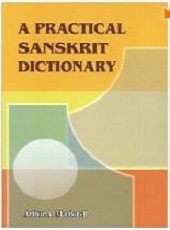
• A Practical Sanskrikt Dictionary, by A. A. Macdonell, 1893,
http://www.sanskrit-lexicon.uni-koeln.de/scans/MDScan/index.php?sfx=jpg;
1929.
- Nataraj ed., 1st in 2006, 2012.
-
https://dsal.uchicago.edu/dictionaries/macdonell/ 190516
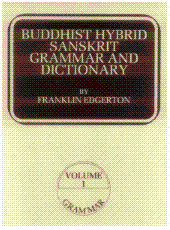
• The Buddhist Hybrid Sanskrit Grammar and Dictionary, BHS, vol.2, by F.
Edgerton, pp. 627.
-
FEdgerton-BHSD<Ô> /
Bkp<Ô> (link chk 180627)
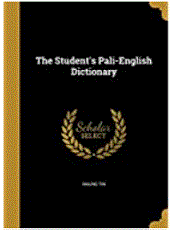
• The Student's Pali English dictionary , by U Pe Maung Tin, 1920.
- (ref: UPMT-PEDxxx). Downloaded copies in TIL HD-PDF and SD-PDF libraries:
-
UPMT-PaliDict1920<Ô> /
bkp<Ô> (link chk
190113)
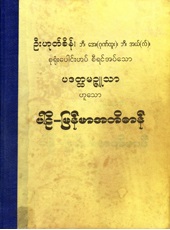
• Pali-Myanmar Dictionary
(in Pal-Myan), by U Hoke Sein,
- (ref: UHS-PMD). The dictionary in printed form is in TIL Research Library.
• Latin-English Vocabulary II, by Hans H Ørberg, 1998
-
HHOrberg-LinguaLatina<Ô> /
Bkp<Ô> (link
chk 190624)
Edited by U Kyaw Tun (UKT) (M.S., I.P.S.T., USA), Daw Khin Wutyi, Daw Thuzar
Myint, Daw Zinthiri Han and staff of Tun Institute of Learning (TIL).
Not for sale. No copyright. Free for everyone.
Prepared for students and staff of TIL Research Station, Yangon,
MYANMAR
-
http://www.tuninst.net ,
www.romabama.blogspot.com
MC-indx.htm |
Top
MCpp-indx.htm
{ka.pa.} कप
 {ka.pi.} कपि
p062c3
 {ka.pu.} कपु
 {ka.pRRi.} कपृ
 {ka.pau:} कपो
Skt Roots: entered below:
Whit017: √kam, 'love';
UKT notes :
•
Ayurveda dosha
• COPD :
excess of
 {þa.laip} 'phlegm'
• Humorism :
Theory of Humors
• Manasa -
the Bengali snake & poison goddess
• Pachisi
 {pa.hsic}
{ka.pa.} कप
• p062c2-b17/ not online
कप [ kapa ]
Skt: कप [ kapa ]
- m. pl. a species of gods - Mac062c2
Skt: कप «kapa» ¹. N. of वरुण. ². a class of demons - Apte:SktDict
• p062c2-b18/chg p051-
कपट [ kapata ]
- m. N. fraud: °--, fictitious;
-nâtaka, m. N.;
-prabandha,
m.
cunning device;
-sata-maya, a. consisting of a hundred kinds of fraud;
-‿îsvara,
m. N. of a temple of Siva.
© कपट [ kapata ]
Skt: कपट [ kapata ]
- m. N. fraud: - Mac062c2
BPal:  {ka.pa.Ta.} - UHS-PMD0290c1
UKT from UHS: m.n. fraud
• p062c2-b19/uhg p051-
कपर्द [ kapard-a ]
- m. cowrie (small shell used as a coin or die); braid of hair in the
form of a shell;
-a-ka, m., -ikâ, f. cowrie;
-ín,
a. having hair wound in the
form of a shell; curly, shaggy; m. ep. of Siva.
UKT 200125:
{krwé-än ka.sa:} 'play game of cowries' is to gamble and the stakes can be set very high. The game involves not only chance but skill as well, and there can always be foul play when the stakes are high. See my note on the Indian gambling game Pachisi : Bur-Myan equivalent:
• p062c2-b20/uchg p051-
कपल [ kapala ]
- n. half; part.
• p062c2-b21/uchg p051-
कपाट [ kapâta ]
- m. n. fold of a door;
-ka (ikâ), --° a. id.;
-vakshas,
a. broad-chested.
• p062c2-b22/uchg p051-
कपाल [ kapãla ]
- n. dish, mendicant's bowl; plate; lid; potsherd; egg-shell; skull;
-mâlin,
a. wearing a garland of skulls (Siva);
-sandhi, m. treaty based on equal
terms;
-sphota, m. N. of a Rakshas.
© कपाल [ kapãla ]
Skt: कपाल [ kapãla ] -
- n. dish, mendicant's bowl; plate; lid; potsherd; egg-shell; skull; -
Mac062c2
UKT 170202: Some Shaivite
{þi-wa. poaN~Na:} 'monks', used bowls made from human skulls. See also Wikipedia: https://en.wikipedia.org/wiki/Skull_cup 170202
" ... The (currently) earliest directly dated skull cup at 14,700 BC [1] comes from Gough's Cave, Somerset, England. Skulls used as containers can be distinguished from plain skulls by exhibiting cut-marks from flesh removal and working to produce a regular lip. [2] "
See also: https://www.asianart.com/exhibitions/sadhus/5.html 200126
" Shaivite sadhu drinks from his human skull bowl. A picture of Shiva can be seen behind him. Although the practice of taking all of one's food and drink from a human skull is rare nowadays, certain sadhus, particularly the Aghori sub-sect, still hold to it as a daily reminder of human mortality and as a challenge to transcend the duality of life and death."
• p062c2-b23/uchg p051-
कपालिका [ kapâl-ikâ ]
- f. potsherd.
• p062c2-b24/uchg p051-
कपालिन्् [ kapâl-in ]
- a. bearing a bowl or skulls; m. N. of Siva or of one of the eleven Rudras; kind of sectary.
sec·ta·ry - n. pl. sec·ta·ries ¹. A sectarian. ². A dissenter from an established church, especially a Protestant nonconformist. [Medieval Latin sectārius from Latin secta sect; See sect ] - AHTD
See also:
¤ Dissent and protest in the ancient Indian Buddhism - Buddh-sch-indx.htm (link chk 200126)
- by Ven. Tran Dong Nhat (b.1968), Univ. of Delhi, 2008. Ph.D. thesis. The first schism of note in Myanmarpré occurred in 18th century known as{a.roän}-{a.tín} controversy in which the leader of
{a.tín geiN:} who was a very learned monk and his close associates were disrobed.
UKT 181115: Because of the sensitive nature of the subject, I'm working on this paper only to serve as a reference.
{ka.pi.} कपि
• p062c2-b25/uchg p051-
कपि [ kap-í ]
- m. monkey;
-ketu, m. ep. of Arguna.
• p062c2-b26/uchg p051-041
कपिञ्जल [ ka-píñgala ]
- m. francoline partridge; N. of a man; N. of a sparrow:
-nyâya, in.
after the fashion of the Kapiñgala topic (in the Pûrvamîmâmsâ) according to
which the plural (kapiñgalân) means only three.
• p062c3-b01/uchg p051-
• कपित्थ [ kapi-ttha ]
- m. [monkey-stand], a tree; n. its fruit;
-pati, m. ep. of Hanumat.
• p062c3-b02/uchg p051-
• कपिल [ kapi-lá ]
- a. (monkey-coloured), brownish, reddish; m. species of monkey; N. of an
ancient sage;
â, f. brown or reddish cow; species of leech;
-gata,
m. N. of a
sage;
-dhûsara, a. brownish grey;
-‿rishi, m. the sage Kapila;
-vastu, m. N. of
Buddha's birth place;
-sarman, m. N. of a Brâhman.
UKT 171213: See p066.htm > entry p066c1-b17/ p053-090
There seems to be another person with a similar name: 90)कापिल (p. 53) kâpil-a
• p062c3-b03/ not online
कपिलीकृ «kapilīkṛ»
[kapilî-kri ]
Skt: कपिलीकृ
[kapilî-kri ] - colour brown
or reddish -- Mac062c3
Skt: कपिली
करोति
{ कपिलीकृ }
«kapilī karoti { kapilīkṛ }
- verb color brown or reddish -- SpkSkt
• p062c3-b04/uchg p051-
कपिश [ kapi-sa ]
- a. (monkey-coloured), brownish, reddish;
-bhrû, f. N. of a woman.
• p062c3-b05/uchg p051-
कपिष्ठल [ kapi-shthala ] «kapiṣṭhala»
- m. N. of a sage: pl. his descendants:
-samhitâ, f. collected scriptures
of the Kapishthalas
• p062c3-b06/ not online
[kapîtana]
- m. N. of various plants
•
p062c3-b07/uchg p051-
कपीन्द्र [ kapi‿indra ]
- m. lord of the monkeys; ep. of Vishnu and of Hanumat;
-‿îsvara,
m. ep.
of Sugrîva.
{ka.pu.} कपु
• p062c3-b08/uchg p051-
कपुच्छल [ ka-pukkhala ]
- n. hair at the back of the head; scoop of the sacrificial spoon.
• p062c3-b09/uch p051-
कपूय [ ka-pûya ]
- a. stinking.
{ka.pRRi.} कपृ
• p062c3-b10/ not online

[ká-prith ]
-thá , m. membrum virile [archaic penis ]
{ka.pau:} कपो
• p062c3-b11/uchg p051-
कपोत [ ka-póta ]
- m. pigeon; î, f. female pigeon;
-ka, m. little pigeon;
-pâlî, f.
dove-cot.
• p062c3-b12/uchg p051-
कपोतिका [ kapot-ikâ ]
- f. dove:
-nyâya, m. fashion of a dove (which did good even to an
enemy).
• p062c3-b13/uchg p051-
कपोल [ kapola ]
- m. cheek;
-kâsha, m. object which rubs against the cheek;
-pâlî, f.
edge of the cheek;
-phalaka, n.,
-bhitti, f.,
-mûla,
n. cheek-bone.
© कपोलमूल «kapolamūla»
Skt: [ -mûla] - n. cheek-bone -- Mac062c3
Skt: कपोलमूल
«kapolamūla» - n. cheekbone -- SpkSkt
 {ka.hpa.} कफ
• p062c3-b14/uchg p051-
कफ [ kapha ]
- m. phlegm (one of the 3 humours of the body);
-ghna, a.
anti-phlegmatic.
© कफ [ kapha ]
Skt: कफ [ kapha ]
- m. phlegm (one of the 3 humours of the body); - Mac062c3
BPal:
{ka.hpa.} - UHS-PMD0292c2
UKT from UHS: m. phlegm
{þa.laip}
See my notes on
Ayurvedic Doshas,
COPD, and
Humorism
• Three Humors: One that has the ability
to vitiate the seven tissues is Ayurveda doshas or
Humors:
1. Vata
 {lé}
वात «vāta»;
2. Pitta
{lé}
वात «vāta»;
2. Pitta
 पित्त «pitta»;
3. Kapha
{þa.laip}
पित्त «pitta»;
3. Kapha
{þa.laip}
 {ka.ba.} कब
• p062c3-b15/ not online
कबन्ध (?) [ká-bandha]
Skt: [ká-bandha] - v. ká-vandha
Skt: कबन्ध «kabandha» - m. barrel. m.n. headless trunk -
SpkSkt
• p062c3-b16/uchg p051-
कबर [ kabara ]
- a. mottled, variegated; m.,
î, f. braid of hair.
 {ka.ma.}
√kam , 'love' - Whit017
- Verb. kaṁta, E. + ; [kāṁtvā, kamitvā ;]
-karaass. ; -kamam cb.
• p062c3-b17/uchg p051-
कम्् [ ¹. ká-m ]
- (ac. sg.) pcl. well: emphasizes a preceding dative.
• p062c3-b18/uchg p051-
कम्् [ ². ka-m ]
- pcl. indeed (after nú, sú, hí).
• p062c3-b19/ not online
कम्् [ ³. kam ]
- (no pres. base), wish, desire; love;
pp. kânta ; cs. kâmaya ,
â. (p.) id.; excite to love:
pp. kâmita , desired. anu ,
cs.
desire. abhi , cs. be in love
• p062c3-b20/uchg p051-
कमठ [ kamatha ]
- m. tortoise.
• p062c3-b21/uchg p051-
कमण्डलु [ kamandalu ]
- m. ascetic's water-pot:
-pâni, a. having a water-pot in the hand.
• p062c3-b22/uchg p051-
कमन [ kam-ana ]
- a. (î) enamoured;
-anîya, fp. to be desired; lovely, charming.
• p062c3-b23/uchg p051-
कमल [ kam-ala ]
- m. n. lotus (called utpala at an earlier stage); â, f. ep. of Lakshmî;
sg. & pl. riches; n. water;
-ka, n. N. of a town;
-garbha, -ga, m. ep. of
Brahman;
-devî, f. N. of a queen;
-nayana, a. lotus-eyed;
-nâbha, m. ep. of
Vishnu; -netra, n. lotus eyed;
-bândhava, m. ep. of the sun;
-bhavana, m. ep.
of Brahman;
-mati, m. N.; -maya, a. consisting entirely of lotuses;
-lokana, a.
lotus-eyed: â, f. N.; -vatî, f. N. of a princess;
-vana,
n. bed of lotuses:
-maya,
a. consisting of beds of lotuses; -vardhana, m. N. of a king;
-varman, m. N. of
a king;
-sambhava, m. ep. of Brahman.
• p062c3-b24/uchg p051-
कमलाकर
[ kamala‿âkara ]
- m. bed of lotuses, lotus lake;
N. of various men;
-‿aksha, a.
(î) lotus-eyed:
-‿agragâ, f. ep. of Alakshmî;
â-kesava,
m. N. of a temple;
â-hatta, m. N. of a market-place;
-‿âlayâ, f. ep. of Lakshmî; -‿âsana, n. lotus
seat.
( end of old p062-2.htm )
UKT 110902:
From: http://www.holistic-herbalist.com/ayurveda-doshas.html 110902
Ayurveda Doshas are the basis of health and disease in Ayurvedic Medicine. There are three Doshas or humors - Vata, Pitta and Kapha. Doshas are in turn dependent upon and represent the working of Five Primary Elements - earth, water, fire, air and ether.
These five elements are not what is meant literally. These are a set of five energy levels that are manifested from even subtler energies. When we are referring to Five Primary Elements, the reference should be at these subtler energies.

There is a close interrelationship between Five Primary Elements and Ayurveda Doshas. This relationship is expressed in this manner. (Ashtanga Sangraha, Sutra Section, 20/3)
• Vata humor: dominated by ether and air.
• Pitta humor: dominated by fire element.
• Kapha humor: dominated by water and earth element.
Body is defined in Ayurveda in several ways. One of the definition is given by Charaka (Charaka Samhita, Sharira Section, 6/3). Body is chracterized by three qualities.
• The residence of Consciousness or Awareness principle.
• Derived by five primary elements - tissues and body.
• The internal and external processes are in homeostatic mode. Homeostasis is an state of dynamic equilibrium that is essential to our life. This principle is explained in Modern Physiology, Pathology and Medicine.
The foundation of our body in both structural and functional sense is based on the three group of substances. These are the derived form of five primary elements.
• Three Humors: One that has the ability to vitiate the seven tissues is Ayurveda doshas or Humors like Vata, Pitta and Kapha.
• Seven Tissues: One that maintains the retains the body is tissue like Plasma, Blood, Muscles, Fat, Bones, Marrow & Nerves, Semen or Ovum.
• The Waste Or Excretory Substances: The substances that harm the body if they stay for longer than normal time in body e.g. Urine, Stool, Sweat.
All the three are essential for the body. Ayurveda doshas govern all the biological and metabolic processes of our body in health and in disease. Actually their vitiation causes derangement in tissues and that causes disease. Their equilibrium helps us to stay in healthy condition.
Seven tissues are essential because without them, there is no body or its processes or the ground over which Doshas act. Tissues are our body, its part, its organs, the organ system.
Excretion of waste material from the body is the sign that the whole processes are in proper place. Body is metabolizing appropriately. Excretory substances and their excretion are a sign of good health that is why Ayurveda gives them due importance.
UKT: End of article.
Go back Ayurveda-dosha-note-b
- UKT 140214
Ask a Western doctor about phlegm (aka mucus), and he would laugh or at least smile at you for what he considers to be your ignorance without realizing that he himself is ignorant of the history of medicine.
¤
{þa.laip} - n. phlegm -- MLC MED2006-491
From: http://umm.edu/health/medical/reports/articles/chronic-obstructive-pulmonary-disease 140214
Alternative names: COPD; Bronchitis - chronic; Chronic bronchitis; Emphysema
• Chronic obstructive pulmonary disease (COPD) is the fourth leading cause of death in the U.S. The disease is characterized by an abnormal inflammatory response in the lungs and restricted airflow (documented by spirometry). The disease typically occurs after age 35.
• Cigarette smoking remains the major cause of COPD, but it isn't the only cause. In most studies, smoking accounts for about 80% of COPD cases. Quitting smoking can improve lung function and help to prevent death from COPD. Other causes, such as genetic syndromes (alpha-1 antitrypsin deficiency) and exposures to pollutants such as dust, irritants and fumes are also involved in the development of the disease.
• An overall treatment strategy may include one or several medications, lifestyle changes, education, pulmonary rehabilitation, oxygen therapy and perhaps surgery.
Chronic obstructive pulmonary disease
(COPD) is a condition in which there is
reduced airflow in the lungs. The disease
develops and worsens over time. COPD
is not reversible, but therapy can slow
its progress.
Although patients can breathe in normally, changes in the small airways cause the tubes to narrow during expiration, making it hard to breathe out. In many patients with COPD, the small sacs where oxygen and carbon dioxide are exchanged are destroyed, gradually depriving the body of enough oxygen.
COPD is associated with a set of breathing-related symptoms:
• Being out of breath, at first when doing physical activities,
but as lung function deteriorates, also at rest
• Chronic cough
• Spitting or coughing mucus (phlegm)
The ability to exhale (breathe out) gets worse over time.
UKT: More in the article.
Go back COPD-note-b

UKT: 110902, 171204
From Wikipedia: http://en.wikipedia.org/wiki/Humorism 110902
Humorism, or humoralism, is a now discredited theory of the makeup and workings of the human body adopted by Greek and Roman physicians and philosophers. From Hippocrates onward, the humoral theory was adopted by Greek, Roman and Islamic physicians, and became the most commonly held view of the human body among European physicians until the advent of modern medical research in the nineteenth century.
The four humors of Hippocratic
medicine were black
bile (gr. melan chole), yellow
bile (gr. chole),
phlegm (gr. phlegma), and
blood (lat. sanguis). A
humor was also referred to as a
cambium (pl. cambia
or cambiums).
[1]

Essentially, this theory held that the human body was filled with four basic substances, called four humors,* which are in balance when a person is healthy. All diseases and disabilities resulted from an excess or deficit of one of these four humors. These deficits could be caused by vapors that were inhaled or absorbed by the body. The four humors were black bile, yellow bile, phlegm, and blood. [UKT¶
Greeks and Romans, and the later Muslim and Western European medical establishments that adopted and adapted classical medical philosophy, believed that each of these humors would wax and wane in the body, depending on diet and activity. When a patient was suffering from a surplus or imbalance of one fluid, then his or her personality and physical health would be affected. [UKT ¶]
UKT 171204: (I've rewritten this passage based on [2], and my own knowledge.) The Four Humor Theory * is closely related to the Theory of the Four Elements †
{ma.ha-Boat}, but not the same. The Four Humors are: Black bile, Phlegm, Yellow bile, and, Blood. The Four Elements
{pa.hta.wi}, Water
{a-pau:}, Fire
{té-zau:}, Wind
{wa-yau:}.
The relation between the two theories are: Earth predominantly present in the Black bile, Water in the Phlegm, Fire in the Yellow bile, and all four elements present in the Blood. [2]. Note: The Four Elements are not what we commonly understand, e.g. Water is not H2O, but something that is cold and fluid, and Wind or Air is not a mixture of N2 and O2.
I've rearranged the
- BMBI-indx.htm (link chk 171204).
Paired qualities were associated with
each humor and its
season. The word Humor is a
translation of Greek
χυμός,
[3]
chymos (literally
juice or
sap, metaphorically
flavor). At around the same time,
ancient Indian Ayurveda
 {a-yu.bé-da.} medicine had developed a theory of three
Humours, which they linked with
the five
Hindu elements.
[4]
{a-yu.bé-da.} medicine had developed a theory of three
Humours, which they linked with
the five
Hindu elements.
[4]
UKT 171204: The Fifth Element is Space
{a-ka-þa.} «ākāsa-dhātu» - which I interpret as Energy. The first Four are Matter. A dead body is made up of four material elements from which the Space element has been removed. See also https://en.wikipedia.org/wiki/Mah%C4%81bh%C5%ABta 171204
The four humours, their corresponding elements, seasons, sites of formation, and resulting temperaments alongside their modern equivalents are: [5]
See also: The Myers-Briggs Type Indicator (MBTI) - http://en.wikipedia.org/wiki/MBTI 110902
Although modern medical science has thoroughly discredited humorism, the theory dominated medical thinking for more than 2,000 years. [6]
The concept of four humors may have origins in ancient Egypt [7] or Mesopotamia, [8] though it was not systemized until ancient Greek thinkers [9] around 400 BC who directly linked it with the popular theory of the four elements earth, fire, water and air ( Empedocles).
Fåhræus (1921), a Swedish physician who devised the erythrocyte sedimentation rate, suggested that the four humours were based upon the observation of blood clotting in a transparent container. When blood is drawn in a glass container and left undisturbed for about an hour, four different layers can be seen. A dark clot forms at the bottom (the "black bile"). Above the clot is a layer of red blood cells (the "blood"). Above this is a whitish layer of white blood cells (the "phlegm", now called the buffy coat). The top layer is clear yellow serum (the "yellow bile"). [10]
Hippocrates (460?-377? B.C. - AHTD) is the one usually credited
with applying this idea to medicine. Humoralism, or the doctrine of the four
temperaments, as a medical theory retained
its popularity for centuries largely
through the influence of the writings of
Galen
(131–201 AD) and was decisively displaced
only in 1858 by
Rudolf Virchow's newly published
theories of cellular pathology. While
Galen thought that humors were formed
in the body, rather than ingested, he
believed that different foods had
varying potential to be acted upon
by the body to produce different humors.
Warm foods, for example, tended to produce
yellow bile, while cold foods tended to produce
phlegm. Seasons of the year, periods of life,
geographic regions and occupations also
influenced the nature of the humors formed.

The imbalance of humors, or dyscrasia, was thought to be the direct cause of all diseases. Health was associated with a balance of humors, or eucrasia. The qualities of the humors, in turn, influenced the nature of the diseases they caused. Yellow bile caused warm diseases and phlegm caused cold diseases.
In On the Temperaments, Galen further emphasized the importance of the qualities. An ideal temperament involved a balanced mixture of the four qualities. Galen identified four temperaments in which one of the qualities, warm, cold, moist or dry, predominated and four more in which a combination of two, warm and moist, warm and dry, cold and dry or cold and moist, dominated. These last four, named for the humors with which they were associated — that is, sanguine, choleric, melancholic and phlegmatic, eventually became better known than the others. While the term temperament came to refer just to psychological dispositions, Galen used it to refer to bodily dispositions, which determined a person's susceptibility to particular diseases as well as behavioral and emotional inclinations.
UKT: More in the Wikipedia article.
Go back Humorism-note-b
 {ma.na.þa}
 -- UKT 140212, 171202:
My first contact with Hinduism was through
the Ramakrishna Society of Rangoon. We were
living at #221 Thompson St., East Rangoon
at the time. Now, the Thompson St. has been
renamed Botahtaung Pagoda Rd. My cousin,
U Saw Tun, and I were just children, just
over the age 10. We volunteered our services
in the library of the Society, and became
friends of one whom we called Swamigyi, and
the other Mr. K. C. Sen. Mr. Sen came in
with the Indian forces of the British
Fourteenth Army when the British Raj
reoccupied Rangoon in May 1945. Both Swamigyi
and Mr. Sen were very kind to us, and they
both became our family friends. With the pix
I am reproducing below, and my rendering of
the name
{ma.na.þa}, I remember both Swamigyi and
Mr. K. C. Sen well and pay my humble respects
to both.
From: http://www.manasadevi.net/manasadevi.html - 171129
UKT 171129: I've given Bur-Myan names, and my personal - unsubstantiated - views as a Tib-Bur, a Theravada Buddhist, and a born-native of Myanmarpré which adjoins Bengal separated by relatively low ranges of Arakan Yoma. Notice how similar is the figurine of the inset-pix to the paintings and frescos of Pagan.
Manasa Devi
 {ma.na.þa dé-wi}
मनसादेवी
aka Padmavati is a Hindu cobra (serpent)
Tantric Goddess, Queen of the Nagas. The
story of her birth starts when Lord Shiva
{ma.na.þa dé-wi}
मनसादेवी
aka Padmavati is a Hindu cobra (serpent)
Tantric Goddess, Queen of the Nagas. The
story of her birth starts when Lord Shiva

 {þi-wa.nût-mín:}
was sexually aroused on the banks of the Kalidaha
pool, a pond in West Bengal in Rajnagar (a town). [Of course, he had to have sex
with the nearest female: imagine what.]
The Manasa's vahana (vehicle) is either the swan
or snake. Swan is also a vahana of Saraswati.
This connection gives her the same attribute -
Wisdom and Knowledge. Snake symbolizes immortality.
The Sij plant (Euphorbia Hguhria called
Sehund or Sij in Hindi), of the cactus family, is
sacred to her, as it can cure poisons. Naaga
Kanya
{þi-wa.nût-mín:}
was sexually aroused on the banks of the Kalidaha
pool, a pond in West Bengal in Rajnagar (a town). [Of course, he had to have sex
with the nearest female: imagine what.]
The Manasa's vahana (vehicle) is either the swan
or snake. Swan is also a vahana of Saraswati.
This connection gives her the same attribute -
Wisdom and Knowledge. Snake symbolizes immortality.
The Sij plant (Euphorbia Hguhria called
Sehund or Sij in Hindi), of the cactus family, is
sacred to her, as it can cure poisons. Naaga
Kanya
 {na-ga. ka.Ña} is the Buddhist form of Manasa.

Manasa is also known as a one-eyed goddess, because the Lord Shiva's wife [Siva-déva the most promiscuous male of the Iron Age intruders into India, has had sex with Mother Goddesses of Bronze Age India: his wife in this instance was probably Chandi] was jealous of her and burned her two eyes. Shiva's children have three eyes and Manasa, with her one eye only, was sent down into the underground (Patala). [UKT ¶]
In addition to Manasamangal Kavya, texts from the Brahma Vaivarta Purana are used in worshipping her. The said texts belong to Prakriti khanda (the second part of the Brahma Vaivarta Purana). This Purana is one of the 18 major Puranas and it is divided into four parts. It also deals with goddesses - Shaktis - the manifestations of Prakriti, the essential nature of intelligence. Prakriti khanda, the second part, celebrates the greatness of Durga, Lakshmi, Saraswati and Savitri during the creation of the world. During the Manasa puja ceremony people bath the statues of Manasa Devi with milk and recite the hymns taken from Prakriti khanda.
Nag Panchami is a snake festival for celebration of the Nagas (both deities and cobras). It takes place on the fifth day after Amavasya (dark moon) of the month of Shraavana (July/August). Nag Panchami is also the day of Manasa.
Manasa Devi has more names: Jagatkaru Priya, Jagat Gauri, Mansa Devi, Sidh Yogini, Padmavati, Naag Bhaamini, Shaivi, Jaratkaaru, Aastik Mata, Maha Gyaan Yuktaa, Naageshwari, Vish Haar, Monosha, Maa Monosha, and probably a few more.
Manasa is a folk goddess [a Mother goddess of the militarily defeated Bronze Age natives became inferior similar to her worshippers who were made into "slaves" of the conquerors] only because her worship reflects a caste conflict, as the orthodox Bhrahmanism deprived lower castes of the right to have access to Brahmanical learning. Manasamangal Kavya (a Bengali Hindu religious text) narrates a story about her and how she renewed her worship in Bengal. It was written sometimes around or after 13th Century AD.
Astika, an ancient Hindu Rishi (a sage), is the Manasa's son she conceived with Jaratkaru, a mythological sage. The Jaratkaru's or Astika's name therefore sometimes appear in variations of the Manasa's name. Astika was a great sage that helped to prevent the genocide of the Nagas, the ancient serpent people of India.
From Wikipedia: http://en.wikipedia.org/wiki/Manasa 110901
 Manasa
(Bengali: মনসা
= ম ন স া , Manasha)
is a Hindu folk goddess of snakes,
worshipped mainly in Bengal and other parts
of northeastern India, chiefly for the
prevention and cure of snakebite and also
for fertility and prosperity. [UKT ¶]
Manasa
(Bengali: মনসা
= ম ন স া , Manasha)
is a Hindu folk goddess of snakes,
worshipped mainly in Bengal and other parts
of northeastern India, chiefly for the
prevention and cure of snakebite and also
for fertility and prosperity. [UKT ¶]
UKT 140213: Whenever Bengali script is rendered, make sure that you use the correct rendering engine. Bengali, like Myanmar, has split-vowels. Arial Unicode gives the wrong result. It is preferable to use Lucida Sans Unicode . However, in the following aks-to-aks, the rendering is simple because no split vowel is involved.
Bengali: মনসা = ম Ma ন Na স Sa া Aa -->
Devanagari: म Ma न Na स Sa ा Aa = मनसा -->
Myanmar:{ma.}
{na.}
{þa} =
Manasa is the sister of
Vasuki, king of Nāgas
 {na.ga:} ([rulers of] snakes) and wife of Rishi
sage Jagatkāru (Jaratkāru).
[1] She
is also known as Vishahara (the destroyer
of poison), Jagadgaurī, Nityā
(eternal) and Padmavati.
[2]
Her myths emphasize her bad temper and unhappiness, due to rejection by her father Shiva and her husband, and the hatred of her stepmother, Chandi (Shiva's wife, identified with Parvati in this context). [UKT ¶]
UKT 140212: Whenever, the name Shiva came in, I am beginning to take the story as a later addition, because of the 1028 hymns in Rig Veda, the number of hymns to Shiva is very small compared to those to Indra (the king), Agni (the messenger), and Soma (the entity to give rest and tranquility). Shiva was then identified with Rudra a mere "Storm" god. See Wikipedia articles: http://en.wikipedia.org/wiki/Rigvedic_deities 140213, and http://en.wikipedia.org/wiki/Rudra 140213
In some scriptures, Rishi sage
Kashyapa is considered to be her father,
rather than Shiva. Manasa is depicted as
kind to her devotees, but harsh to people
who refused to worship her.
[3]
Denied full godhead by her mixed parentage,
Manasa’s aim was to fully establish her
authority as a goddess and to acquire
steadfast human devotees.
[4]
Originally an
Adivasi (tribal [mostly Tib-Burman
speakers]) goddess, Manasa was accepted in
the pantheon worshipped by Hindu lower caste
groups [Sudras - the militarily defeated
peoples who were considered to be
"slaves"]. Later, Manasa was
included in a higher caste Hindu pantheon,
where she is now
regarded as a Hindu goddess
rather than a tribal one.
[3]
As a Hindu goddess, she was recognized as
a daughter of sage Rishi
Kashyapa and [wife]
Kadru, the mother of all Nāgas. [UKT ¶]
UKT 140213: Those who took part in ancient wars in India were the original peoples of India, and might not have been the mythical creatures. See Wikipedia: http://en.wikipedia.org/wiki/Exotic_tribes_of_ancient_India 140213
By the 14th century, Manasa was identified as the goddess of fertility and marriage rites and was assimilated into the Shaiva pantheon, related to the god, Shiva. Myths glorified her by describing that she saved Shiva after he drank the poison, and venerated her as the "remover of poison". [UKT ¶]
UKT 140213: Read how the Dévas cheated the Asuras of their fair-share of the items resulting from the Churning of The Cosmic Ocean. In the story, Shiva drank the poison. See Wikipedia: http://en.wikipedia.org/wiki/Ocean_of_milk 140213

 Her [Manasa] popularity grew and spread
to southern India [the area of Dravidian
speakers], and her followers began to
rival Shaivism (the cult of Shiva
Her [Manasa] popularity grew and spread
to southern India [the area of Dravidian
speakers], and her followers began to
rival Shaivism (the cult of Shiva
 {þi-wa.nût-mín: ko:kwèý-mhu.Ba-þa} ). As a
consequence, stories attributing Manasa's
birth to Shiva emerged and ultimately
Shaivism adopted this indigenous goddess
into the Brahmanical tradition of
mainstream Hinduism.
[5]
{þi-wa.nût-mín: ko:kwèý-mhu.Ba-þa} ). As a
consequence, stories attributing Manasa's
birth to Shiva emerged and ultimately
Shaivism adopted this indigenous goddess
into the Brahmanical tradition of
mainstream Hinduism.
[5]
UKT: More in the Wikipedia article.
From: http://www.boldsky.com/yoga-spirituality/faith-mysticism/2013/story-of-manasa-devi-snake-goddess-036777.html#slide27015 140212
UKT 171202: I maintain that the English word Goddess is uninformative. Manasa was a Mother-goddess of the bronze-age peoples of Bengal. She was Mata Manasa, just like our present-day Bharat-Mata 'Mother India' - a sexless icon. It was the iron-age Brahmins{poaN~Na:}, who made her into a female Dévi so that she could be given into marriage. In the case of Mata Manasa, she was not made a full-dévi of Brahmanical tradition of mainstream Hinduism, but only a half-dévi because of which she was said to be very angry.
"According to the Puranas,
Kashyapa Rashi [the father] married Dévi
Goddess Manasa [the
daughter] to Jaratkaru Rishi who married
her on a condition. Jaratkaru said that
if Manasa ever disobeys him, then he will
desert her. Once Goddess Manasa awakened
Jaratkaru [her husband] very late in the
morning and he was late for his morning
prayers. [probably to recite Gayatri Mantra.]
He became furious at Manasa and deserted
her. Later he came back and they had a son
named Astika."
Go back Manasa-note-b
- UKT 140214

I am familiar with the Bur-Myan game
{pa.hsic} - the game of chance and skill
during my childhood in Kungyangoan. Some
women folk were addicted to it, and we
could hear the rather sweet sound of the
cowries thrown into a porcelain dish
coming from a neighbour's house every day
about noon. Six cowries were used instead
of 2 dice. See my note in -
p002-4.htm (link chk 140214)
This little innocent game of
{pa.hsic} and undoubtedly others
( {krwé-än ka.sa:}) when played by ancient
kings could be the cause of wars related
in Buddhist and Hindu legends and
histories. For example the Mahabharata
war was fought after the game between
the rival princes (and kings) - the
Pandavas and Kauravas . Such a game was
also the cause of the first Mon rebellion
that finally led to the death of
King Sawlu of Pagan.
{krwé-än ka.sa:}) when played by ancient
kings could be the cause of wars related
in Buddhist and Hindu legends and
histories. For example the Mahabharata
war was fought after the game between
the rival princes (and kings) - the
Pandavas and Kauravas . Such a game was
also the cause of the first Mon rebellion
that finally led to the death of
King Sawlu of Pagan.
From Wikipedia: http://en.wikipedia.org/wiki/Pachisi 140214
Pachisi (Hindi: पचीसी) is a cross and circle board game that originated in ancient India which has been described as the "national game of India". [1] It is played on a board shaped like a symmetrical cross. A player's pieces move around the board based upon a throw of six or seven cowrie shells, with the number of shells resting with aperture upwards indicating the number of spaces to move.
The name of the game derives from the Hindi word pachis, meaning twenty-five, the largest score that can be thrown with the cowrie shells. Thus the game is also known by the name Twenty-Five. There are other versions of this game where the largest score that can be thrown is thirty.
There are other well known versions of the game, chausar, chaupar, chaupur or caupur. [2] [3] The word caupur derives from the Sanskrit cata meaning he who has four legs. [2] Parcheesi, Sorry! and Ludo are among the many Westernized commercial versions of the game.
UKT: More in the Wikipedia article.
Go back Pachisi-note-b
End of TIL file