p298-2.htm
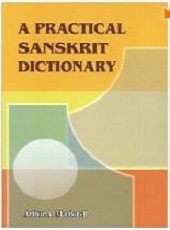
• A Practical Sanskrikt Dictionary,
by A. A. Macdonell, 1893,
http://www.sanskrit-lexicon.uni-koeln.de/scans/MDScan/index.php?sfx=jpg;
1929.
-
Nataraj ed., 1st in 2006, 2012.
-
https://dsal.uchicago.edu/dictionaries/macdonell/ 190516
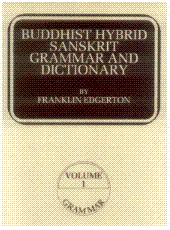
• The Buddhist Hybrid Sanskrit Grammar and
Dictionary, BHS, vol.2, by F. Edgerton,
pp. 627.
-
FEdgerton-BHSD<Ô> /
Bkp<Ô> (link chk 180627)
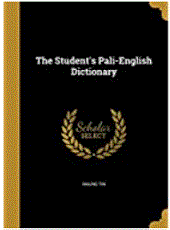
• The Student's Pali English dictionary ,
by U Pe Maung Tin, 1920.
- (ref: UPMT-PEDxxx).
Downloaded copies in TIL
HD-PDF and SD-PDF libraries:
-
UPMT-PaliDict1920<Ô> /
bkp<Ô> (link chk 190113)
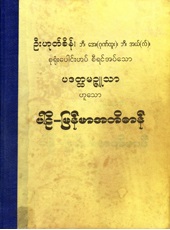
• Pali-Myanmar Dictionary
(in Pal-Myan), by U Hoke Sein,
- (ref: UHS-PMD). The dictionary in printed form is in TIL Research Library.
• Latin-English Vocabulary II, by Hans H Ørberg, 1998
-
HHOrberg-LinguaLatina<Ô> /
Bkp<Ô> (link
chk 190624)
Edited by U Kyaw Tun (UKT) (M.S., I.P.S.T., USA),
Daw Khin Wutyi, Daw Thuzar Myint, Daw Zinthiri Han
and staff of Tun Institute of Learning (TIL).
Not for sale. No copyright. Free for everyone.
Prepared for students and staff of TIL
Research Station, Yangon, MYANMAR
-
http://www.tuninst.net ,
www.romabama.blogspot.com
MC-indx.htm |
Top
MCpp-indx.htm
 {wé} : begin
p298-2c1
p298-2c2
p298-2c3
p298-2c1-b02
• वे m. (RV.) = vi, biu= bird (nm.vé vés).
p298-2c1-b03
• vekshana
- n. incorr. for ka ikshana.
p298-2c1-b04
• वेग [vég-a]
- m. [√vig] shock, jerk (V., C.,
rare); C.: rush, impact; flood (of water, tears), current; impetus (esp. of
missiles), force, velocity, speed; impetuosity, vehemence, haste, sudden
impulse; outbreak, outburst (of passion etc.), excitement; attack (of disease);
circulation, working (of a poison; sts. pl.); impulse: -tara, m. greater
swiftness: vegâd vegataram gam, run faster and faster; -tas, ad. with a sudden
jerk; speedily, hastily, impetuously; -danda, m. elephant (=vetanda); -vat, a.
impetuous, hasty, swift, energetic, violent (wind); m. N. of a fairy: -î, f. N.
of a fairy; -vâhin, a. flowing (river) or flying (arrow) swiftly; -sarî, f.
female mule; -̮anila, m. violent wind.
p298-2c1-b05
• वेगित [veg-ita]
- den. pp. impetuous, swift, rapid;
-in, a. id.; -ila, m. N.
p298-2c1-b06
• [venkata]
- m. N. of a mountain in the Dradrilian country.
p298-2c1-b07
• [vengi]
- (or i), f. N. of a town.
p298-2c1-b08
• वेण [vena]
- m. musician (a mixed
caste, offspring of Vaidehaka and Ambashthî): â, f. N. of a river: -tata, m.
bank of the Venâ.
p298-2c1-b09
• वेणि
[veni]
- f. braid of hair, esp.
of the hair of women worn in a single plait as a sign of mourning: -kâ, f.
continuous line, uninterrupted stream: -vâhin, a. flowing or causing to flow in
an uninterrupted stream.
p298-2c1-b10
• वेणी
[venî]
- f. = veni: -samhâra, m.
tying up of the braid of hair (of Draupadî), T. of a play (existing in the tenth
century a. d.) by Bhatta-nârâyana.
p298-2c1-b11
• वेणु
[vénu]
- (or ú) reed,
cane, bamboo; flute, pipe.
p298-2c1-b12
• वेणुदारिन्
[venu-dârin]
- a.
bamboo-splitting; m. N. of a demon; -mat, a. provided with a
bamboo; -yava, m. pl. seed of the bamboo; -yashtí, f. bamboo
cane; -vana, n. forest of bamboo; -vâdana, n. playing on the
flute; -vidala, n. split bamboo; -vaidala, a. made of split
bamboo.
p298-2c1-b13
• वेतण्ड
[vetanda]
- m.
elephant: â, f. a form of Durgâ (v. r. for vetâlâ).
p298-2c1-b14
• वेतन
[vetana]
- n.
wages; price (rare).
p298-2c1-b15
• वेतस
[vetas-á]
- m. kind of
reed (Calamus Rotang); cane; n. N. of a town: (a)-maya, a.
consisting of reed (Calamus Rotang); -mâlin, a. wreathed
with reeds; -vritti, a. acting=pliant like the reed.
p298-2c1-b16
• वेताल
[vetâla]
- m. kind of
demon that takes possession of a dead body: â, f. a form of
Durgâ.
p298-2c1-b17
• [vet-tri]
- m. [I. vid] I. (w. g., or -°) knower; witness (rare); experiencer (rare); 2.
[2. vid] espouser, husband.
p298-2c1-b18
• वेत्र
[ve-tra]
- m.n. kind of
large reed (for making sticks); cane, staff: -grahana, n.
(holding the staff), office of a door-keeper: â, f. female
door-keeper; -yashti, f. cane staff; -latâ, f. id.: -maya,
a. made of canes; -vat, a. containing or consisting of cane;
m. N. of a mythical being, son of Pûshan: -î, f. female
door-keeper; N. of a tributary of the Yamunâ.
p298-2c1-b19
• वेत्रासन
[vetra̮âsana]
- n. cane-seat.
p298-2c1-b20
• वेत्रिन्
[vetr-in]
- m.
staff-bearer, door-keeper.
p298-2c2-b00
• वेद 1.
[véd-a]
- m.
[√1. vid] knowledge, ritual lore (V.); sg. pl. sacred
knowledge, handed down in the threefold form (trayî vidyâ)
of Rig-veda, Sâma-veda, and Yagur-veda; later the A
tharva-veda was added as a fourth; in E. the Itihâsa-purâna
or Purâna is spoken of as a fifth Veda; perception (Br.,
rare).
p298-2c1-b01
• वेद 2. [ved-a]
- m.
[√2. vid] finding, obtainment (in su-véda); property (S.,
rare).
p298-2c2-b02
• वेद 3. [vedá]
- m. tuft
of strong grass (Kusa or Muñga) used as a broom etc. in
rites.
p298-2c1-b03
• वेदक
[veda-ka]
- a. (ikâ)
making known; rendering conscious; -kâra, m. composer of the
Veda; -kumbha, m. N. of a teacher; -kakshus, n. eye of the
Veda; -gña, a. knowing the Veda; -tattva, n. true nature or
essence of the Veda: -̮artha, m. true meaning of the Veda: -vid,
a., -vidvas, pt. knowing the true meaning of the Veda; -traya,
n. the three Vedas; -tva, n. nature of the Veda; -darsana,
n. occurrence or mention in the Veda: ab. in accordance with
the Veda; -darsin, a. having an insight into or knowing the
Veda; -dâna, n. imparting the Veda.
p298-2c2-b04
• [ved-ana]
- I. n. knowledge (exc. f.); a, f. pain (exc. n. ); a, f. perception,
sensation; n. making known (-°); 2. (ved-), a. (-°) finding; procuring; n.
finding (C.); marrying (of both sexes; C.); property, goods (RV., AV.); -ana-vat,
a. possessed of knowledge; feeling pain; painful; -aniya, fp. cs. (I. vid) to be
disignated, expressed, meant, by (-°); being felt, by or as (-°).
p298-2c1-b05
• वेदनिन्दक
[veda-nindaka]
- m. scoffer at the Veda, infidel; -pâtha, m.
recension of the Veda; -pâthin, a. studying the Veda; -pâraga,
m. one thoroughly conversant with the Veda; -punya, n. merit
acquired by Vedic study; -pradâna, n. imparting the Veda; -phala,
n. reward resulting from Vedic study; -bâhya, m. unbeliever;
-brahma-karya, n. Vedic apprenticeship; -brâhmana, m.
Brâhman knowing the Veda, Brâhman in the true sense; -bhâshya,
n. commentary on the Veda: -kâra, m. composer of the
commentary on the Veda, Sâyana; -maya, a. (î) consisting of
or containing sacred knowledge; -mâtri, m. mother of the
Veda, designation of Sarasvatî, Sâvitrî, and Gâyatrî; -mûla,
a. having its root in the Veda; -yagña, m. sacrifice
prescribed in the Veda.
p298-2c2-b06
• [ved-ay-i-tri]
- m. knower.
p298-2c2-b07
• वेदरहस्य
[veda-rahasya]
- n. secret doctrine of the Veda, the Upanishads; -râsi,
m. the entire Veda; -vâkya, n. statement of the Veda; -vâda,
m. id.; talk about the Veda, theological discussion; -vâdin,
a. able to talk about or conversant with the Vedas; -vikrayin,
a. selling=teaching the Veda for money; -vit-tama, spv. most
learned in the Veda; -vit-tva, n. knowledge of the Veda; -víd,
a. knowing the Veda; -vidyâ, f. knowledge of the Veda: -vid,
a. versed in Vedic learning, -vrata-snâta, pp. having
completed one's Vedic and scientific studies and one's vows;
-vidvas, pt. knowing the Veda; -viplâvaka, a. propagating
the Veda; -veda̮aṅga-tattva-gña, a. knowing the Vedas and
the Vedâṅgas thoroughly; -vedâṅgapâraga, a. thoroughly
conversant with the Vedas and Vedâṅgas; -vyâsa, m. arranger
of the Veda; -vrata, n. observance prescribed during Vedic
study; a. having taken the Vedic vow; -sabda, m. the word
Veda; statement of the Veda; -sâkhâ, f. Vedic branch or
school; -sâstra, n. sg. doctrine of the Veda: pl. the Veda
and other canonical works: -purâna, n. pl. id. and the
Purânas; -sruti, f. Vedic scriptures.
p298-2c3-b01
• वेदस्
[véd-as]
- n. 1.
knowledge (RV.); 2. (gettings), property, wealth (V.).
p298-2c3-b02
• वेदसंहिता
[veda-samhitâ]
- f. an entire Veda in any recension;
-samnyâsika, a. having renounced Vedic study and pious works
and devoting oneself to contemplation; -samnyâsin, a. id.;
-samâpti, f. completion of Vedic study.
p298-2c3-b03
• वेदाङ्ग
[veda̮aṅga]
- n. member of the Veda, subsidiary Vedic treatise (six
are enumerated: Sikshâ, Kalpa, Vyâkarana, Nirukta, Khandas,
Gyotisha); -̮âdi, m. beginning of the Veda; m. n. sacred
syllable om; -̮adhigama, m. Vedic study; -̮adhyayana, n.
id.; -̮adhyâya, a. studying or having studied the Veda;
-̮adhyâyin, a. id.; -̮anadhyayana, n. neglect of Vedic
study; -̮anuvakaná, n. repetition or recitation of the Veda;
Vedic doctrine.
p298-2c3-b04
• वेदान्त
[veda◡́anta]
- m. end of the Veda (rare); end of Vedic study
(rare); text forming the conclusion or the essence of the
Veda, i.e. an Upanishad and the theologico-philosophical
doctrine based thereon (Uttara-mîmâmsâ or Vedânta system):
-krit, m. author of the Vedântas; -sâra, m. essence of the
Vedânta, T. of a compendium of the Vedânta system;
-̮abhihita, pp. contained in the Vedânta; -̮upagata, pp.
accruing from the Vedânta (reward).
p298-2c3-b05
• वेदान्तिन्
[vedânt-in]
- m. follower of the Vedânta system.
p298-2c3-b06
• वेदाभ्यास
[veda̮abhyâsa]
- m. Vedic study.
p298-2c3-b07
• वेदार्थ
[veda̮artha]
- m. import or sense of the Veda: -vid, a. knowing the
sense of the Veda; -̮avâpti, f. acquisition of the Veda.
p298-2c3-b08
• वेदि
[véd-i]
- f.
shallow bed dug out (in the sacrificial court) covered with
straw, containing the sacred fire-places and serving as an
altar; being narrow in the middle, the female waist is often
compared with it; Vedi-shaped open pavilion in a court-yard
prepared for weddings; stand, pedestal, bench: (i)-kâ, f.
Vedi-shaped pavilion (=vedi); stand, bench.
p298-2c3-b09
•
p298-2c3-b10
• वेदिपुरीष
[vedi-purîsha]
- m. loose earth of the Vedi; -matî, f. N.; -madhya,
a. having a Vedi-shaped waist; -shád, a. sitting on or at
the altar (V.); -sambhavâ, f. ep. of Draupadî.
p298-2c3-b11
• [ved-i]
- f. vedi.
p298-2c3-b12
• वेदीयस्
[véd-îyas]
- cpv.
knowing or finding better than (ab.; RV.1).
p298-2c3-b13
• वेदोक्त
[veda̮ukta]
- pp. mentioned, taught, or contained in the Veda; -̮udita,
pp. prescribed by the Veda; -̮upakarana, n. supplementary
treatise to the Veda.
p298-2c3-b14
• [ved-dhri]
- m. [vyadh] piercer, hitter (of a mark.).
p298-2c3-b15
• वेद्य
[véd-ya]
- 1.
notorious, famous (V.); to be known, that which is known
(V., C.); to be recognised or regarded as (nm. or --°; C.);
2. to be acquired (V.); to be married (in a-; C.): -tva, n.
knowableness (C.).
End of TIL file