Myanmar name: Yingat-gyi English name: -- Family: Rubiaceae
Burmese-Myanmar name in Nagathein :3-155{ring-kat-kri:}
Photos:
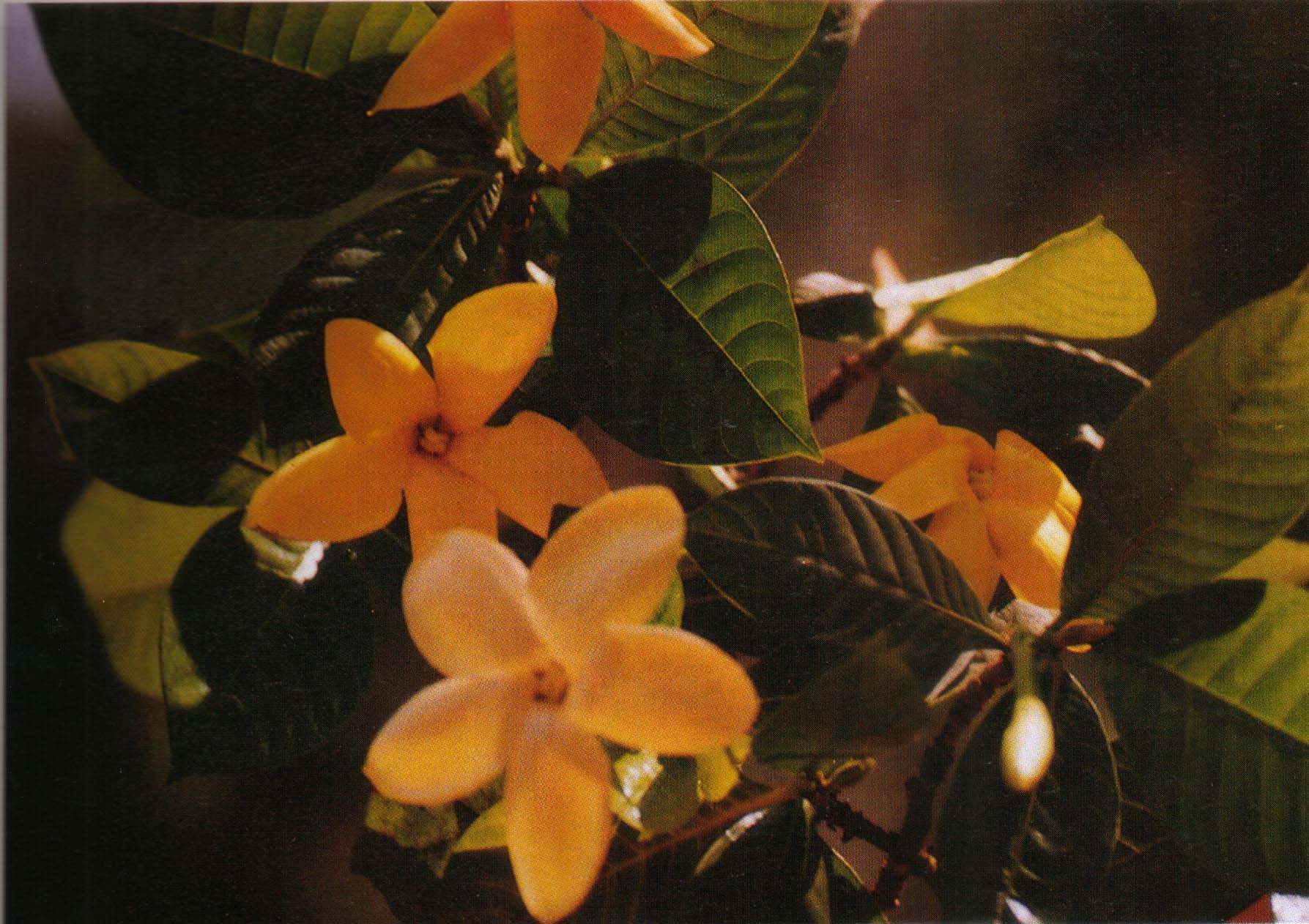
left -- habit with flowers
right -- habit with fruits
Click on the pictures to enlarge.

by Kyaw Soe and Tin Myo Ngwè, Forest Resource Environment Development and
Conservation Association (FREDA), Series 1, 2004, ISBN 974-91986-0-3
Copied by U Kyaw Tun, and staff of TIL for staff and students of TIL. Not for sale.
MainIndex of DB| Top
IndexofCollected papers
Agri.Dept.2000: Akshara Science names | Family names
Contents of this pageUKT: Nagathein references are given to check the Burmese-Myanmar names. * shows where there is no agreement in Burmese name but when the plant is identifiable from botanical name.
{ring-kat-kri:}
Gardenia coronaria Buch.-Ham. 3-155
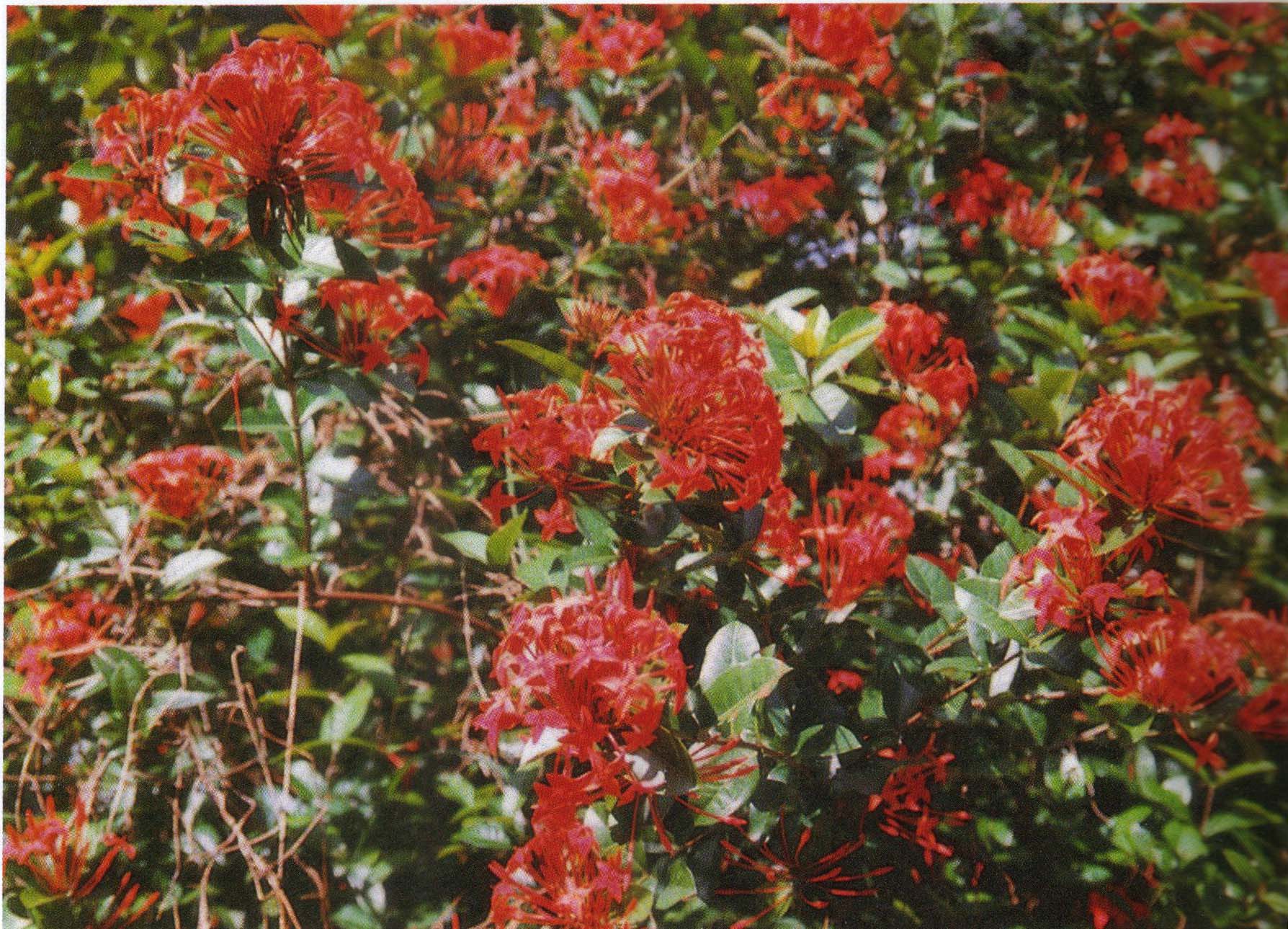
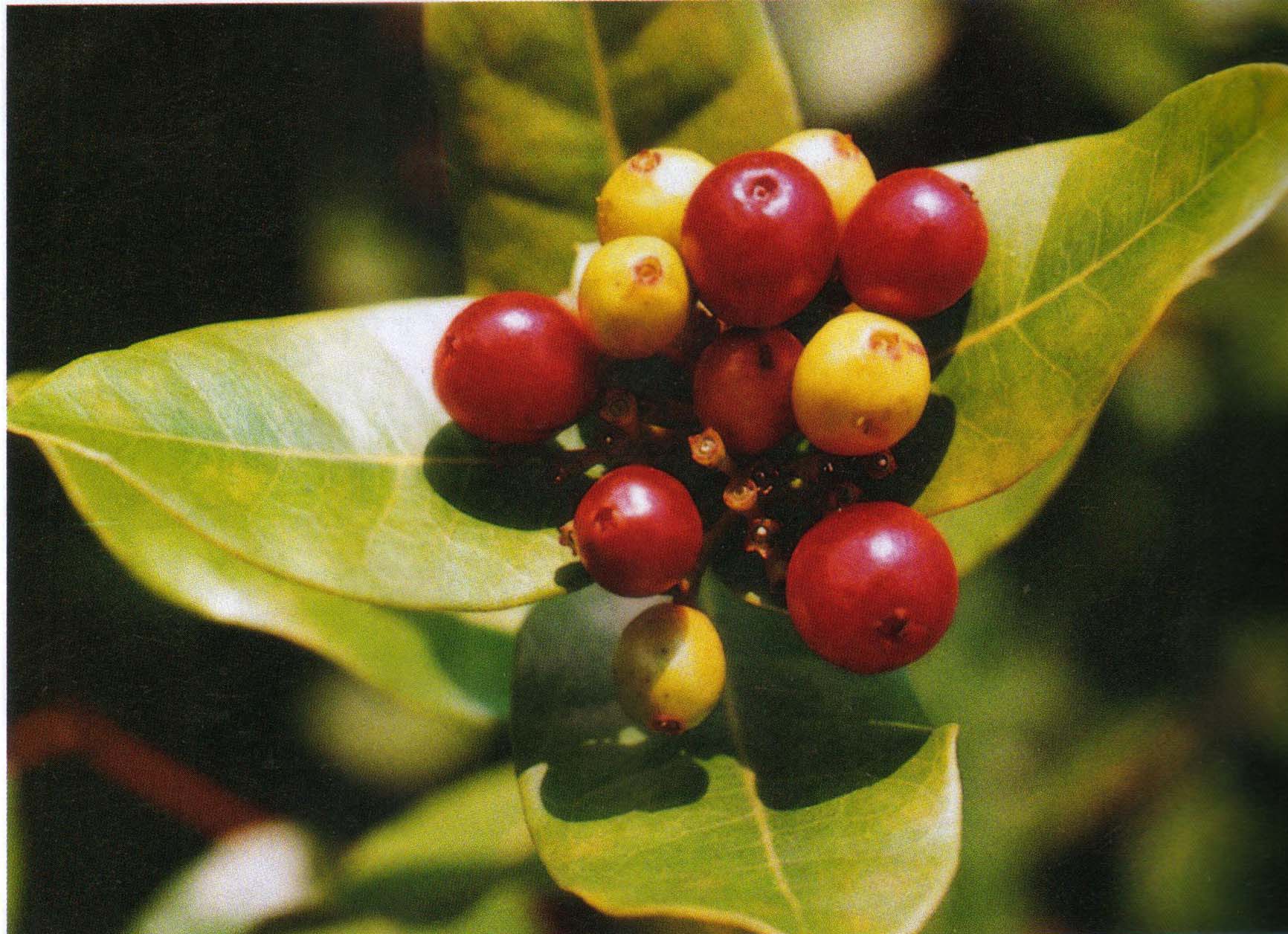
{poaN~Na.reip}
Lxora coccinia L. 2-264
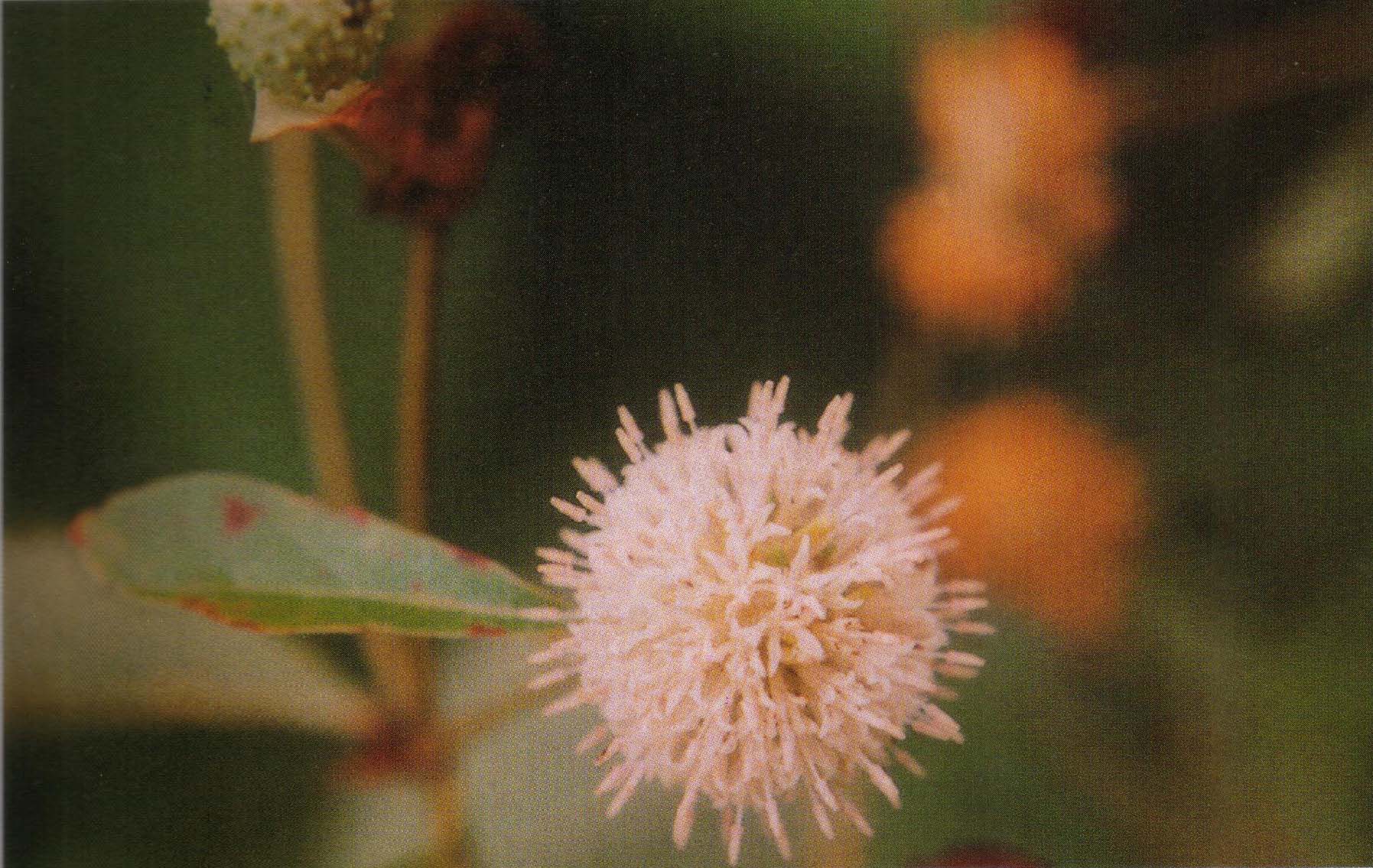
{htein} ; {mhau-htein}
Mitragyna parvifolia(Roxb.) Korth. 2-065
{ni-pa.hsé:} ; {rè:yo}
Morinda citrifolia L. 2-141
MainIndex of DB|
Top
IndexofCollected papers
Agri.Dept.2000:
Akshara
Science names
|
Family names
Contents of this page
KS-TMN 190
|
Botanical name: Gardenia coronaria Buch.-Ham. in Symes Embassy to Ava ed. 2. 307 Myanmar name: Yingat-gyi English name: -- Family: Rubiaceae Burmese-Myanmar name in Nagathein :3-155{ring-kat-kri:} Photos: |
|
|
Identification characters:
A deciduous unarmed tree; branches stout, woody, younger stems notched at the
nodes, pubescent, buds resinous. Leaves opposite and decussate, simple; stipules
interpetiolar; subsessile; laminae abovate, sometimes elliptic-obovate, the
bases cuneate, the margins entire, the tips abruptly and shortly acuminate,
unicostate, reticulate, the surfaces glabrescent, glaucous. Inflorescences
usually axillary cymes, sometimes terminal, solitary or 2-to3-flowered,
frequently leaf-opposed or supra-axillary; bracts foliaceous. Flowers
ebracteolate, subsessile, bisexual, actinomorphic, pentamerous, epigynous, large
and showy, fragrant. Hypanthium tubiform, 5-or rarely 4-or 6-angled. Calyx
synsepalous, tubular, obscurely and irregularly 5-toothed, acutely 5-angled,
spathaceous, caducous. Corolla synpetalous, 5-lobed, rarely 4-or 6- lobed,
salverform, twisted in bud, the tubes long, cylindrical, the lobes obliquely
ovate, obtuse, about half the length of tube, pale to yellowish green.
Androecium polyandrous, stamens 5, rarely 4 or 6, alternate the corolla lobes,
epipetalous, attached at the mouth of corolla tube, subsessile, completely
inserted, the anthers dithecous, linear-oblongoid, dorsifixed,dehiscence
longitudinal. Pistil 1, ovary ellipsoid, 2-carpelled, syncarpous, 1-loculed
above, 2-loculed below, the ovules numerous on the parietal placentae, the style
long, thick, persistent, the stigma 2-lobed, clavate fusiform. Fruit a hard
drupe, ellipsoid, 5-ribbed, the style persistent forming a beak, orange to
reddish brown when ripe; seeds many, reniform, compressed, testa thin, endosperm horny.
Flowering period: January - April
Fruiting period: February - August
Distribution: Grows wild throughoutMyanmar upto 4000ft. or cultivated
Parts used and uses: Flower -- Pyrexia due to either biliary or chest infections or blood dyscrasia . Fruit -- Cough; Mucolytic
MainIndex of DB|
Top
Contents of this page
KS-TMN 193
{poaN~Na.reip} Photos: |
 |
 |
Identification characters:
Shrubs, unarmed; younger stems cylindrical, glabrate. Leaves opposite and
decussate, simple; stipules interpetiolar, ovate-caudate, deciduous; petioles
obsolete; laminae obovate or elliptic-obovate, the bases cuneate, frequently
cordate, the margins entire, the tips acute, mucronate, unicostate, reticulate,
the surfaces glabrous. Inflorescences terminal, rarely axillary, cymes dichasial,
paniculate, the cymules 3-flowered, occasionally the ultimate cymules 2-or
5-flowered; bracts minute, triangular. Flowers bracteolate, sessile or with
short pedicels, bisexual; actinomorphic, tetramerous, epigynous. Hypanthium
cupuliform, glabrous. Calyx aposepalous, the sepals 4, ovate, reddish, glabrous.
Corolla synpetalous, 4-lobed, tubular-rotate, the lobes 4, ovate, glabrous.
Androecium polyandrous, stamens 4, exserted, the anthers dithecous, acicular,
apiculate, dorsifixed, introrse, dehiscence longitudinal. Pistil 1, ovary
2-carpelled, syncarpous, 2-loculed, the placentation axile, the ovule 1 in each
locule, the style filiform, the stigma 2-lobed, ellipsoid, exserted. Fruit a
berry, globose, with persistent calyx, dark or blackish red; seeds oblongoid,
plano-convex, endospermic.
Flowering period:
fruiting period: Throughout the year
Distribution: Grows wild or cultivated especially in Lower Myanmar
Parts used and uses: Leaf -- Dismenorrhoea; Intestinal obstruction; Ascities; Laxative; Tooth-ache; Inflammation of gums; Analgesics for painful gums due to oropharyngeal ulcers.
MainIndex of DB|
Top
Contents of this page
KS-TMN 194
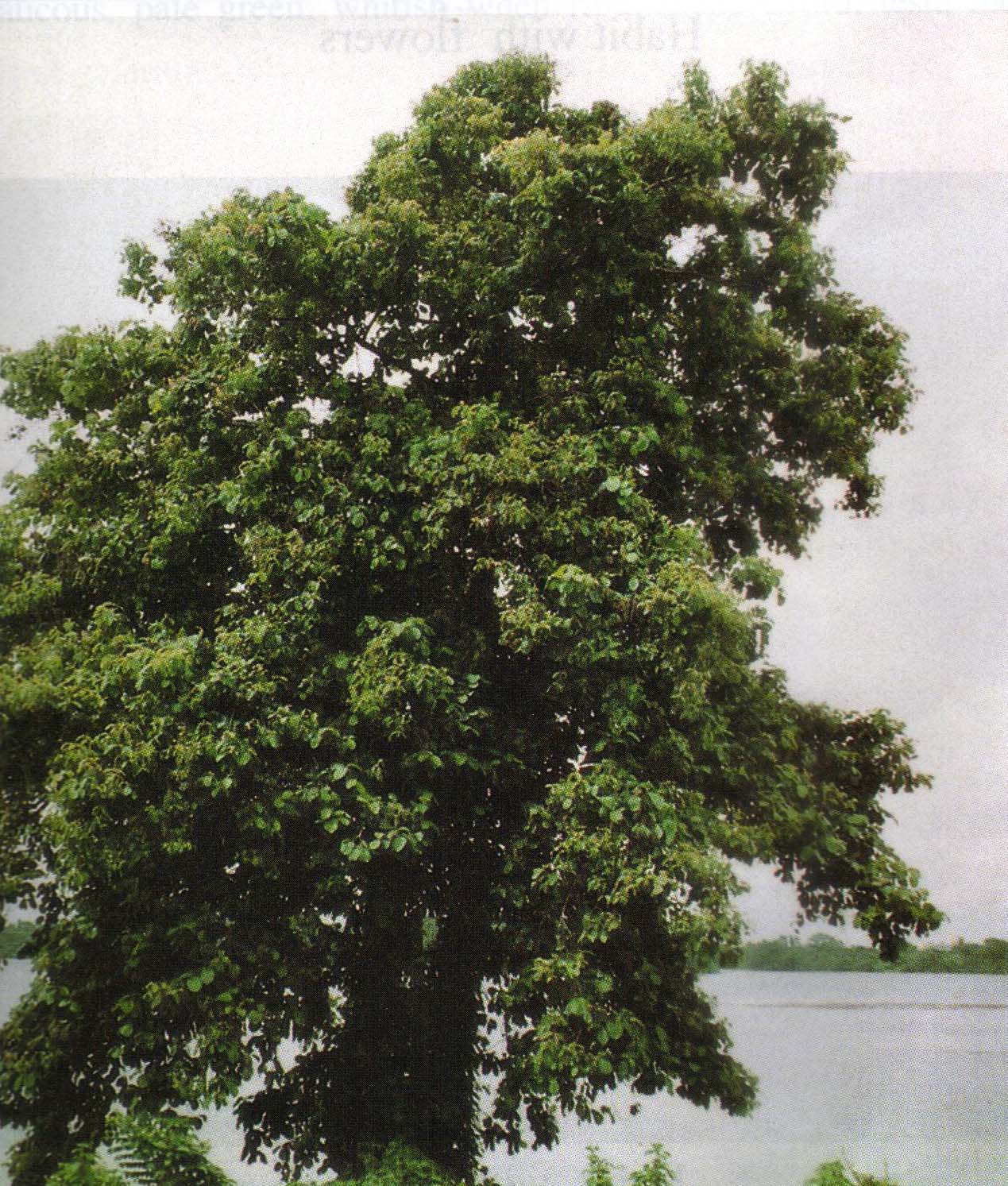
{htein} ; {mhau-htein} Photos: |
 |
 |
Identification characters:
A deciduous tree, shedding leaves in the hot season; stems quadrangular, the
younger ones puberulent, the older glabrous with lenticels. Leaves opposite,
decussate, simple, stipules interpetiolar, obovate, caducous; petioles short;
laminae oblong-obovate or suborbicular, variable in size and shape, the bases
rounded to obscurely truncate, the margins entire, the tips acute to acuminate,
unicostate, reticulate, the surfaces glabrous. Inflorescences terminal,
sometimes axillary, in globose heads, solitary or in cymes of usually 3 heads,
tomentose; bracts foliaceous, oblanceolate, deciduous. Flowers bracteolate,
sessile, bisexual, actinomorphic, pentamerous, epigynous. Calyx synsepalous,
tubular-truncate, glabrous, persistent. Corolla synpetalous, tubular, 5-lobed,
the lobes lorate, the outer surfaces glabrous, the inner pubescent, greenish
yellow. Androecium polyandrous, stamens 5, epipetalous to the throat of corolla
tube, the non-adherent filaments short, the anthers dithecous, narrowly ovoid,
basifixed, introrse, dehiscence longitudinal. Pistil 1, ovary ovoid,
2-carpelled, syncarpous, 2-loculed, the ovules numerous in each locule,
pendulous, attached to the semi-cylindrical placentas, the style filiform,
exserted, the stigma mitriform, disc absent. Fruits a capsule, with persistent
calyx, ovoid, sulcate, glabrous; seeds numerous linear-obovoid, minute, winged
all round, endosperm fleshy.
Flowering period: October - November
Fruiting period: December - January
Distribution: Grow wild throughout Myanmar.
Parts used and uses: Bark and root -- Pyrexia; Gastro-intestinal colic; Muscular pain.
MainIndex of DB|
Top
Contents of this page
KS-TMN 197
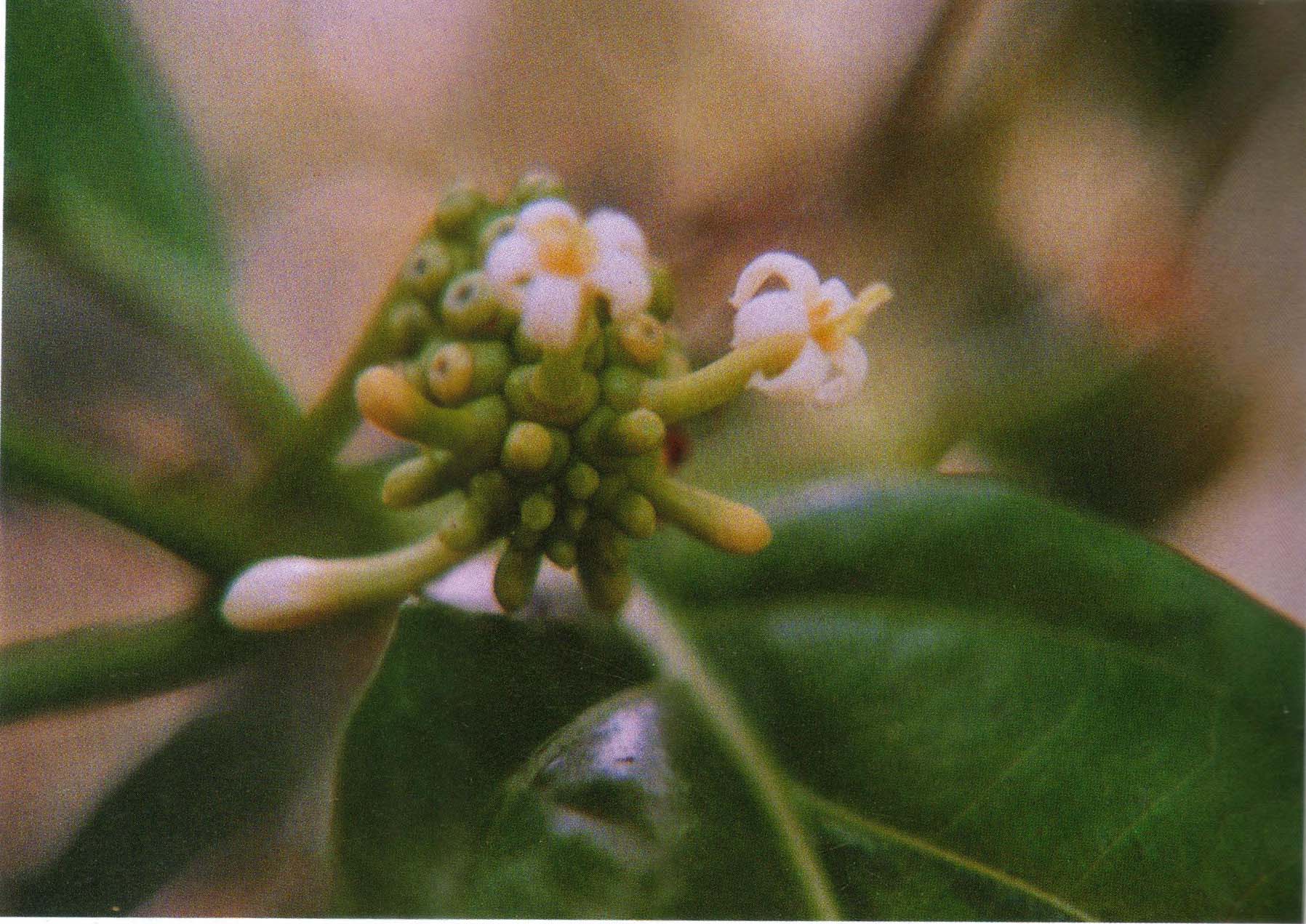
Burmese-Myanmar name in Nagathein :2-141 Photos: |
 |
 |
UKT: Nagathein listed two species of Morinda :
1. M. angustifolia as{rè:yo}-- Nagathein 3-097
2. M. tinctoria as {ni-pa.hsé:} or{tau:rè:yo} -- Nagathein 2-141
Identification characters:
A small tree; trunk straight, the barks smooth, the younger stems obtusely
4-angled, glabrous. Leaves opposite, simples stipules large, obovate or oblong,
the tips rounded or acute; petioles short; lamiae broadly elliptic to obovate,
the bases acute to cuneate, the margins entire, undulate, the tips acute,
unicostate, reticulate, glabrous, green, the upper darker, glaucous.
Inflorescences in dichisal cymes, condensed and aggregated into heads, borne on
peduncles, the head ellipsoid, solitary, leaf opposed, at alternate node; bracts
foliaceous. Flowers ebracteolate, pedicellate, bisexual, actinomorphic,
pentamerous, epifynous. Calyx synsepalous, the tube or hypanthium urceolate,
adnate to the ovary, basaly adnate to the other tubes. Corolla synpetalous,
5-lobed, infundibuligorm, the lobes lanceolate, acute, glabrous, the throat
pubescent, white. Androecium polyandrous, stamens 5, epipetalous, the filaments
short, hairy, the anthers dithecous, oblongoid, introrse, dehiscence
longitudinal. Pistil 1, 2-carpelled, syncarpous, 2-loculed, the placentation
axile-basal, the ovule solitary in each locule, the style 1, slender with 2
linear stigmatic branches. Fruit of many berries aggregated into a fleshy head,
irregularly shaped, glaucous, pale green, whitish when ripe; seeds ovoid, testa
membranous, endosperm fleshy.
Flowering and fruiting periods: Throughout the year
Distribution: Commonly grows wild especially on banks of streams and rivers or planted.
Parts used and uses: Diarrhoea;Amoebic dysentery; Regulates menstrual cycle: Antipyretic; Gains weight. Root-- Purgative. Leaf -- Arthritis; Infantile amoebic dysentery; Healscarbuncles; Neuritis; Pyrexia. Fruit young -- For the integrity of teethand gums. Fruit Dried -- Analgesic for gum inflammation. Fruit -- Bleeding in sores.
MainIndex of DB|
Top
Contents of this page
End of TIL file