Update:
2006-03-19 12:13 PM +0700
TIL
Medicinal Plants of Myanmar
Plumbaginaceae
by Kyaw Soe and Tin Myo Ngwè, Forest Resource Environment Development and
Conservation Association (FREDA), Series 1, 2004, ISBN 974-91986-0-3
Copied by U Kyaw Tun, and staff of TIL for staff and students of TIL. Not for sale.
MainIndex of DB |
Top
IndexofCollected papers
Agri.Dept.2000:
Akshara
Science names
|
Family names
Contents of this page
UKT: Nagathein references are given to check the Burmese-Myanmar names. *
shows where there is no agreement in Burmese name but when the plant is
identifiable from botanical name.
{kan.hkyoap-hpru} Plumbago zeylanica L.
MainIndex of DB |
Top
Contents of this page
KS-TMN 186
|
Botanical name: Plumbago zeylanica L.Sp. Pl. 151. 1753.
Myanmar name: Kant-choke-hpyu
English names: Ceylon leadwoet; White flowered leadwoet
Family: Plumbaginaceae
Burmese-Myanmar name in Nagathein :1-108**{kan.hkyoap-hpru}
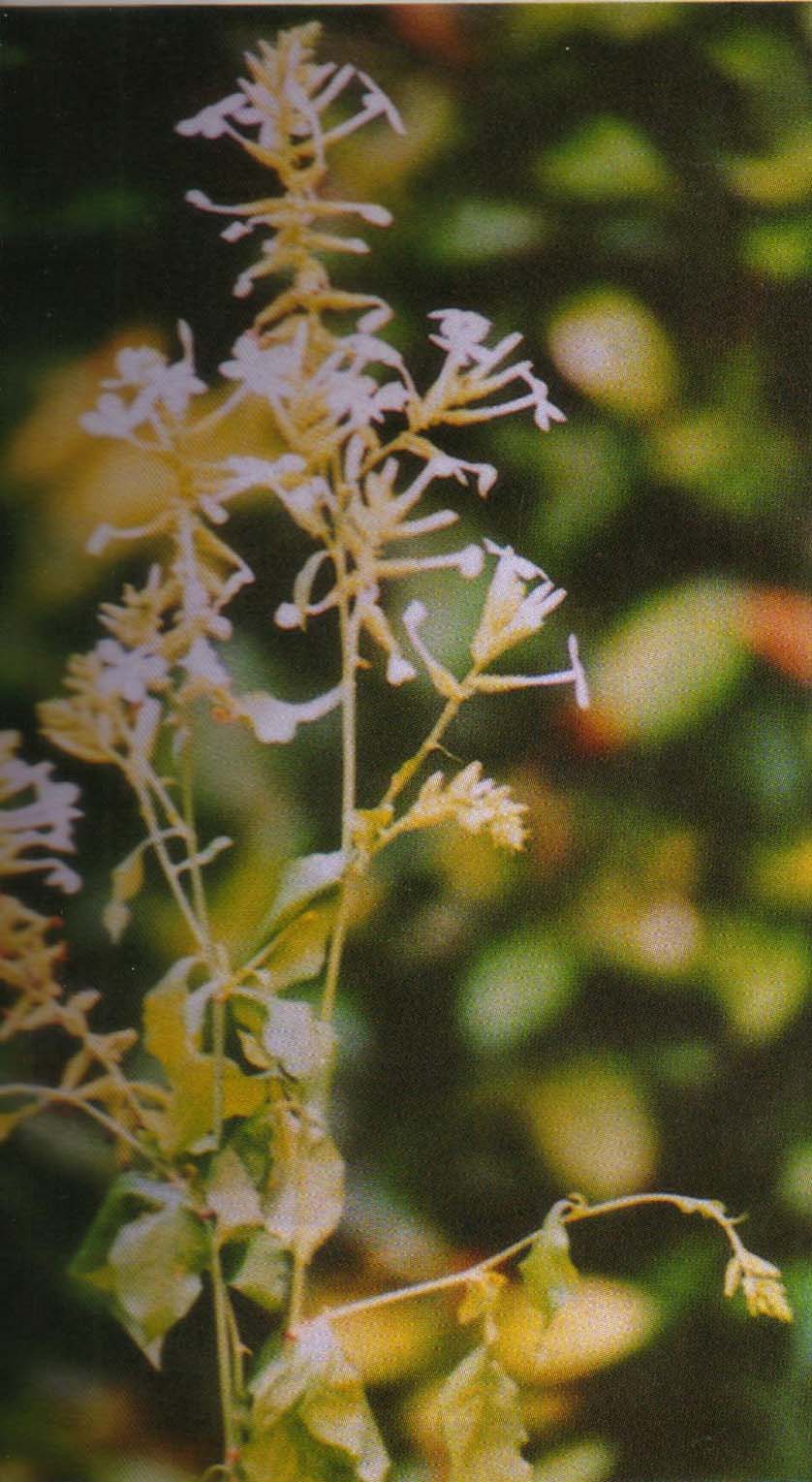
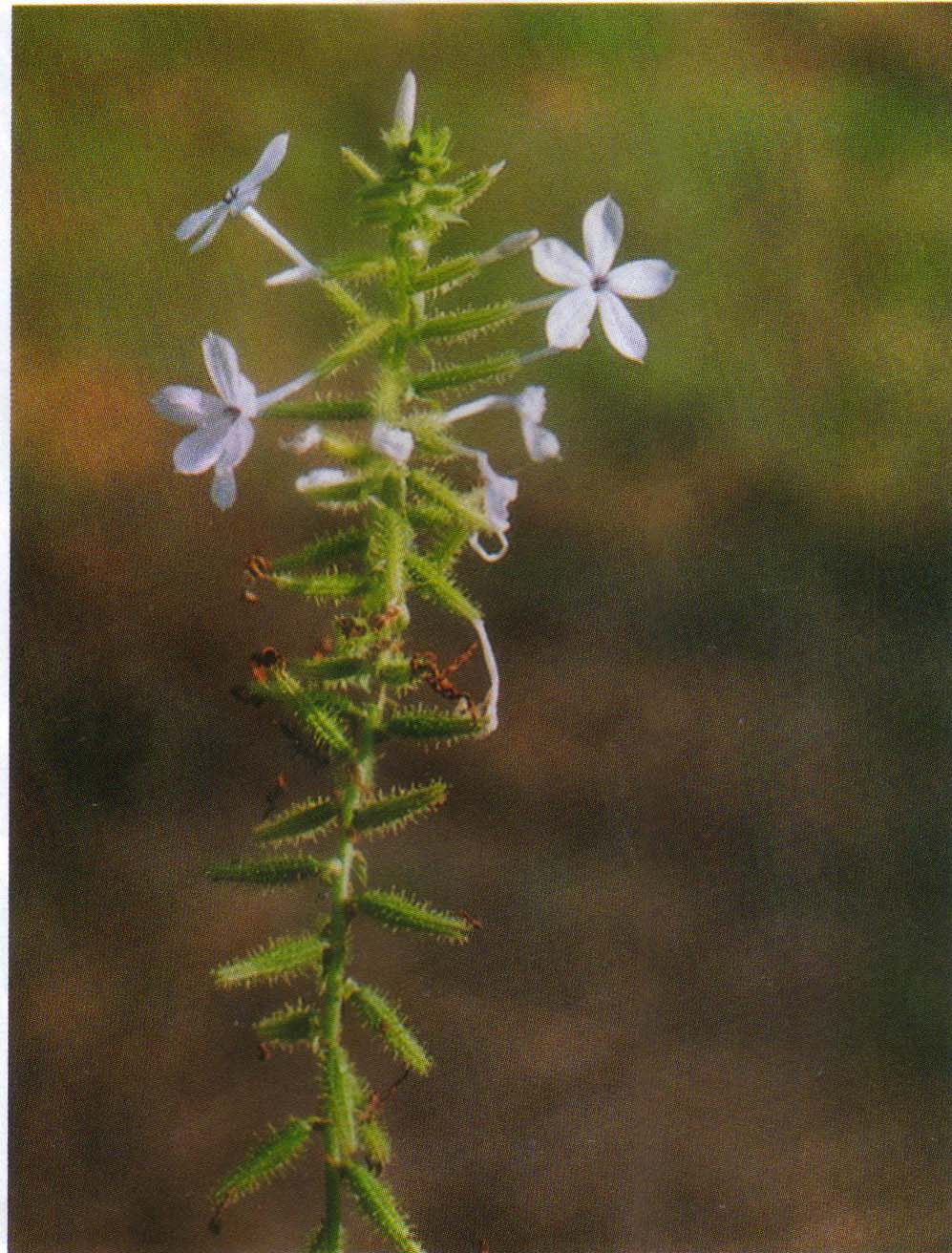
Photos:
left -- habit with flowers
right -- habit
with flowers and fruits
Click on the pictures to enlarge.
|
 |
 |
Identification characters:
A perennial herb, undershrub or shrub, branches diffuse, subscandent; stems
somewhat woody, the younger ones cylindrical, striate, covered with scurfy
glandular, multicellular and peltate hairs. Leaves alternate, simple;
exstipulate; subsessile, the petiole bases dilated, amplexicaul; laminae ovate,
the bases shortly and abruptly attenuated into a short petiole, the margins
entire, the tips acute, unicostate, reticulate, the surfaces glabrous, the lower
glaucous. Inflorescences terminal cincinni, unilateral, simple or sometimes
panicled; peduncles spicate, with stipituate glands, the cymules 1-floered;
bracts ovate, persistent. Flowers bracteolate, pedicellate, bisexual,
actinomorphic, pentamerous, hypogynous. Calyx synsepalous, tubular, 5-toothed,
the outer surfaces covered densely with viscid glandular hairs. Corolla
sunpetalous, salveform, 5-lobed, the lobes obovate-oblong, acute, apiculate,
white, Androecium polyandrous, stamens 5, the filaments dilated at the bases,
opposite the corolla lobes, the anthers dithecous, oblongoid, basifixed,
introrse, exserted just beyond the throat, dehiscence longitudinal. Pistil 1,
ovary 5-lobed, ovoid-oblongoid, attenuated at the apex, 5-carpelled, syncarpous,
1-loculed, the ovule solitary and pendulous from a basal funicle, the style
terminal, filiform, divides aboce into 5 lognitudinally enclosed in persistent
calyx covered with viscid glandular hairs; seeds ellipsoid, albument scanty.
Flowering period: November-February
Fruiting period: November-February
Distribution: Common throughout Myanmar
Parts used and uses: Root, bark -- Oedema; Leucoderma; Leprosy; Pruritis; Cough;
Rhinorrhoea; Chest pain; Dysentery; Infections; Arthritis; Anaemia; Splenomegaly; Elephantiansis.
MainIndex of DB |
Top
Contents of this page
End of TIL file