Update:
2006-03-18 06:24 PM +0700
TIL
Medicinal Plants of Myanmar
Nymphaeaceae
by Kyaw Soe and Tin Myo Ngwè, Forest Resource Environment Development and
Conservation Association (FREDA), Series 1, 2004, ISBN 974-91986-0-3
Copied by U Kyaw Tun, and staff of TIL for staff and students of TIL. Not for sale.
Main Index of DB |
Top
Index ofCollected papers
Agri.Dept.2000:
Akshara
Science names
|
Family names
Contents of this page
UKT: Nagathein references are given to check the Burmese-Myanmar names. *
shows where there is no agreement in Burmese name but when the plant is
identifiable from botanical name.
{kra-ni}
Nymphaea rubra Roxb.1-161
{kra-ño}
Nymphaea stellata Willd.1-16
Main Index of DB |
Top
Index ofCollected papers
Agri.Dept.2000:
Akshara
Science names
|
Family names
Contents of this page
KS-TMN 173
|
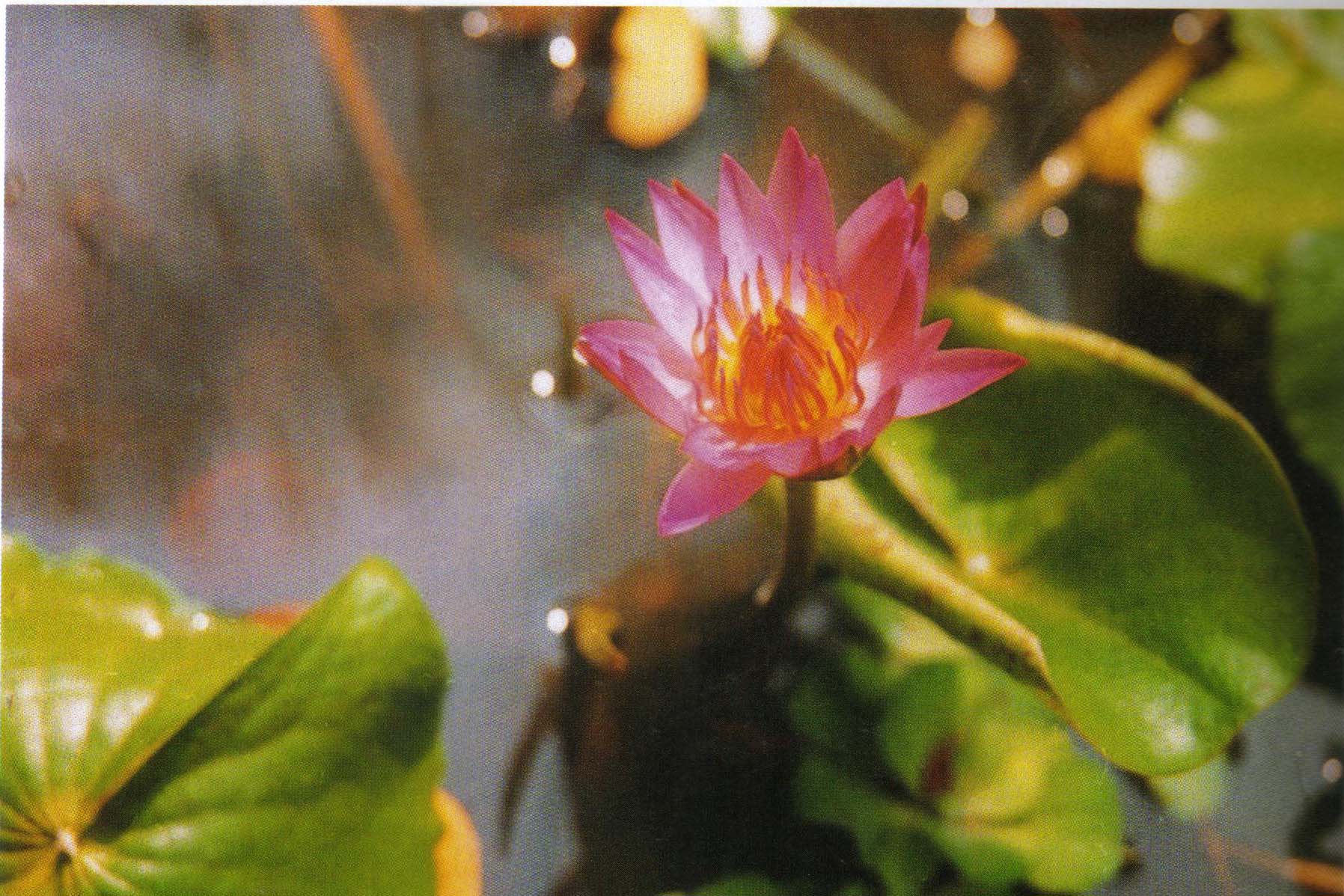
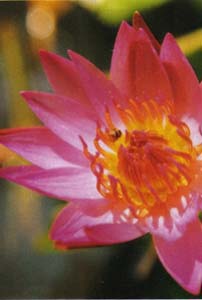
Botanical name: Nymphaea rubra Roxb. ex Salisb. Parad. Lond.I,subt. 14. 1805.
Myanmar name: Kyar-ni
English name: Indian Water-lily
Family: Nymphaeaceae
Burmese-Myanmar name in Nagathein :1-161
{kra-ni}
Photos:
left -- habit with a flowers
right -- close up of a flower
Click on the pictures to enlarge.
|
 |
 |
Identification characters:
A large aquatic perennial herb, floating; rootstock a cluster of short, erect,
pinkish corm-shaped rhizomes. Leaves alternate, simple; exstipulate; petioles
very long, arising directly from the submerged rhizome, floating, dark red,
pubescent; laminae orbicular, the younger subsagittate, the bases with a the
tips rounded, multicostate, reticulate, the veins prominent, the upper surfaces
glabrous, reddish green, the lower tomentose, dark red. Inflorecences scapose,
the scapes radical, axillary, solitary, very long, stout, pubescent, floating.
Flowers showy, open only in the mornings, fragrant, bisexual, actinomorphic,
polymerous, hypogynous. Calyx aposepalous, the sepals 4, elliptic-concave, 5- to
10-ribbed, the outer surface red, the inner with 5 dark red veins, inserted at
the base of the torus. Corolla apopetalous, the petals about 25,
elliptic-concave or elliptic-oblong, obtuse, length thrice longer than breadth,
many-seriate, spirally arranged, the inner gradually transformed into stamens,
all adnate to the base of the disk, red or pale rose with 5 veins, glabrous.
Androecium polyandrous, stamens about 40, many-seriate, spirally arranged, the
filaments petaloid, broadly dilated at the base, dark red, the anthers dithecous,
linear-oblongoid, without appendages, dark red, introrse, dihiscence
longitudinal. Pistil 1, ovary globose, enveloped in a fleshy torus, many-carpelled,
syncarpous, many-loculed, the ovules many per locule, the placentation parietal,
the style absent, the stigma discoid, radiate, the rays 18-20, with clavate
appendages. Fruit a berry, globose, fleshy, green, ripening under water,
bursting irregularly; seeds broadly ellipsoid, rough, each enclosed in a white
transparent aril, endospermic.
Flowering period: November-January
Fruiting period: November-January
Distribution: Common in warmer parts of Myanmar
Parts used and uses: Root, leaf, flower, fruit, seed -- Purify blood.
Flower, pollen -- Promote spermatogenesis
Main Index of DB |
Top
Contents of this page
KS-TMN 174
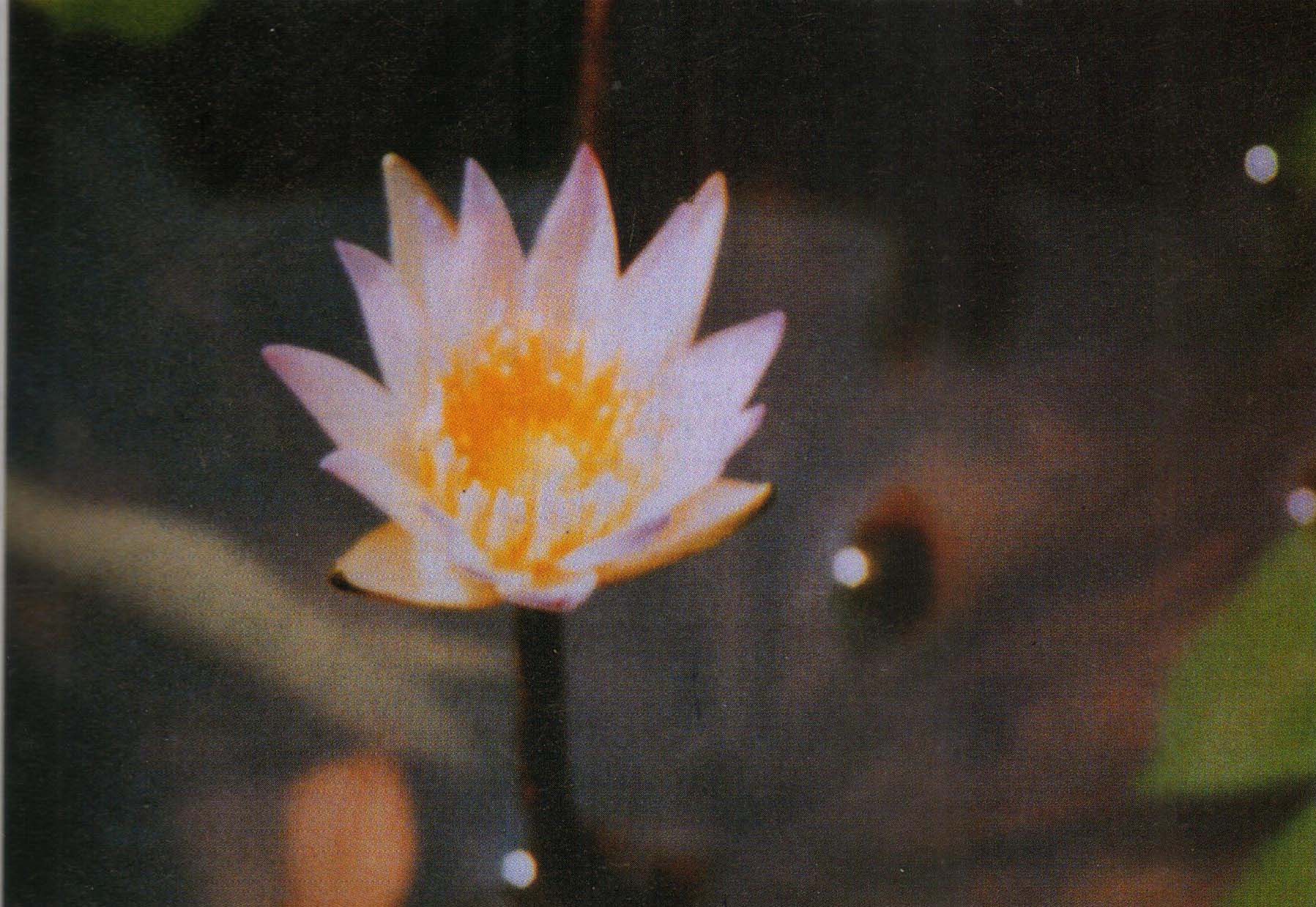
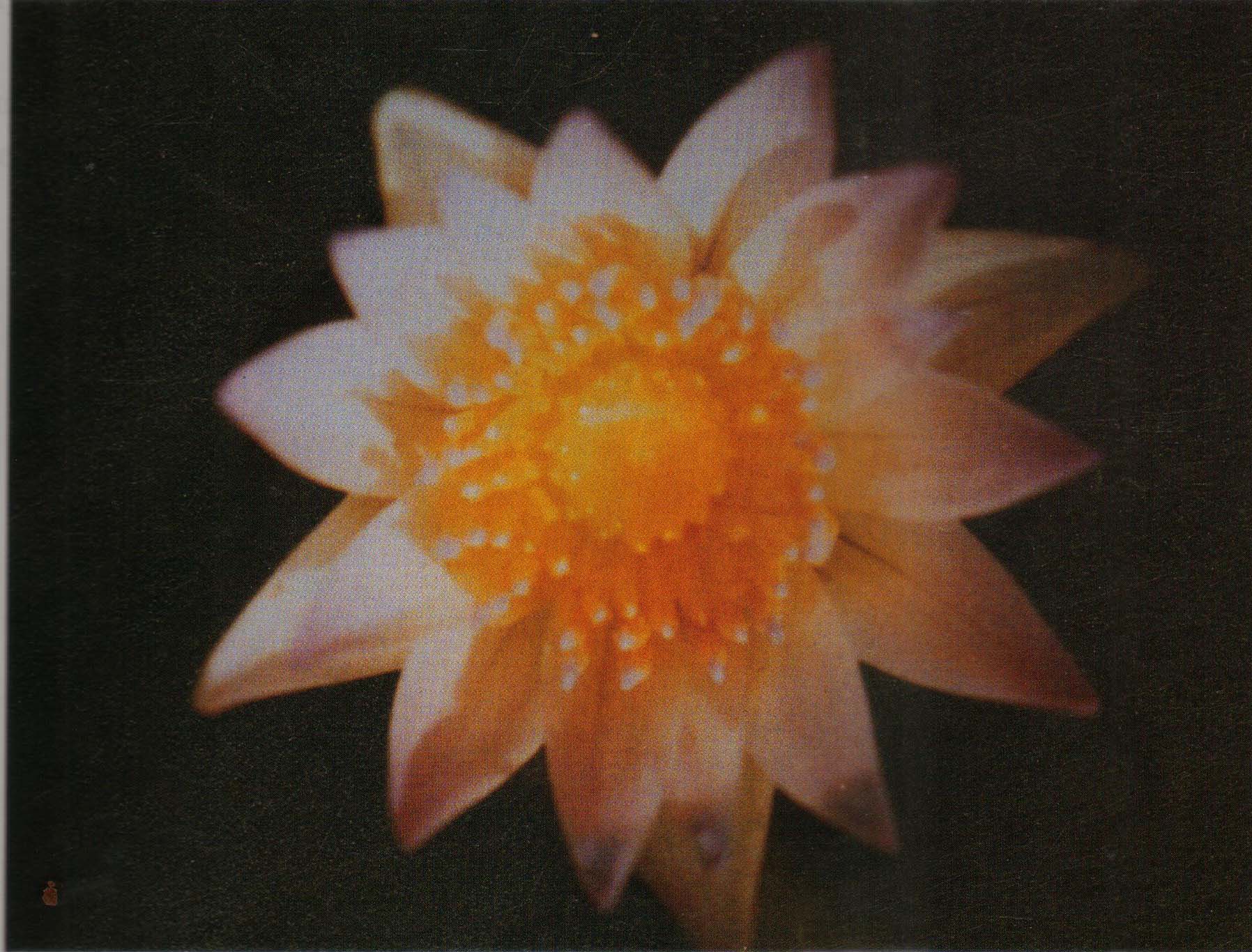
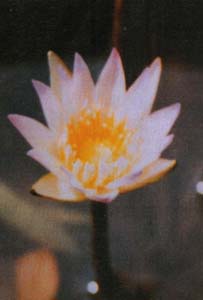
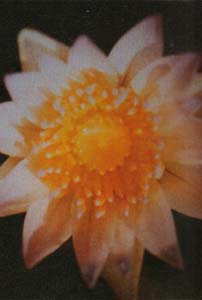
Botanical name: Nymphaea stellata Willd. var. cyanea It. f. k. J.Fl. Ind. 1.243
Myanmar name: Kyar-nyo; Kyar-pyar
English name: Indian Blue Water-lily
Family: Nymphaeaceae
Burmese-Myanmar name in Nagathein :1-16
{kra-ño}
Photos:
left -- habit with a flowers
right -- close up of a flower
Click on the pictures to enlarge. |
 |
 |
Identification characters:
A large aquatic perennial herb, floating; rootstock a cluster of short, ovoid
purplish rhizomes. Leaves alternate, simple; exstipulate; petioles long,
slender, arising directly from the submerged rhizome, floating, dark purplish
green; laminae ovate-orbicular, the younger sagittate, the bases with a narrow
deeply cordate sinus, peltate, the margins entire or irregularly
sinuate-dentate, the tips rounded, multicostate, reticulate, the surfaces
glabrous, the upper purplish green, cutinized, the lower dark purple, often with
black blotches. Inflorescences scapose, the scapes radical, axillary, solitary,
very long, stout, floating. Flowers showy, faintly fragrant, bisexual,
actinomorphic, polymerous, hypogynous. Calyx aposepalous, the sepals 4, oblong-lanceolate,
acute or subobtuse, many-veined, not ribbed, often with purplish fine streaks,
inserted at the base of the torus. Corolla apopetalous, the petals 10-30,
elliptic-oblong or lanceolate, many-seriate, spirally arranged, the inner
gradually transformed into stamens, all adnate to the base of the disk, usually
pale violet or light blue. Androecium polyandrous, stamens 10-50, many-seriate,
spirally arranged, the filament petaloid, broadly dilated at the base, the
anthers dithecous, linear-oblongoid, with a lingual appendage, introrse,
dehiscence longitudinal. Pistil 1, ovary globose, enveloped in a fleshy torus,
superior, many-carpelled, syncarpous, many-loculed, the ovules many per locule,
the placentation parietal, the style absent, the stigma discoid, radiate, the
rays 10-30, without appendage. Fruit a berry, globose, fleshy, ripening under
water, bursting irregularly; seeds globose, minute, embedded in pulp, each
enclosed in a fleshy aril, endospermic.
Flowering period and fruiting period: October-May
Distribution: Grows wild in warmer parts of Myanmar. Common in lakes and ponds
Parts used and uses: Roots, leaves, flowers, fruits, seeds
-- Biliousness: Give strength and stamina to body.
Main Index of DB |
Top
Contents of this page
End of TIL file