Update:
2006-03-18 08:18 AM +0700
TIL
Medicinal Plants of Myanmar
Labiatae
by Kyaw Soe and Tin Myo Ngwé, Forest Resource Environment Development and
Conservation Association (FREDA), Series 1, 2004, ISBN 974-91986-0-3
Copied by U Kyaw Tun, and staff of TIL
for staff and students of TIL. Not for sale.
Main
Index of DB | Top
Index of
Collected papers
Agri.Dept.2000:
Akshara
|
Science names |
Family names
Contents of this page
UKT: Nagathein references are given to check the Burmese-Myanmar names. *
shows where there is no agreement in Burmese name but when the plant is
identifiable from botanical name.
{ping.ku-hteip-peit}
Leucas cephalotes Spreng. 2-245
{ping-seim:} Ocimum basilicum L. 2-241
Main
Index of DB | Top
Index of
Collected papers
Agri.Dept.2000:
Akshara |
Science names |
Family names
Contents of this page
KS-TMN 113
{ping.ku-hteip-peit}
Leucas cephalotes Spreng. 2-245
|
Botanical name: Leucas cephalotes Spreng. Syst, ii 743. 1825.
Myanmar name: Pinku-hteik-peik
English name:
Family: Labiatae
Burmese-Myanmar name in Nagathein 2-245:
{ping.ku-hteip-peit}
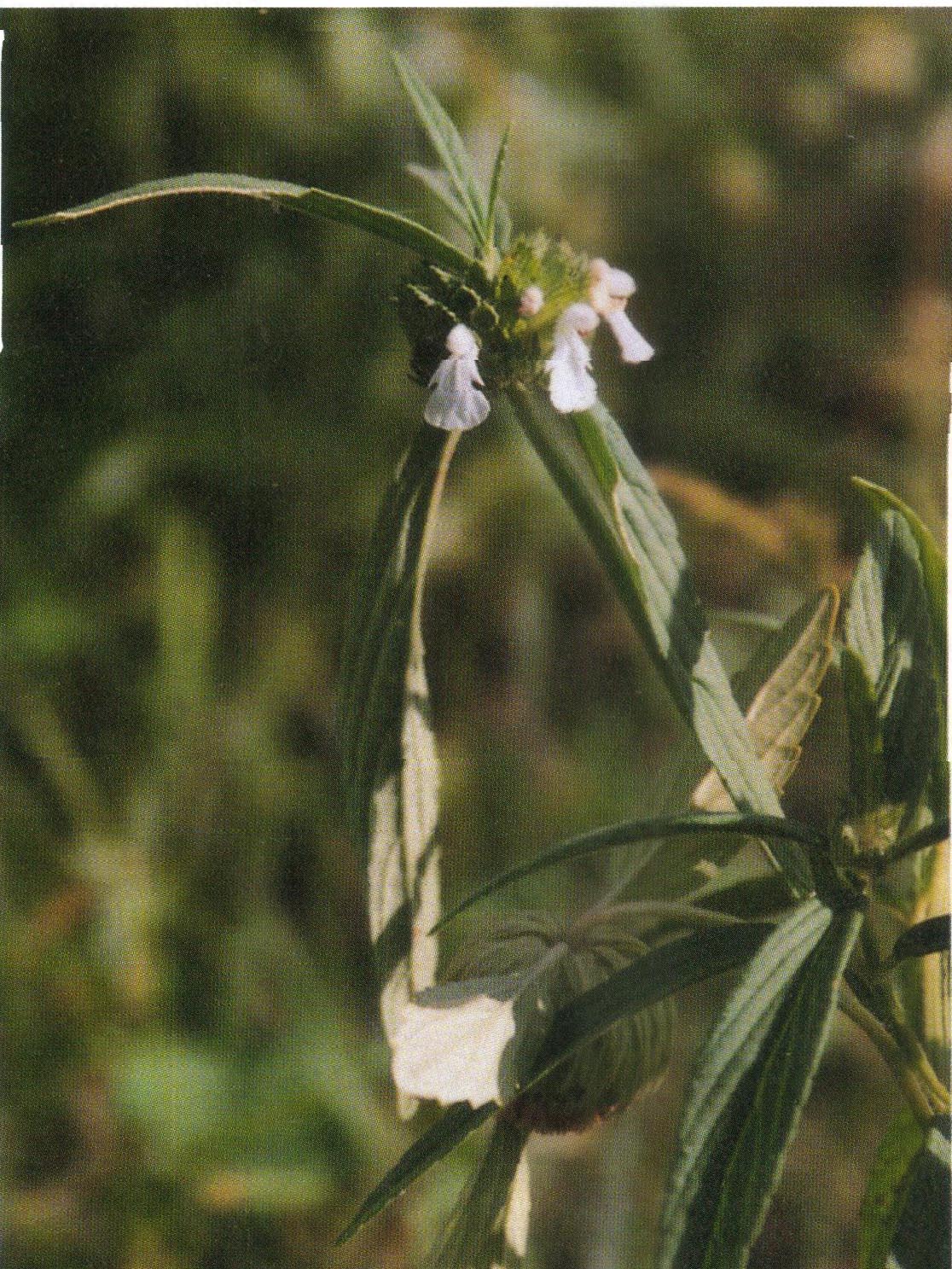
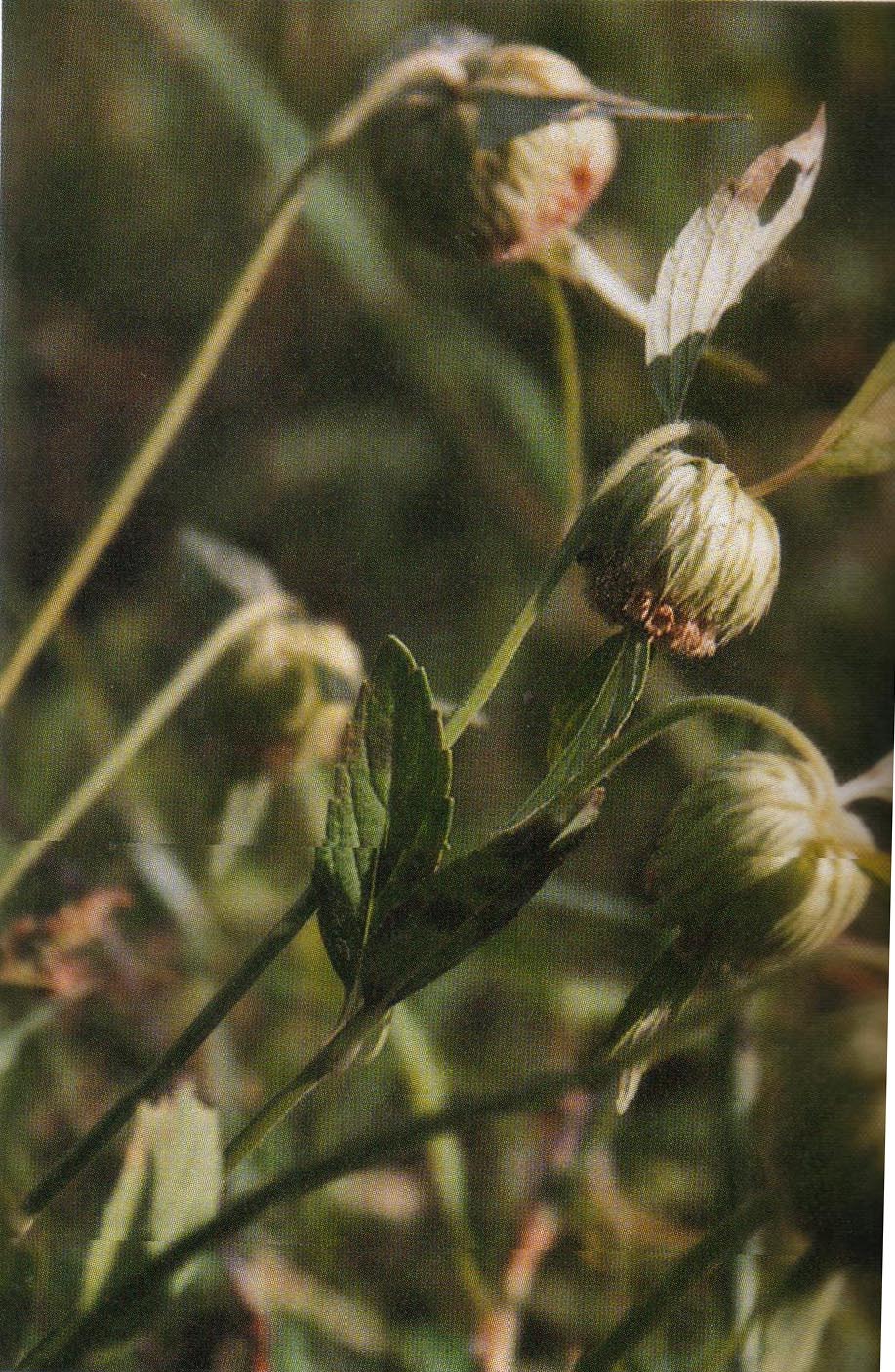
Photos:
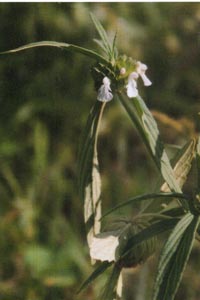
left -- habit with flowers
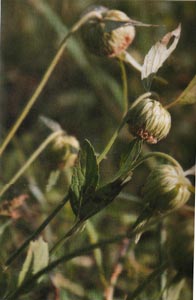
right -- habit with fruits
Click on the pictures to enlarge. |
 |
 |
Identification characters:
Annual herbs, erect; stems stout, shallowly grooved, branchesdiffuse,
pubescent. Leaves opposite and decussate, simple; exstipulate; petioles
pubescent; laminae ovate or ovate-lanceolate, the bases obtuse, the margins
serrulate, the tips acute, unicostate, reticulate, the upper pubescent, the
lower puberulent, the veins more conspicuous. Inflorescents verticillasters,
axillary, the verticils many-flowered, the verticil bearing axils condensed at
the terminal end to form a globose head, pubescent; peduncles absent; bracts
lanceolate, many, forming an incolucre, awned, pubescent. Flowers ebracteolate,
sessile, bisexual, zygomorphic, tetramerous, hypogynous. Calyx synsepalous,
10-lobed, the tubes tubular, curved, the mouths oblique, villous,
10-ribbed above, the upper half pubescet, the lower glabrous, the lobes
triangular, acute, awned, unequal. Corolla synpetalous, bilabiate, the tubes
curved, broader above, hairs forming a slightly oblique ring within, about half
the tube, the upper lip erect, cucullate, the outer surfaces villous, the inner
glabrous, the lower lip 3-lobed, spreading, longer and broader than the upper,
the median lobe cuneate, the tip truncate, white. Androecium polyandrous,
stamens 2+2, didynamous, the lower pair longer, epipetalous, inserted, the
filaments cylindrical, flattened at the bases, ventrally pilose at the middle,
the anthers dithecous, ellipsoid, notched at the middle, connivent, confluent,
those of the upper pair larger than the lower, dorsifixed, introrse, dehiscence
longitudinal. Pistil 1, ovary cuboid, 2-carpelled, syncarpous, 4-loculed due to
false septation, placentation basal with a solitary ovule in each locule, the
style strap-shaped, cylindrical at the base, gynobasic, the stigmas 2-fid,
subulate, disc 4-lobed, the anterior lobes larger. Fruit of 4 dry nutlets,
oblongoid, small, erect, endosperm scanty.
Flowering and fruiting periods: October-June
Distribution: Grows wild throughout Myanmar.
Parts used and uses: Whole plant -- Cathartic; Indigestion; As an
expectorant; Jaundice; Oedema. Leaf -- Biliousness; Jaundice; Oedema;
Polyuria; Cough; Asthma; Metrorrhagia; Urinary tract infection; Pruritis;
Aspermia; Jaundice. Root -- Jaundice. Infusion of plant -- Infantile
cough; Rheumatism; Antidote for snake bite. Infusion of fresh: Plant
-- Antidote for snake bite. Fruit -- Malaria; As an antipyretic
Main
Index of DB | Top
Contents of this page
KS-TMN 114
|
Botanical name: Ocimum basilicum L. Sp. Pl. 597.1753.
Myanmar names: Pin-sein; Pin-pwa
English names: Basil; Common Basil; Sweet Basil: Common Sweet Basil.
Family: Labiatae
Burmese-Myanmar name in Nagathein 2-241:
{ping-seim:}
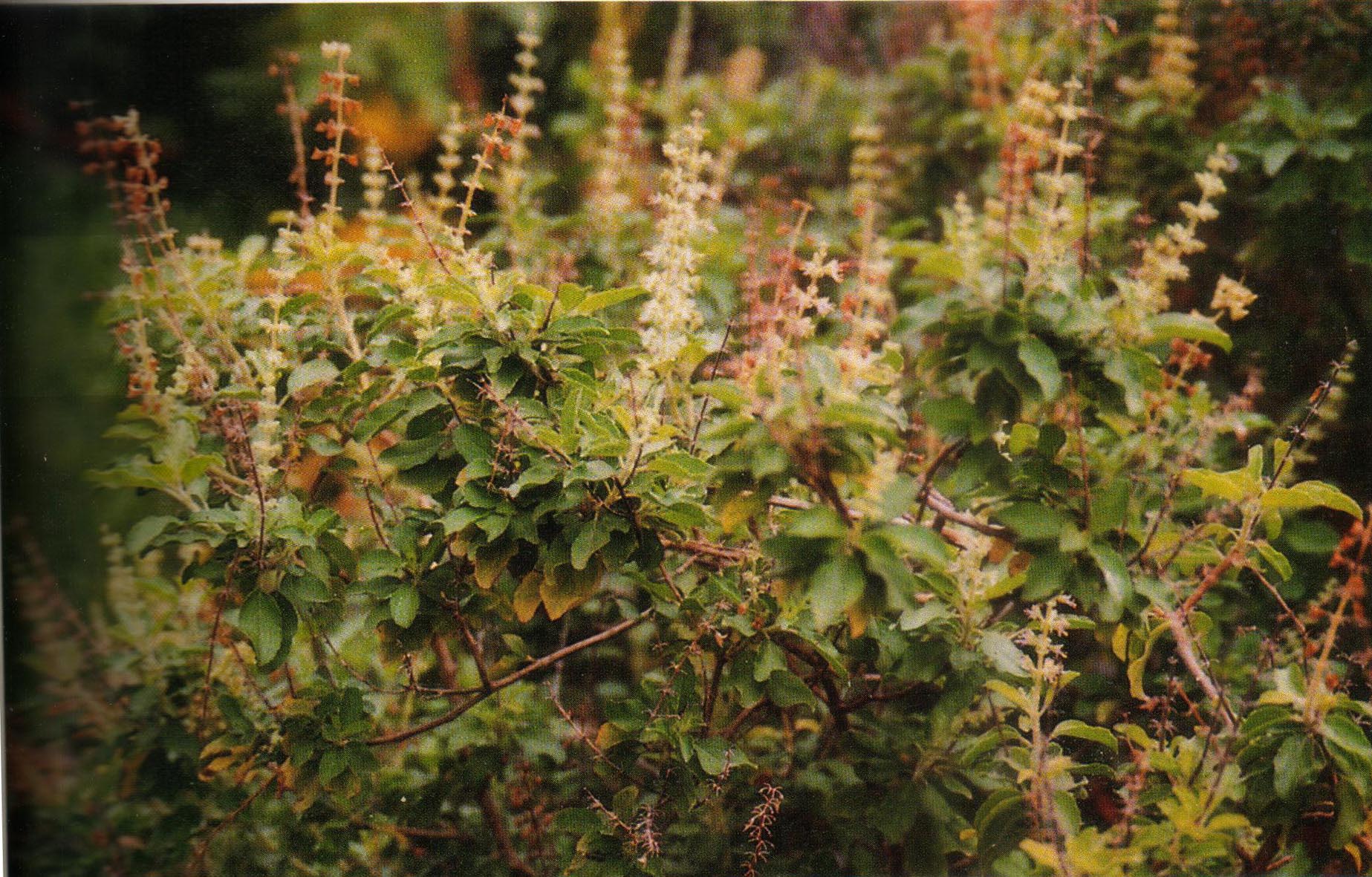
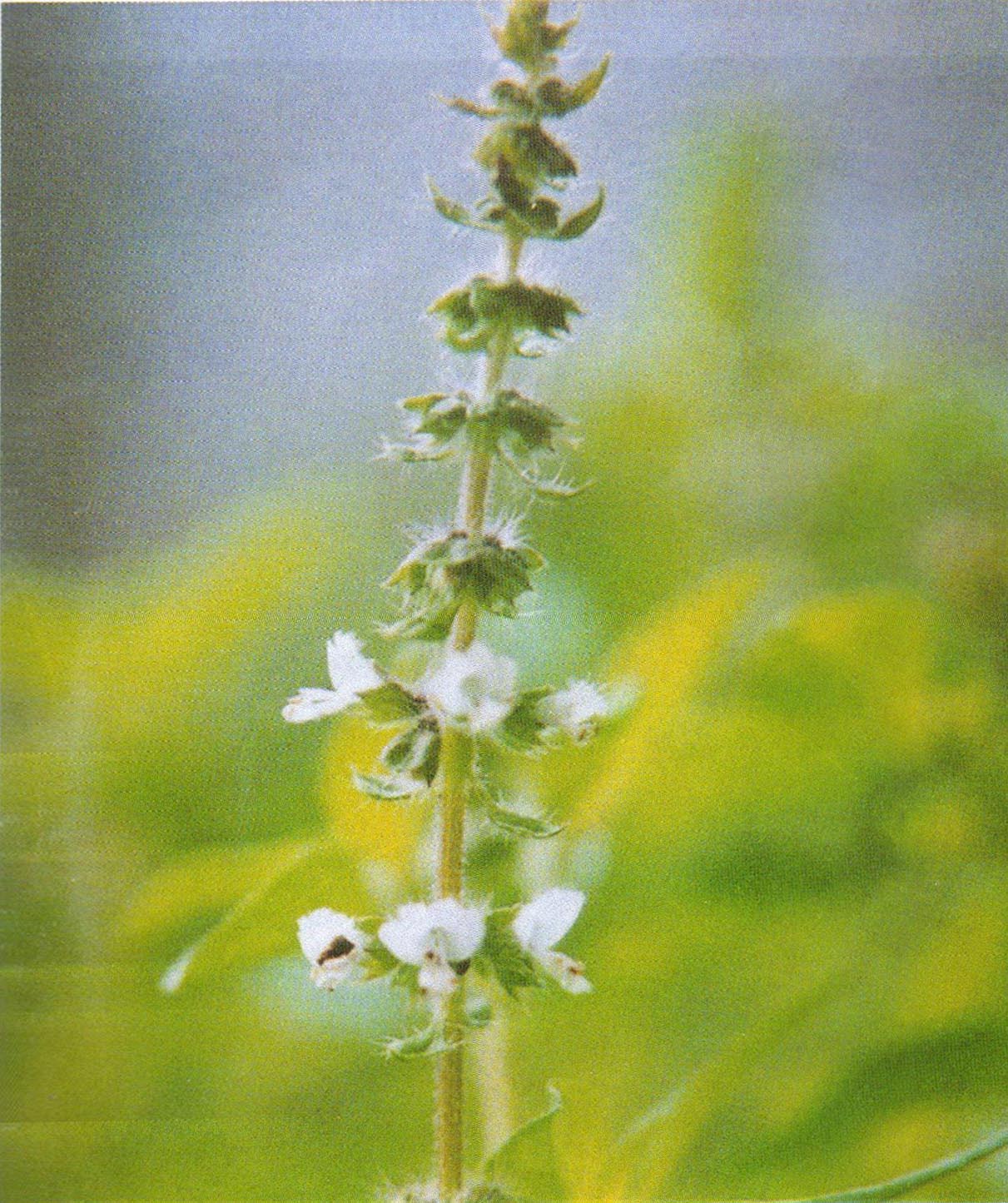
Photos:
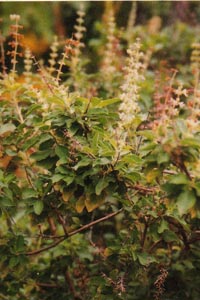
left -- habit with flowers and fruits
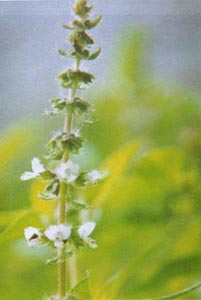
right -- close up of flower
Click on the pictures to enlarge. |
 |
 |
Identification characters:
An annual herb, suffrutescent; younger stems quadrangular, hispid, green.
Leaves opposite and decussate, simple; exstipulate; petiolate; laminae ovate,
the bases obtuse or cuneate, the margins serrate or sometimes obscurely toothed,
the tips acute to acuminate, unicostate, reticulate, glabrescent on the veins
and along the margins. Inflorescences terminal, rarely axillary, spiciform
racemes of verticillasters, the verticils 6-flowered, 3 each in a reduced
cincinnus. Flowers pendant, ebracteolate, pedicellate, bisexual, zygomorphic,
pentamerous, hypogynous. Calyx synsepalous, campanulae, obscurely bilabiate, the
upper lip uncut, orbicular, larger and broader than the lower, the lower lip
4-fid, ovate-lanceolate, awned, the 2 middle awns longer than the upper lip,
pubescent. Corolla synpetalous, bilabiate, the tubes short, cylindrical, the
upper lip 4-fid, erect, the lower lip uncut, cucullate, white, pubescent, pilose
at the base of the upper lip and the cucullate part of the lower. Androecium
polyandrous, stamens 2+2, didynamous, epipetalous, the filaments of the
posterior pair longer than those of the anterior ones, attached to the middle of
the corolla tube, those of the anterior pair to the base of the upper lip,
declinate, slightly exserted, the anthers dithecous, sagittate, confluent,
papillose, bisefixed, introrse, dehiscence longitudinal. Pistil 1, ovary
4-lobed, 2-carpelled, syncarpous 4-loculed due to false septation, the
placentation basal with one ovule in each locule, nectariferous disc 4-lobed,
the style 1, gynobasic, purple, the stigma 2-fid, subulate. Fruit of 4 dry
1-seeded nutlets, enclosed within persistent and accrescent calyx, the stigma
nutlets ellipsoid, obscurely muricate; seeds ellipsoid, black, endosperm scanty,
fleshy.
Flowering and fruiting periods: October-December
Distribution: Grows wild and cultivated throughout Myanmar.
Parts used and uses: Whole
plant -- Appetizer; Heartburn; Antiseptic; Carminative; Biliousness;
Expectorant; Pyrexia; Heart disease; Pruritis; Leprosy; Emesis; Heals
carbuncles; Antidote for poisons; Blood disease. Seed -- Oedema; To allay
thirst.
Main
Index of DB | Top
Contents of this page
End of TIL file