Update:
2006-03-19 08:20 AM +0700
TIL
Medicinal Plants of Myanmar
Euphorbiaceae
by Kyaw Soe and Tin Myo Ngwé, Forest Resource Environment Development and
Conservation Association (FREDA), Series 1, 2004, ISBN 974-91986-0-3
Copied by U Kyaw Tun, and staff of TIL
for staff and students of TIL. Not for sale.
Main
Index of DB | Top
Index of
Collected papers |
Agri.Dept.2000:
Akshara
|
Science names |
Family names
Contents of this page
UKT: Nagathein references are given to check the Burmese-Myanmar names. *
shows where there is no agreement in Burmese name but when the plant is
identifiable from botanical name.
{thak-ring:-kri:}
Croton oblongifolius Roxb. 3-436
{ka.na.hko} Croton tiglium L. 1-45
{hsé:ma.hkam:} ; {Bein:hpo} Jatropha multifida L.
{hsi:hpru} ; {sha:hpru} Phyllanthus emblica L.
{krak-hsu} Ricinus communis L.
Main
Index of DB | Top
Index of
Collected papers |
Agri.Dept.2000:
Akshara
|
Science names |
Family names
Contents of this page
KS-TMN 093
|
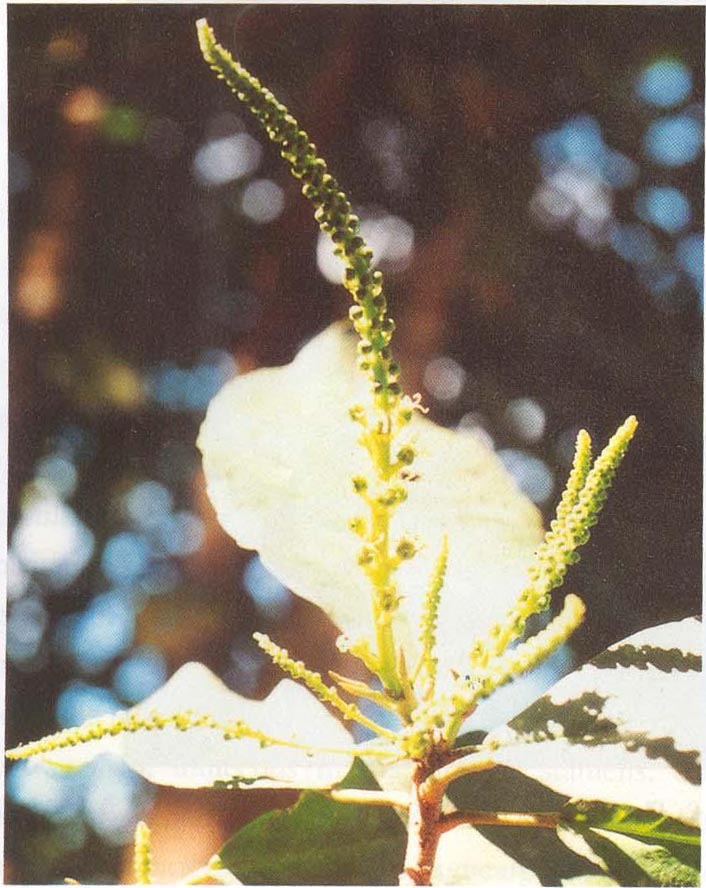
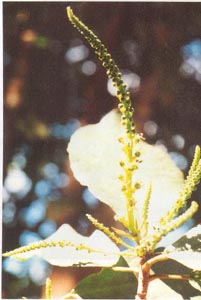
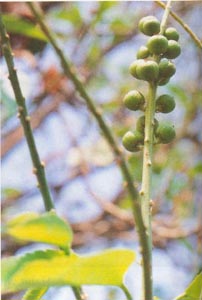
Botanical name: Croton oblongifolius Roxb. FL. Ind. 111. 685. 1832.
Myanmar name: Thetyin-gyi
English name: --
Family: Euphorbiaceae
Burmese-Myanmar name in Nagathein 3-436:
{thak-ring:-kri:}
Photos:
left -- habit with flowers
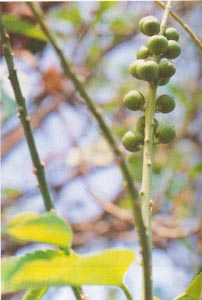
right -- fruits
Click on the pictures to enlarge. |
 |
 |
Identification characters:
A middle sized tree, deciduous; bark brownish, branches lepidote while young.
Leaves alternate, crowded towards the ends of the branchlets, simple; stipules
deciduous; petioles cylindrical, lepidote; laminae elliptic-oblong or oblong-lanceolate,
the bases acute or obtuse, the margins serrate, the tips acute to acuminate,
unicostate, reticulate, the surfaces glabrescent, the upper dark green.
Inflorescences in terminal paniculate cymes, the cymules fascicled at the axils
of minute bracts, monoecious, the staminate flowers at the upper portion, more
numerous than the pistillates, the pistillates at the lower; peduncles erect,
lepidote; bracts lanceolate to ovat. Flowers ebracteolate, pedicellate,
unisexual, actinomorphic, pentamerous, hypogynous. Staminate flowers: Calyx
synsepalous, 5-partite, lepidote, persistent. Corolla apopetalous, the petals 5,
ovate, villous within, glabrous without, pale yellowish green. Androecium
polyandrous, stamens 12, inserted on a villous receptacle, the filaments long,
slender, inflexed in bud, more hairy at the bases, the anthers dithecous,
oblongoid, adnate, introrse, dehiscence longitudinal. Pistillode absent.
Pistillate flowers: Calyx synsepalous, 5-partite, the lobes broadly ellitptic,
lepidote, persistent. Corolla obsolete. Androecium nil. Pistil 1, ovary
oblongoid, glabrous, 3-carpelled, syncarpous, 3-loculed, the placentation axile,
the ovule one in each locule, the styles 3, the stigmas 2-fid for more than half
the length. Fruit a regma of three, 2-valved 1-seeded cocci, globose, 3-lobed,
depressed at the top, with persistent calyx, pale greenm lepidote; seeds 3,
oblongoid, pale green, smooth, caruncle small, endosperm copious, fleshy.
Flowering period: December--February
Fruiting period: June--April
Distribution: Grows wild, more common in lower Myanmar.
Parts used and uses: Root bark, leaves and seeds
Root bark -- Pneumonitis; Hepatitis; Hepatomegaly; Arthritis.
Bark --Oedema; Hepatitis; Hepatomegaly; Best antidote for snake bite; Pyexia.
Seeds -- Diarrhoea; Oedema; Very useful for inflammations either taken
orally or as an external application
Main
Index of DB | Top
Contents of this page
KS-TMN 094
|
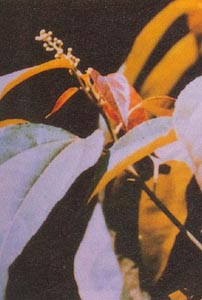
Botanical name: Croton tiglium L. Sp. PL. 1004. 1753.
Myanmar name: Kana-kho
English name: Purging Croton
Family: Euphorbiaceae
Burmese-Myanmar name in Nagathein 1-45
{ka.na.hko}
Photos:
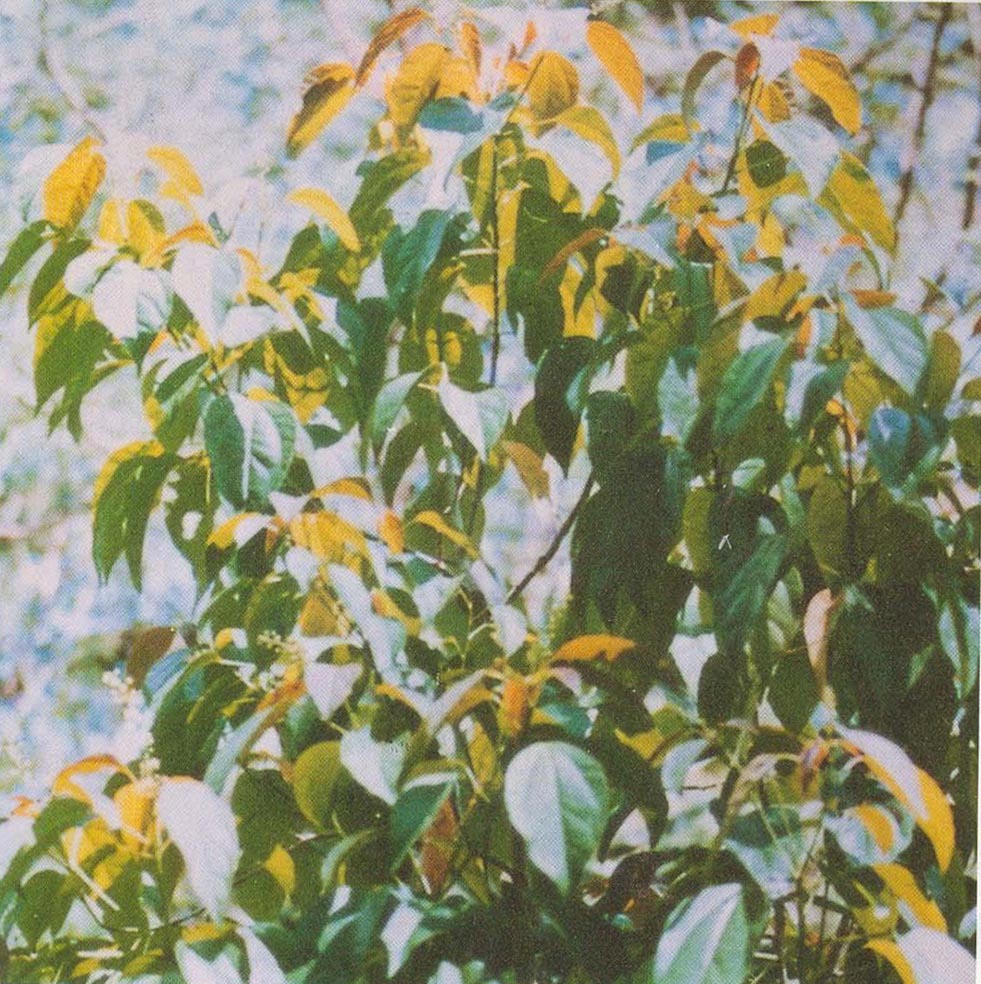
left -- habit
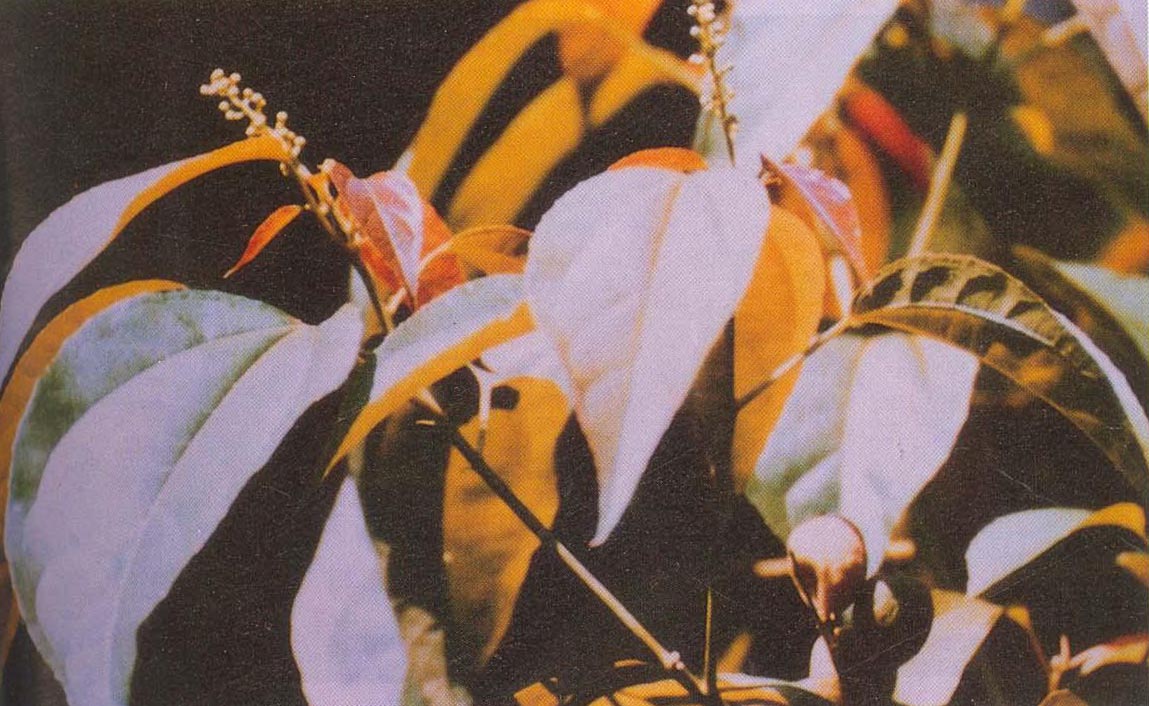
right -- habit with flowers & fruits
Click on the pictures to enlarge. |
 |
 |
Identification characters:
A small tree, evergreen; bark smooth, the younger stems stellate puberulent.
Leaves alternate, simple; stipulate; petioles long; laminae ovate or elliptic-lanceolate,
the bases obtuse to rounded, the margins serrate, the tips acute to acuminate,
3-costate, reticulate, the surfaces glabrous. Inflorescences in terminal
racemes, bearing unisexual flowers; monoecious; bracts subulate. Flowers
ebracteolate, pedicellate, unisexual, actinomorphic, pentamerous, hypogynous.
Staminate flower: Calyx synsepalous, 5-partite, the tips bearded, glabrescent,
persistent. Corolla apopetalous, the petals 5, linear, as long as the calyx.,
the margins pubescent, white. Androecium polyandrous, stamens 15, inserted on a
villous receptacle, disc glands 5, small, opposite the calyx lobes, the anthers
dithecous, adnate, introrse, dehiscence longitudinal. Pistillode absent.
Pistillate flower: Calyx synsepalous, 5-partite, the tips bearded, stellate
puberulent, villous at the base within, persistent. Corolla absent; disc
obscure, annular. Pistil 1, ovary ellipsoid, stellately hispid, 3-lobed,
3-carpelled, syncarpous, 3-loculed, the placentation axile, the ovule one in
each locule, the styles 3, the stigmas 2-fid. Fruit a schizocarp capsule of
three 1 - seeded cocci, elliptic-oblongoid, 3-lobed, hispid; seeds oblongoid,
3-lobed, hispid; seeds oblongoid, obtusely trigonous, carunculate ,endosperm
copious, fleshy.
Flowering period: July - September
Fruiting period: August - November
Distribution: Grows wild in Myanmar. Planted.
Parts used and uses: Seed: Ascites; Febrifuge; Leprosy; As an antidote
for scorpion stings
Main
Index of DB | Top
Contents of this page
KS-TMN 097
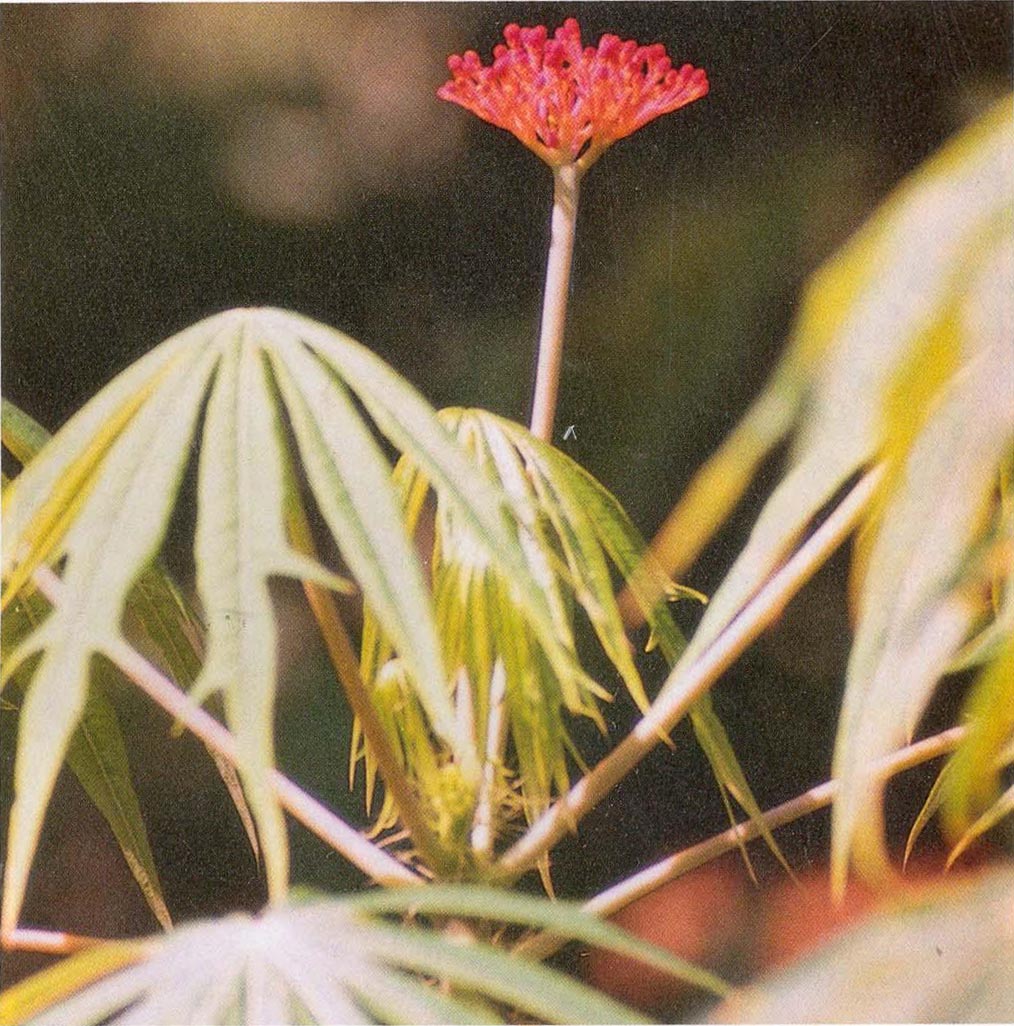
Botanical name: Jatropha multifida L. Sp. Pl. 1006. 1753.
Myanmar names: Hsay-makhan; Bein-hpo
English names: Coral Plant; Coral-bush; French Physic Nut; Small Physic Nut
Family: Euphorbiaceae
Burmese-Myanmar name in Nagathein
{hsé:ma.hkam:} ; {Bein:hpo}
Photos:
left -- habit with flowers
right -- habit
Click on the pictures to enlarge. |
 |
 |
Identification characters:
A large shrub or a small tree; younger stems glabrous, sap milky. Leaves
alternate, simple; stipules multifid stalks; petioles long, canaliculated;
laminae orbicular, palmatisect, 3- to 5-lobed, incised into many narrow entire
or lobulate segments, the bases rounded or cordate, the margins entire or
glandular semulated, the tips caudate-acuminate, 5- to 10-costate, reticulate,
glabrous, the upper surfaces green, the lower reddish green glaucous.
Inflorescences in terminal and axillary corymbose scorpioid cymes; peduncles
long; bracts subulate, minute, green. Flowers ebracteolate, pedicellate,
unisexual, monoecious, actinomorphic, pentamerous, hypogynous. Staminate flowers
8-12: Calyx synsepalous, 5-partite, companulate, the lobes ovate, petaloid,
orange-red. Corolla synpetalous, connate only at the bases, the petals 5,
obovate, cuneate, each base with a glandular disc, red or orange-red. Androecium
monadelphous, stamens 10, the anthers dithecous, ovoid, erect, dorsifixed,
extrorse, dehiscence longitudinal; intrastaminal disc entire; pistillode absent.
Pistillate flowers 2-3: solitary, axillary, calyx and corolla as in the
staminate flowers; intrastaminal disc urceolate. Pistil 1, ovary oblongoid,
3-carpelled, syncarpous, 3-loculed, the placentation axile, the ovule 1in each
locule, pendulous, micropyle carunculate, the style short, the stigmas 3, each
2-fid.Fruit a septifragal capsule, globose, 3-lobed, splitting into three
2-valved, 1 -seeded crustaceous cocci, dehiscing ventrally, green when
young, yellow or pale black when mature; seeds 3, carunculate, pale black,
endosperm fleshy.
Flowering period: Throughout the year
Fruiting period: Throughout the year
Distribution: Planted.
Parts used and uses: Leaf, fruit, seed, latex -- Haemorrhoids;
Common cold; Ascites. Leaf -- Scabies. Seed -- Aphrodisiac;
Abortifacient. Latex -- Common cold; Heals boils and pustules.
Main
Index of DB | Top
Contents of this page
KS-TMN 098
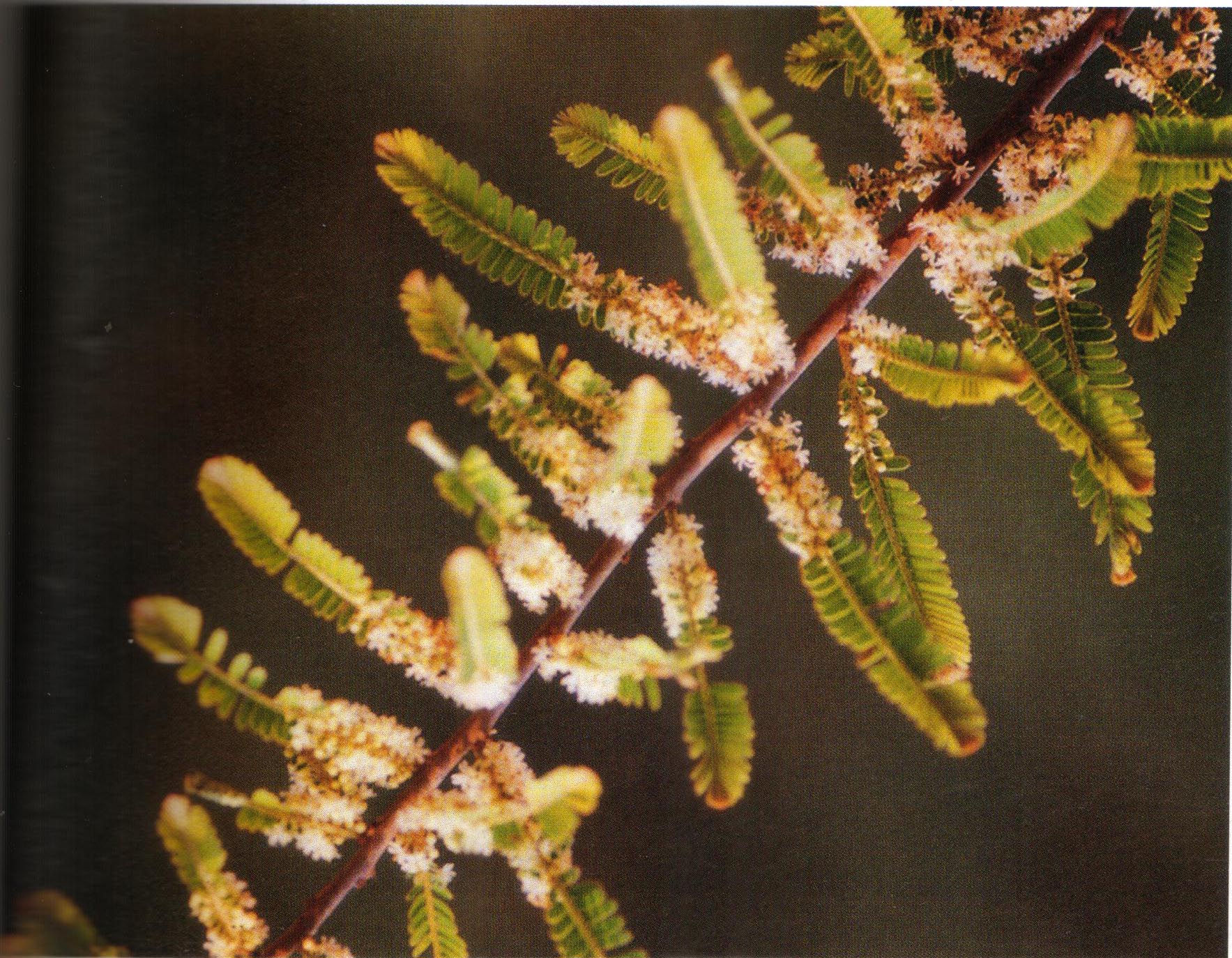
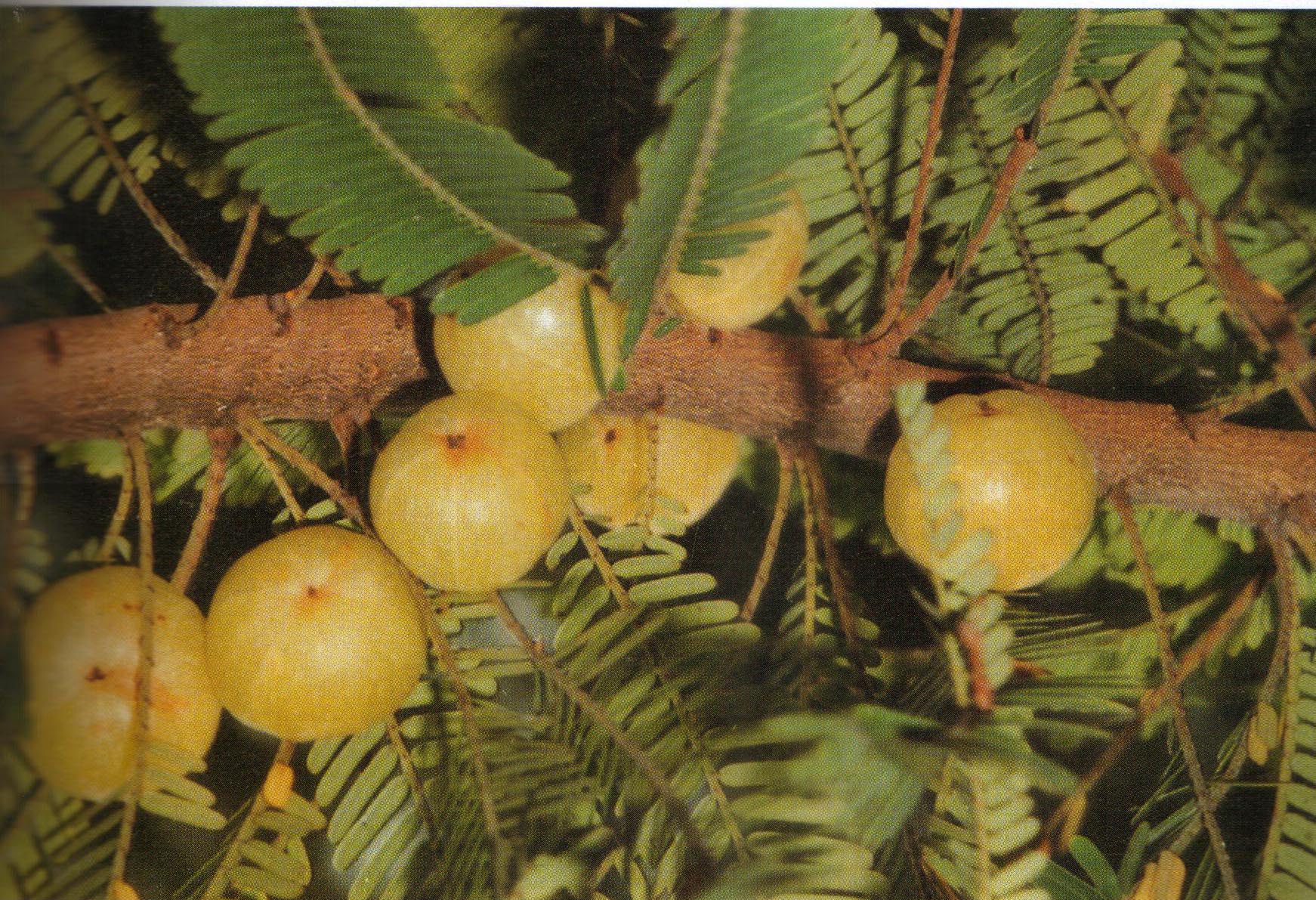
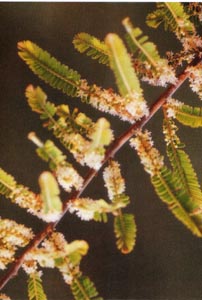
Botanical name: Phyllanthus emblica L. Sp. Pl. 982. 1753.
Myanmar names: Zibyu; Shabyu.
English names: Emblic Myrobalan tree; Eastern Goose- berry
Family: Euphorbiaceae
Burmese-Myanmar name in Nagathein
{hsi:hpru} ; {sha:hpru} Photos:
left -- habit with flowers
right -- habit with fruits
Click on the pictures to enlarge. |
 |
 |
Identification characters:
A middle sized tree, deciduous; trunks crooked, branches
slender, spreading, bark greenish gray, younger stems pubescent. Leaves alternatedistichous, closely and symmetrically set along the branch lets, appear
like the leaflets of a pinnate leaf, simple; stipules ovate, scarious;
subsessile; laminae linear-oblong or narrowly linear, the bases obtuse, the
margins entire, the tips acute, unicostate, reticulate, the surfaces glabrous.
Inflorescences axillary cymes, densely fasicled along the leaf bearing
branchlets, often on the naked portion below the leaves; bracts fimbriate.
Flowers ebracteolate, the staminates pedicellate, the pistillates subsessile,
unisexual, monoecious, actinomorphic, trimerous, hypogynous. Staminate flowers
numerous; calyx aposepalous, the sepals 6, oblong, obtuse, 2-seriate, greenish
yellow. Androecium monadelphous, stamens 3, the staminal column short, central,
the anthers dithecous, oblongoid, extrorse, dehiscence longitudinal;
intrastaminal disc obsolete; pistillode absent. Pistillate flowers few: calyx as
in the staminates. Petals absent; intrastaminal disc a lacerate cup. Pistil 1,
ovary globose, 3-carpelled, syncarpous, 3-locuted the placentation axile, the
ovules 2 in each locule, pendulous, micropyle carunculate, the styles 3, basally
connate, each 2-fid, the arms recurved, the stigmas 6, very large filiform
branches. Fruit fleshy with 3-bony 2-valved cocci, indehiscent, depressed
globose, obscurely 6-lobed; seeds 3-gonous, endosperm fleshy.
Flowering period: November - December
Fruiting period: January - July
Distribution: Common in mixed deciduous forests up to 4,000ft. Also cultivated.
Parts used and uses: Fruit -- Dysuria; Polyuria; Constipation; Dysentery; Hiccough.
Seed: Blennorrhoea
UKT: Medical terms from AHTD and other sources:
dys·u·ri·a n. 1. Painful or difficult urination.
pol·y·u·ri·a n. 1. Excessive passage of urine, as in
diabetes.
blennorrhoea -- 1. Rarely used
term for any
mucous
discharge,
especially from the
urethra or vagina.
2. In
ophthalmic usage,
was synonymous
with
conjunctivitis, but is now
obsolete. Synonym:
blennorrhagia,
myxorrhoea.
Origin: blenno-+ G. Rhoia, a flow (05 Mar 2000) --
http://cancerweb.ncl.ac.uk/cgi-bin/omd?blennorrhoea
UKT: The following is a bit of interesting information
www.lagosforum.com/interv.php?NR=326 on an African plant belonging to the
same genus as {zi:phru-thi:}
"Phytochemical analysis of phyllanthus amarus by
pharmacognosists at the Pharmacognosy Laboratory College of Medicine University
of Lagos (CMUL), Idi-Araba, shows that the whole plant is very bitter due to the
presence of a group of substances such as alkaloid, sesquiterpene, essential
oils, phyllanthine. These substances, according to the Senior Laboratory
Attendant, Mr. Isaac Adeleke, are generally referred to as having bitter
principle.
"Ihesie told The Guardian that local clinical trials of phyllanthus
amarus in ElizKaf Herbal Home shows that it possesses a very active blood
cleansing property, increases the elimination of waste from the blood and the
body through the kidneys, lungs, skin and liver. The blood purifying effects of
phyllanthus amarus, he said is enhanced by mixing equal quantity of it with
chickweed (Stellaria media). This mixture according to Ihesie, when used as an
infusion could help those suffering from weight related arthritis or rheumatism.
"Ihesie continued: "phyllanthus is one bitter tonic herb, which
helps in promoting the function of the liver. It is one of the herbs recommended
in most liver disorder especially, in acute phases of viral hepatitis jaundice.
Even after recovery from the disease, it is often taken orally for a long period
in order to help prevent the degenerative changes that might later occur in the
liver due to the viral infection. Such changes include the cirrhosis of the
liver or the cancer of the liver. "
Main
Index of DB | Top
Contents of this page
KS-TMN 101
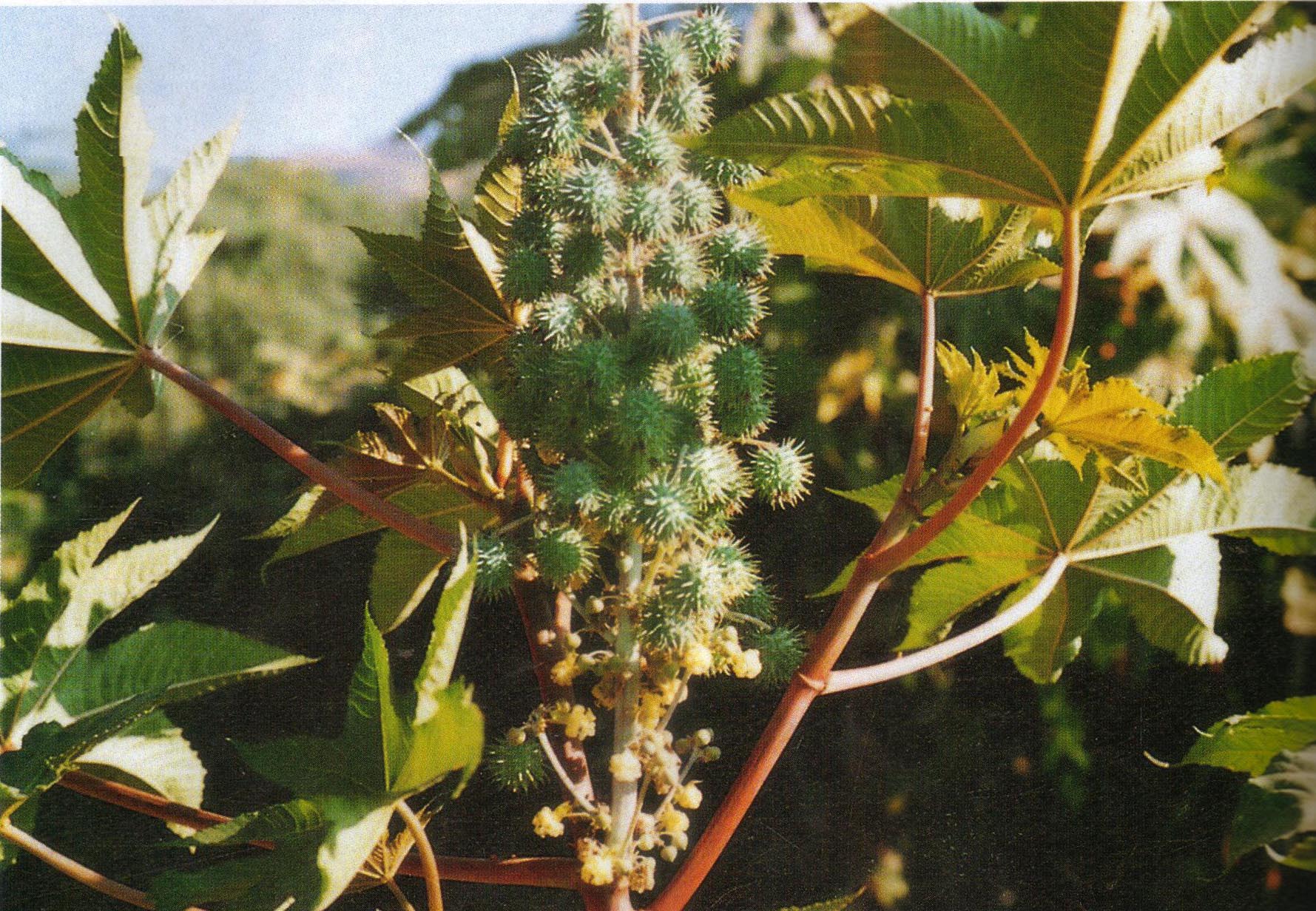
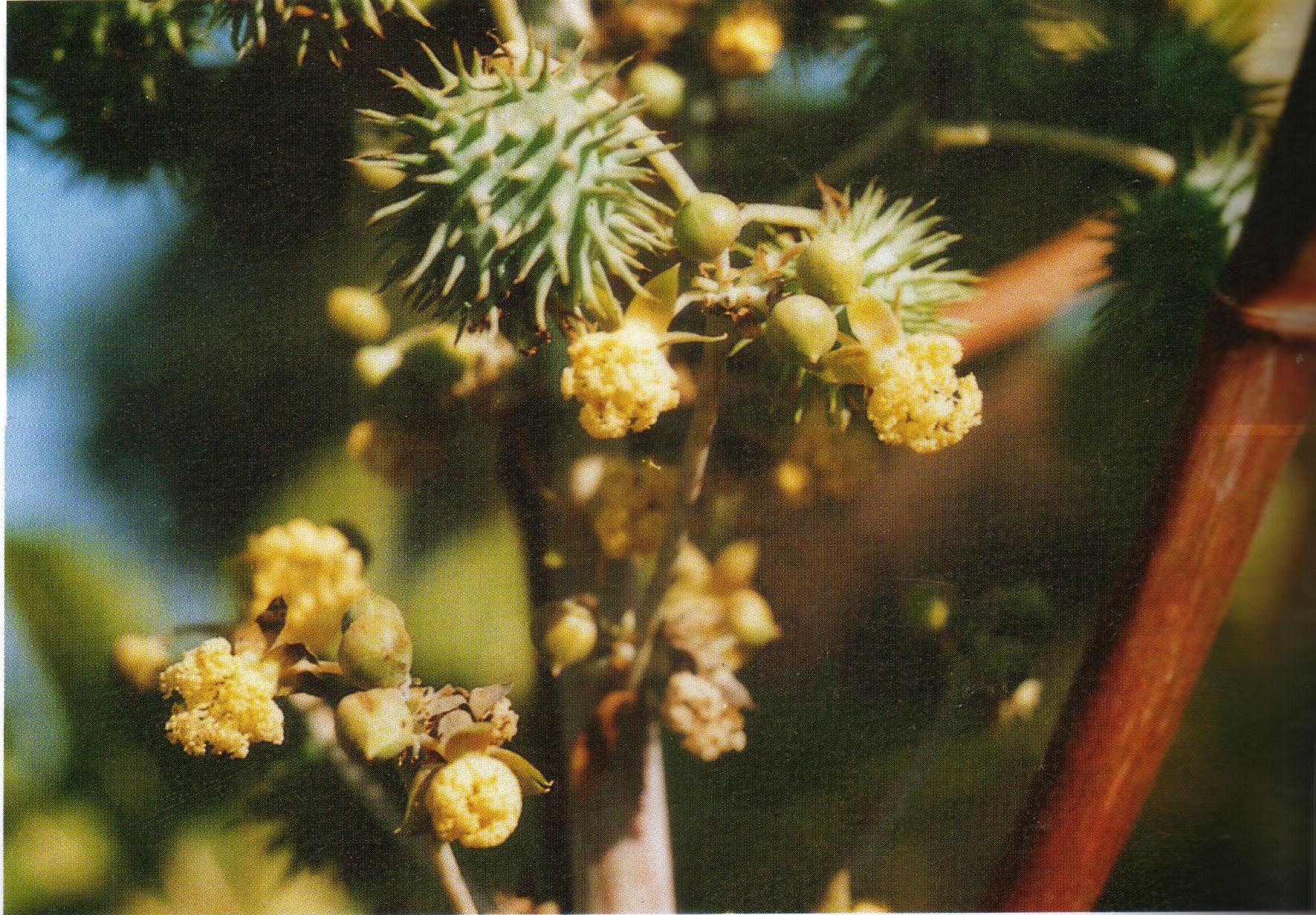
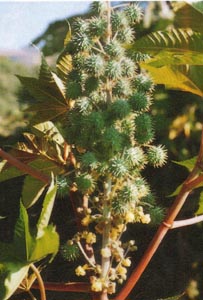
Botanical name: Ricinus communis L. Sp. Pl. 1007. 1753.
Myanmar name: Kyet-su
English names: Castor-oil Plant; Palma Christi.
Family: Euphorbiaceae
Burmese-Myanmar name in Nagathein
{krak-hsu a.kri:}
Photos:
left -- habit with flowers and fruits
right -- flowers and fruits
Click on the pictures to enlarge. |
|

|
Identification characters:
Evergreen small trees or annual herbs; stems cylindrical,
hollow, glabrous, the younger ones and the infloreseence axes red or green.
Leaves alternate, simple; stipules intrapetiolor, linear; petioles long, red or
green; laminae palmatipartite, 5-to 11-lobed, the lobes oblong to linear, the
bases peltate, the margins dentate or serrate, the tips acauminate, 5-to
11-costate, reticulate, the surfaces glabrous, membranous, green or
reddish-green. Inflorescences thyrsiform, terminal, the cymules 3- to
6-flowered; bracts ovate, persistent. Flowers ebracteolate, pedicellate,
unisexual, monoecious, the staminates borne on the lower part of the peduncle,
the pistillates on the upper part, apetalous, actinomorphic, hypogynous.
Staminate flowers: Pedicels short. Calyx aposepalous, the sepals 5, ovate,
glabrous, Androecium polyadelphous, the bundles 1-6, stamens numerous, the
filaments much branched, the anthers dithecous, cells distinct, globose,
divergent, basifixed, introrse, dehiscence longitudinal. Pistillode absent.
Pistillate flowers: Pedicels long. Calyx aposepalous, the sepals 5, ovate,
deciduous. Pistil 1, ovary ellipsoid, usually 3-carpelled, cyncarpous,
3-loculed, 4-carpelled and 4-loculed rare, the placentation apical, the ovule
one in each locule, pendulous, the styles 3, terminal, the stigmas bifid,
plumose. Fruit a dehiscent regma, spiny, globosely oblongoid, green, red
or reddish-green, dehiscing into 3, 2-valued coccae when ripe, the cocci
1-seeded; seeds ovoid, oblongoid or cuboid, testa crustaceous, variously
coloured, grey, brown, black, reddish brown or deep chocolate brown, the
markings or mottlings various, white or brown or wholly black and non mottled,
endosperm oily and fleshy.
Flowering and fruiting periods: October-May
Distribution: Commonly grows wild, naturalized or cultivated in Myanmar.
Parts used and uses: Seed -- Promotes spermatogenesis; Cathartic; Dysentery; Ascites; Colic;
Hyperlipaemia; Hepatitis; Carminative; Cough;
As an expectorant; Asthma; Backache; Head-ache; Orchitis; Haemorrhoids; Gouty
arthritis; Leprosy; Pyrexia
UKT: Medical terms from AHTD and other sources:
ca·thar·tic adj. 1. Inducing catharsis; purgative. n.
1. An agent for purging the bowels, especially a laxative. [Late
Latin catharticus from Greek kathartikos from kathairein to
purge; See catharsis ]
as·ci·tes n. pl. ascites 1.
An abnormal accumulation of
serous fluid in the abdominal cavity. [Middle English aschites from Late
Latin ascºt¶s from Greek askit¶s from askos belly,
wineskin] as·cit “ic ( -s¹t“¹k) adj.
hy·per·li·pe·mi·a n. 1. An excess of fat or lipids in
the blood. Also Called hyperlipidemia .
orchitis -- an inflammation of one or both of the
testicles, often
caused by infection --
www.pennhealth.com/ency/article/001280.htm
hem·or·rhoid n. 1. An itching or painful mass of dilated
veins in swollen anal tissue. 2. hemorrhoids The pathological condition
in which such painful masses occur. In this sense, also called piles .
py·rex·i·a
n. 1. Fever. [New Latin from Greek purexis from
puressein to have a fever from puretos fever; See pyretic ]
py·rex “i·al
or py·rex “ic adj.
Main
Index of DB | Top
Contents of this page
End of TIL file