by Kyaw Soe and Tin Myo Ngwé, Forest Resource Environment Development and
Conservation Association (FREDA), Series 1, 2004, ISBN 974-91986-0-3
Copied by U Kyaw Tun, and staff of TIL
for staff and students of TIL. Not for sale.
Main Index of DB |
Top
Index of Collected papers |
Agri.Dept.2000: Akshara |
Science names
| Family names
Contents of this page
UKT: Nagathein references are given to check the Burmese-Myanmar names. *
shows where there is no agreement in Burmese name but when the plant is
identifiable from botanical name.
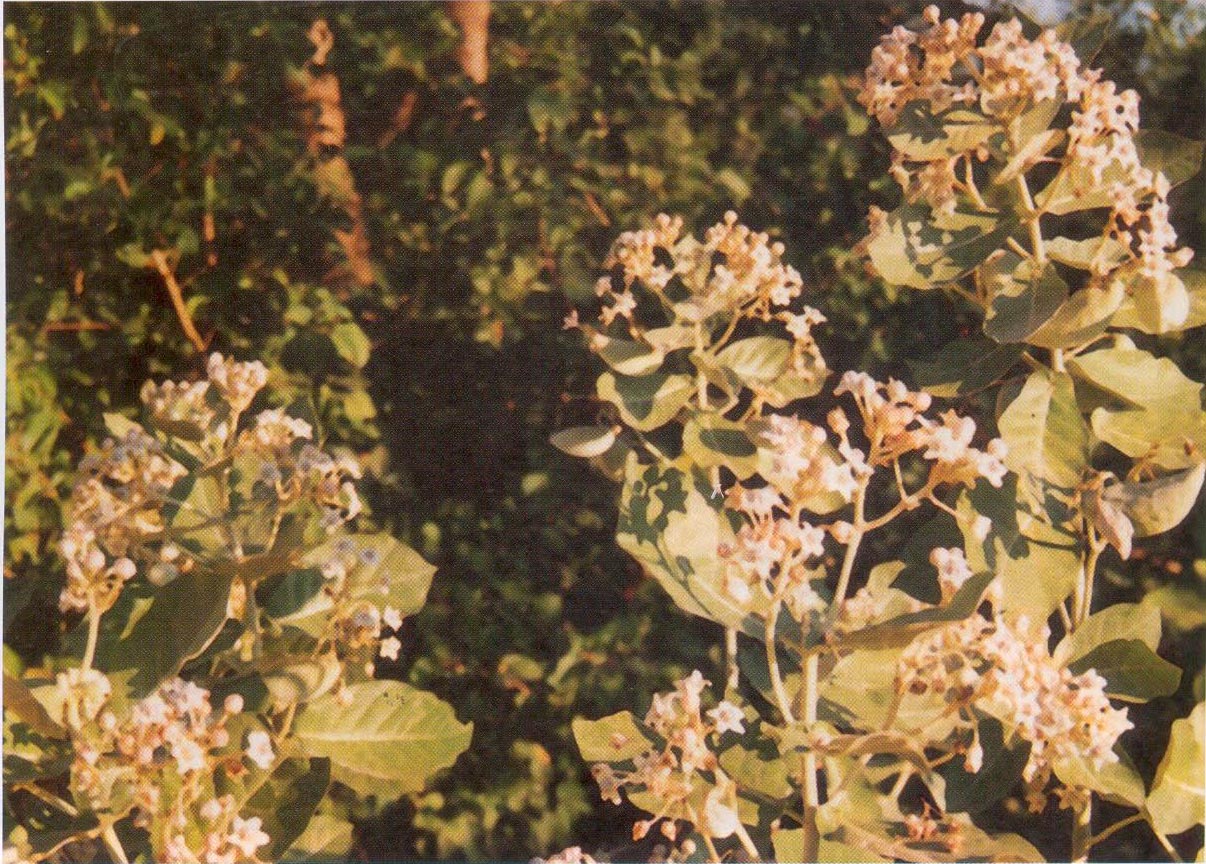
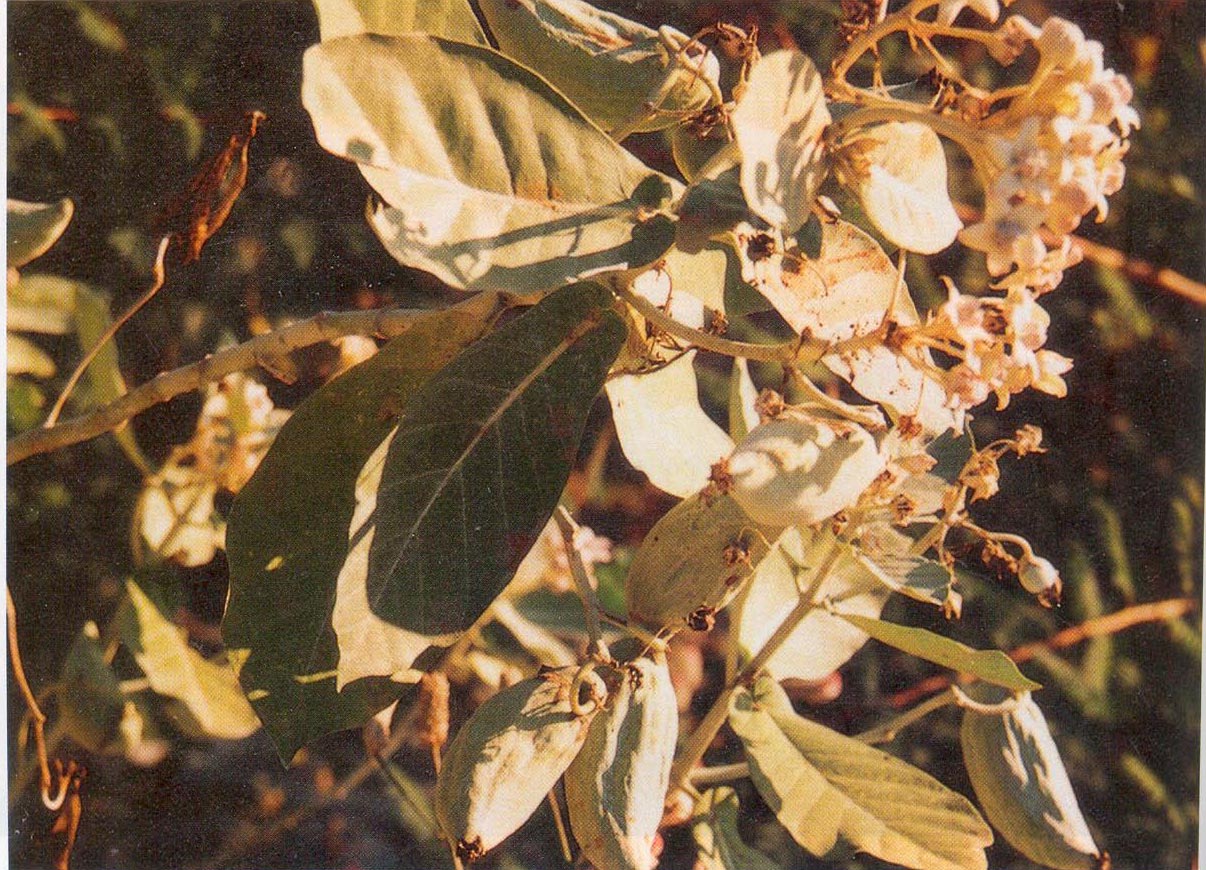
{ma.ro:kri:} Calotropois gigantea R.Br.
3-396*
{hkwé:htuk-nwèy} Dregea volubilis Benth. 1-304
{goan-hkyo} Leptadenia reticulata Wt.& Arn. 1-335
Main Index of DB |
Top
Index of Collected papers |
Agri.Dept.2000: Akshara |
Science names |
Family names
Contents of this page
KS-TMN 061
Botanical name: Calotropis gigantea R. Br. in Ait. Hort. Kew. ed. 2,11. 78. 1811.
Myanmar name: Mayoe-gyi
English names: Madar; Vercum Gigantic Swallow-wort
Family: Asclepiadaceae
Burmese-Myanmar name in Nagathein 3-396:
{ma.ro:kri:}
Photos:
left -- habit with flowers
right -- habit with fruits
Click on the pictures to enlarge.
|
 |
 |
Identification characters:
A tall shrub; bark pale, yellowish white, the younger stems terete with fine
appressed pubescence, sap milky. Leaves opposite, simple; stipules minute;
subsessile; laminae elliptic-oblong or obovate-oblong, the bases cordate,
sometimes amplexicaul, the margins entire, the tips acute, unicostate,
reticulate, thick, glaucous, the upper surfaces glabrous, the lower with cottony
tomentum. Inflorescences in axillary umbelliform cymes. Flowers with very long
pedicels, bisexual, actinomorphic, pentamerous, hypogynous. Calyx aposepalous,
the sepals 5, ovate, acute, pubescent. Corolla sunpetalous, 5-lobed, broadly
campanulate, the lobes deltoid-ovate, the tube short, terminated at its mouth
with a ring of corona, the corona-lobes narrow, shorter than the staminal
coulumn with 2 obtuse auricles just below the rounded uncut apex. Androecuim
monadelphous, stamens 5, the filaments united into a fleshy staminal column, its
apex united to the dilated part of the style to form a gynostegium, the anthers
dithecous, pollen granular forming pollinia or pollen-masses, 1 in each cell.
Pistil 1, the ovaries 2, each ovary 1-carpelled, 1-loculed, the ovules
pendulous,, imbricated in several series on a ventral and parietal palcenta, the
styles 2, the stigma 5-lobed. Fruit a follicetum of 2 follicles (one aborts);
seeds broadly ovoid, compressed, with a tufted micropylar coma of long silky
hairs, endosperm thin and small.
Flowering period: March-July
Fruiting period: May-August
Distribution: Commonly grows wild throughout Myanmar
Parts used and uses: Whole plant: root, leaf, flower, fruit and latex
-- Flatulence; Diarrhoea; Coughs; Splenomegaly; Haemorrhoids;
Abdominal tumours; Intestinal colicp; Pruritis; Sores: Leprosy. Root
-- Antidote for snake bites and scorpion stings; Antidote for various poisons;
Oedema; Muscle spasticity in legs; Haematinic; Elephantiasis; Eye diseases; Skin
diseases; Leprosy. Root bark -- Tooth-aches.
Leaf -- Paralysis; Arthritis; Oedema; Cough; as an expectorant; Pneumonia in
children; Flatulence in children; Ear-ache; Antidote for snake bite;
Elephantiasis. Stem -- Internal haemorrhoids . Flower -- Cholera; Lithiasis.
White flowers -- Antisialagogue; For the treatment of cough, asthma, loss of
appetite . Latex -- Brain disease; Oliguria; Epilepjsy; Antidote for snake bite;
Antirabies; Knee-ache; As an expectorant; Prevents freckle formation
Main Index of DB |
Top
Contents of this page
KS-TMN 062
Botanical name: Dregea volubilis Benth. ex Hook. f. Fl. Brit. Ind. iv. 46. 1883.
Myanmar names: Gwedauk-nwe
English name:
Family: Asclepiadaceae
Burmese-Myanmar name in Nagathein 1-304:
{hkwé:htauk-nwèy}
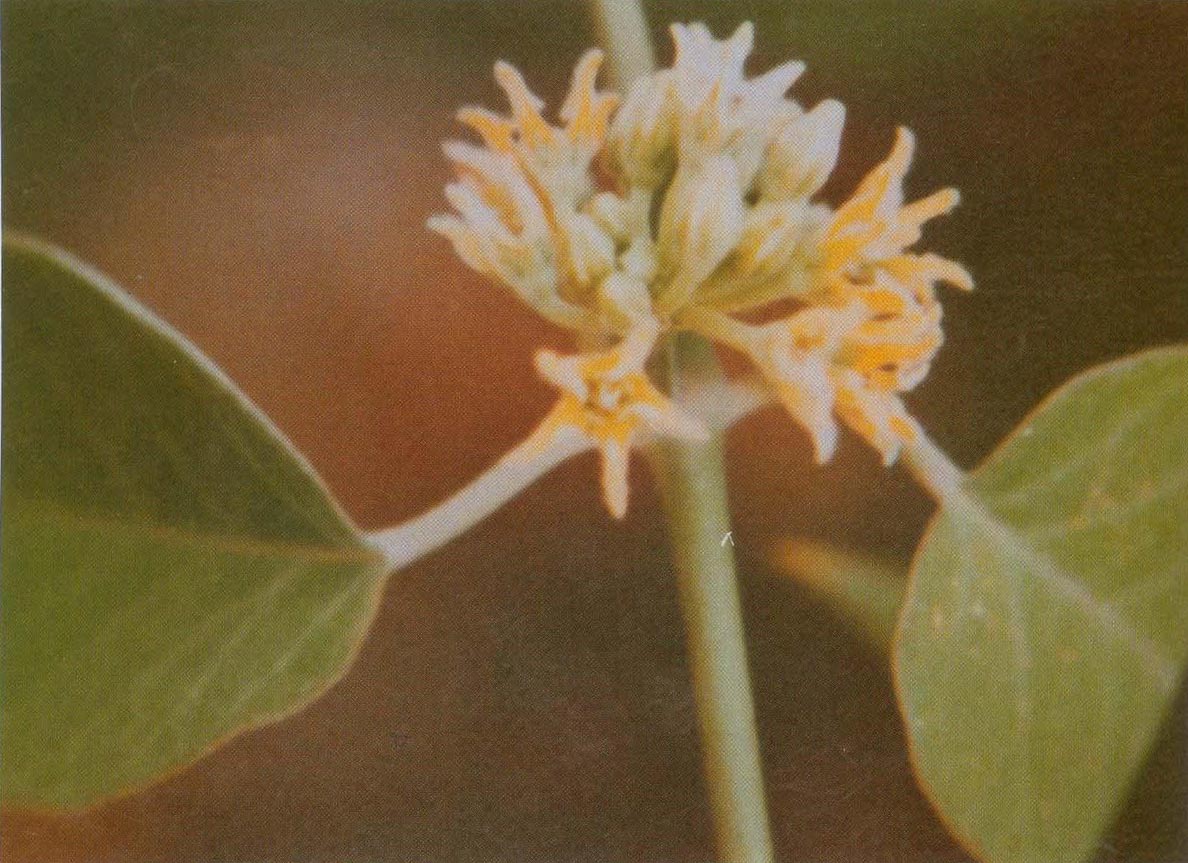
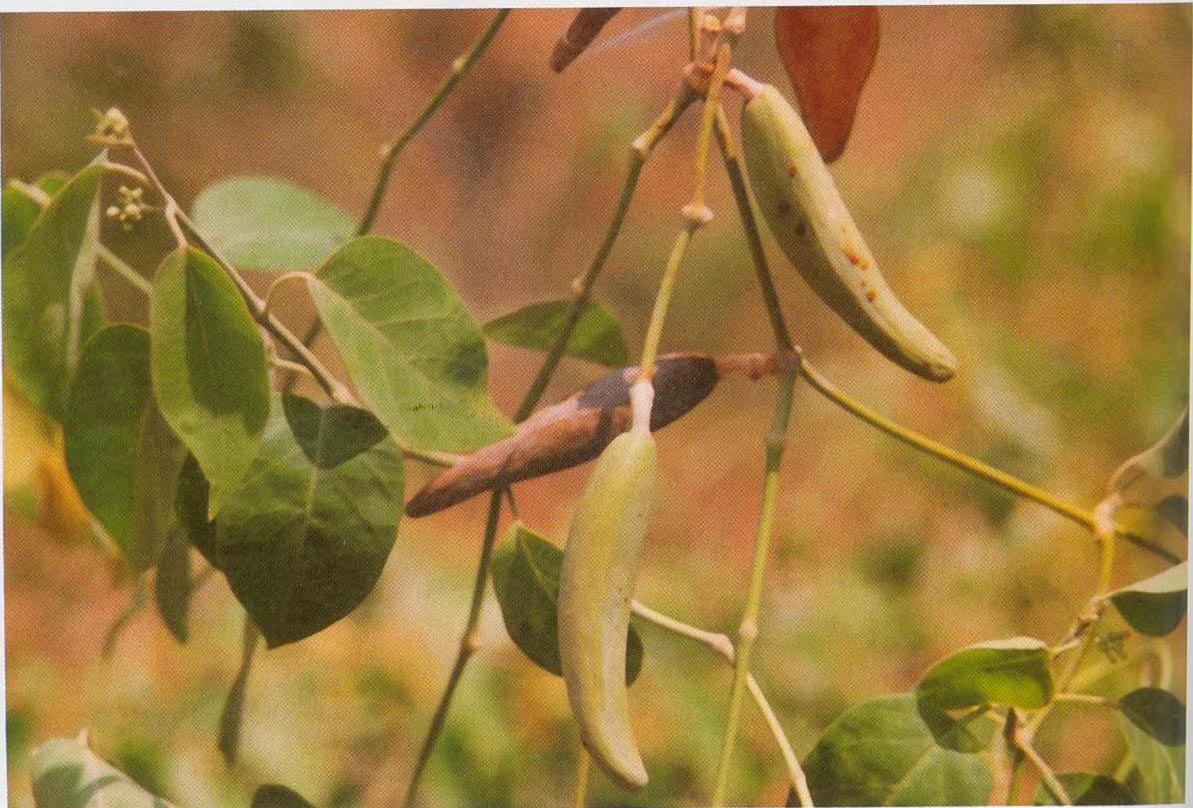
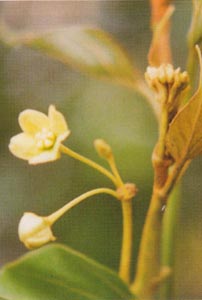
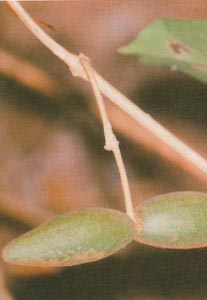
Photos:
left -- habit with flowers
right -- habit with fruits
Click on the pictures to enlarge.
|
 |
 |
Identification characters:
A tall stout shrub; stems lianous, the younger ones green, smooth, the older
branches ash-coloured, glabrous. Leaves opposite and distinchous, simple;
stipules minute; petioles long; laminae broadly ovate or suborbicular, the bases
rounded or cordate, the margins entire, the tips acuminate, unicostate,
reticulate, the surfaces glabrous or puberulent. Inflorescences in axillary
umbelliform cymes, many-flowered, subglobose, pendant; peduncles longer than
pedicels. Flowers pedicellate, bisexual, actinomorphic, pentamerous, hypogynous.
Calyx synsepalous, 5-sect, the lobes ovate-oblong. Corolla synpetalous, 5-lobed,
the lobes broadly triangular-ovate, overlapping to the right, the tubes short,
greenish; corona staminal, the lobes large, fleshy, spreading, cuspidate,
obliquely truncate at top, the inner cusp minute, incumbent on the anthers tops.
Androecium monadelphous, stamens 5, the filaments united into a fleshy very
short staminal column, the apex united to the dilated part of the style
(dome-shaped ) to form a gynostegium, the anthers dithecous, the tips broadly
ovate-oblong, pollen granular forming pollinia or pollen masses, pollinia
oblongoid, 1 in each cell. Pistil 1,2-carpelled, ovaries 2, each ovary
1-carpelled, 1-loculed, the ovules pendulous, imbricated in several series on a
ventral and parietal placenta, the style 2, short, the stigma 1, dome-shaped.
Fruit a follicetum of 2 follicles (one aborts), ellipsoid, rugosely striated;
seeds broadly ovoid, smooth, with a tufted micropylar coma of long silky hairs,
endosperm thin and small.
Flowering period: May-June
Fruiting period: June-September
Distribution: Commonly grows wild in warmer plains.
Parts used and uses: Haematemesis; Aphrodisiac; Sore throat; Abdomial tumours;
Appetizer; Carminative; Heals carbuncles; Eczema; Asthma; Antidote for posion;
Possess haematinic effect; Infections. Leaf -- Opthalmia; Herpes; Colds; Heals carbuncles
Main Index of DB |
Top
Contents of this page
KS-TMN 065
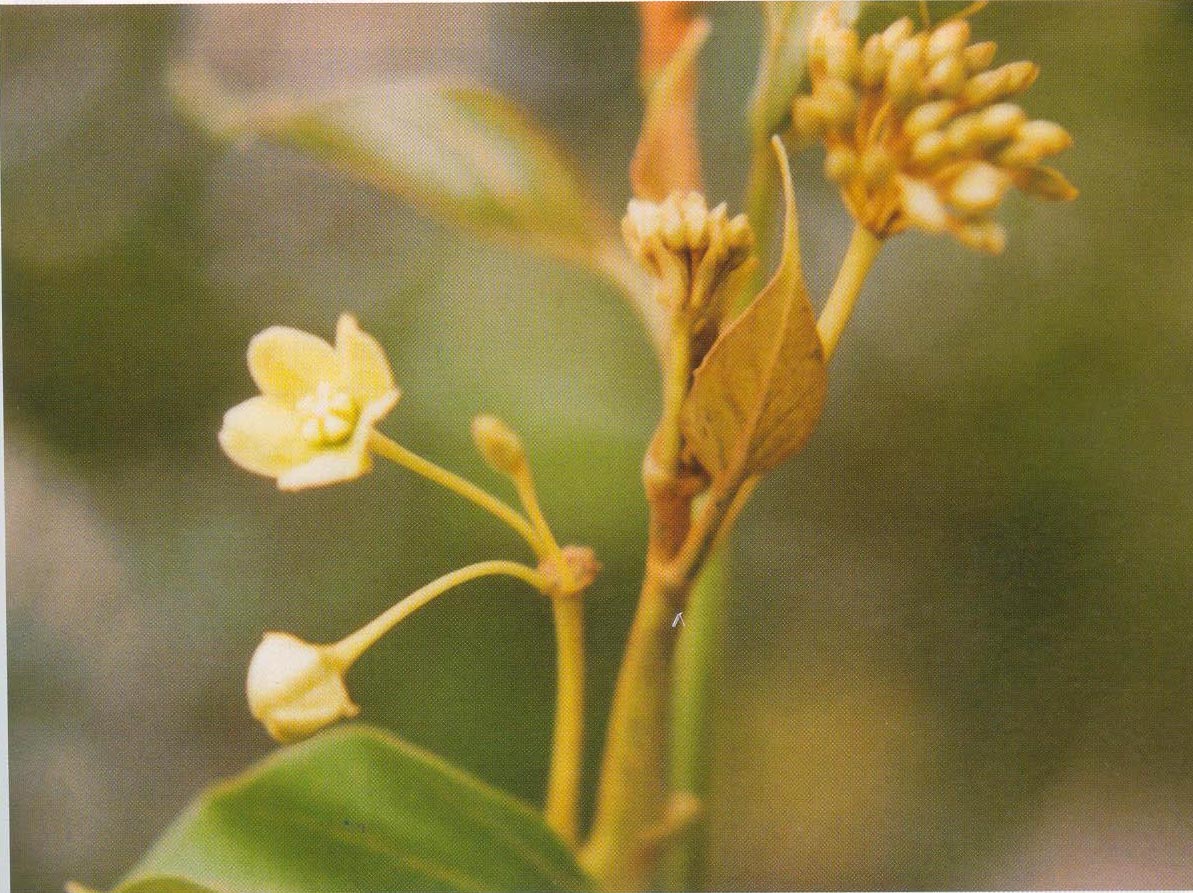
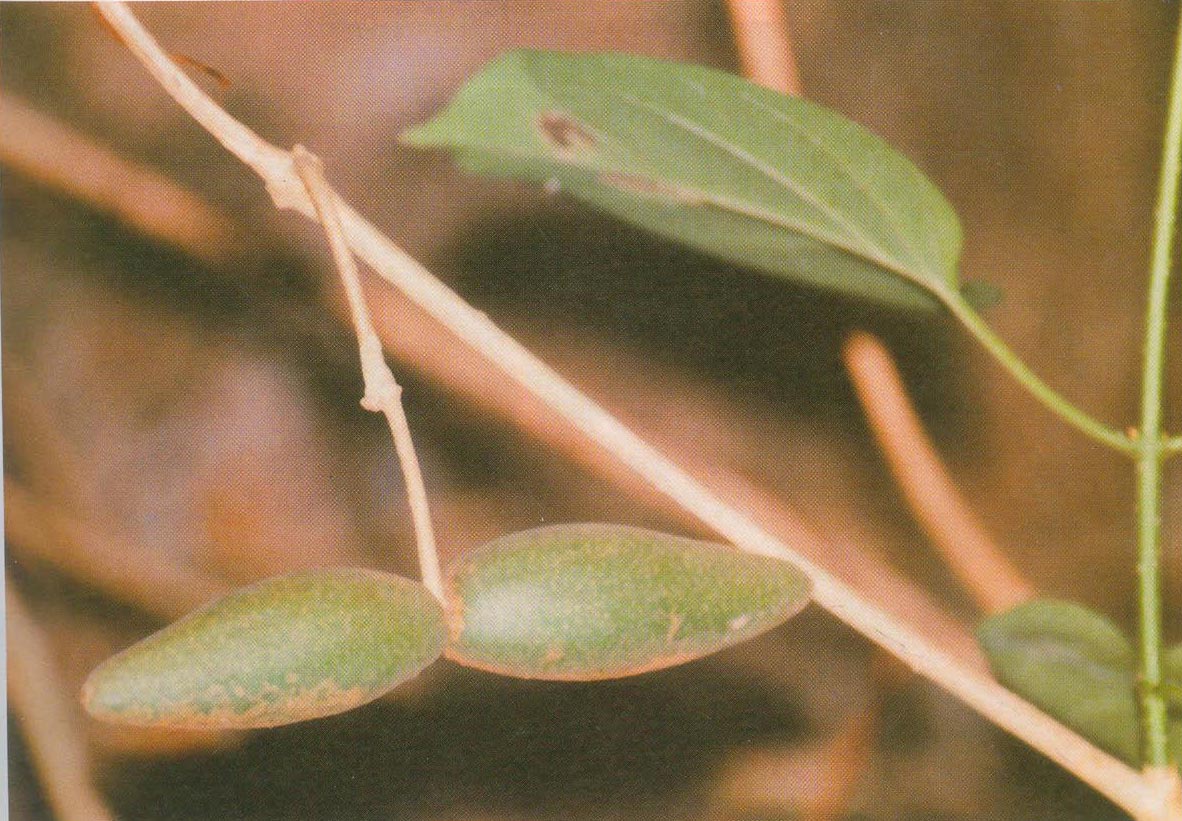
Botanical name: Leptadenia reticulata Wt. & Arn. in Wight Contril 47. 1834.
Myanmar name: Gone-cho
English name:
Family: Asclepiadaceae
Burmese-Myanmar name in Nagathein 1-335:
{goan-hkyo}
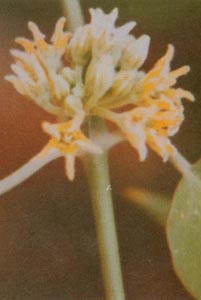
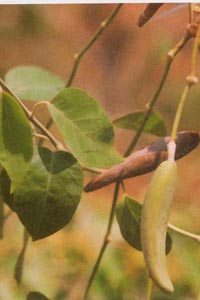
Photos:
left -- flowers
right -- habit with fruits
Click on the pictures to enlarge.
|
 |
 |
Identification characters:
A twining shrub; stems lianous, much branched, leafy, the younger ones tereted,
hoary-puberulous, bark corky, sap milky. Leaves opposite, simple; stipules
minute; petioles puberulous; laminae broadly ovate or ovate-oblong, the bases
rounded or cuneate, the margins entire, the tips acute to retuse, unicostate,
reticulate, the upper surfaces glabrous, the lower with hoary pubescence,
coriaceous. Inflorescences umbellform cymes, axillary, the cymes solitary or in
pairs, many-flowered; peduncles hoary-puberulous. Flowers ebracteate,
ebracteolate, pedicellate, bisexual, actinomorphic, pentuncles hoary-puberulous.
Calyx synsepalous, turbinate, shortly 5-lobed, the lobes obtuse. Corolla
synpetalous, 5-lobed, rotate, the tube short, the lobes thick, ovate-oblong, the
margins revolute, pubescent, greensih yellow; corona double, corolline corona of
5 quadrate truncate fleshy lobes at the sinuses, staminal corona minute,
annular, close to the staminal column at the base of the anther dithecous,
globose, wihtout terminal appendages, incumbent on the style top, pollen
granular forming pollinia or pollen-masses, pollinia 1 in each cell, erect, the
tips pellucid. Pistill 1, ovaries 2, each ovary 1-carpelled, 1-loculed, the
ovules pendulous, imbricated in several series on a ventral and parietal
placenta, the styles 2, the stigma 5-lobed. Fruit a follicetum of 2 follicles
(one aborts), straight, turgid, smooth, beaked, woody; seeds narrowly ovoid,
with a tufted micropylar coma of long silky hairs, endosperm thin and small.
Flowering period: April-July
Fruiting period: August-September
Distribution: Grows wild, common in dry zone plains
Parts used and uses: Root -- Apthaea; Appetiser; Aphrodisiac;
Clears voice; Expectorant; Carminative;
Gonorrhoea; Paralysis; Abdominal tumours; Flatulence; Indigestion; Cough;
Pyrexia; Antidote for poisons; For longevity of life.
Main Index of DB |
Top
Contents of this page
End of TIL file