Update:
2012-12-17 06:36 AM +0630
TIL
Medicinal Plants of Myanmar
Acanthaceae
by Kyaw Soe and Tin Myo Ngwé, Forest Resource Environment Development and
Conservation Association (FREDA), Series 1, 2004, ISBN 974-91986-0-3
Copied by U Kyaw Tun, and staff of TIL
for staff and students of TIL. Not for sale.
Main Index of DB |
Top
Index of Collected papers
Agri.Dept.2000: Akshara |
Science names |
Family names
Contents of this page
UKT: Nagathein references are given to check the Burmese-Myanmar names. *
shows where there is no agreement in Burmese name but when the plant is
identifiable from botanical name.
{hka.ra} ; {ré-hka.ra}
Acanthus ilicifolius L. 1-241
{mu.ya:kri:} ; {ma.ya:kri:}
Adhatoda vasica Nees. 2-428
{hsé:hka:kri:} ; {nga.roap-hka:}
Andrographis paniculata Nees. 1-451
{leip-sa-rwé:} ; {leip-tha-rwé:}
Barleria prionitis L. 3-271*
{htau:la.pat}
Rhinacanthus nasuta (L.) Kurz. 2-059
Main Index of DB |
Top
Index of Collected papers |
Agri.Dept.2000: Akshara |
Science names |
Family names
Contents of this page
KS-TMN 027
|
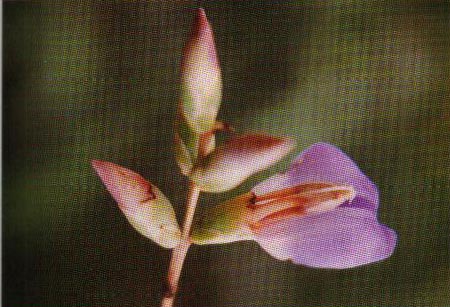
Botanical name: Acanthus ilicifolius L. Sp. Pl. 639. 1753
Myanmar names: Khayar, Ye-Khayar
English name: Sea Holly
Family: Acanthaceae
Burmese-Myanmar name in Nagathein 1-241:
{hka.ra} ; {ré-hka.ra}
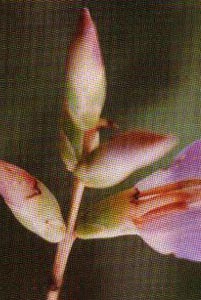
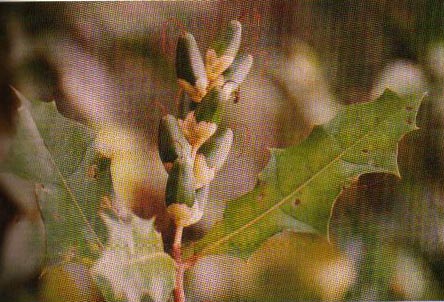
Photos:
left -- flowers
right -- habit with fruits
Click on the pictures to enlarge.
|
 |
 |
Identification characters:
An erect shrub; branches sparce, the younger stems terete, glabrous. Leaves
opposite and decussate,simple; stipules spinous; petioles short; laminae oblong
or elliptic, pinnaatifid to pinnatipartite, the bases, the margins and the tips
spinous, unicostate, reticulate, the surfaces glabrous, coriaceous.
Inflorescences in terminal spicate cymes, elongate, laxly flowered; bracts
ovate, acute, glabrous. Flowers bracteolate, the bracteoles broadly lanceolate,
sessile, bisexual, zygomorphic, hypogynous. Calyx synsepalous, 4-sect, the two
outer lobes larger, elliptic, the two inner ones broadly lanceolate. Corolla
synpetalous, bilabiate, blue,the upper lip obsolete, the lower lip elongate
obovate, obtusely 3-lobed, pubescent within. Androecium polyandrous, stamens 4,
didynamous, shorter than the lower lip, epipetalous, the filaments stout,
attached at the base of the corolla tube, curved below the anthers, exserted,
the anthers monothecous, oblongoid, spurred, dorsifixed, extrorse, dehiscence
longitudinal, necteriferous disc absent. Pistill, ovary ovoid, 2-carpelled,
syncarpous, 2-loculed, the placentation axile, the ovules 2 in each locule, the
style slender, the stigma bifid. Fruit a loculicidal capsule, oblongoid,
compressed, chestnut brown; seeds 4, subglobose, compressed, glabrous, non-endospermic.
Flowering and fruiting periods: April - August
Distribution: Grows wild at the edges of the Mangrove forests in Myanmar.
Parts used and uses: Galactagogue; As an expectorant; Indigestion;
Flatulence; Neuralgia; Biliousness; Oedema. Leaf - Arthritis; Neuralgia.
Young stem or leaf -- Antidote for snake venom. Thorn -- Antidote
for snake bite
Main Index of DB |
Top
Contents of this page
KS-TMN 029
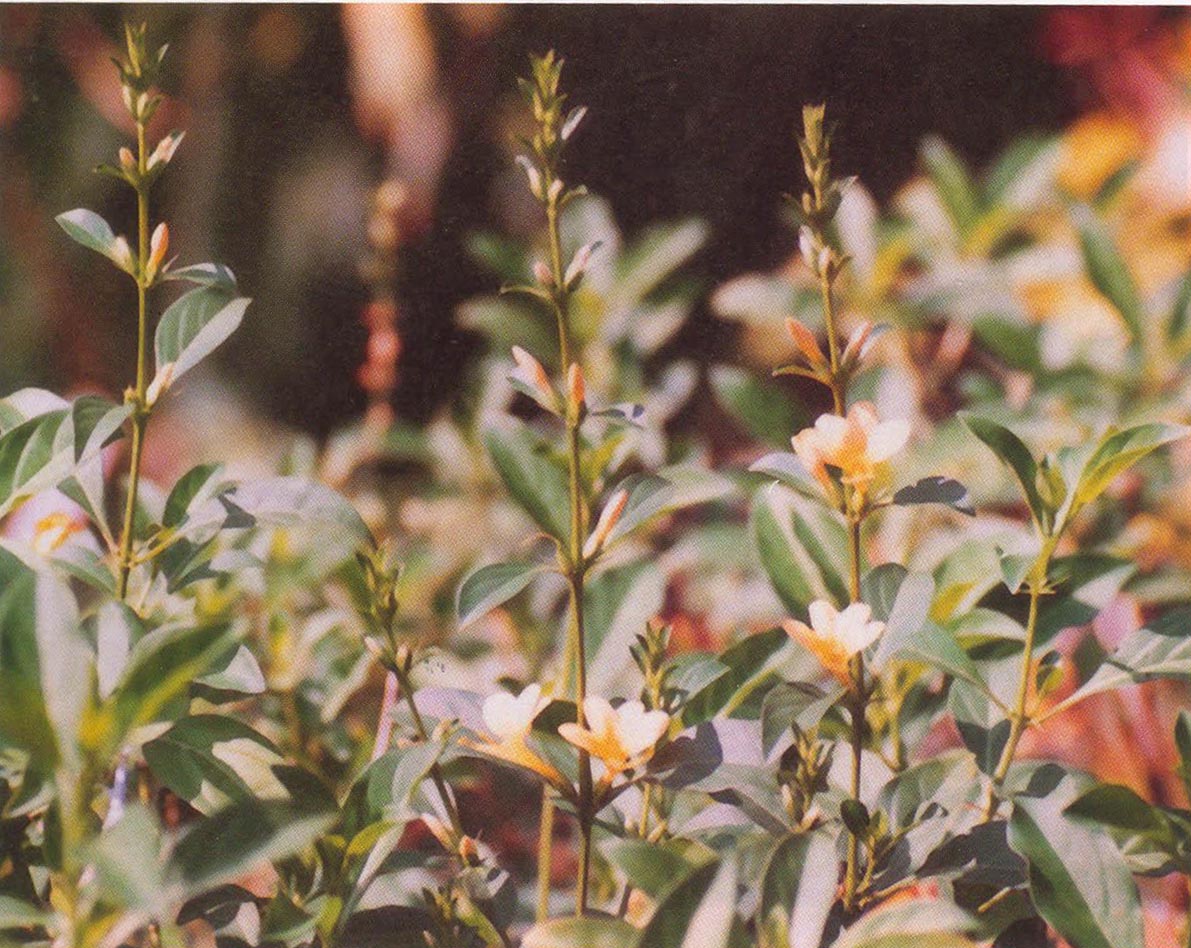
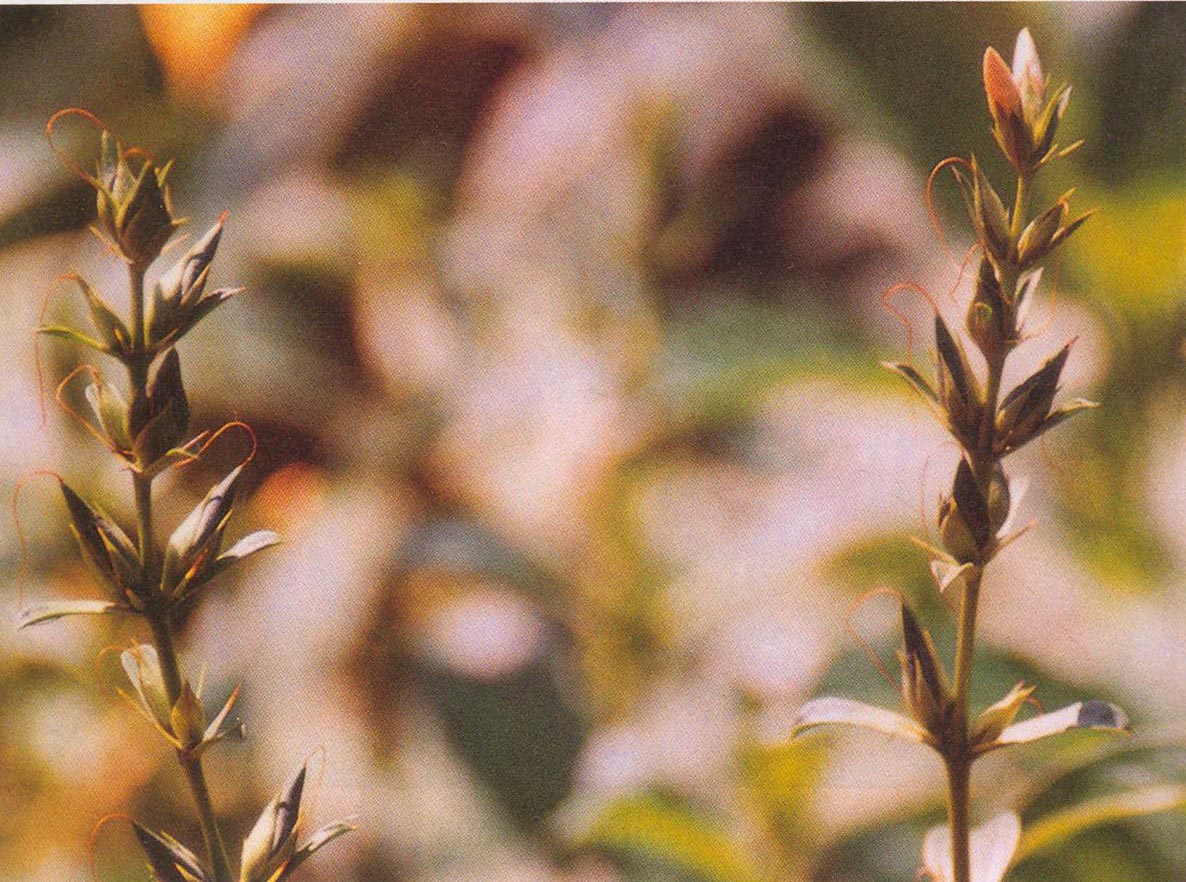
{mu.ya:kri:} ; {ma.ya:kri:} Adhatoda vasica Nees. 2-428
|
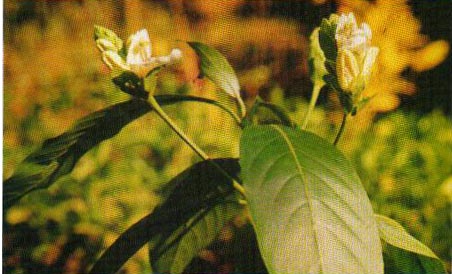
Botanical name: Adhatoda vasica Nees. in Wall. Pl.as. Rar.111, 103. 1832.
Myanmar names: Muyar-gyi; Mayar-gyi
English name: Malabar nut Tree
Family: Acanthaceae
Burmese-Myanmar name in Nagathein 2-428:
{mu.ya:kri:} ; {ma.ya:kri:}
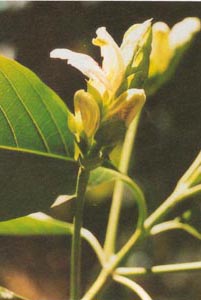
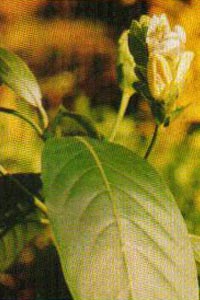
Photos:
left -- habit with flowers
right -- habit with flowers and young fruits
Click on the pictures to enlarge.
|
|
|
Identification characters:
A perennial dense shrub; bark yellowish, the younger stems terete, pubescent,
unarmed, the nodes tumid. Leaves opposite and decussate, simple; exstipulate;
petiolate; laminae elliptic-lanceolate, the bases acute, the margins entire, the
tips acuminate, unicostate, reticulate, the surfaces glabrous. Inflorescences in
axillary spicate cymes, densely flowered; peduncles short; bracts broadly ovate,
foliaceous. Flowers bracteolate, pedicellate, bisexual, zygomorphic, pentamerous,
hypogynous. Calyx synsepalous, campanulate, 5-sect, the lobes oblong-lanceolate,
imbricate. Corolla synpetalous, 5-lobed, bilabiate, the tubes cylindrical, the
upper half laterally inflated, constricted above the middle, the upper lips
2-fid, erect, the lower lips 3-fid, spreading, white, throat with pinkish
stripes. Androecium polyandrous, stamens 2, epipetalous, the anthers dithecous,
sagittate ,the lobes divergent at the base, the lower lobe apiculate at the
base, introrse ,dehiscence longitudinal, disc annular. Pistil 1, ovary ovoid,
2-carpelled, syncarpous, 2-loculed, the placentation axile, the ovules 2 in each
locule, the style filiform, the stigma 2-lipped. Fruit a loculicidal capsule,
clavately oblongoid, dorsi-ventrally flattened; seeds subglobose, 2 per fruit, 1
aborted, tubercular-verrucose, glabrous, non-endospermic.
This species propagate mainly by cuttings.
Flowerings period: November - March
Fruiting period: January - March
Distribution: Throughout the Myanmar plains upto 4000ft.
Parts used and uses: Whole plant -- (young plant): Jaundice; Opthalmia; Mucolytic.
(whole plant): Carminative; For good voice; Good for heart.
Roots, leaves, flowers, fruits and seeds: Expectorant; Biliousness.
Root: Cough; Mucolytic; Asthma;
Epiphora; Epistaxis; Stomatitis; Haematemesis; Antidote for scorpion
stings; Leucorrhoea; Tooth-ache. Leaf: Biliary infection; Haematemesis; Asthma; Leucorrhoea.
Main Index of DB |
Top
Contents of this page
KS-TMN 030
|
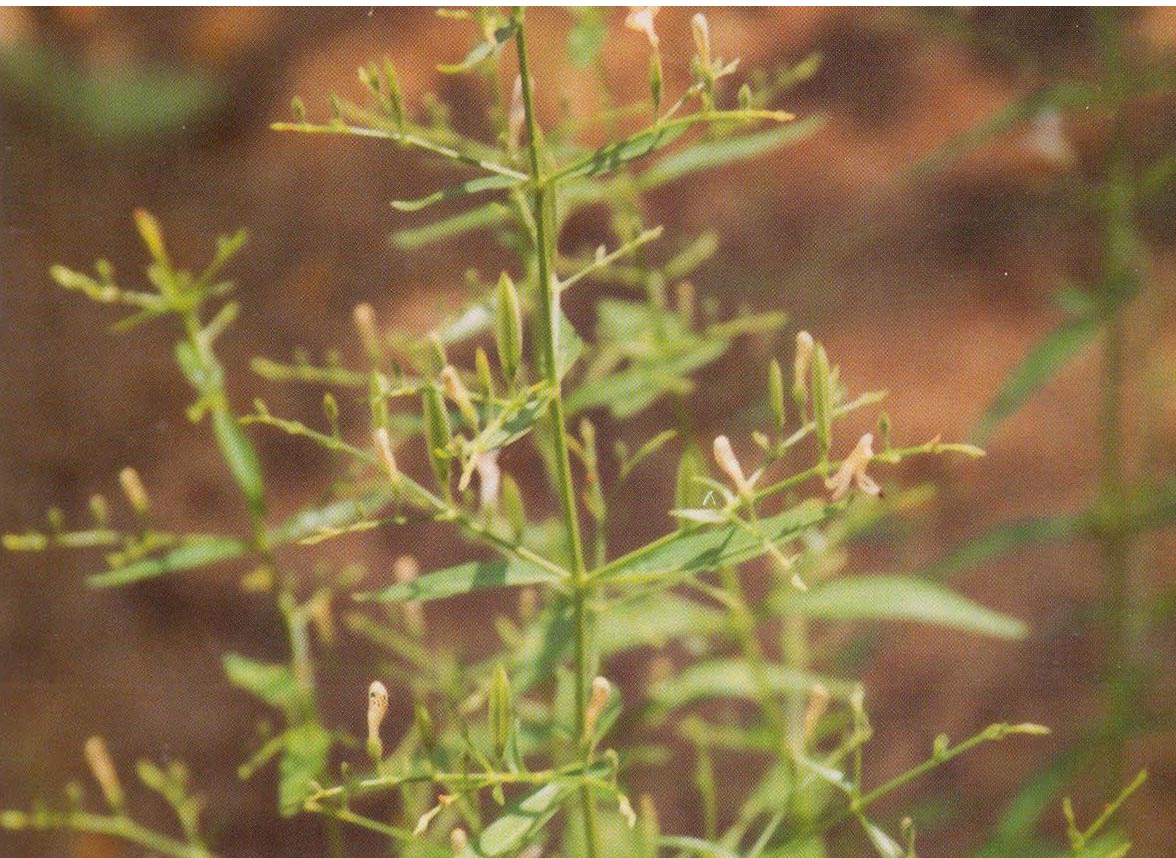
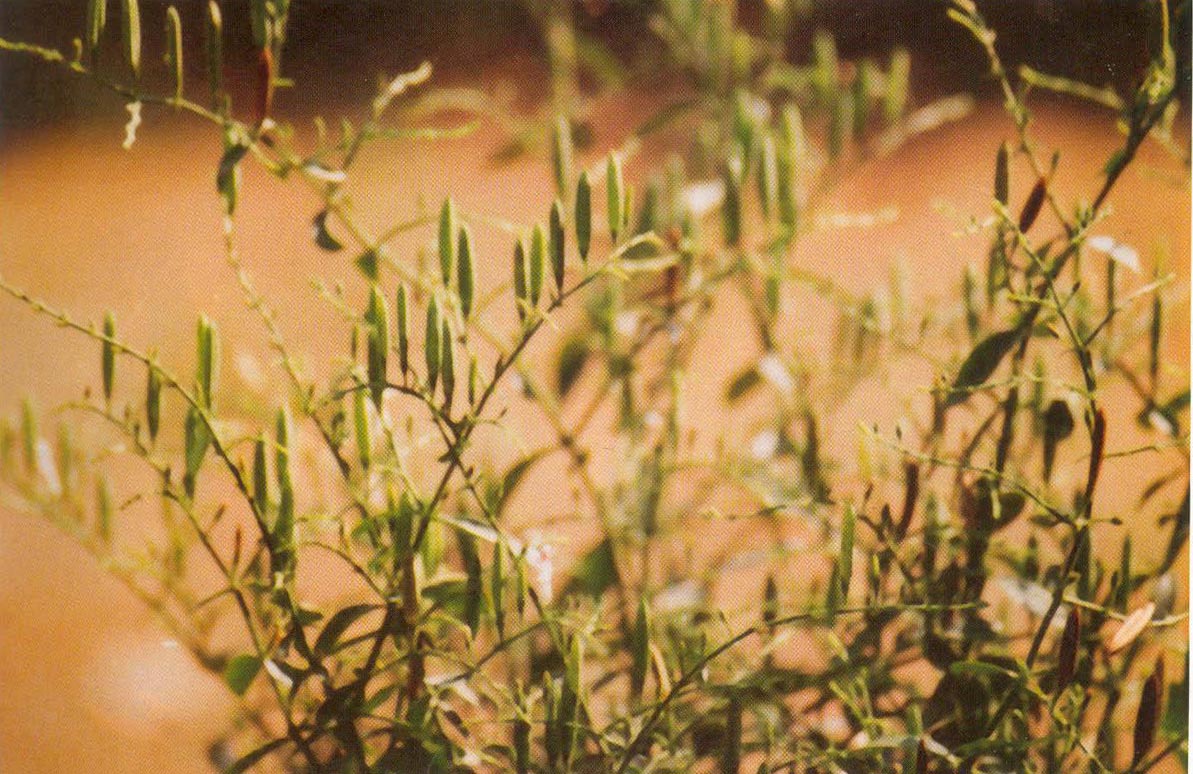
Botanical name: Andrographis paniculata Nees. in Wall. PL. As.Rar.
111, 116. 1832.
Myanmar names: Hsay-khar-gyi; Nga-yoke-khar.
English name: Creat
Family: Acanthaceae
Burmese-Myanmar name in Nagathein 1-451:
{hsé:hka:kri:} ; {nga.roap-hka:}
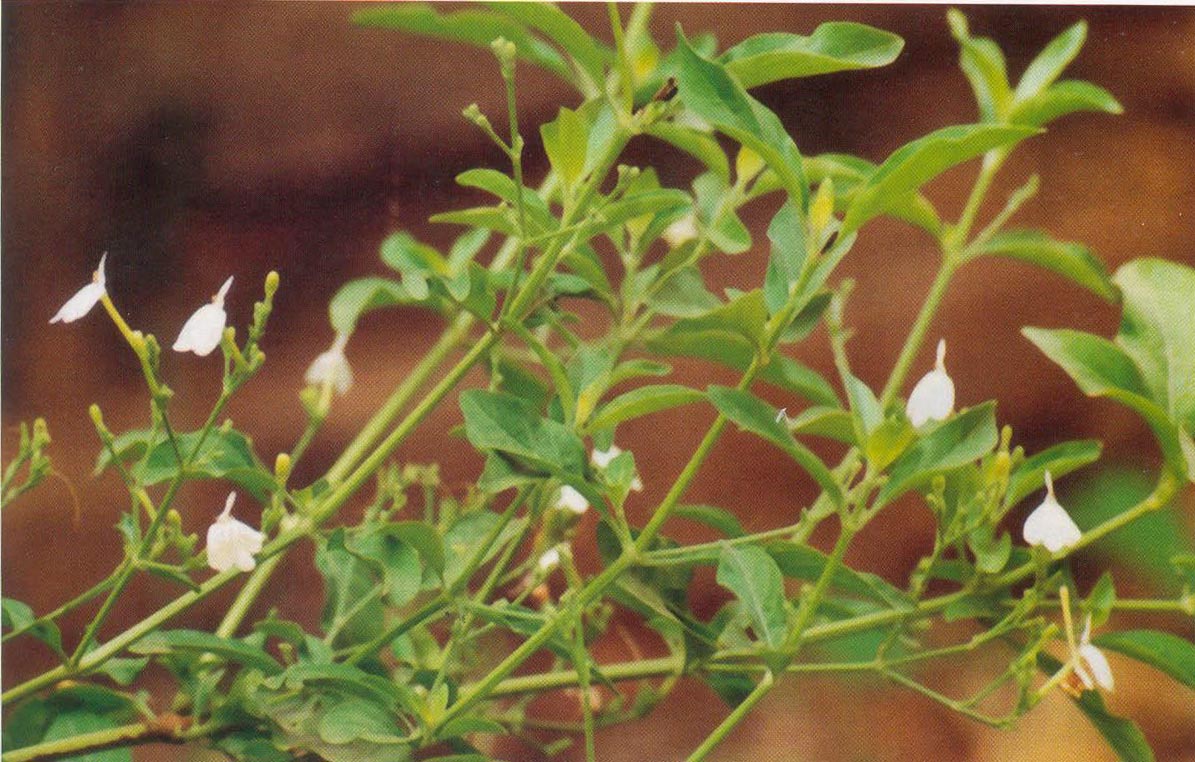
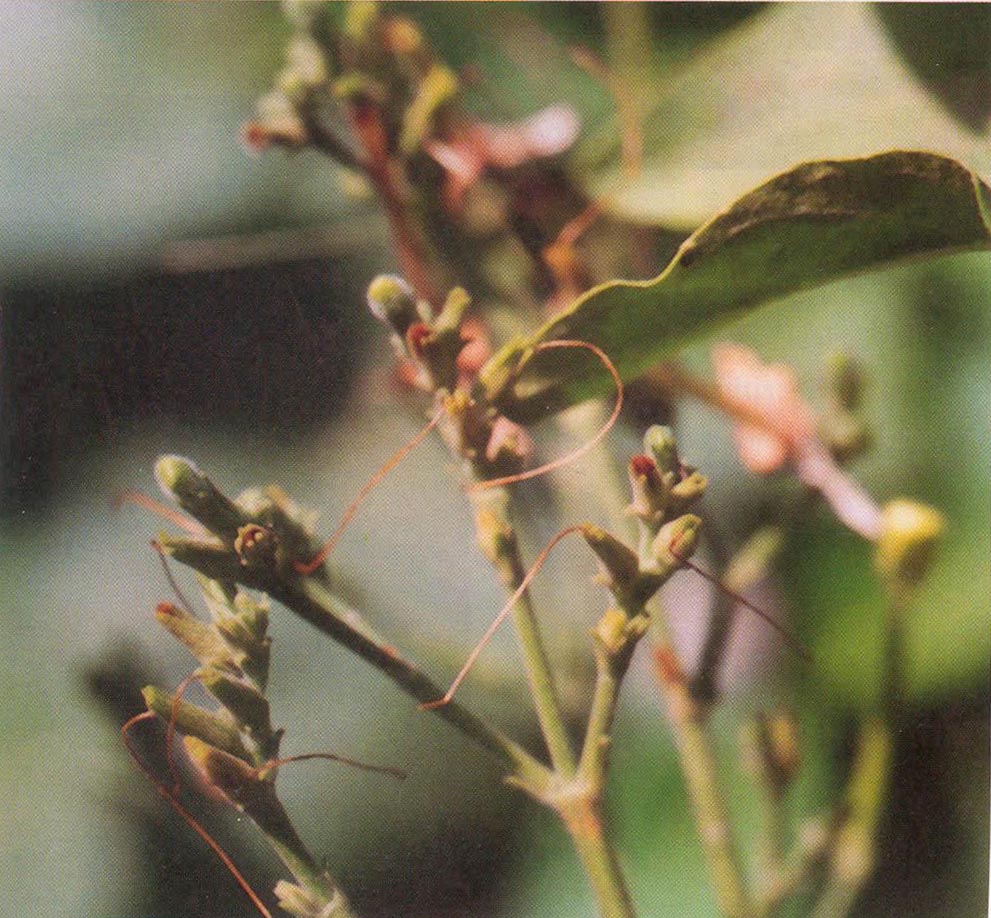
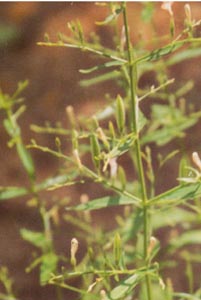
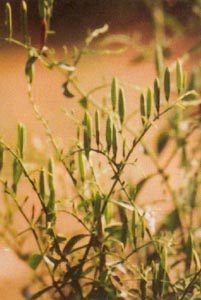
Photos:
left -- habit with flowers
right -- habit with fruits
Click on the pictures to enlarge.
|
 |
 |
Identification characters:
A perennial herb; stems sharply quadrangular, solid, puberulent. Leaves
opposite and decussate, simple; exstipulate; petiolate; laminae elliptic or
lanceolate, the bases obtuse, the margins entire, the tips acute, unicostate,
reticulate, glabrous. Inflorescences in axillary and terminal paniculate cymes;
peduncle length about half the height of plant; bracts small, persistent.
Flowers ebracteolate, pedicellate, bisexual, zygomorphic, pentamerous,
hypogynous. Calyx synsepalous, 5-sect, the lobes linear-lanceolate, the outer
surfaces pubscent with glandular hairs. Corolla synpetalous, deeply bilabiate,
white, the upper lip 2-lobed, the lower lip 3-lobed, the inner surfaces with
maroon coloured spots, pubescent. Androecium polyandrous, stamens 2,
epipetalous, about the middle of corolla tube, the filaments ciliate upwards,
white, the anthers dithecous, oblongoid, the bases bearded, connivent, dark
purple, introrse, exserted, dehiscence longitudinal, annular nectiferous disc
present. Pistil 1 , ovary ellipsoid, 2-carpelled, syncarpous, 2-loculed, the
placentation axile, the ovule 1 in each locule, the style filiform, exserted,
the stigma simple. Fruit a loculicidal capsule, ellipsoid, glabrous; seeds 4-5,
subquadrate, rugose, non-endospermic.
Flowering period: Flowers throughout the year
Fruiting period: Fruits throughout the year
Distribution: Grows wild throughout the plains. Also cultivated.
Parts used and uses: Root, leaf, flower, fruit, seed -- Pediatric fevers
- Diarrhoea; Head-ache; Indigestion.
Main Index of DB |
Top
Contents of this page
KS-TMN 033
{leip-sa-rwé:} ; {leip-tha-rwé:}
Barleria prionitis L. 3-271*
|
Botanical name: Barleria prionitis L. Sp. PL. 636. 1753.
Myanmar names: Leik-sa-ywe; Leik-tha-ywe
English names:
Family: Acanthaceae
Burmese-Myanmar name in Nagathein 3-271:
{leip-sa-rwé:} ; {leip-tha-rwé:}
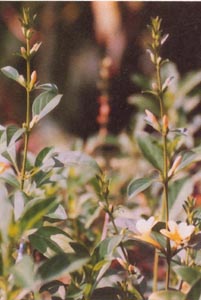
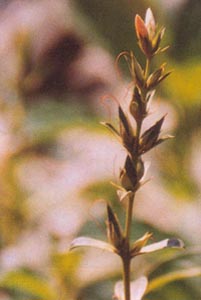
Photos:
left -- habit with flowers
right -- habit with fruits
Click on the pictures to enlarge. |
 |
 |
Identification characters:
A much branched shrub, usually very prickly, rarely unarmed; younger stems
cylindrical or obscurely quadrangular, glabrous. Leaves opposite and decussate,
simple; exstipulate; petiolate; laminae elliptic to elliptic-oblong, the bases
attenuate, the margins entire, the tips cuspidate, unicostate, reticulate, the
upper surfaces glabrous, the lower tawny sericeous. Inflorescences axillary
cymes, 1-to 3-flowered in the lower axils, becoming spicate above; bracts
foliaceous, oblong-lanceolate, spinescent, persistent. Flowers bracteolate,
bracteoles spinescent, sessile, zygomorphic, bisexual, tetramerous, hypogynous.
Calyx synsepalous, 4-sect in opposite pairs, the outer pair much larger, oblong-lanceolate,
acuminate, the inner pair or lobes linear-lanceolate, mucronate. Corolla
synpetalous, infundibuliform, 5-lobed, bilabiate, the upper lip deeply 4- lobed,
the lobes oblong-obovate, the tube elongate, twice the length of lobe,
puberulent without, glabrous within, yellow. Androecium polyandrous, stamens 4,
2 fertile, 2 staminodes, epipetalous, the filaments of the fertile stamens
longer, exserted, the anthers dithecous, oblongoid, dehiscence longitudinal;disc
large, cupular, half embracing the ovary. Pistil 1, ovary ovoid, 2-carpelled,
syncarpous, 2-loculed, the ovules 2 in each locule, the placentation axile-basal,
the style long and slender, the stigma bifid. Fruit a loculicidal capsule,
ovoid, with a long tapering solid beak, 2-seeded; seeds ovoid, much compressed,
sericeous, hairs wavy, non-endospermic.
Flowering period: October-November
Fruiting period: November - January
Distribution: A weed, common in dry plains
Parts used and uses: Roots, leaves, flowers, fruits and seeds
-- Infantile diarrhoea. Root: Cellulitis . Leaf: Pyrexia; Pruritis;
Ringworm; Heals boils and carbuncles; Antidote for
scorpion venom; Infantile coughs and fevers; Scabies; Gonorrhoea; Cough. Leaf and stem:
Heal chronic sores and ulcers
Main Index of DB |
Top
Contents of this page
KS-TMN 034
|
Botanical name: Rhinacanthus nasuta (L.) Kurz in Journ.As. Soc.Beng. 39.11,79. 1870.
Myanmar name: Htaw-la-butt
English name:
Family: Acanthaceae
Burmese-Myanmar name in Nagathein 2-059:
{htau:la.pat}
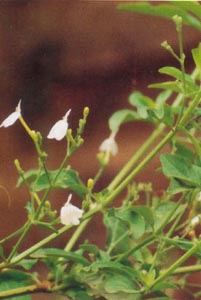
Photos:
left -- habit with flowers
right -- habit with fruits
Click on the pictures to enlarge. |
 |
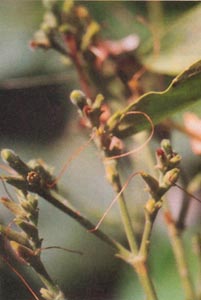 |
Identification characters:
An undershrub; stems subterete or obscurely angled, glabrous.Leaves opposite,
decussate, simple; exstipulate; petioles short; laminae elliptic-lanceolate or
elliptic - lanceolate or elliptic-oblong, the bases tapering to acute, the
margins entire, undulate, the tips acute, unicostate, reticulate, the surfaces
glabrous or glabrescent. Inflorescences in paniculate cymes, terminal; bracts
small, ovate-lanceolate, pubescent. Flowers sessile or shortly pedicellate,
bracteolate, bisexual, zygomorphic, pentamerous, hypogynous. Calyx synsepalous,
5-partite, the lobes linear-lanceolate, subequal, tomentose. Corolla synpetalous,
the tube long, narrow, cylindric, scarcely widened above, the limb 2-lipped, the
upper lip shortly 2-lobed, erect, the lower broad, 3-lobed, the lobes oblong,
obtuse, recurved, white. Androecium polyandrous, stamens 2, inserted,
epipetalous on the throat of the corolla, the filaments short, the anthers
dithecous, superposed, cupular nectiferous disc present. Pistil 1, ovary ovoid,
2-carpelled, syncarpous, 2-loculed, the ovules 2 in each locule, the style
filiform, the stigma minutely 2-fid. Fruit a loculicidal capsule, clavate,
contracted below into a long solid cylindric stalk, 4- seeded; seeds ovoid,
slightly compressed, glabrous, obscurely rugose, non-endospermic.
Flowering period: May - June
Fruiting period: May - June
Distribution: Grows wild and cultivated throughout Myanmar
Parts used and uses: Leaf juice: Heals ringworm, pimples and freckles on the face
Root bark: Aphrodisiac; Ringworm; Herpes; Skin disease; Oedema;
For dyeing hair; As hair shampoo; Promotes growth of eyebrows
Main Index of DB |
Top
Contents of this page
End of TIL file